
Eyes
Double Eyelid
A procedure to create or refine an upper-eyelid crease, assessed individually.
Free consultation, no obligation.

- Consult required
- Typical session time
- One procedure, then a review
- Typical sessions
- Recovery varies
- Downtime
On this page
In brief
Double-eyelid treatment is a surgical procedure that creates or refines an upper-eyelid crease, using either a suture (embedding) method or an incisional method. Eyelid anatomy decides which method applies, and whether either does, so the eyelid is examined in person before anything is arranged.
What is double-eyelid treatment?
A double eyelid is the crease across the upper eyelid. Many people of Asian descent naturally have a single eyelid without one. Double-eyelid treatment is a surgical procedure that forms or adjusts that crease.
- Creating an upper-eyelid crease where there is a single eyelid
- Refining a faint or uneven crease
- Reducing the effort of achieving a crease with eye make-up
Methods: suture and incisional
There are two broad approaches. The suture (embedding) method uses small access points through which fine sutures are placed to form the crease, without a continuous incision. The incisional method uses an incision along the intended crease line and is sometimes considered where there is excess skin or fat, or where a suture approach is less suitable.
The suture method generally involves shorter swelling; the incisional method tends to hold longer.
Who should postpone or avoid it
Because the procedure is around the eye, these conditions can make it unsuitable or higher-risk:
- Chronic or dry-eye conditions, which upper-eyelid procedures can aggravate
- Uncontrolled high blood pressure
- Circulation disorders
- Thyroid disease
- Diabetes
- Glaucoma
- Heart disease
The procedure, step by step

1. Design
The doctor marks the intended crease height and shape with you, checking symmetry with your eyes open and closed.
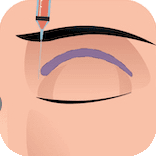
2. Anaesthesia
Local anaesthetic is given to the eyelid area. You stay awake throughout — the area is numbed, not sedated.
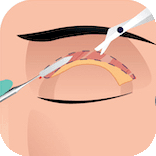
3. The procedure begins
The doctor works along the marked line using the suture or incisional method agreed at your consultation, addressing excess fat if needed.
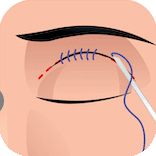
4. Suturing
Fine sutures form and secure the crease. How many are placed, and where, depends on the method used.

5. Healing and review
Swelling and bruising are expected in the first days, and a review appointment checks how the eyelid is healing. How the crease settles differs between individuals.
After a session
Swelling and bruising of the eyelids are expected and settle over time, generally sooner with the suture method. Many people return to everyday activities within around ten to fourteen days. The eyelids continue to settle over the following weeks to months, so the early crease is not the final one.
Follow the eye-area aftercare the doctor gives you, and come back for the review appointment.
Risks, side effects, and what Double Eyelid cannot do
Temporary effects include swelling, bruising, tightness and asymmetry while healing. The doctor goes through the specific risks around the eye before you consent.
Common and temporary
Swelling, bruising, tightness and asymmetry while the eyelid heals.Less common
Risks specific to surgery around the eye, which the doctor goes through with you before you consent.What it cannot do
- No specific duration can be promised. The incisional approach tends to hold longer than the suture approach.
- The early crease is not the final one: the eyelids keep settling for weeks to months.
- Not every eyelid suits either method. Anatomy decides, which is why the eyelid is examined in person first.
Bring your full medical history, including any eye condition.
What affects the number of sessions, and the cost
Cost depends mainly on the method. Suture and incisional are different procedures with different costs, and which one applies cannot be settled before the eyelid is examined.
- The method: suture or incisional.
- Whether excess fat is addressed during the procedure.
Common questions
How long do the results last?
It depends on the method and how your eyelids heal. The incisional approach tends to hold longer than the suture approach, but no specific duration can be promised.
Am I suitable for double-eyelid treatment?
It depends on your eyelid anatomy and health. Dry-eye disease, uncontrolled high blood pressure, circulation disorders, thyroid disease, diabetes, glaucoma and heart disease can rule it out, so bring your full medical history.
Does the procedure hurt?
The eyelid is numbed with local anaesthetic, and you stay awake. Tightness, swelling or tenderness while healing is common and typically settles.
How long is the recovery after double eyelid surgery?
Many people return to everyday activities within around ten to fourteen days, generally sooner with the suture method. The eyelids keep settling for weeks to months after that, so the early crease is not the final one.
What is the difference between the suture and incisional methods?
The suture method forms the crease with fine sutures through small access points, without a continuous incision, and generally means shorter swelling. The incisional method uses an incision along the crease line and tends to hold longer. Your eyelid anatomy decides which applies, if either.
Read next

Book a free consultation
The consultation is free, takes about 20 to 30 minutes, and there is no obligation to book treatment afterwards. A doctor will examine your skin and tell you whether Double Eyelid is appropriate, and if it isn’t, what would be.
Ask about this treatmentMedically reviewed by

Dr Lim Xiao Chien
Partner, Aesthetic Physician
MBBS, LCP Board Certified, GCFM, MAC · MMC 74662
Dr Lim Xiao Chien graduated from Jawaharlal Nehru Medical College, KLE University in India with a degree in Bachelor of Medicine and Bachelor of Surgery (MBBS).
View full profile- Reviewed by
- Dr Lim Xiao Chien, MMC 74662
- Last reviewed
- 1 Jun 2026
- Next review due
- 1 Jun 2027