
Lasers
Pico Laser
A picosecond laser used for pigmentation, dull skin tone and tattoo removal, suited to a range of Asian skin tones.
Free consultation, no obligation.
- 2 pico platforms
- Matched to your skin type and pigment
- 20–40 minutes
- Typical facial pigment appointment, including preparation
- Assessment first
- Your first visit is a doctor consultation, not a treatment
On this page
In brief
Pico laser is a category of laser, not a single machine. Every pico device fires pulses lasting trillionths of a second, but they differ in wavelength, which decides which pigment, ink colours and skin tones a device suits. Kaiteki runs more than one pico platform for that reason, and a doctor decides which, if any, fits your skin.
Results from Kaiteki patients
Before and after photos of patients treated at Kaiteki for acne, pigmentation, enlarged pores, tattoo removal and birthmark. A plan may combine more than one treatment.
10 photos · tap one to enlarge
Active acne, before and after a course of treatment at Kaiteki
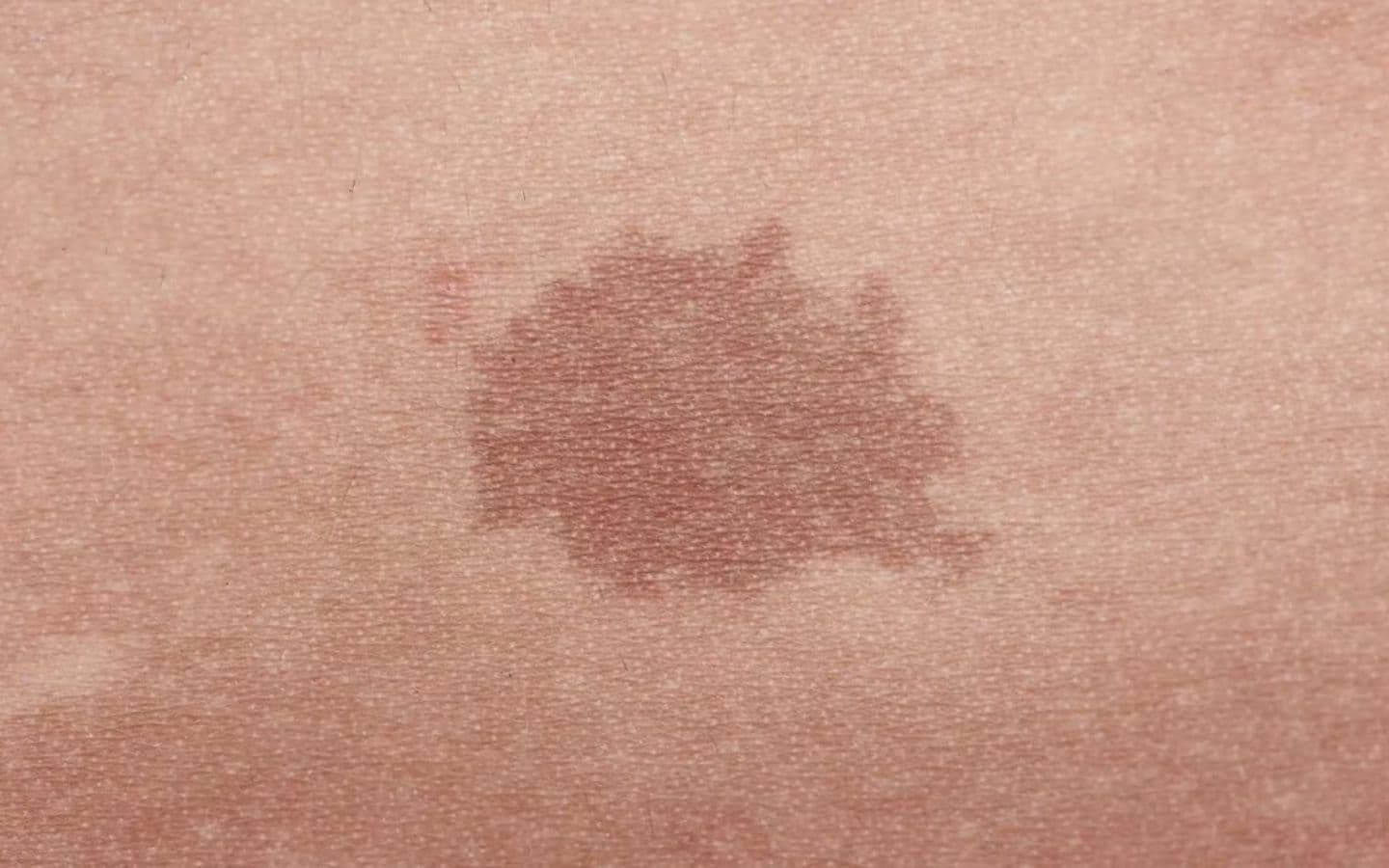
Facial pigmentation, before and after a course of treatment at Kaiteki
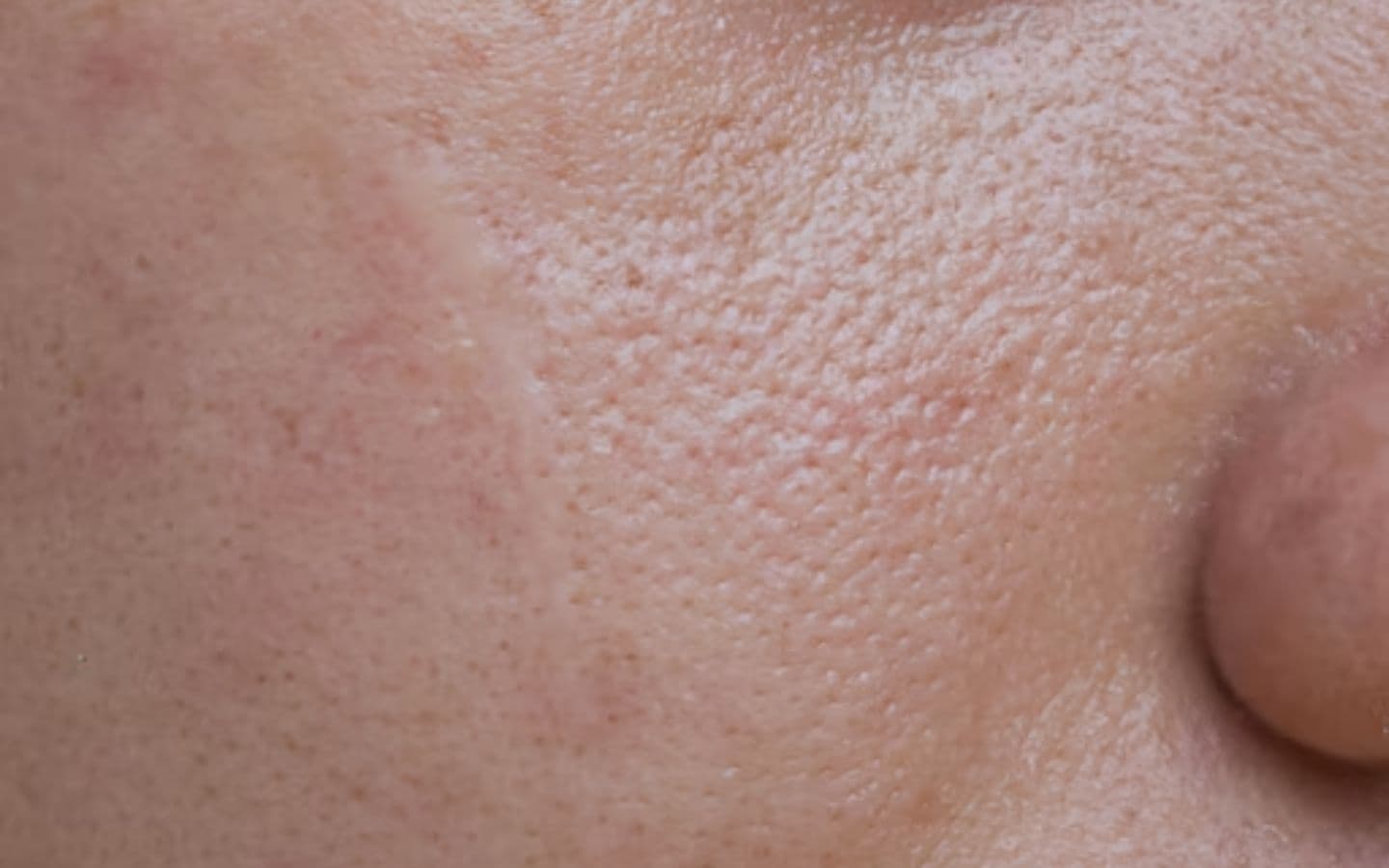
Pore appearance on the cheek, before and after a course of treatment at Kaiteki
Tattoo, before and after a course of treatment at Kaiteki
Pigmented birthmark around the mouth, before and after laser treatment at Kaiteki
Active acne, before and after a course of treatment at Kaiteki
Facial pigmentation, before and after a course of treatment at Kaiteki
Skin texture and pores, before and after a course of treatment at Kaiteki
Tattoo, before and after a course of treatment at Kaiteki
Port-wine stain on the back of the neck, before and after vascular laser at Kaiteki
Photographs of Kaiteki patients, published with consent. Individual results vary and are not guaranteed. These images are not a promise of outcome. A doctor will assess whether any treatment is suitable for you.
What is Pico laser?
“Pico” refers to the length of the laser pulse, not to a brand. A picosecond is a trillionth of a second, and pulses that short deliver their energy faster than the surrounding skin can heat up. The effect on pigment is therefore largely photomechanical (a rapid shockwave that fractures pigment clusters) rather than thermal.
That matters because heat tends to provoke pigment problems in the skin tones common in Malaysia, which is why picosecond devices are widely used here for pigment work. Suitability still turns on three things a doctor checks: the type and depth of your pigment, your skin type, and whether you mark after inflammation.
How does a picosecond pulse break up pigment?
The pulse is absorbed by pigment far more strongly than by the surrounding skin. Because it arrives and ends in trillionths of a second, the pigment particle takes the energy as a mechanical shock and breaks into smaller fragments. Those fragments are then cleared gradually by the body's own immune cells over the weeks that follow.
Delivered at lower energy with a diffractive lens, the same pulse creates small zones of controlled injury in the upper skin without breaking the surface, which is used as a skin-renewal pass for texture and tone rather than for a specific mark.
What Pico Laser is used for at Kaiteki
Surface pigment
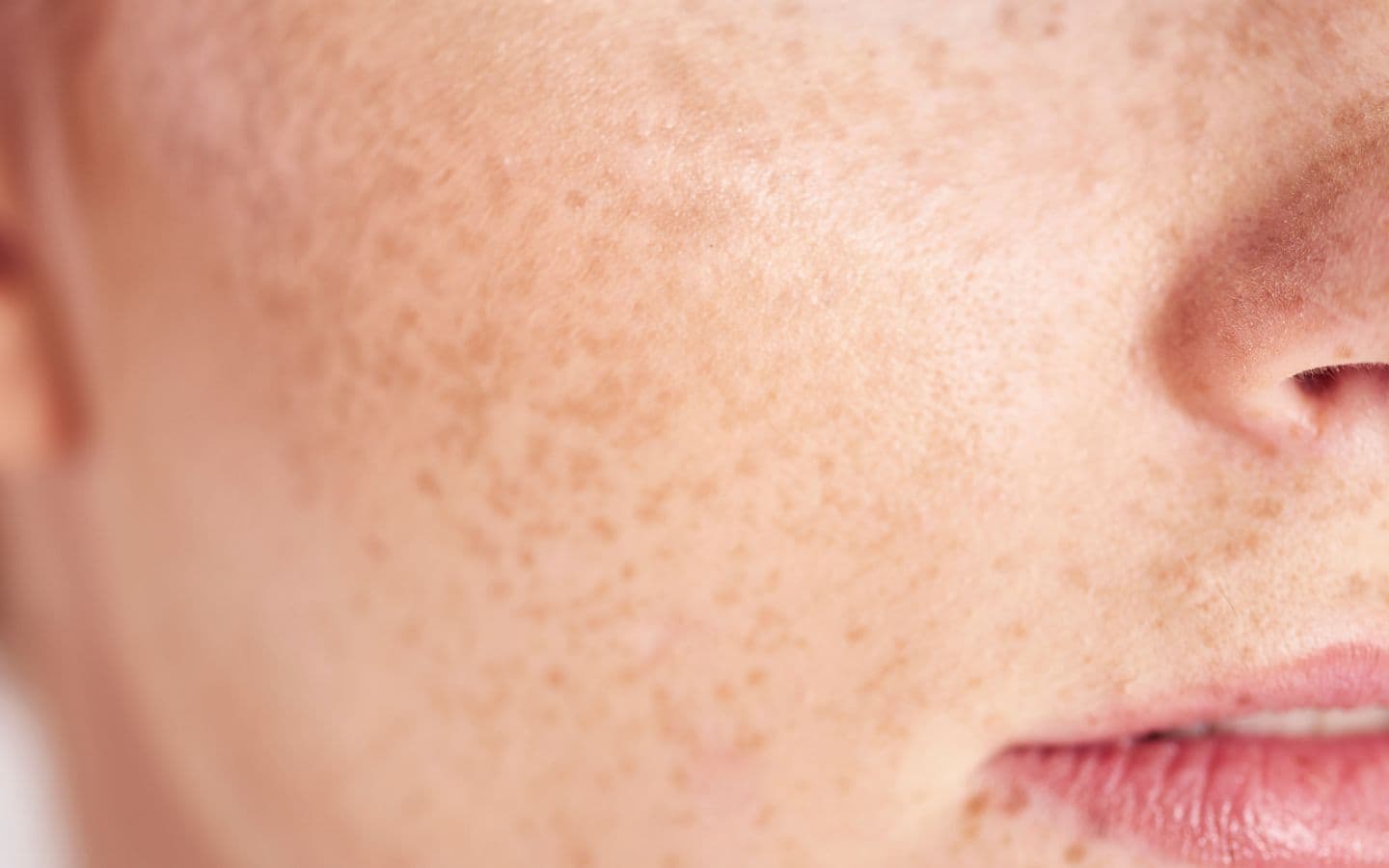
Sun spots, freckles and other benign pigmented marks sitting in the upper skin.
Deeper and hormonal pigment
Melasma, and dermal pigment conditions such as naevus of Ota or Hori's naevus. These sit deeper and respond less predictably.
Post-acne marks and tone
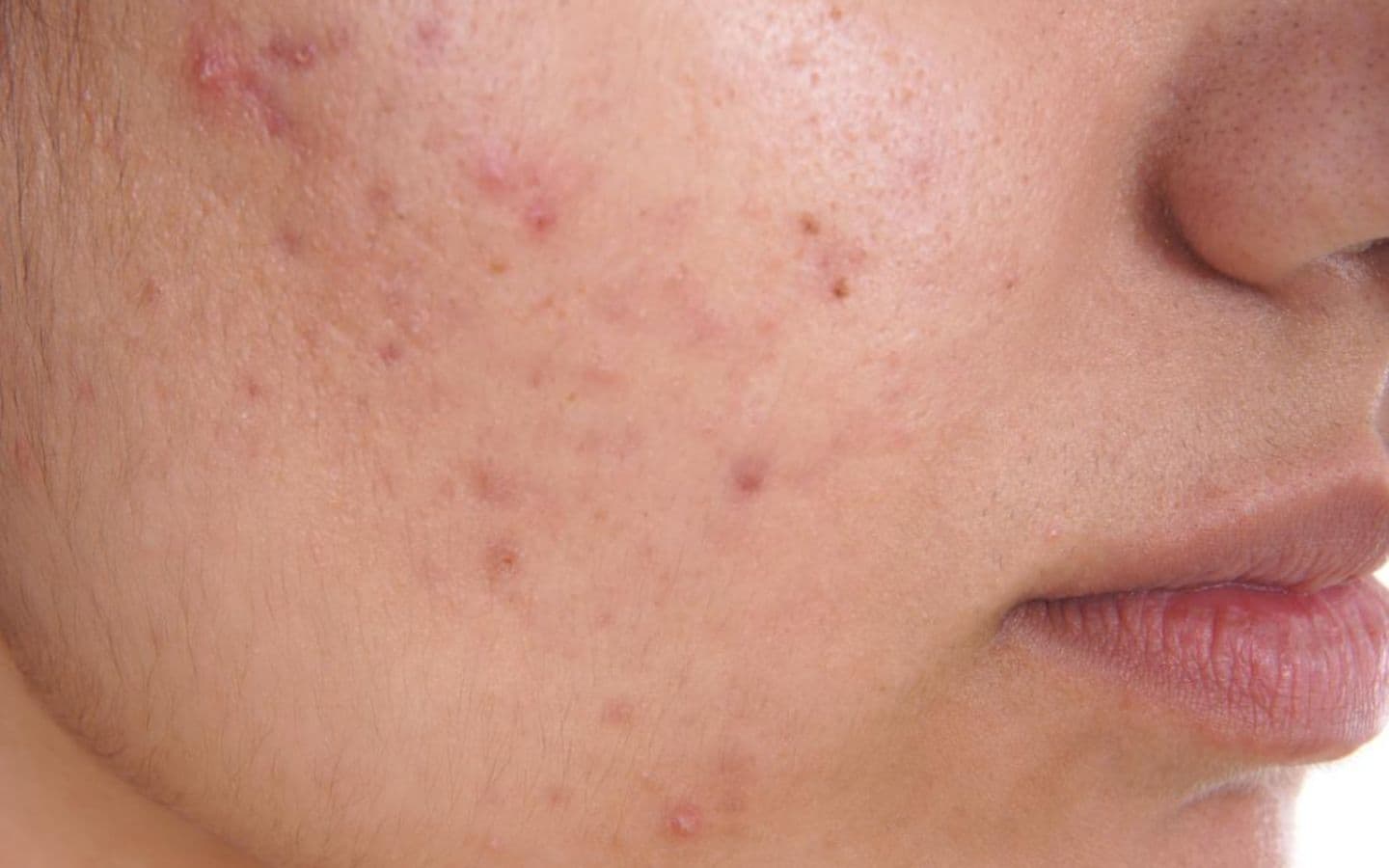
Brown marks left behind after spots have settled, along with dull or uneven overall tone and the look of enlarged pores.
Tattoo ink
Black and dark blue inks respond most predictably. Light colours, white and some cosmetic or permanent-makeup pigments can be resistant or behave unpredictably, so tattoos are assessed individually.


Which pico device, and why it matters
Both platforms fire picosecond pulses, but their primary wavelengths differ, and wavelength changes how strongly melanin absorbs the pulse. That is a difference in energy delivery, not a ranking.
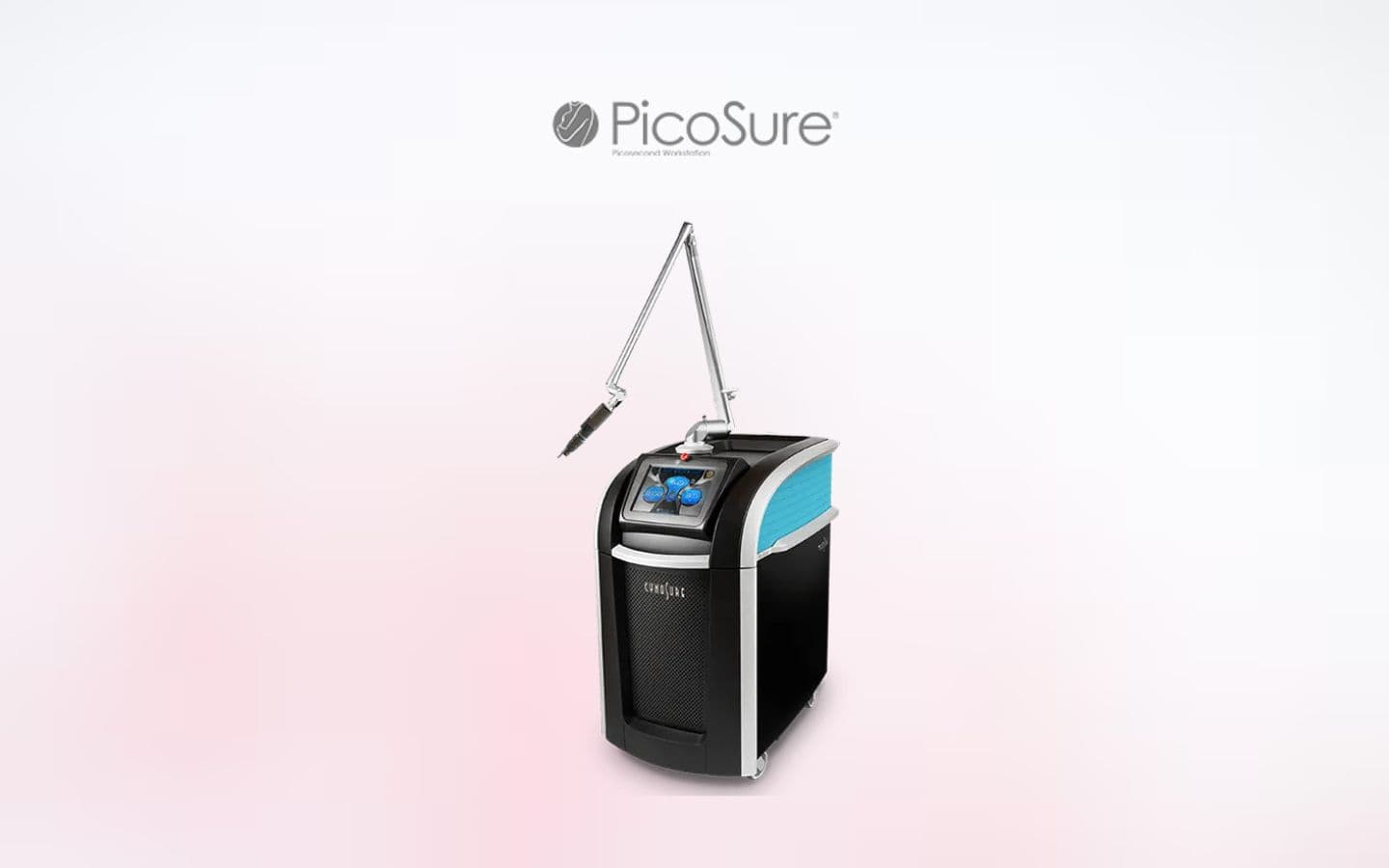
PicoSure
755nm · Cynosure
An alexandrite-wavelength platform. 755nm is absorbed strongly by melanin, which is useful for certain pigment and ink colours but makes skin tone a larger factor in the settings chosen. The manufacturer limits some indications by Fitzpatrick skin type.
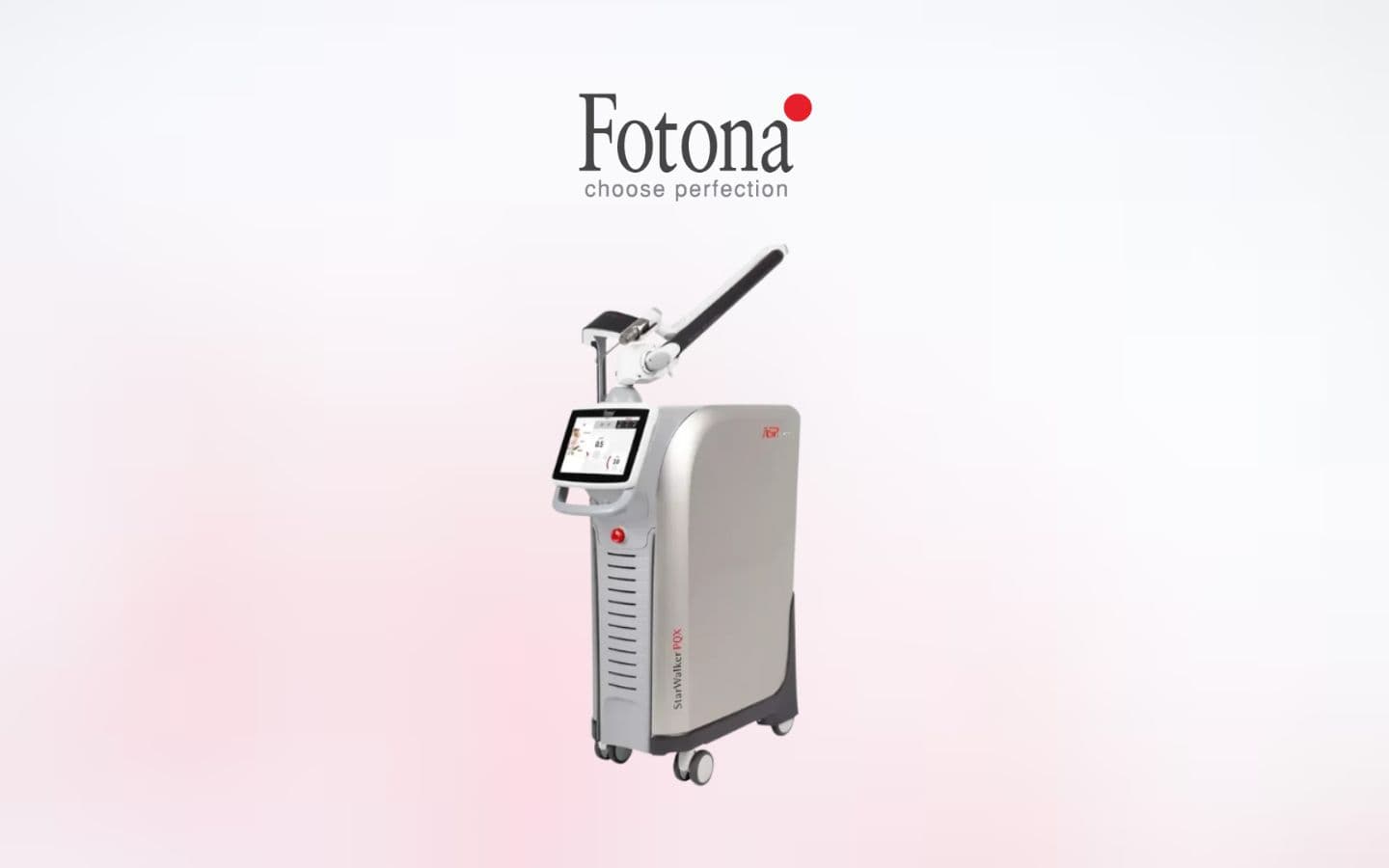
About PicoSureFotona PQX (StarWalker)
1064nm · Fotona
Built around the longer 1064nm Nd:YAG wavelength, which interacts less with surface melanin and travels deeper. Often chosen where skin tone or pigment depth makes a 755nm pass less appropriate.
About Fotona PQX
Not sure which applies to you?
A doctor can look at your skin, tell you which type of pigment you have, and say honestly whether a pico laser is the right tool for it.
Ask about this on WhatsAppFree consultation, about 20 to 30 minutes, no obligation.
Who should postpone or avoid it
- Pregnancy or breastfeeding. Treatment is generally deferred.
- Recently tanned or sunburnt skin. This raises the risk of an uneven response and of pigment change afterwards.
- Active infection, inflammation or open skin in the area to be treated.
- A history of keloid or hypertrophic scarring.
- Medications that increase light sensitivity, including oral isotretinoin.
- Recent lasers, peels or other procedures on the same area.
What a session involves
Consultation and skin assessment
The doctor examines the area, takes your history, and explains whether a pico laser is appropriate. Sometimes the answer is a different treatment, or waiting.
Test area where appropriate
A small patch may be treated first, particularly for deeper pigment or for tattoo ink of unknown composition, and reviewed before a full session is booked.
Preparation
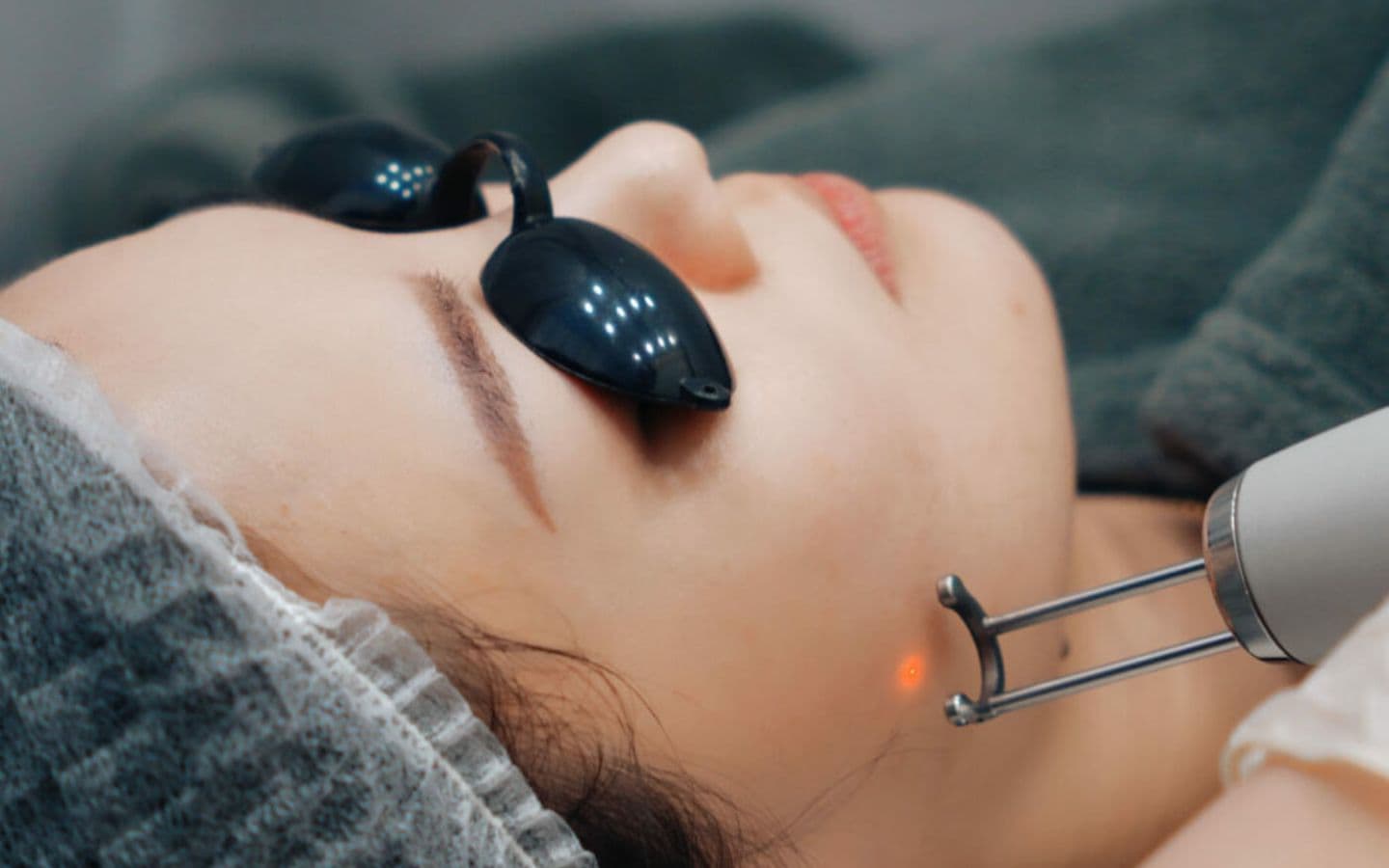
The skin is cleansed and eye shields are fitted. Topical numbing may be applied where the plan calls for it, most often for sensitive areas and tattoo work.
The treatment pass
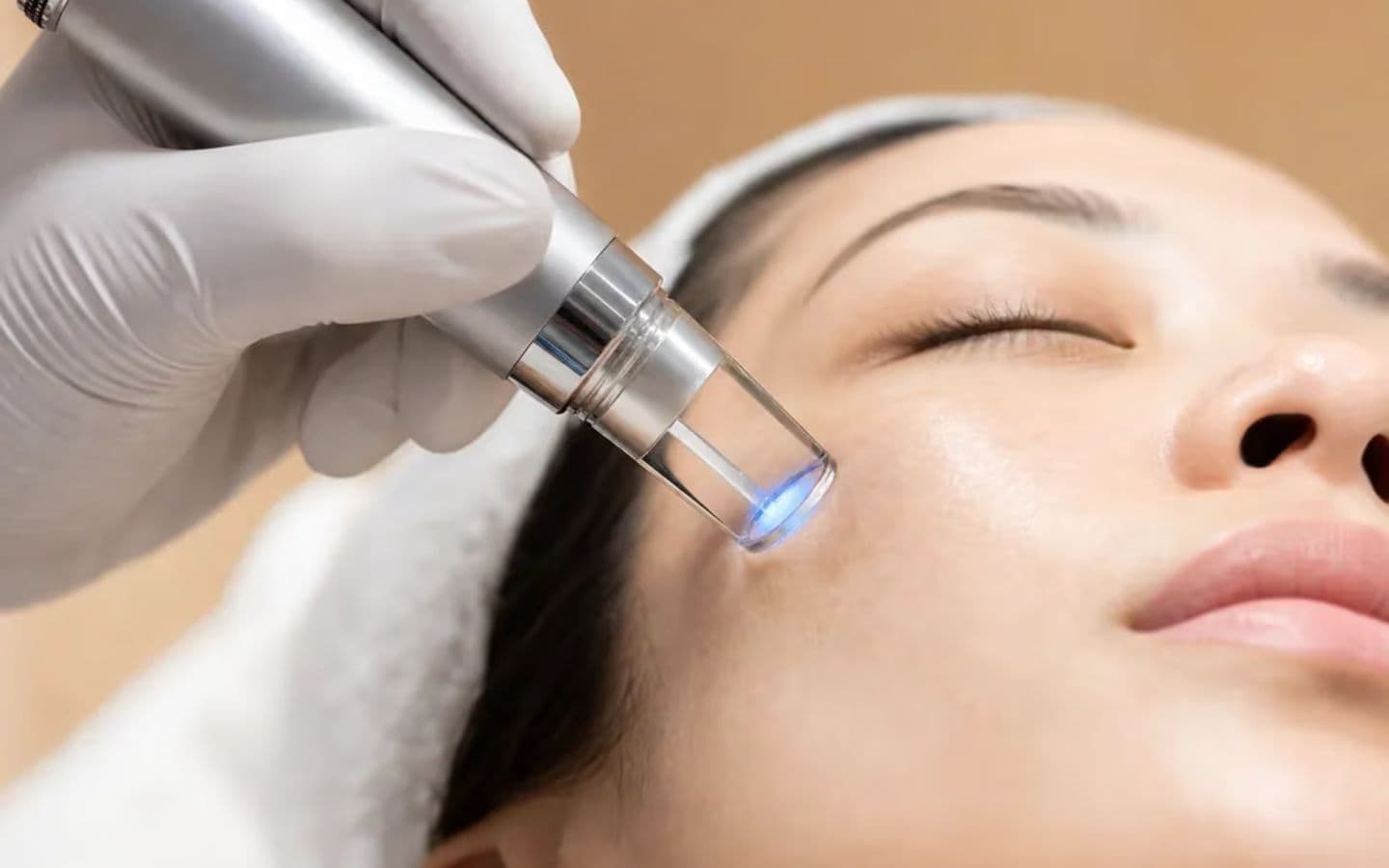
The handpiece is passed over the area in overlapping passes. Most people describe brief snapping or hot-pinprick sensations rather than sustained pain. Treated pigment may look temporarily darker or greyish straight away, which is expected.
Afterwards
A cooling or soothing step, sunscreen, and aftercare instructions for the area treated.
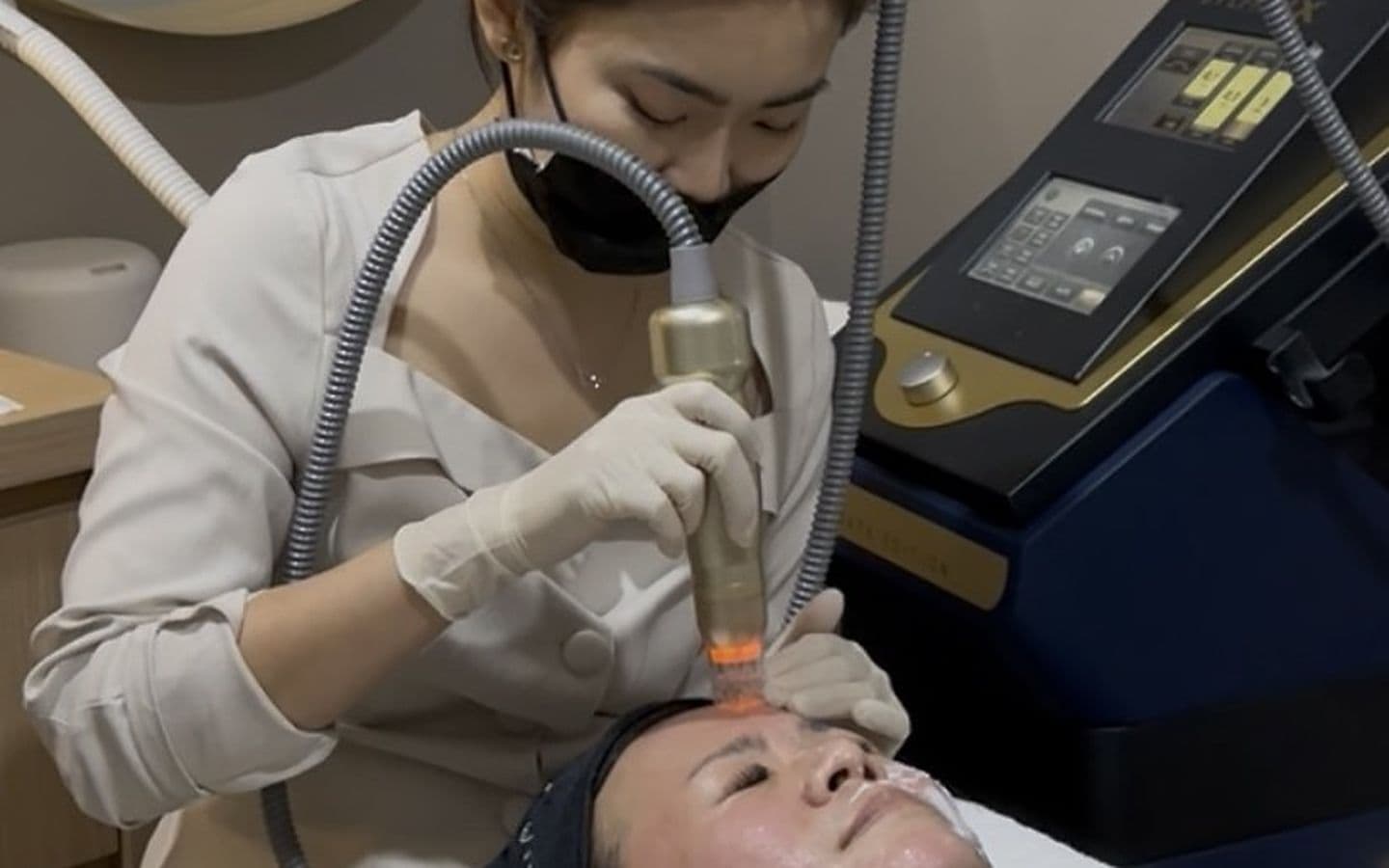
In the treatment room
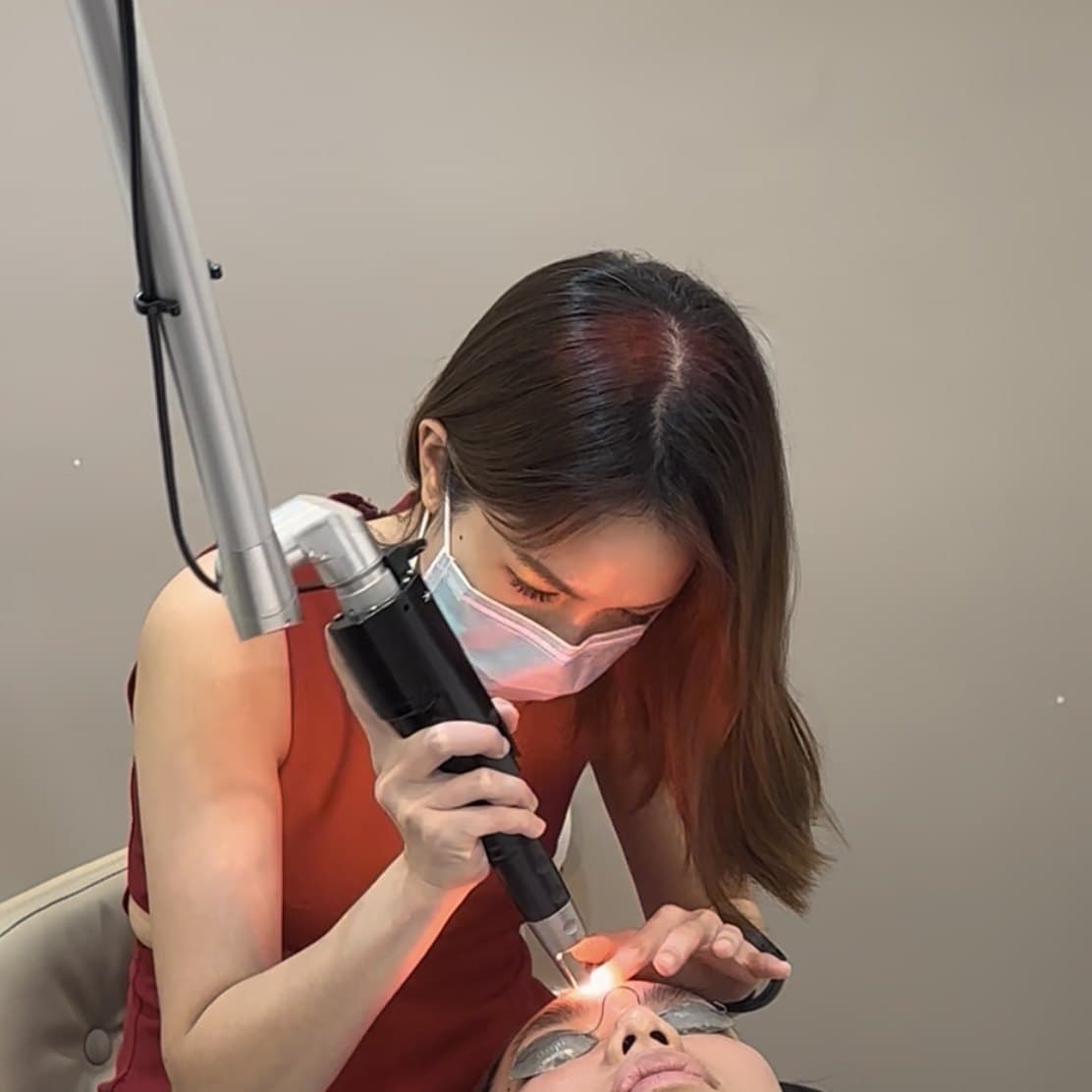
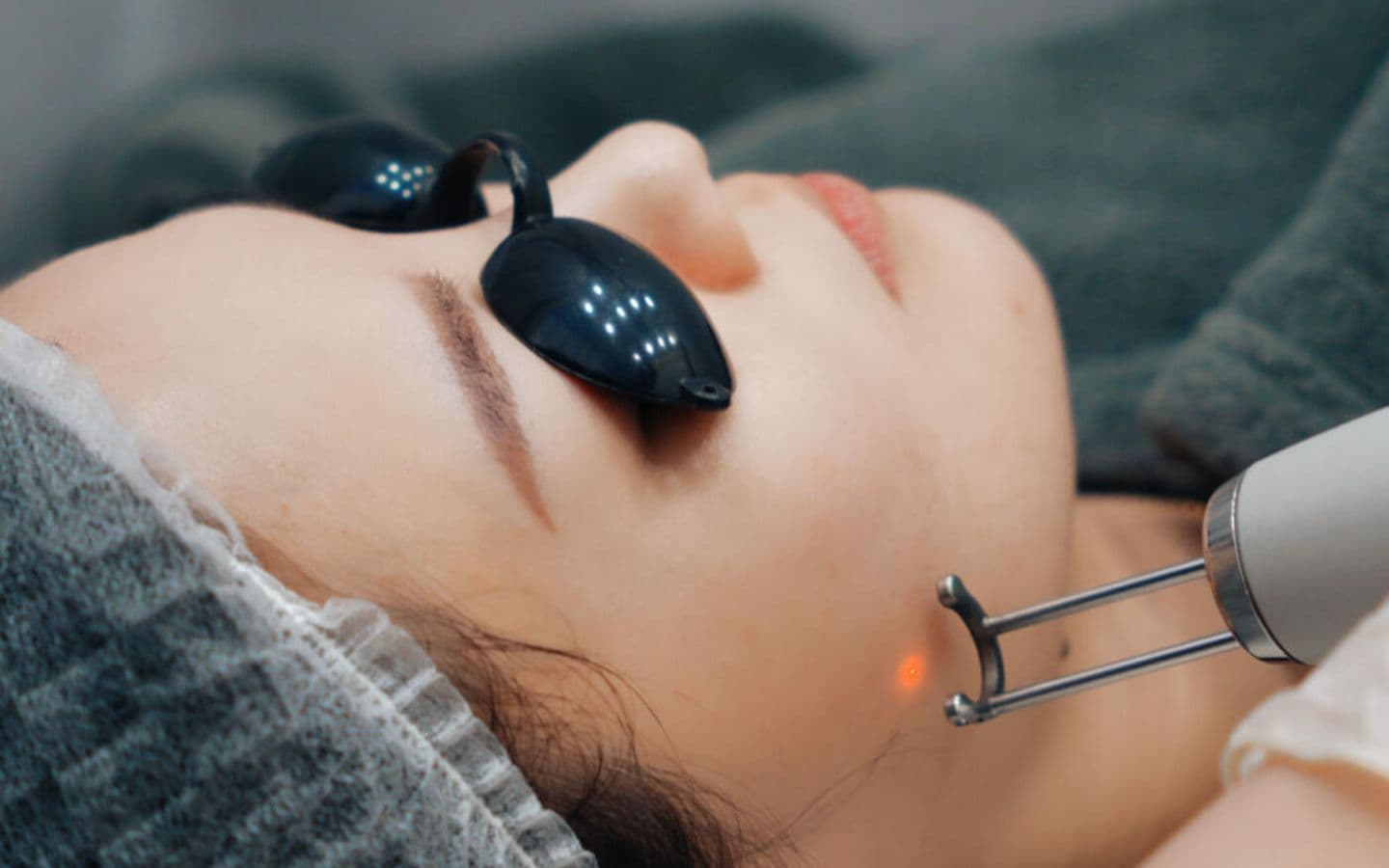
A practitioner guides the laser handpiece over the patient's cheek during a session at Kaiteki.
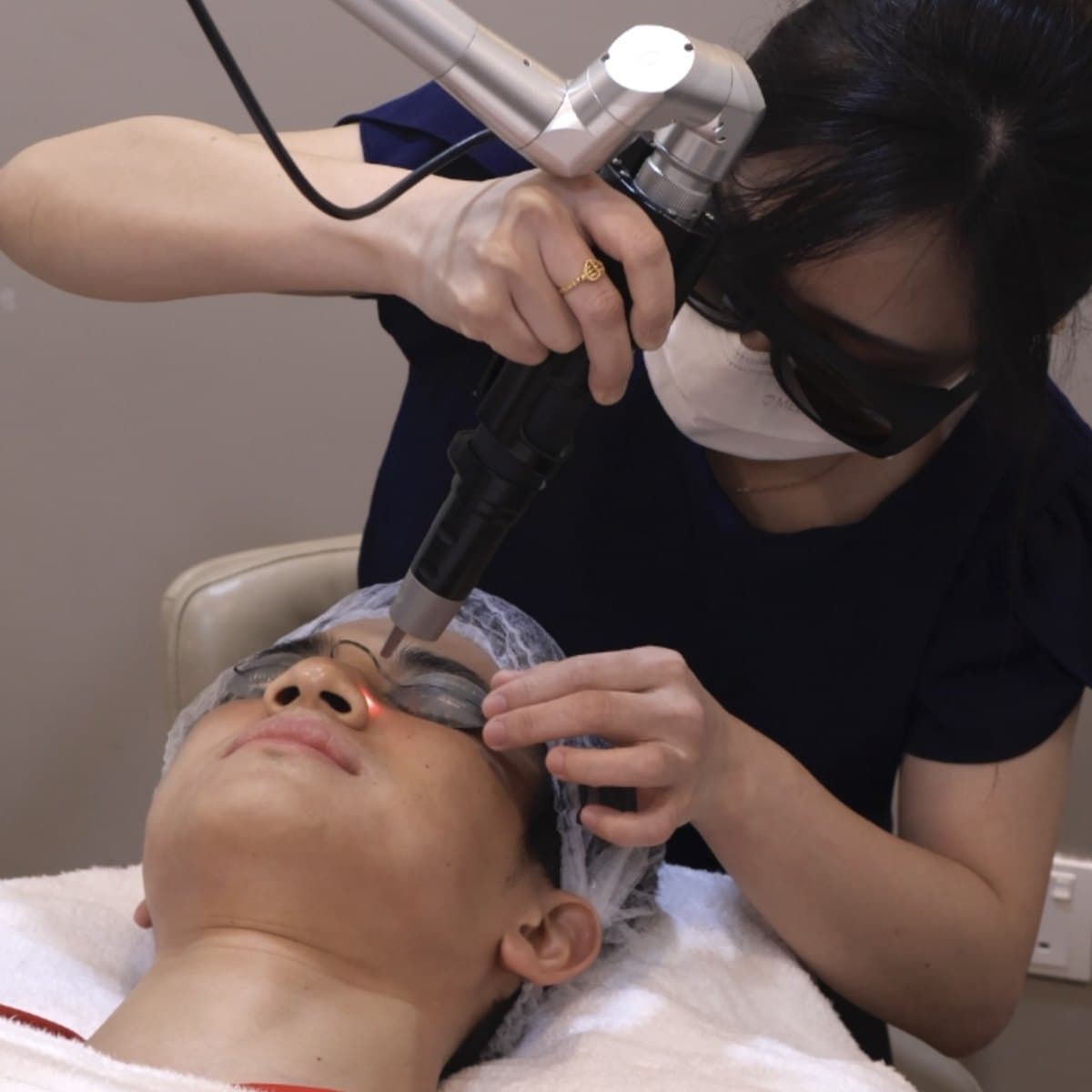
A practitioner in protective eyewear works the laser handpiece across the patient's face.
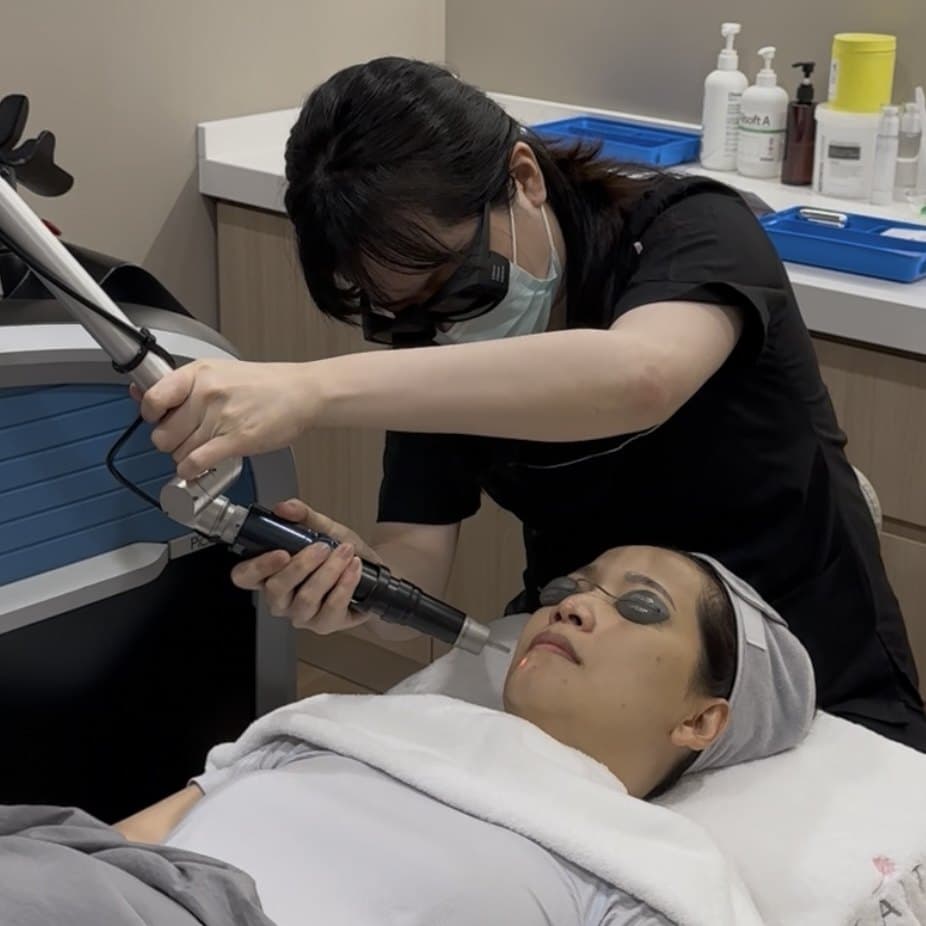
A practitioner positions the laser arm beside a patient wearing eye protection.
After a session
The first few hours
Mild redness, warmth and sometimes slight swelling. Most people go back to their day.Day one to two
Redness typically settles. Where pigment was targeted directly, treated spots often look darker than before.Day three to roughly two weeks
Small darkened flecks or fine crusting may appear and then flake away on their own. Leave them alone; picking is the most common cause of a mark that outlasts the treatment.
Daily broad-spectrum sunscreen and real sun avoidance; gentle cleansing and moisturising; and no retinoids or acids until your doctor says to resume.
Risks, side effects, and what Pico Laser cannot do
Common and temporary
Redness, warmth, mild swelling, pinpoint bruising and small crusts that flake away over one to two weeks.Less common
Darkening of the treated skin after treatment (post-inflammatory hyperpigmentation), lightening of the treated skin, blistering and, rarely, scarring.Pigment change and Malaysian skin
Post-inflammatory hyperpigmentation is the risk that matters most in the skin tones common here: skin with more melanin answers injury with more pigment, so an over-aggressive setting can leave a darker mark than the one it targeted. That is why a doctor may choose lower energy, longer intervals, a test patch or a different wavelength.What it cannot do
- It does not stop new pigment forming. Without daily sun protection, sun-related marks return, and melasma fluctuates with sun exposure and hormones.
- It does not treat active acne. Marks left behind, yes; the inflammatory condition itself is managed medically.
- It cannot promise complete clearance of a tattoo. Ink composition is rarely known with certainty, and some colours respond poorly.
- It does not lift or tighten skin.
Also tell your doctor about any history of cold sores.
What affects the number of sessions, and the cost
Kaiteki does not quote prices online; the figure you get at consultation reflects your assessed plan. What moves it:
- Type and depth of pigment. Surface sun spots generally need fewer visits than deeper dermal pigment.
- Size of the area treated, whether a few spots, a full face, or a body area.
- Which device and settings your doctor selects for your skin type.
- For tattoos: ink colours, density, how many layers were applied, the age of the tattoo and where it sits on the body.
- Whether pico work is combined with other steps in a wider plan.
Devices used at Kaiteki
Which platform is used depends on your individual assessment.
Common questions
Does Pico laser hurt?
Picosecond pulses are generally reported as more tolerable than older longer-pulse lasers, and settings can be adjusted during the session.
How many sessions will I need?
Surface sun spots generally need fewer sessions than dermal pigment or a dense tattoo. Facial pigment is commonly planned as several sessions a few weeks apart.
Will I see a difference after one session?
Not reliably. Your body clears fragmented pigment gradually, so change develops over the weeks after each session. Progress is reviewed at each visit.
Can Pico laser treat melasma?
Sometimes, with caution. Over-aggressive treatment can worsen melasma, so it is usually managed as an ongoing plan of sun protection, topical care and conservative in-clinic settings. A doctor decides whether any laser suits your melasma at all.
How much does Pico laser cost in Malaysia?
Kaiteki does not quote prices online. Pricing is given at consultation for your assessed plan.
Can I wear makeup or go back to work afterwards?
Makeup can go back on once redness settles, over intact skin only and never over crusting.
Read next



Where to go next
Book a free consultation
The consultation is free, takes about 20 to 30 minutes, and there is no obligation to book treatment afterwards. A doctor will examine your skin and tell you whether Pico Laser is appropriate, and if it isn’t, what would be.
Ask about this treatmentMedically reviewed by

Dr Chew Yuhhui
Co-Founder & Senior Medical Director
MBBS, LCP Board Certified, MAC, MSAM · MMC 68232
Allow your passion to become your purpose and it will one day become your profession.
View full profile- Reviewed by
- Dr Chew Yuhhui, MMC 68232
- Last reviewed
- 20 Jun 2026
- Next review due
- 20 Jun 2027