
Concern · Skin
Tattoo Removal
Ink colour, depth and skin tone all affect how removal works.
Free, about 20–30 minutes, no obligation to book treatment.
- A course, not a session
- Ink is cleared gradually by the body between visits, over a series of appointments.
- Colour decides a lot
- Black and dark blue behave predictably; some colours and cosmetic pigments do not.
- Assessed in person
- Ink composition is rarely known, so the tattoo is examined rather than described.
On this page
In brief
Tattoo removal is the gradual fading of tattoo ink using laser energy that breaks pigment into smaller particles the body may clear over time.
Results from Kaiteki patients
6 photos · tap one to enlarge
Tattoo, before and after a course of treatment at Kaiteki
Tattoo, before and after a course of treatment at Kaiteki
Tattoo, before and after a course of treatment at Kaiteki
Tattoo, before and after a course of treatment at Kaiteki
Tattoo, before and after a course of treatment at Kaiteki
Tattoo, before and after a course of treatment at Kaiteki
Photographs of Kaiteki patients, published with consent. Individual results vary and are not guaranteed. These images are not a promise of outcome. A doctor will assess whether any treatment is suitable for you.
What is laser tattoo removal?
Laser tattoo removal uses focused laser energy to break the ink held in the skin into fragments small enough for the body's own immune system to carry away. That is why the interval between sessions matters as much as the sessions themselves.
What affects your session count
The tattoo is reviewed at each visit and the plan adjusted as it fades. What moves the count most:
- Ink colour: different pigments absorb different wavelengths.
- How deep the ink sits: professional tattoos place ink deeper and more densely than amateur ones. Deeper ink takes more sessions to reach and clear, and layered or covered-up work can hold several depths at once.
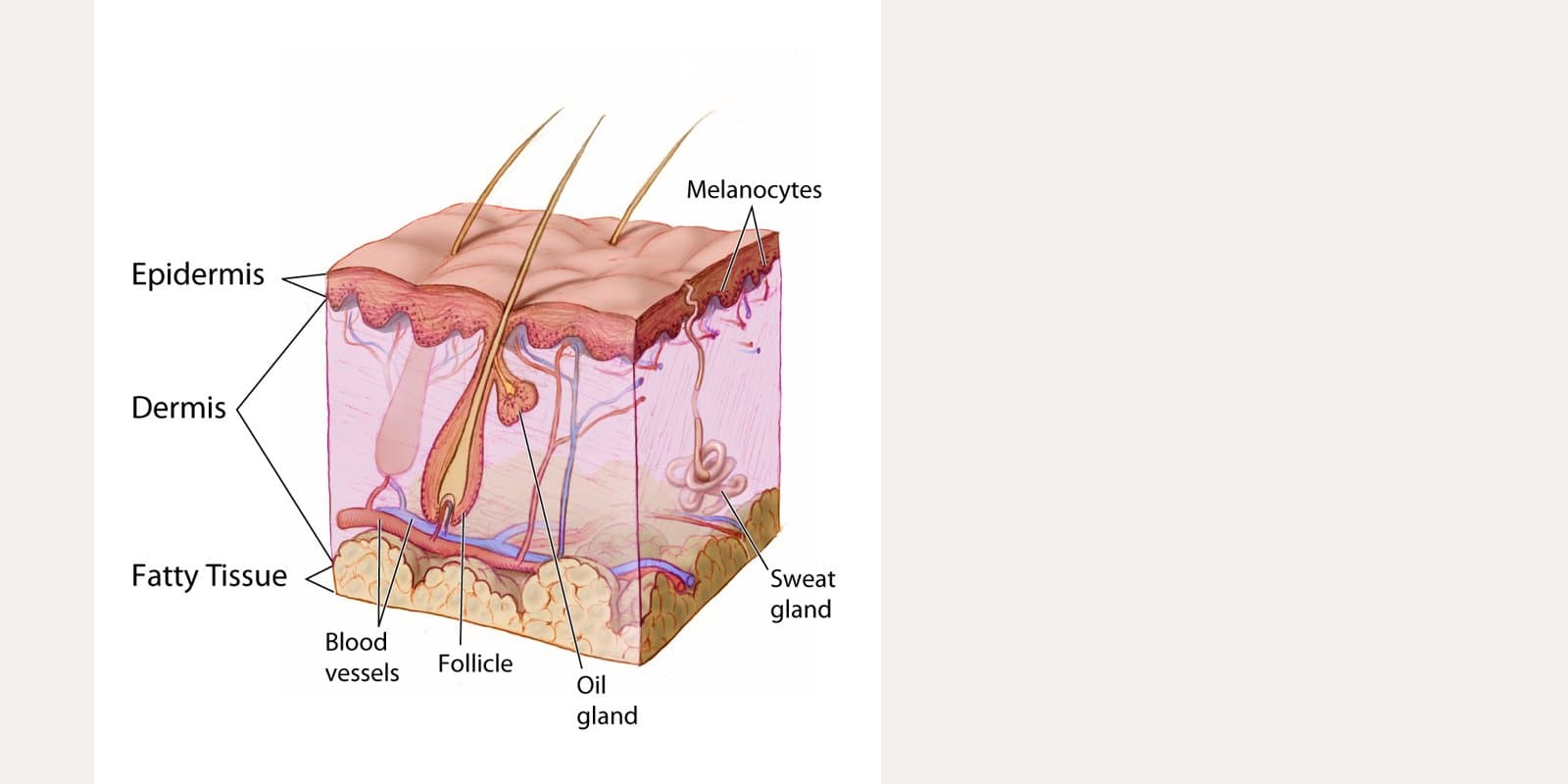
Tattoo ink sits in the dermis, the layer beneath the surface. Illustration: National Cancer Institute. - Size and density: a larger or heavily saturated piece simply contains more pigment.
- Where it sits on the body: areas with stronger circulation clear fragments more readily than the hands, ankles and feet (see below).
- Age of the tattoo and your own health: older tattoos have usually faded somewhat already. Smoking, poor circulation and anything that suppresses immune function slow the clearance the treatment depends on.
How different inks respond
Ink composition is not standardised and is rarely documented, so this describes general behaviour rather than what your tattoo will do.
| Ink | How it behaves | What that means in practice |
|---|---|---|
| Black and dark blue | Absorbs a wide range of wavelengths | The most predictable to treat, and usually the reference point for planning a course |
| Green and turquoise | Absorbs only within a narrow band | Needs a specific wavelength; typically assessed for whether the clinic's platform can reach it |
| Red and orange | Responds to shorter wavelengths | Generally treatable, though more prone to a temporary reaction in the surrounding skin |
| Yellow and light pastels | Absorbs poorly across most wavelengths | Often the last colour still visible, and sometimes the reason a course is stopped short of clear |
| White and flesh-tone pigment | Can darken on contact with laser energy | Tested on a small area first, because some formulations oxidise to grey or black |
Where the tattoo sits
The body clears ink fragments through the lymphatic system, so how well an area drains changes how a tattoo behaves between sessions.
Upper arm, chest and back
Strong circulation and good lymphatic drainage.Hands, fingers, ankles and feet
Slower drainage and thinner skin over bone. These typically need longer intervals and more patience, and they are the areas where expectations most often need adjusting.Face, neck and eyebrows
Treated with particular caution. Cosmetic pigment is unpredictable, the skin is thin, and any pigment change here is highly visible.Over a scar or a raised tattoo?
Tattoos placed over scar tissue, or work that sits raised or itchy, are assessed separately. So is any tattoo containing a mole or a changing mark, which must be examined before laser is used anywhere near it.
What a doctor checks first
Before any laser is used, an assessment covers a short list of things that change whether treatment is appropriate at all:
- The colours present, and whether the clinic's platform has a wavelength for each of them.
- Whether the tattoo is a cover-up, a rework, or has been treated elsewhere before.
- Your medical history, including anything affecting immune function, healing or photosensitivity.
Treatment options at Kaiteki
Tattoo removal at our clinics is a single treatment carried out over a course of appointments.
Pico Laser
For breaking ink into particles the body clears
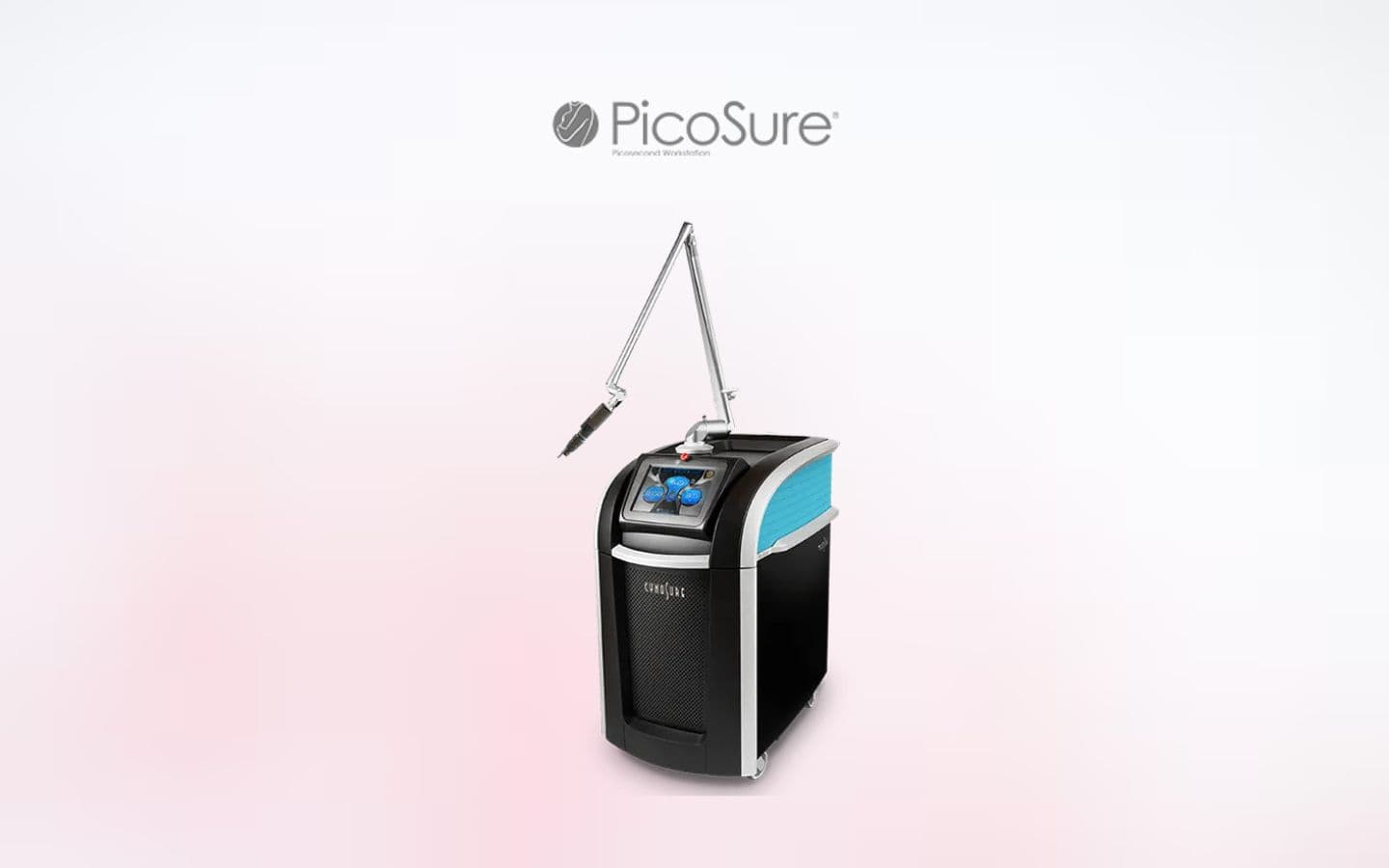
A picosecond laser delivers energy in pulses short enough to shatter pigment mechanically rather than by heating it, which reduces the heat delivered to surrounding skin.
Pico Laser
Wondering if yours can be treated?
Send us a photo on WhatsApp and a doctor can tell you what to expect from an assessment.
Ask about this on WhatsAppFree consultation, about 20 to 30 minutes, no obligation.
Technology used
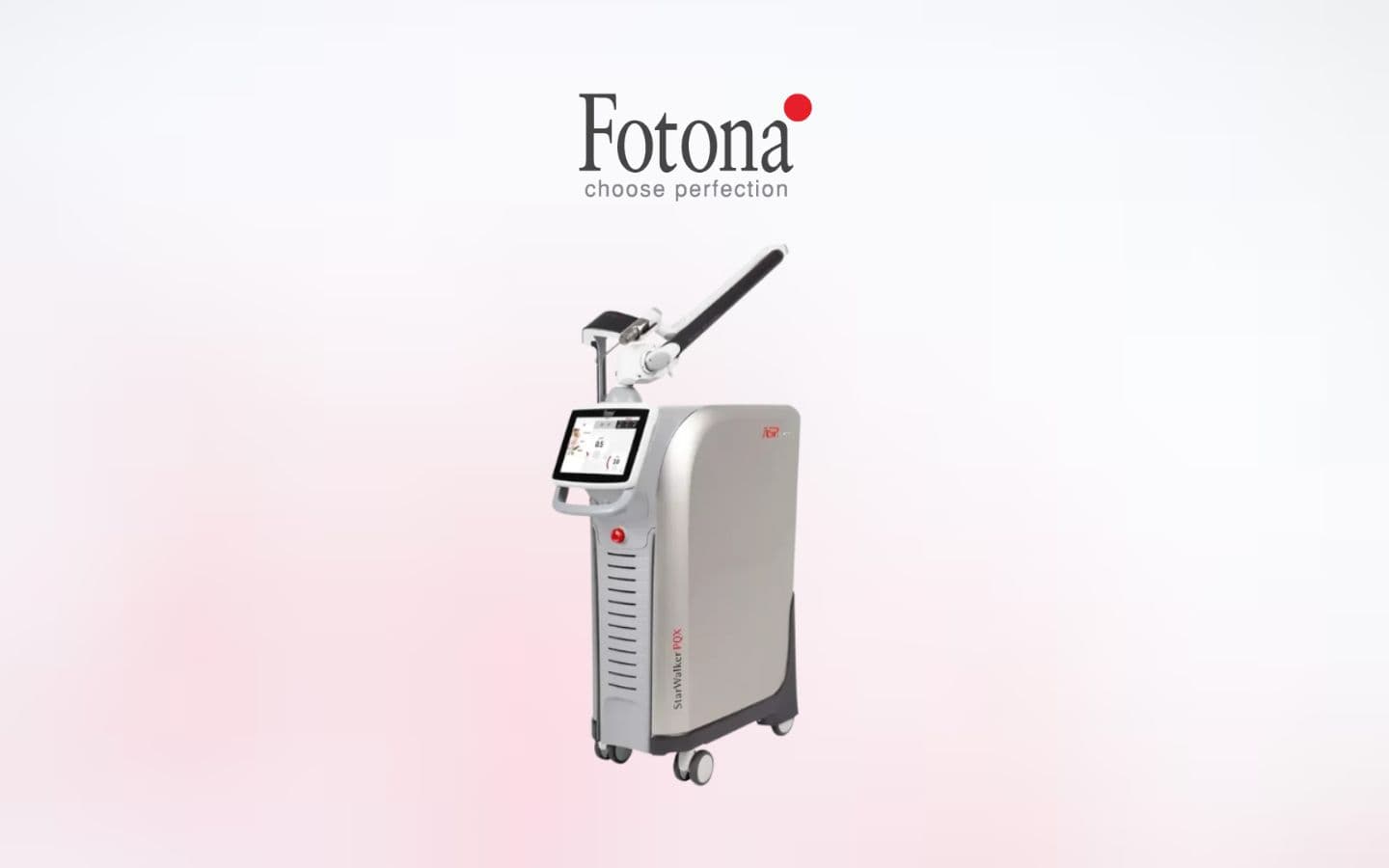
Different ink colours absorb different wavelengths, so a platform with only one wavelength can only reach some of a tattoo.
Risks and what to expect
Common and expected
Immediate whitening of the treated area, then redness, swelling, tenderness and often blistering or crusting over the following days. The area may weep briefly.Pigment change and Malaysian skin
Medium and deeper skin tones carry a higher chance of hypopigmentation, where treated skin ends up lighter than the surrounding area, and of post-inflammatory hyperpigmentation.Scarring and ink darkening
Scarring is uncommon but possible, particularly if crusts are picked or if sessions are spaced too closely. Some pigments, notably white and flesh-tone cosmetic ink, can darken on contact with laser energy.What treatment cannot do
Complete clearance cannot be promised for any tattoo. Yellow and pastel inks often persist after everything else has gone, and a faint shadow or a change in skin texture where the tattoo was is a common end point. Removal does not restore the skin to how it looked before the tattoo.
Tell your doctor if you are pregnant or breastfeeding, take photosensitising medication or oral acne medication, have a history of keloid scarring or cold sores, have a condition affecting immune function or healing, have tanned recently, or have had the tattoo treated anywhere else before.
What your first visit involves
The tattoo itself is examined: ink composition is rarely known, so it cannot be judged from a description.
History
When the tattoo was done, whether it is a cover-up or has been treated before, and how your skin usually heals.
Examination
Colours, density, depth and the surrounding skin.
Discussion
Which colours are likely to respond, and how sessions are spaced.
Test patch and plan
Where colour behaviour is uncertain, a small test area is treated first, then a sequence and a review point.
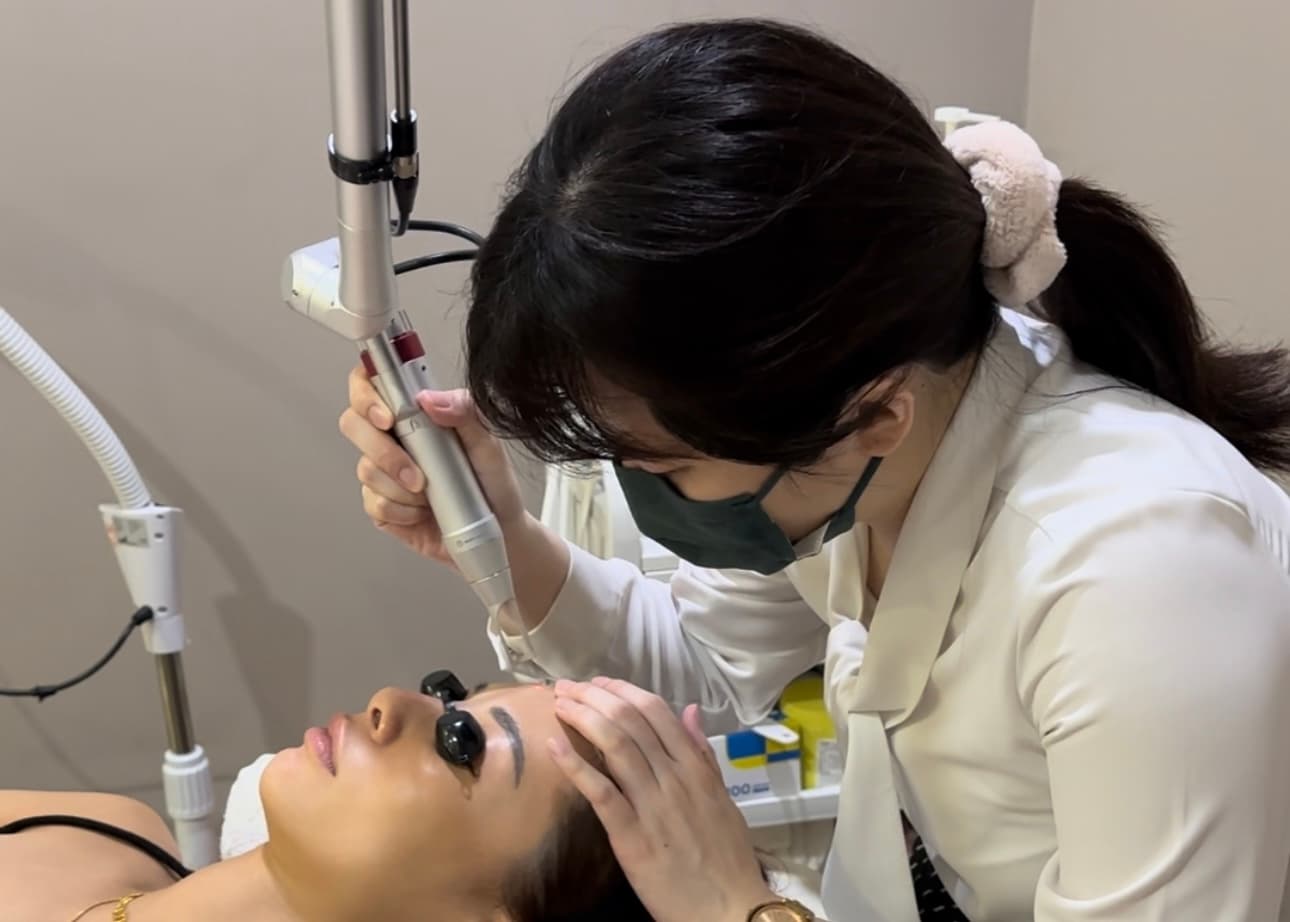
A picosecond laser treatment in progress.
What affects the cost
Pricing is set once the tattoo is assessed. It depends on:
- The size of the piece, and how densely the ink is packed within it.
- How many colours are present, since some need a different wavelength from the rest.
- Where it sits on the body, which affects both technique and how the area is expected to clear.
- How many sessions, which is reviewed at each visit rather than fixed in advance.
- Whether a test patch is carried out first, which is standard for colours and cosmetic pigment.
Common questions
Can a tattoo be completely removed?
Sometimes, but it cannot be promised for any tattoo before it has been treated. Black and dark blue generally clear most predictably, while yellow, pastel and some cosmetic pigments often persist after everything else has gone.
How many sessions will it take?
There is no fixed number. It depends on the colours, how deeply and densely the ink was placed, the size, where it sits on the body, your skin tone and how well you heal.
Does it hurt?
It is generally described as more uncomfortable than getting the tattoo, though it is over far more quickly. People often compare it to a hot elastic band snapping against the skin. Numbing cream is applied beforehand and cooling is used during and after.
Is it safe on darker skin?
Yes, with the right wavelength, conservative settings and longer intervals. The specific issue is that melanin in the skin competes with the ink for laser energy, which raises the chance of the treated area ending up lighter or darker than the surrounding skin.
Can eyebrow or lip tattoos be removed?
They can be assessed, but they are among the least predictable pigments to treat. A test patch on a small, discreet area is standard practice before treating anything on the face, and the assessment may conclude that treatment is not advisable.
What do I need to do afterwards?
Keep the area clean, dry and covered as instructed, do not pick at blisters or crusts, avoid swimming pools, saunas and heavy exercise until it has settled, and keep it out of the sun completely. Sun exposure on treated skin is the most common cause of pigment change afterwards.
Read next

Related concerns
Pigmentation
Pigment change after removal is assessed the same way as any other.Birthmark
Pigmented marks are treated with related laser principles.Acne
Texture change left behind is assessed alongside scarring of any origin.
Not sure if your tattoo can be treated?
The consultation is free, takes about 20 to 30 minutes, and there is no obligation to book treatment afterwards. A doctor will examine your tattoo and talk you through what is, and is not, worth doing.
Book a free consultationMedically reviewed by

Dr Calvin Tan
Aesthetic Physician
MD, MAC · MMC 71657
Dr Calvin is a passionate medical doctor with a Medical Degree from Universiti Sains Malaysia (USM). He has over 9 years of experience in the medical industry where he worked in Orthopaedic Surgery as a medical officer then he pursued his interest into medical aesthetics. With a strong foundation in surgical training, he has acquired the hands on dexterity and precision that he can bring that experience into the field of medical aesthetics.
View full profile- Reviewed by
- Dr Calvin Tan, MMC 71657
- Last reviewed
- 13 Jul 2026
- Next review due
- 13 Jul 2027