Device & Injectables6 min read
Picocare vs PicoSure: which laser delivers better results?
Neither device is universally better. Picocare is a 1064nm/532nm platform whose 1064nm output is generally the lower-risk setting on deeper skin tones, with 595nm and 660nm handpieces for stubborn tattoo colours. PicoSure's 755nm and Focus lens suit green and blue ink and skin revitalisation. The right choice depends on your concern and your doctor's assessment.
The honest starting point
Patients ask me this one constantly, usually after reading a clinic page that crowns one machine the winner. So let me say the unglamorous part first. The device matters far less than whether it is the right tool for your particular concern, and who is holding it.
Both are excellent picosecond lasers. Both break pigment and tattoo ink into particles small enough for your body to clear, with less heat than the older generation of lasers. Where they differ is wavelength, and how each behaves on darker, Asian skin.
How picosecond lasers work
A picosecond laser fires energy in pulses measured in trillionths of a second. Those very fast pulses shatter pigment mostly through a shockwave rather than by burning, so less heat spreads into the surrounding skin.
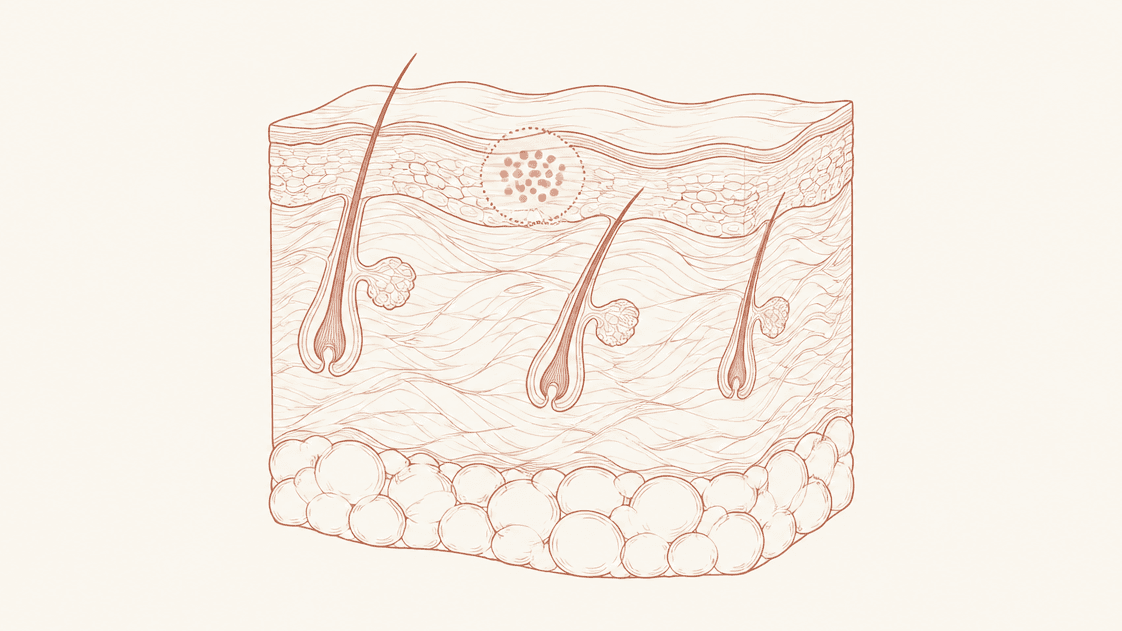
For Malaysian skin tones that is not a minor detail. Excess heat is what raises the risk of post-inflammatory hyperpigmentation, the dark marks that turn up after a treatment has been pushed too hard. I see those marks often enough, usually from somewhere else, and they are harder to fix than the original problem.
Both Picocare and PicoSure sit in this picosecond family, so both are gentler than nanosecond lasers. Our Pico laser page covers how we use the category generally.
Picocare: the specs
Picocare 450 is made by WONTECH, based in Daejeon, South Korea. It was the first Korean picosecond laser to clear the FDA for tattoo removal, back in 2017.
It is an Nd:YAG platform at heart: 1064nm and 532nm, the two wavelengths most pico devices are built around. Pulse duration is roughly 450 picoseconds at 1064nm, which is where the name comes from, and about 375 picoseconds at 532nm. Peak power reaches around 1.33 gigawatts at 1064nm. Two dye handpieces, 595nm and 660nm, can be added for the tattoo colours that 1064nm and 532nm tend to leave behind.
The other piece worth knowing is the HEXA MLA handpiece, a micro lens array with spot sizes from roughly 3 to 10mm. It splits the beam into fine points that create tiny cavitations inside the skin, which is used for acne scarring at the smaller spots and for texture and rejuvenation at the larger ones.
In plain terms: a 1064nm-led workhorse with a fractional attachment for scar and texture work, and colour handpieces available when a tattoo needs them.
PicoSure: the specs
PicoSure is made by Cynosure. It was one of the first picosecond lasers, and it built its name on a 755nm alexandrite wavelength paired with a Focus lens for skin revitalisation. It was also the first picosecond laser cleared by the FDA for melasma, back in 2018.
Pulse width is around 750 picoseconds. That 755nm wavelength is particularly good on stubborn green and blue tattoo inks, and the Focus lens concentrates energy into tiny zones that stimulate collagen. That is why PicoSure has a reputation for brightening and texture work on top of clearing pigment. Newer PicoSure Pro systems add 532nm and 1064nm.
Side by side
| Picocare 450 | PicoSure | |
|---|---|---|
| Manufacturer | WONTECH (South Korea) | Cynosure (United States) |
| Core wavelengths | 1064 / 532nm, plus optional 595 / 660nm handpieces | 755nm (Pro adds 532 / 1064nm) |
| Pulse duration | Around 450 ps at 1064nm, 375 ps at 532nm | Around 750 ps |
| Strongest on | Dermal and epidermal pigment, dark ink, scar and texture work | Green and blue ink, brightening and texture |
| Deeper skin tones | 1064nm is the primary wavelength | Usable, but settings and operator skill carry more weight |
| Signature feature | HEXA MLA micro lens array | Focus lens for skin revitalisation |
The melasma reality check
This is the section an honest clinic will not skip. If your concern is melasma, no picosecond laser is a guaranteed fix. Aggressive settings can make melasma darker, and sometimes that shows up weeks later, not on the day.
Melasma is driven by hormones, heat and sun. It usually needs a combination plan: diligent sunscreen, topical lightening agents, sometimes oral options, with laser used cautiously if at all. I have set that plan out in full in melasma treatment in Malaysia, including what our climate does to it. Anyone telling you they can zap melasma away in two sessions is overpromising, and you should treat that as information about the clinic rather than about the laser.
Which is safer for Asian and darker skin?
Malaysian skin tones are often Fitzpatrick IV to V. More melanin means more risk of dark marks if a laser is used too aggressively. The 1064nm wavelength penetrates deeper and is absorbed less by surface melanin, which generally makes it the lower-risk choice on darker skin.
Picocare is built around 1064nm rather than treating it as an add-on, and that matters for depth matching on richer skin tones. PicoSure can absolutely be used on darker skin too, but its 755nm wavelength interacts more with melanin, so settings and operator skill matter even more.
Here is the practical takeaway. Ask which wavelength will be used on your skin, and why. If the answer is vague, or the same for every patient, be careful.
Sessions, downtime and cost in Malaysia
Most pigmentation concerns need a course, not a single visit. Often three to six sessions a few weeks apart. Tattoos can take considerably more.
Downtime is usually minimal. Some pinkness, a warm feeling, and pigment that darkens briefly before flaking away over the following days. That temporary darkening is the process working, not a sign something went wrong.
On price, full-face picosecond sessions in Malaysia commonly run from roughly RM600 to RM2,000 per session, depending on the clinic and the work involved. Packages bring the per-session cost down. Treat those as ballpark figures and confirm directly. Be careful with very cheap trial offers, which sometimes mean low energy settings and a course that never quite gets anywhere.
Will my skin look darker afterwards?
A fair worry, and a common one. For most pigment treatments the spots darken first, crust lightly, then flake off within one to two weeks, leaving clearer skin.
What is not expected is pigment that keeps spreading or darkening past that window. That can signal post-inflammatory hyperpigmentation and should be reviewed. Strict sun protection afterwards is not optional if you want to avoid it. Our pigmentation page explains how we approach the concern overall.
So which one gives better results?
Neither is universally better, and any page that crowns one is selling you something.
For deeper pigment on richer skin tones, and for combining pigment work with acne scarring or texture, Picocare's 1064nm base and HEXA MLA handpiece make it a sensible all-rounder, with 595nm and 660nm available when a tattoo needs the extra colours. For green and blue tattoo ink, and for brightening and collagen work, PicoSure and its Focus lens are hard to beat.
The real deciding factor is which device fits your concern and your skin tone, in the hands of a doctor who explains their settings rather than just their machine.
In summary
Choosing between these two comes down to matching the right wavelength to the right problem, on skin that is treated with care. Get clear on your concern first, whether that is freckles, sun spots, melasma, a tattoo or general dullness. Then choose a clinic that talks you through wavelength, settings, and a realistic number of sessions for your skin tone.
If you would like a straight recommendation based on your own skin, message us and we will assess whether either is suitable.
Book a free consultation
A doctor will assess your skin and tell you honestly whether this is the right option for you, including when it is not.
Related pages on our site
About the author

Dr Joaan Kong
Aesthetic Physician
MBBS, AAAM, LCP Board Certified · MMC 90047
Dr Joaan Kong obtained her Bachelor of Medicine and Surgery (MBBS) from International Medical University (IMU). She then trained as a Paediatric doctor before embarking her journey in aesthetic medicine. Her training in the paediatric department has refined her skills in needle handling and detailed meticulous work.
View full profile- Written by
- Dr Joaan Kong, MMC 90047
- Published
- 28 May 2026
- Last reviewed
- 7 September 2026
This page is general information about aesthetic treatments and is not medical advice. Treatments carry risks that are explained during consultation, and individual results vary. A doctor will assess whether a treatment is suitable for you before it is carried out.