Device & Injectables5 min read
Sculptra vs Radiesse: how the two collagen stimulators differ

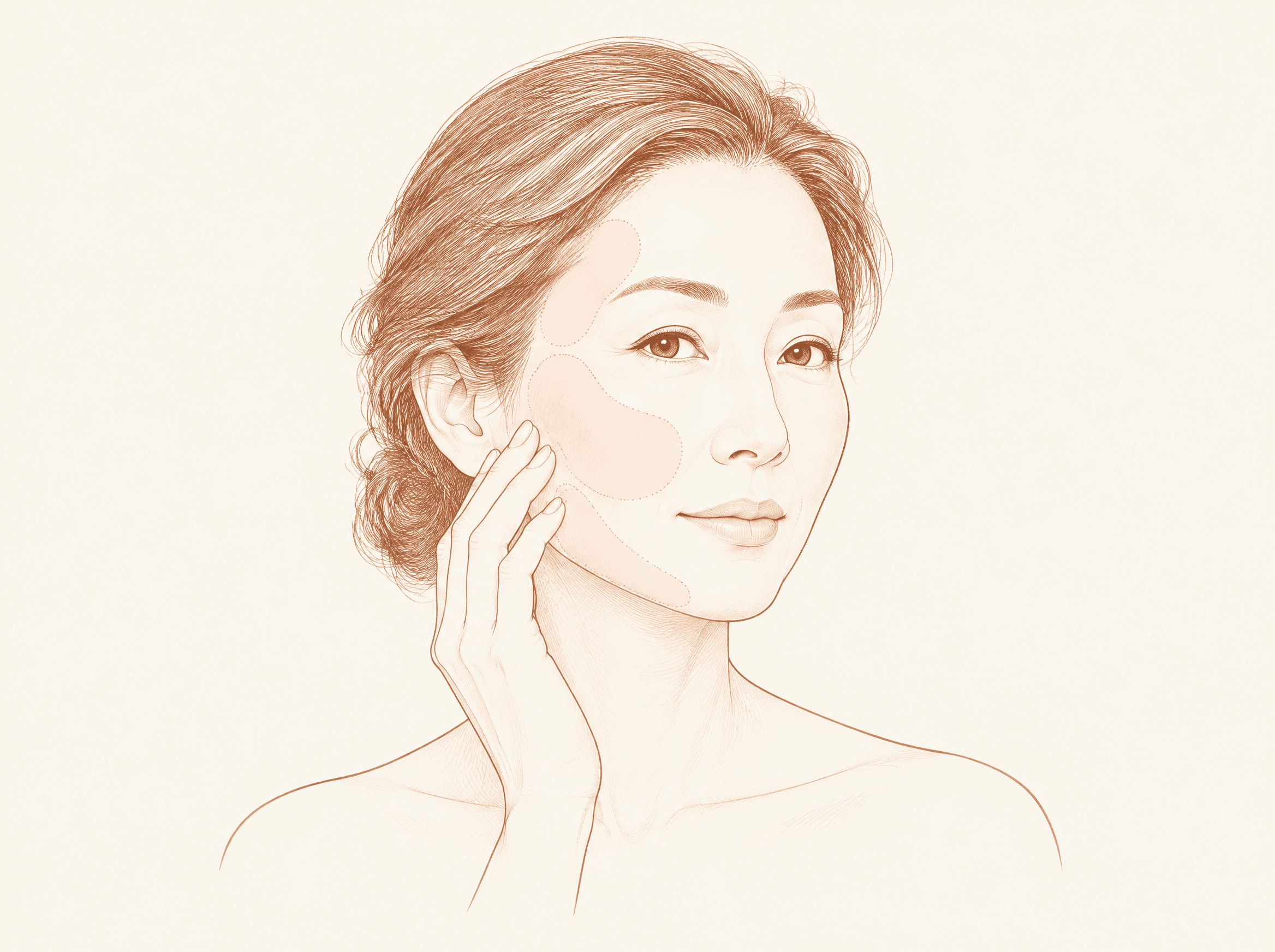
Sculptra and Radiesse both prompt the skin's own collagen, but they behave differently. Sculptra, made of poly-L-lactic acid, works only gradually over a course of sessions. Radiesse, made of calcium hydroxylapatite in a gel, gives some support on the day, then works gradually too. Neither can be dissolved, so a doctor plans either carefully.
Sculptra and Radiesse are both collagen stimulators, and that is about where the similarity ends. Sculptra works only gradually, over a short course of sessions. Radiesse gives some support on the day and then works gradually too. Neither can be dissolved afterwards, which is the point most comparisons leave out.
Patients often come to me having read that one is "better". That is the wrong question. They are made of different materials, they behave differently in the skin, and they suit different people and different areas. This guide explains how each works, where they differ, and what a doctor weighs before choosing either, or neither.
Key takeaways
Both are bio-stimulators, not classic fillersEach is meant to prompt your own collagen. A hyaluronic acid filler adds volume directly and works differently.
Timing is the main practical differenceRadiesse provides some immediate support from its gel carrier. With Sculptra, change builds over weeks to months.
Neither can be dissolvedUnlike a hyaluronic acid filler, there is no agent to reverse them, so careful assessment beforehand matters more.
Skin tone is not the deciding factorBoth work biologically rather than with light, so they are used across a range of Malaysian skin tones.
What is Sculptra?
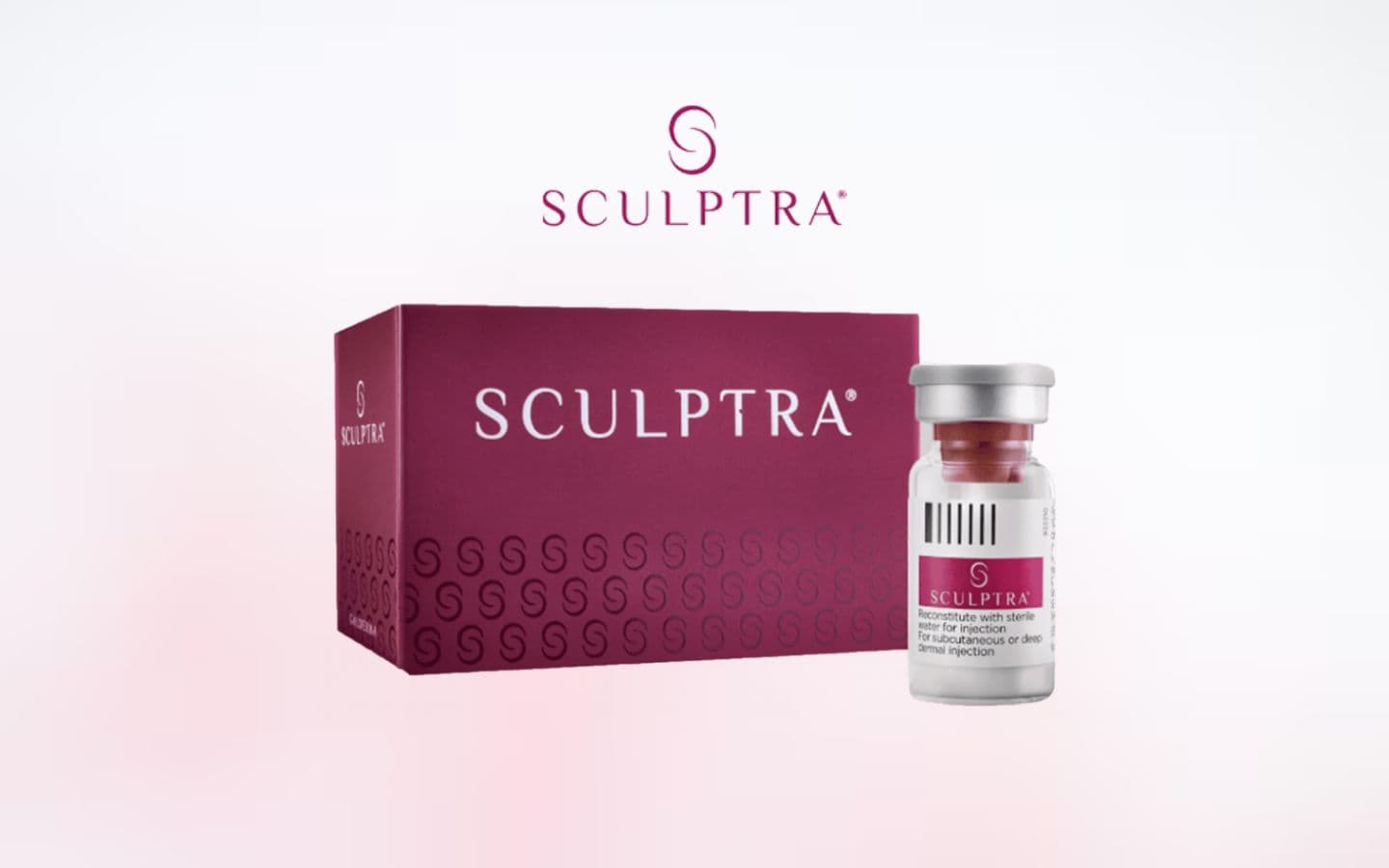
Sculptra is made by Galderma. Its active material is poly-L-lactic acid (PLLA), a synthetic, bioresorbable material long used in absorbable stitches. It comes as a dry powder that the clinic mixes with sterile water before use.
Once injected, the fluid is absorbed fairly quickly, so whatever you see on the day mostly goes down within days. The PLLA particles are then broken down slowly, and while that happens they act as a stimulus for your own collagen. That is why Sculptra is planned as a course of sessions a few weeks apart, with change appearing over weeks to months rather than at the appointment.
What is Radiesse?
Radiesse is made by Merz Aesthetics. Its active material is calcium hydroxylapatite (CaHA), tiny mineral-like microspheres suspended in a gel.
The gel gives support straight away, then is absorbed. The microspheres stay in the tissue for a period and act as a scaffold around which your body forms collagen. Radiesse can also be thinned with saline, usually called hyperdilute Radiesse, and spread more widely to work on skin quality rather than shape. Whether standard or diluted preparation suits you is a clinical decision.
Sculptra vs Radiesse at a glance
 Sculptra | 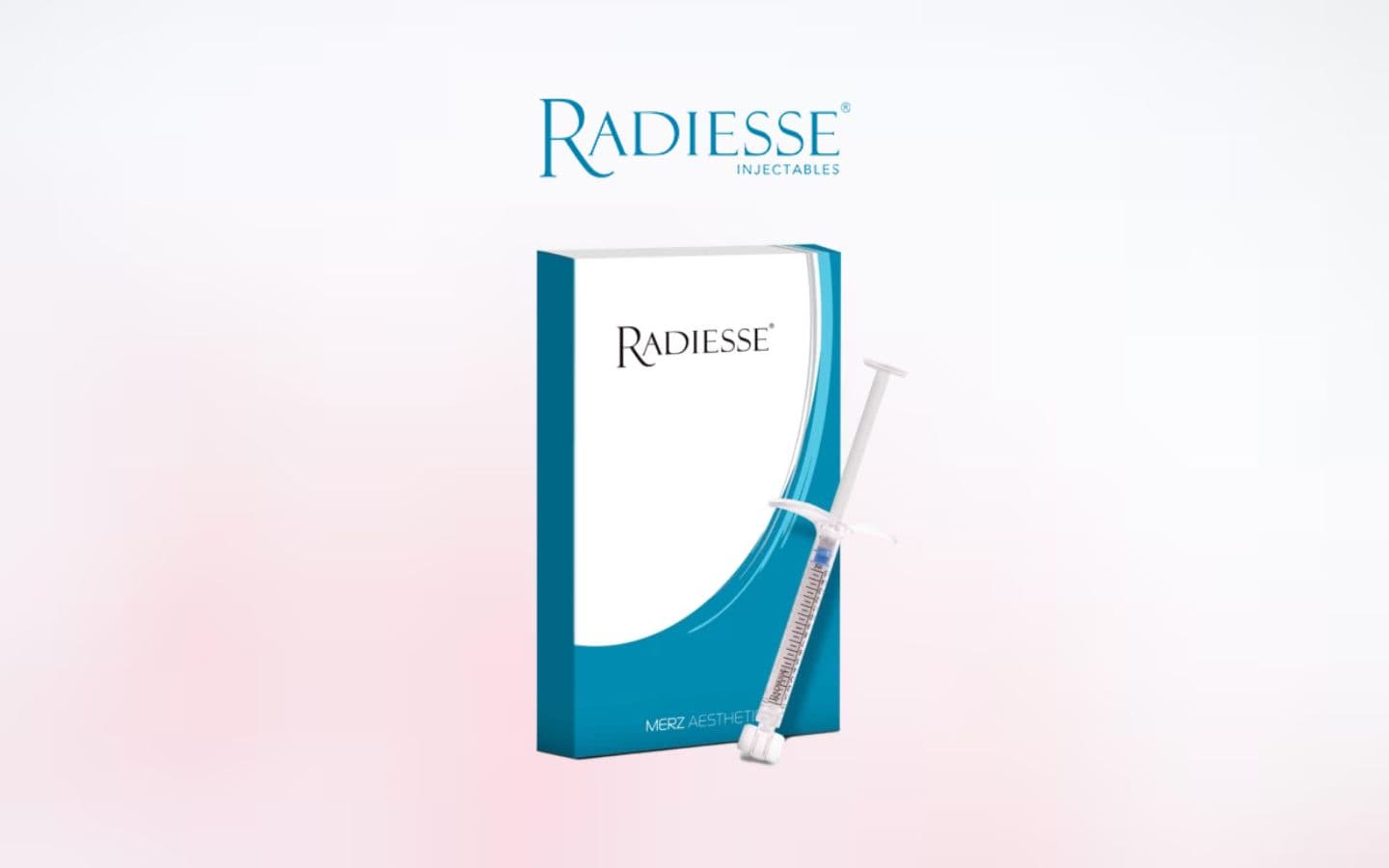 Radiesse | |
|---|---|---|
| Active material | Poly-L-lactic acid (PLLA) | Calcium hydroxylapatite (CaHA) in a gel |
| Made by | Galderma | Merz Aesthetics |
| What you notice on the day | Little that lasts; the fluid is absorbed | Some immediate support from the gel |
| How change builds | Gradually, over weeks to months | Gradually, after the initial support |
| Usual plan | A short course of sessions | One session or a staged plan, depending on the area |
| Can it be dissolved? | No | No |
| Areas in the manufacturer's labelling | Face | Face and jawline, back of the hands, décolletage (diluted) |
| After the session | Massage advice is common | Shaping or massage, especially on the hands |
The table does not list how long each lasts or how many sessions you need, because neither is something I can promise in advance. Both materials are cleared by the body over time and your own tissue keeps ageing, so duration varies from person to person.
How change builds over time
This is the difference patients feel most. With Radiesse there is something to see when you leave; with Sculptra, most of the change arrives later.
| Stage | Sculptra | Radiesse |
|---|---|---|
| On the day | ||
| On the day | Little to notice. The mixing fluid gives brief fullness, which is absorbed within days. | Some change. The gel carrier gives some support straight away. |
| The weeks after | ||
| The weeks after | Some change. The collagen response begins. Further sessions in the course are usually a few weeks apart. | Some change. The gel is absorbed while the microspheres stay and collagen starts to form around them. |
| The months after | ||
| The months after | Main change develops. Change builds gradually as your own collagen forms. | Main change develops. The collagen response continues after the initial support. |
Which one suits which concern?
Generally, Sculptra is considered where the concern is overall firmness and thinning across a region, such as the cheeks or temples, in someone happy to build change slowly. It suits people who prefer a gradual result that friends do not notice overnight.
Radiesse is more often considered where some structural support is wanted as well, for example along the jawline or in deeper folds, and it is the one of the two with labelling for the back of the hands and the décolletage.
In practice there is a lot of overlap, and some plans use neither. If the main concern is a single line or a specific volume loss that you want corrected on the day, a hyaluronic acid filler may be the more suitable tool, and it has the advantage of being dissolvable. If skin quality is the main concern, a skin booster may be considered first. Our bio-stimulator treatment page explains where this category fits, and there is a separate comparison of Ellansé and Sculptra, the other bio-stimulator patients often ask about.
Why "cannot be dissolved" matters
With a hyaluronic acid filler, an enzyme can break the product down if the result is not right or a complication needs treating. Neither Sculptra nor Radiesse has an equivalent. Once placed, the material is cleared by the body on its own timetable.
That does not make either unsafe. It changes how carefully the plan should be made. I would rather under-treat and review than over-treat something that cannot be taken back, and I tell patients to expect a conservative first session for that reason.
Risks and who should avoid them
Both carry the usual injectable effects: swelling, redness, tenderness and bruising at the injection sites, which commonly settle within days. Both can, less often, cause small lumps or nodules under the skin. With Sculptra these have been reported months after treatment; with Radiesse the manufacturer notes they are more likely on the hands. Rare but serious vascular complications are recognised for facial injectables in general, which is one reason these are doctor-performed procedures.
Tell your doctor about blood-thinning medication, autoimmune conditions and any previous filler or implant in the area.
What to ask at your consultation
- Which material, if any, the doctor would use for your concern, and why that one rather than the other.
- What the plan looks like: one session or a course, and when the first review is.
- What happens if you are not happy, given that neither can be dissolved.
- What aftercare, including massage, the doctor wants you to follow.
A good consultation should end with a clear reason for the choice, not a product you came in already asking for.
Common questions
Is Sculptra a filler?
Not in the usual sense. It is a collagen stimulator: it adds little volume on the day and works by prompting your own collagen over time.
Which lasts longer, Sculptra or Radiesse?
Both manufacturers publish figures from their own studies, but duration varies between people, because the material is cleared by the body and your tissue keeps ageing. Your doctor will explain what is realistic for you rather than quote a number.
Can Sculptra and Radiesse be used together?
Sometimes, in different areas or at different stages of a plan. Whether that makes sense for you is decided at assessment.
Are Sculptra and Radiesse suitable for Asian skin?
Both work biologically rather than with light, so skin tone is not the limiting factor it can be with lasers. Suitability depends on your anatomy, the area and your medical history.
Book a free consultation
A doctor will assess your skin and tell you honestly whether this is the right option for you, including when it is not.
Related pages on our site
About the author

Dr Jamie Gan Ee Vienn
Aesthetic Physician
MD, PDAM (EIU) · MMC 97231
Dr. Jamie obtained her medical degree from Kursk State Medical University, Russia. She subsequently completed her housemanship and served in the Emergency Department at Hospital Tuanku Jaafar, Seremban, where she developed strong clinical judgement, precision, and the ability to perform under pressure.
View full profile- Written by
- Dr Jamie Gan Ee Vienn, MMC 97231
- Reviewed by
- Dr Chin Wei Horng, MMC 50809
- Published
- 3 November 2026
This page is general information about aesthetic treatments and is not medical advice. Treatments carry risks that are explained during consultation, and individual results vary. A doctor will assess whether a treatment is suitable for you before it is carried out.