
Lifting & Tightening
HIFU
Focused ultrasound used for non-surgical skin-lifting and tightening concerns.
Free consultation, no obligation.
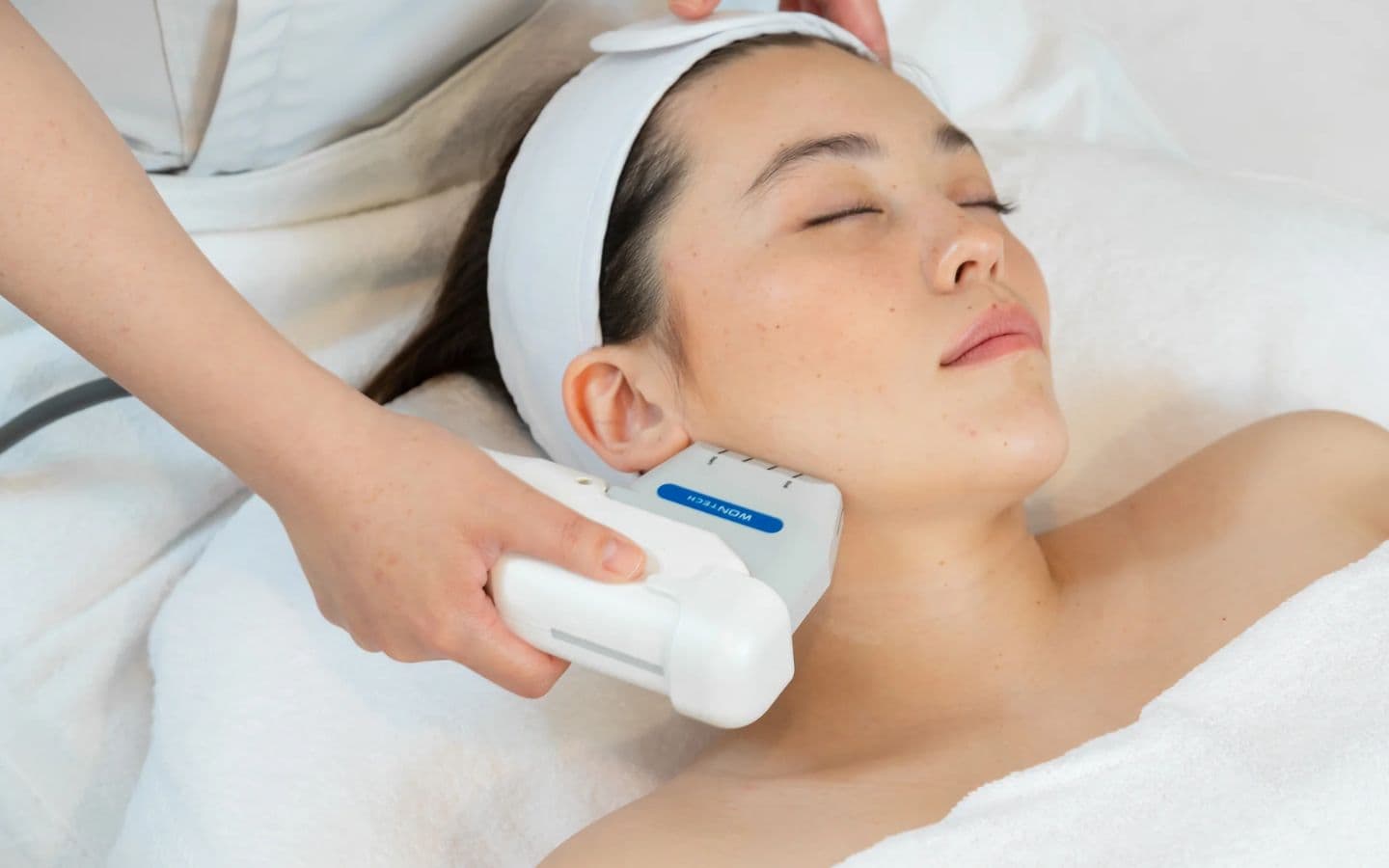
- 2 ultrasound platforms
- Selected for your face and the depth being treated
- 30–60 minutes
- Typical face and neck appointment, including preparation
- Assessment first
- Your first visit is a doctor consultation, not a treatment
On this page
In brief
HIFU (high-intensity focused ultrasound) is a non-surgical treatment that delivers focused ultrasound energy to deeper skin layers. How much laxity there is, and how deep it sits, is what decides whether it applies to you at all — so a doctor examines your face before any plan is made.
Results from Kaiteki patients
Before and after photos of patients treated at Kaiteki for fine lines & wrinkles, face contouring, face lifting and aging. A plan may combine more than one treatment.
10 photos · tap one to enlarge
Forehead lines, before and after treatment at Kaiteki
Chin projection, before and after treatment at Kaiteki
Facial firmness, before and after a course of treatment at Kaiteki
Skin tone and texture, before and after a course of treatment at Kaiteki
Forehead lines, before and after treatment at Kaiteki
Cheek support and proportion, before and after treatment at Kaiteki
Facial firmness, before and after a course of treatment at Kaiteki
Overall skin quality, before and after a course of treatment at Kaiteki
Frown lines between the brows, before and after treatment at Kaiteki
Chin projection, before and after treatment at Kaiteki
Photographs of Kaiteki patients, published with consent. Individual results vary and are not guaranteed. These images are not a promise of outcome. A doctor will assess whether any treatment is suitable for you.
What is HIFU?
HIFU stands for high-intensity focused ultrasound: a non-surgical, energy-based treatment that directs ultrasound to set depths beneath the skin, without incisions.
How does HIFU reach the layer a facelift works on?
HIFU concentrates ultrasound energy at set depths beneath the surface, including the deeper support layer sometimes called the SMAS (superficial muscular aponeurotic system). That is the same layer a surgical facelift addresses, though focused ultrasound reaches it without incisions. The energy creates small, controlled points of heat at those depths while the skin surface is largely spared, which is why there is no wound to heal.
That controlled heating prompts the body's repair response, and the skin produces fresh collagen in the treated zones. Because this is a collagen response rather than mechanical tightening, any change is gradual and differs from person to person.
What HIFU is used for at Kaiteki
Sagging along the jaw and jowls
Early to moderate laxity in the lower face and along the jawline, and loss of definition under the chin.
Firmness and fine lines with age
Loss of firmness associated with reduced collagen, crepey or loose-feeling skin on the neck, and an overall loss of tone.

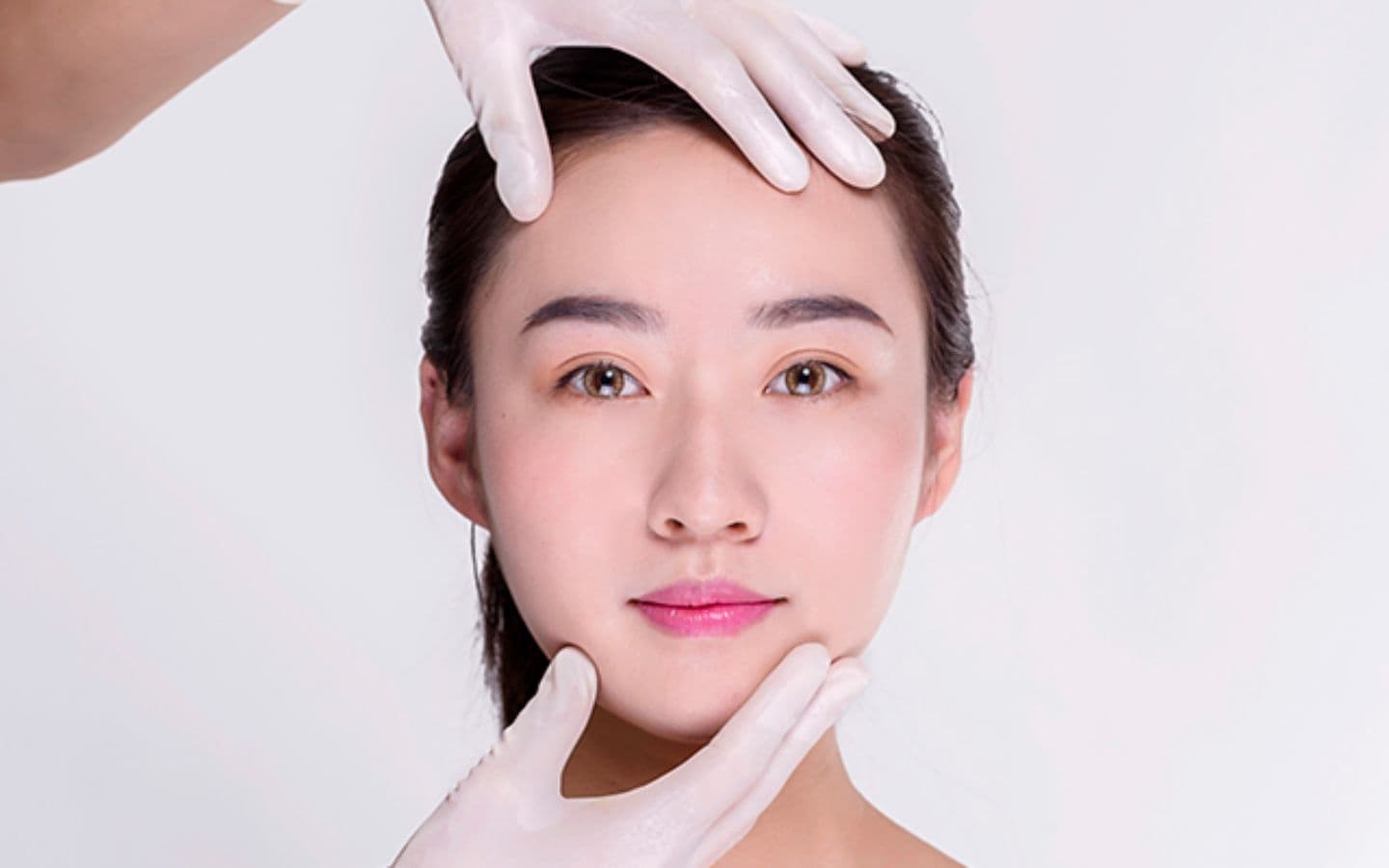

Ultracel Q or Liftera: which HIFU device, and why
Both devices focus ultrasound beneath the surface. They differ in how that energy is shaped.
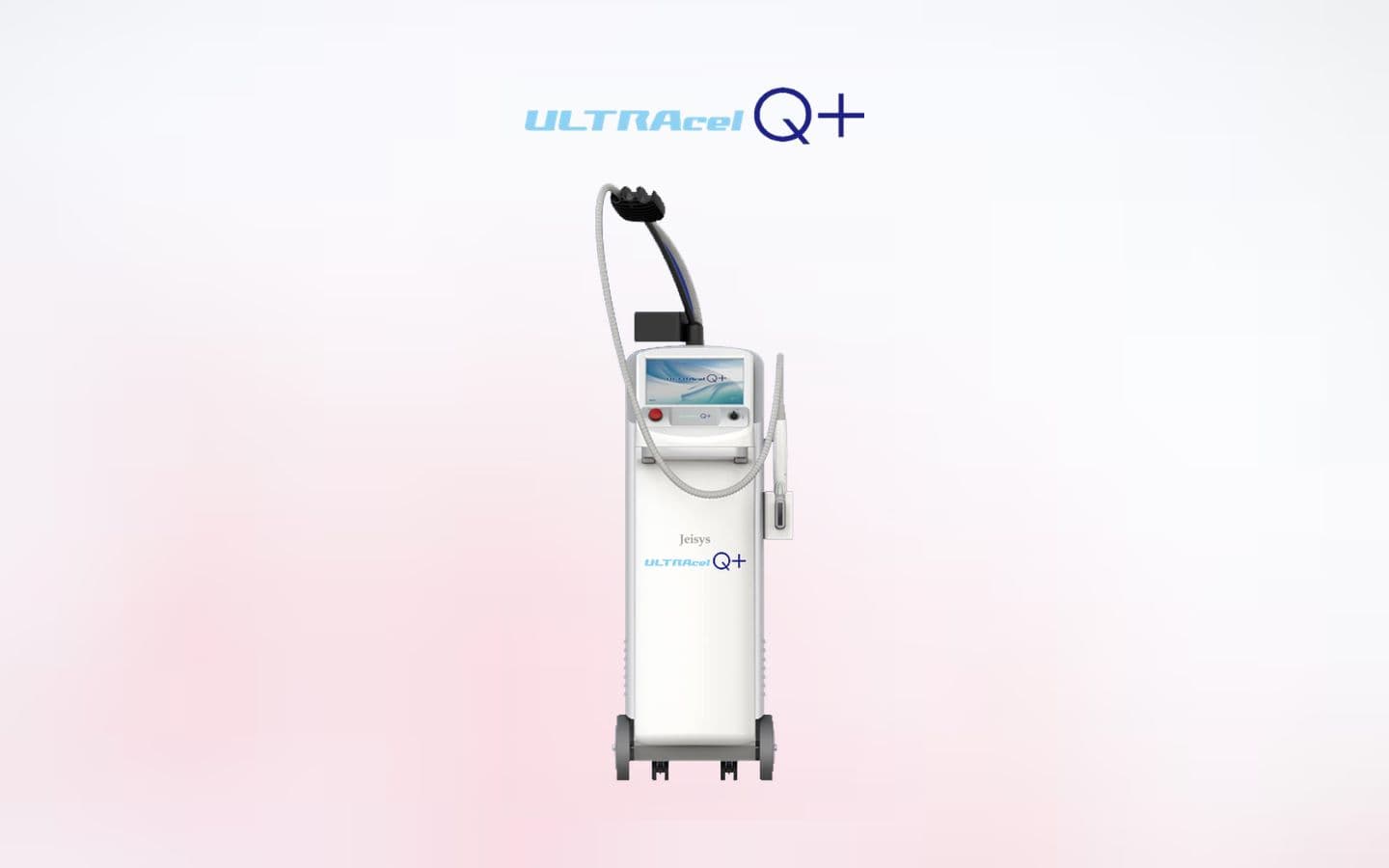
Ultracel Q
Cartridge-based · Jeisys Medical
The doctor changes cartridges to change the focal depth, so the same platform can be aimed at the dermis, the deeper SMAS layer or the fat layer, with the energy focused either as a dot or along a line.
About Ultracel QLiftera
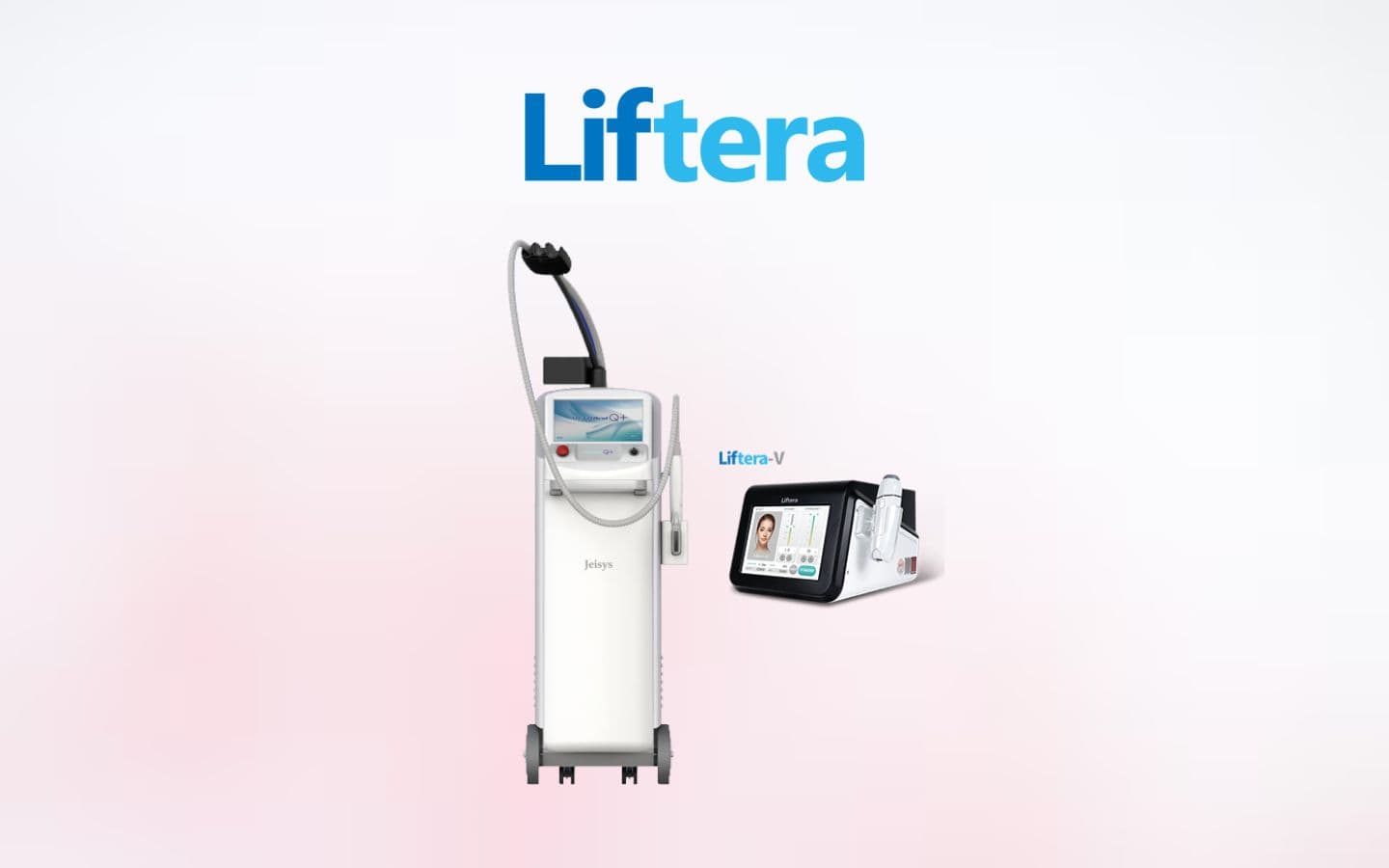
Line-focused · Asterasys
Draws the focus along a continuous line rather than a row of separate dots, which the manufacturer links to reduced discomfort. A pen-type applicator reaches smaller, curved areas such as around the eyes, the nasolabial region and along the jaw.
About Liftera
Not sure whether lifting is what your face needs?
A doctor can tell whether what you see is laxity, volume loss or skin quality, and whether HIFU addresses it.
Ask about this on WhatsAppFree consultation, about 20 to 30 minutes, no obligation.
Who should postpone or avoid it
- Pregnancy or breastfeeding. Treatment is deferred.
- Active infection, inflamed acne or open wounds in the area to be treated.
- Implants, metallic or cardiac devices, or recently placed dermal fillers lying in the path of the energy.
- A tendency to keloid scarring.
- Certain medications and medical conditions.
What a session involves
Consultation and assessment
The doctor examines where your laxity sits, whether there is enough for focused ultrasound to be worth doing, and which device suits each area.
Mapping and preparation
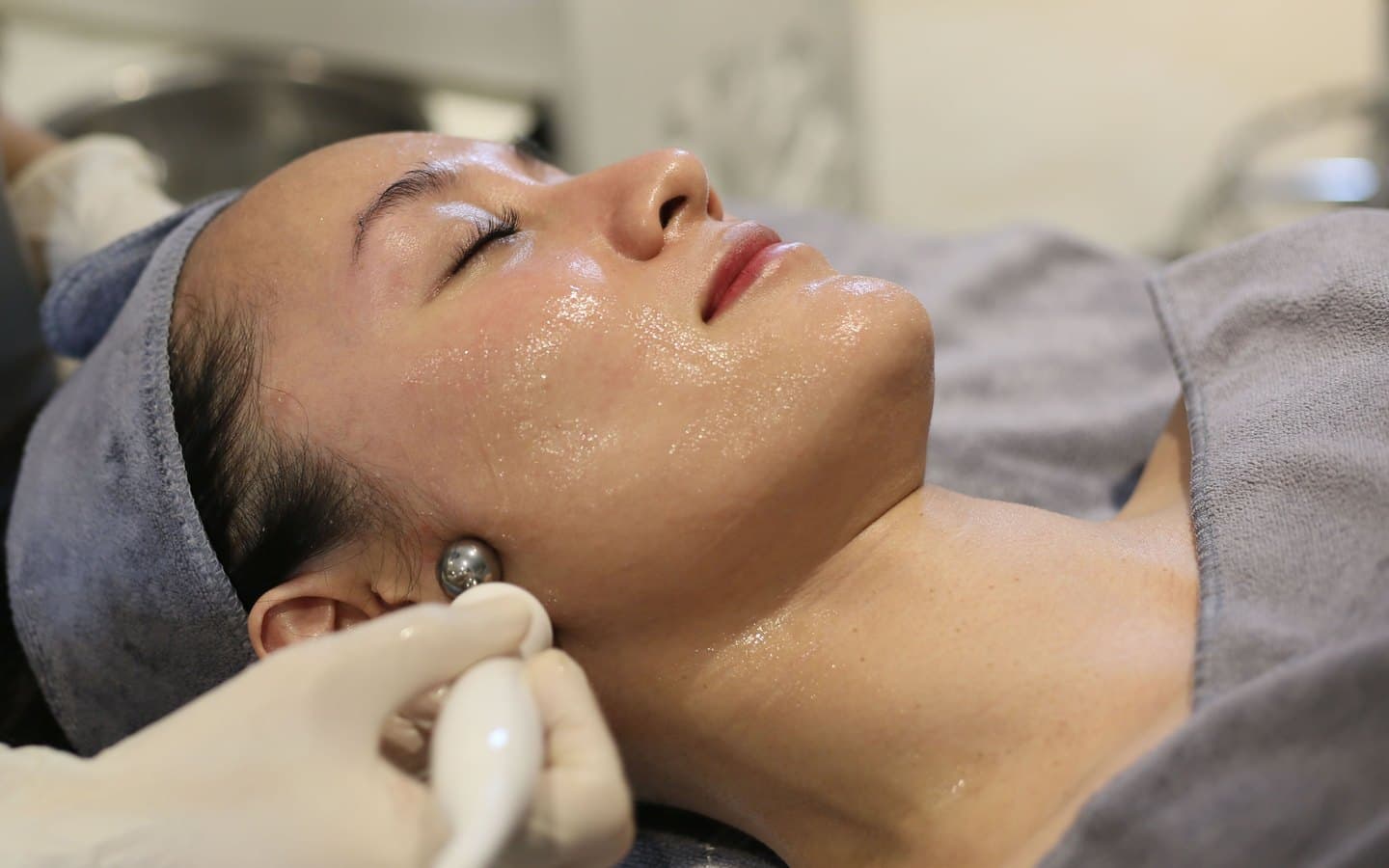
The skin is cleansed, the treatment areas are marked so the energy is mapped rather than applied uniformly, and ultrasound coupling gel is applied. Topical numbing may be used depending on the area.
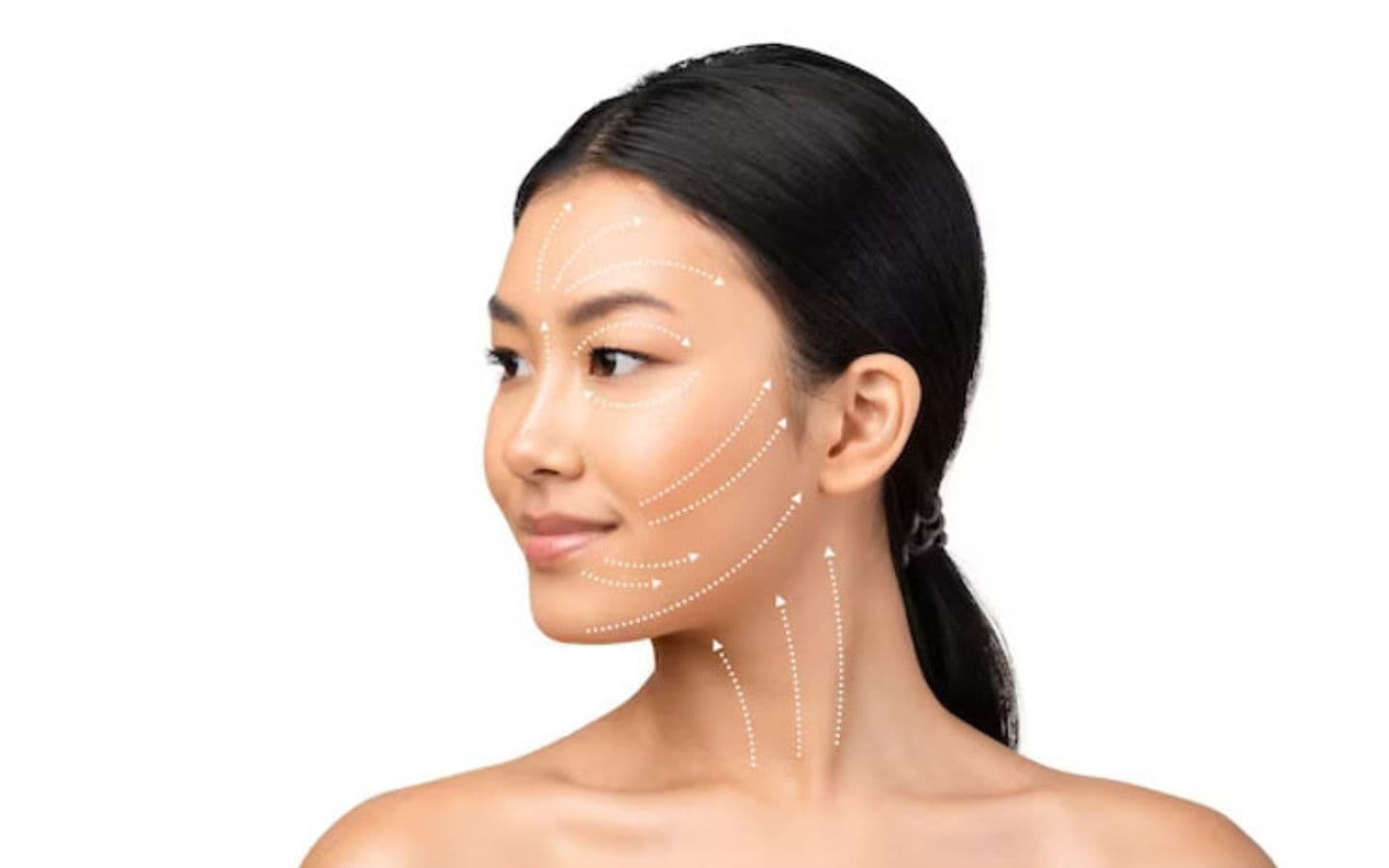
The treatment lines
The doctor delivers the energy line by line with the selected cartridges. Most people describe brief warmth, prickling or a deep tapping with each pulse rather than continuous pain, felt more over bony areas such as the jaw and forehead.
Afterwards
The gel is removed and you are given aftercare advice.
In the treatment room
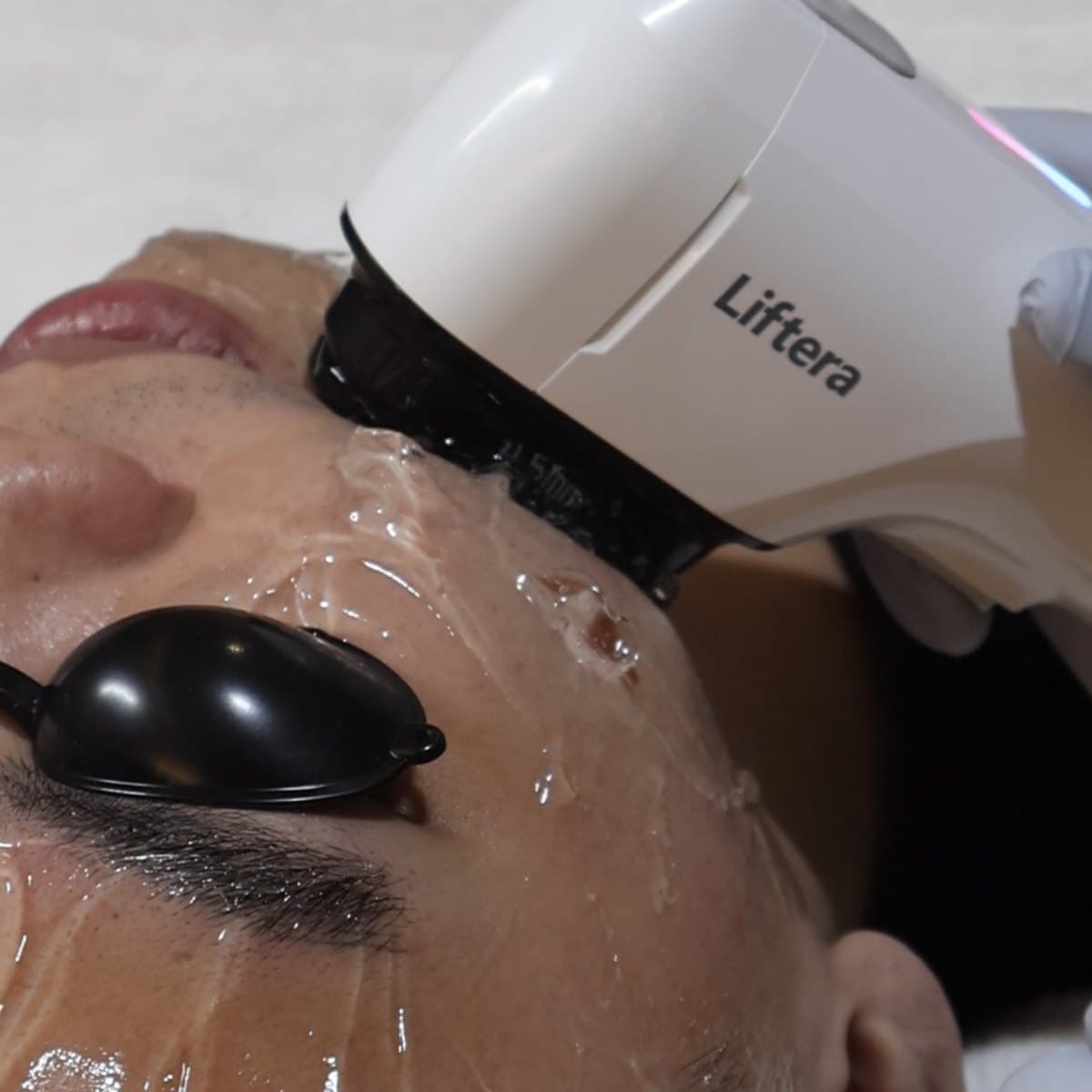
The ultrasound handpiece on a gel-coated cheek, with eye shields in place.
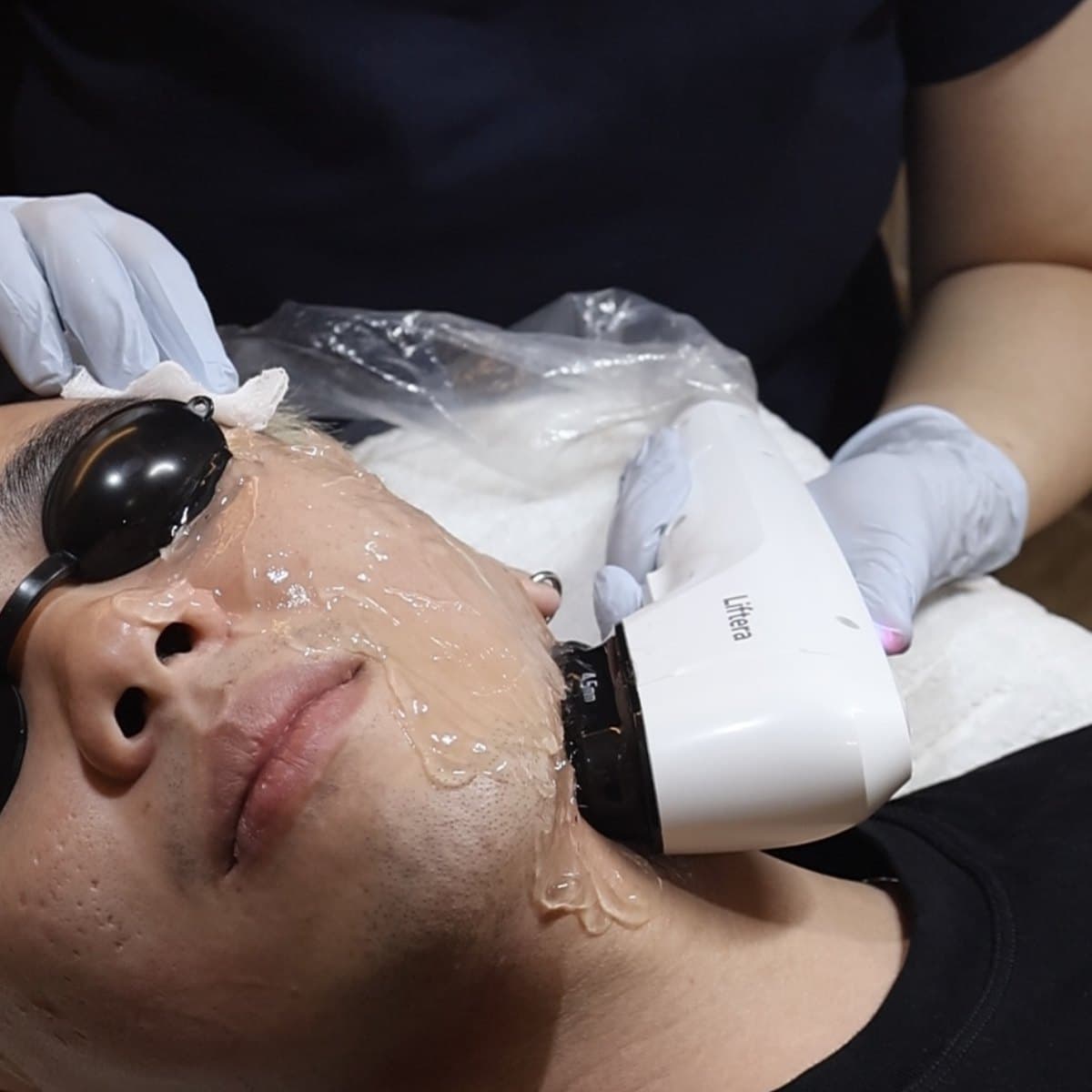
A gloved practitioner holds the ultrasound handpiece along the patient's jawline.
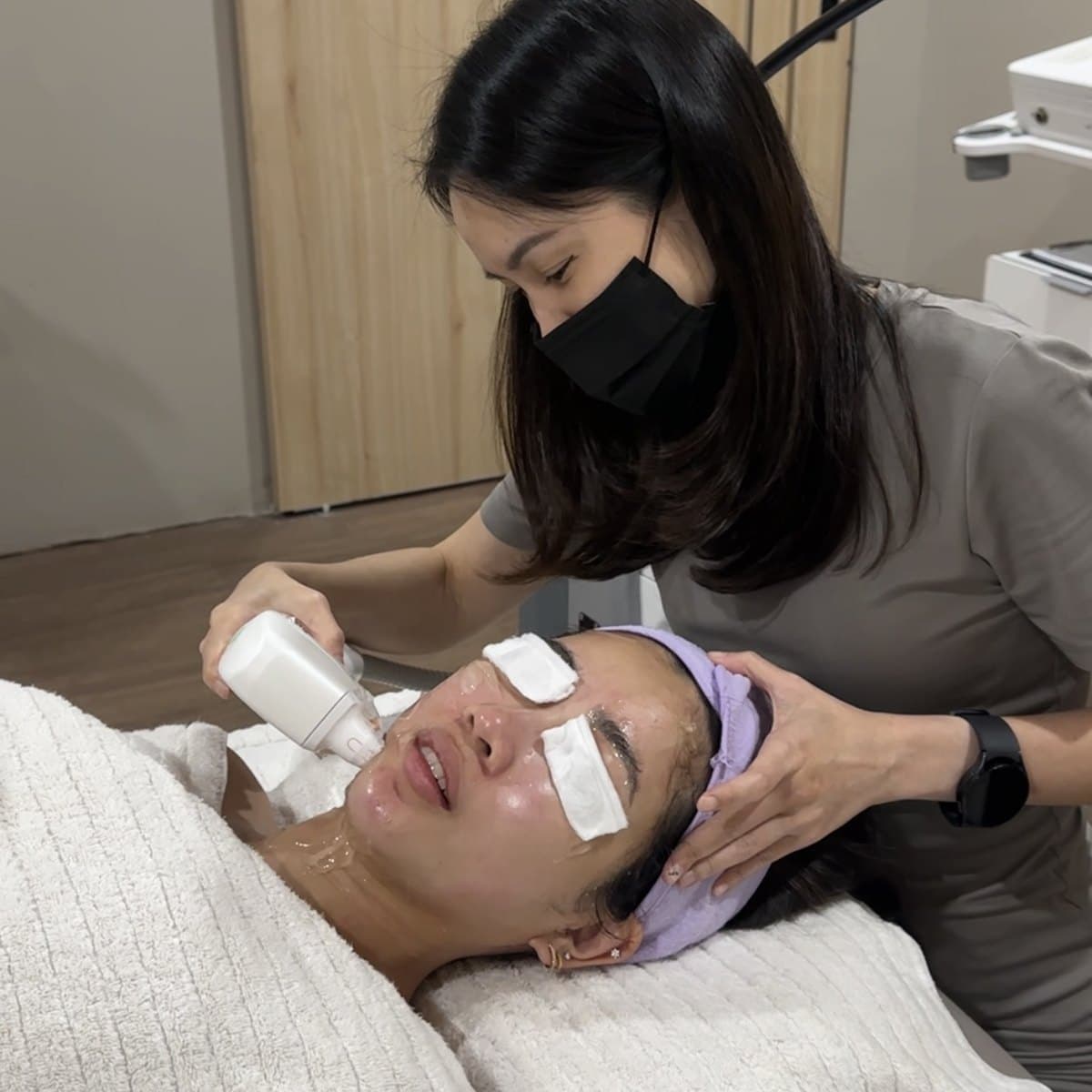
A practitioner works on the patient's cheek with the handpiece; eye pads cover the eyes.
After a session
Straight afterwards
Mild redness and slight swelling in the treated area can occur. Most people carry on with their day.The first few days
Tenderness to touch, or a temporary feeling of firmness in the treated area, generally settles on its own over a few days.
Gentle skincare and daily sun protection. You may be asked to avoid intense heat, such as saunas or hot yoga, for a short period.
Risks, side effects, and what HIFU cannot do
Common and temporary
Redness, swelling, tenderness, small areas of bruising, and transient numbness or tingling in the treated area.Less common
Welts, and temporary nerve-related effects such as localised muscle weakness, have been reported with focused-ultrasound treatments.Pigment change and Malaysian skin
Focused ultrasound is absorbed by tissue rather than by melanin, so HIFU is generally used across a wide range of skin tones, including deeper Asian skin, without the pigment considerations that apply to some lasers. The bigger risk here is the device and the operator. See “Is cheap HIFU safe?” below.What it cannot do
- It is not a facelift. It does not cut, lift or remove skin. Heavy sagging is often better discussed as a surgical question.
- It does not replace lost volume, relax lines caused by muscle movement, or treat surface texture and pigment.
- It is not permanent. Skin continues to age after any tightening treatment, which is why plans include review and occasional maintenance.
Tell your doctor about anything listed under who should postpone it.
What affects the number of sessions, and the cost
Kaiteki does not quote HIFU prices online; the plan is set by examining your face. What moves it:
- The areas treated. A jawline-and-neck plan is a different amount of work from a full face and neck.
- The number of shots or lines delivered across those areas.
- Which device and cartridges your plan needs.
- Whether HIFU is combined with another treatment in a wider plan.
HIFU vs other options
| Treatment | Best for | Downtime |
|---|---|---|
| HIFU | Early to moderate laxity along the jaw, lower face and neck | None for most people |
| Dermal fillers | Lines and hollows caused by lost volume or structure | 1-3 days |
Devices used at Kaiteki
Which platform is used depends on your individual assessment.
Common questions
What is the difference between HIFU and Ultherapy?
Both use focused ultrasound. Ultherapy is a separate platform that shows the tissue layers on screen before treating.
Is there any downtime after HIFU?
Usually little to none. Temporary redness, mild swelling or tenderness can occur and typically settles within a few days.
How many HIFU sessions will I need?
HIFU is often planned as one session with a review, or a small number of sessions across the year, rather than a fixed course.
Does HIFU hurt?
Numbing cream and adjusted settings keep it tolerable, so say if it is uncomfortable.
Is cheap HIFU safe?
Very low-priced HIFU, particularly in non-medical settings, is where the real risk sits: a poorly calibrated device or an untrained operator can cause burns, unwanted fat loss or nerve injury. Choose a clinic that names its device, uses one registered with Malaysia's Medical Device Authority, and has a registered doctor delivering the treatment.
Read next

Where to go next
Book a free consultation
The consultation is free, takes about 20 to 30 minutes, and there is no obligation to book treatment afterwards. A doctor will examine your skin and tell you whether HIFU is appropriate, and if it isn’t, what would be.
Ask about this treatmentMedically reviewed by
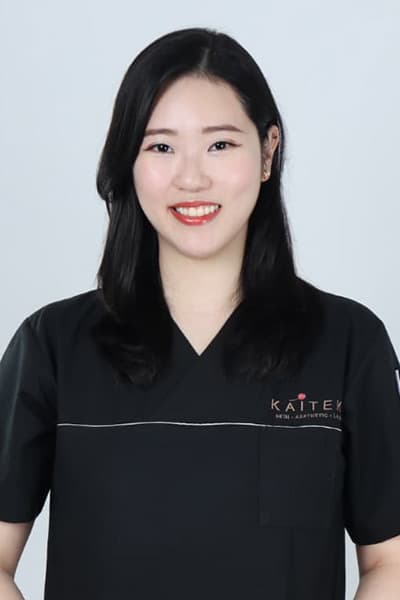
Dr Yvonne Chuah
Aesthetic Physician
MD, MAC, LCP Certified · MMC 86640
Dr. Yvonne Chuah graduated from Nizhny Novgorod State Medical Academy (NNSMA). She began her medical career serving as a Medical Officer at Hospital Pulau Pinang, followed by further service at Hospital Sungai Bakap.
View full profile- Reviewed by
- Dr Yvonne Chuah, MMC 86640
- Last reviewed
- 18 Jun 2026
- Next review due
- 18 Jun 2027