
Lifting & Tightening · Device
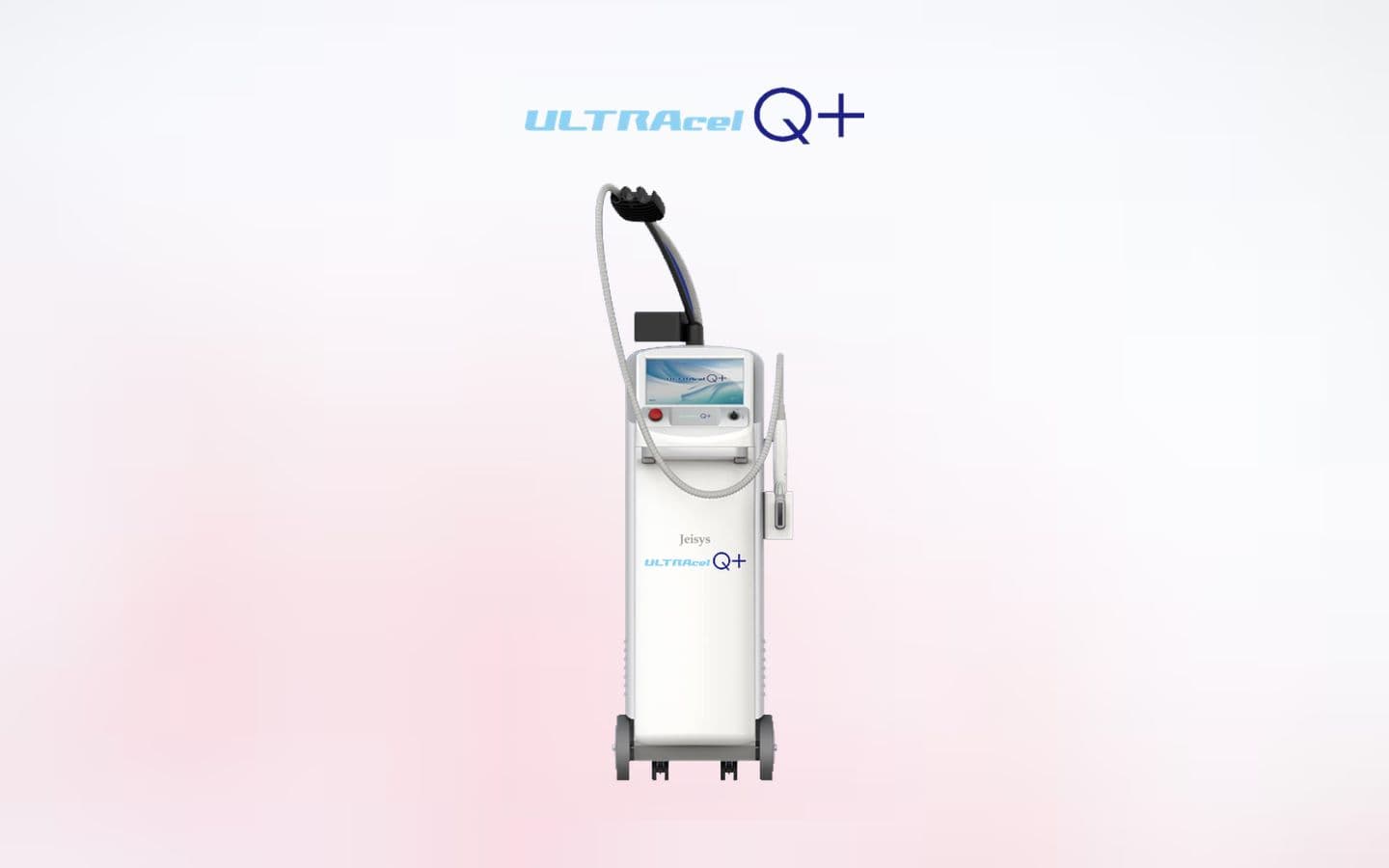
Ultracel Q
A multi-cartridge HIFU platform from Jeisys Medical, used within Kaiteki's HIFU treatment for non-surgical lifting and tightening concerns.
Free consultation, no obligation.
- Focused ultrasound
- Energy
- Jeisys Medical, Korea
- Manufacturer
- HIFU
- Used within
In brief
Ultracel Q is a high-intensity focused ultrasound platform from Jeisys Medical, used at Kaiteki within our HIFU treatment. Rather than working at the surface, it passes focused ultrasound through the skin so that heating happens in a chosen deeper layer, with the cartridge selected for that depth.
What is Ultracel Q?
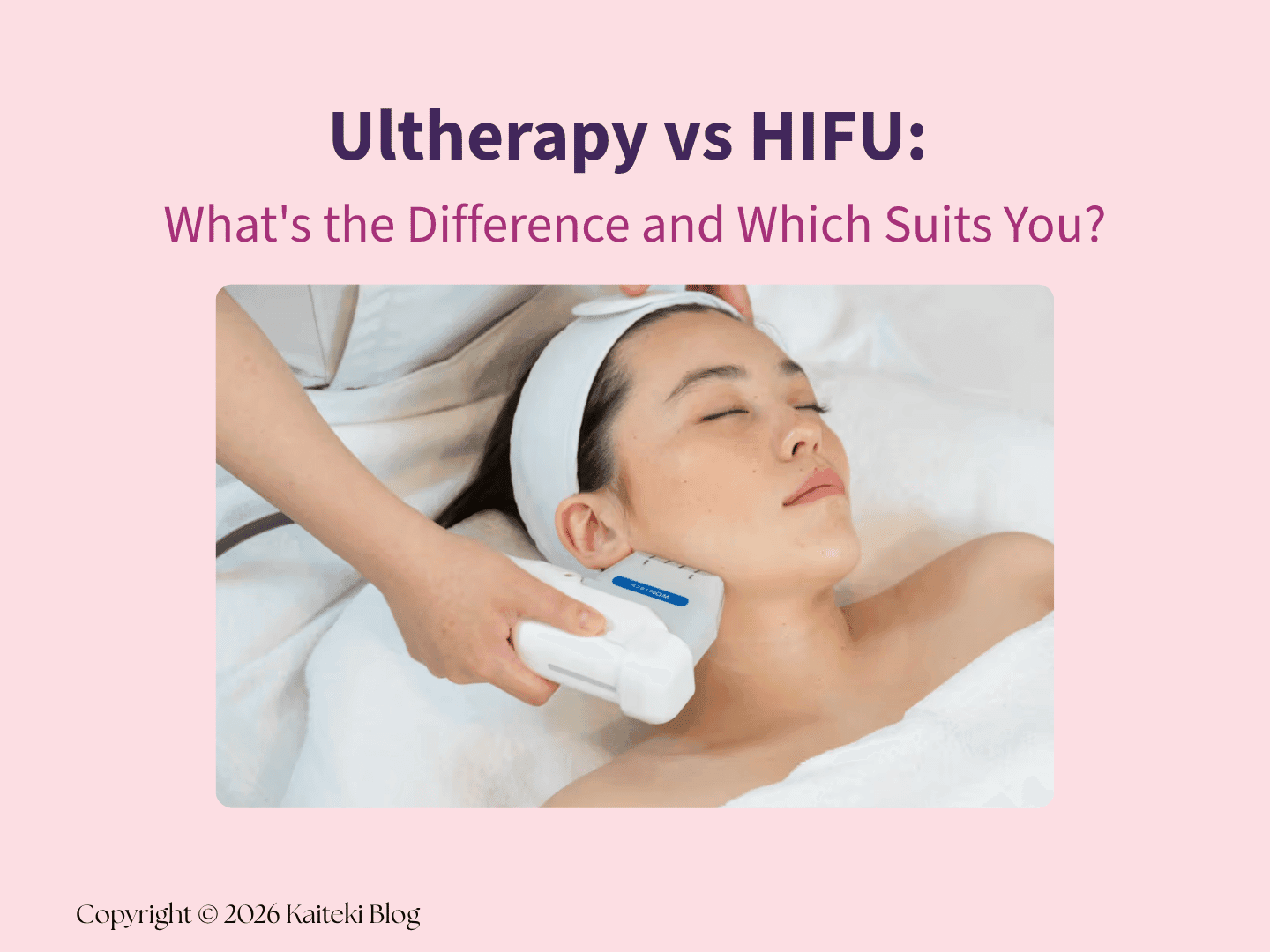
Ultracel Q is a high-intensity focused ultrasound (HIFU) platform made by Jeisys Medical, a Korean aesthetic device manufacturer. It sits in the non-surgical lifting and tightening category, and at Kaiteki it is one of the devices used within the HIFU treatment. Rather than working on the skin surface, HIFU passes focused ultrasound energy through the surface and concentrates it at a chosen depth below it, so the layer being treated is deeper than the layer the handpiece touches.
What distinguishes the platform for someone comparing HIFU devices is that it is cartridge-based: the doctor swaps cartridges to change the focal depth and the shape of the heat that is delivered, instead of working at one fixed setting. Whether HIFU is appropriate for you at all, and if so, which depths and how many passes, depends on your degree of laxity, tissue thickness and medical history, which a doctor assesses at an in-person consultation.
How focused ultrasound works on Ultracel Q
Each cartridge focuses ultrasound to a small point at a set depth, creating controlled heating there while the skin surface is largely spared. Jeisys also offers a linear cartridge series it calls LinearFirm, which spreads the focus along a line rather than a single dot, giving a longer continuous heat zone in one pulse. Jeisys states that irradiation time drops from roughly 1.5 seconds per pulse with a dot cartridge to about 0.7 seconds with a linear cartridge, and describes the shorter exposure as more comfortable.
Jeisys also describes the platform as operating at a moderated focal temperature (quoted in its clinician material as around 60–65°C, below the range at which collagen is fully broken down) with the intention of prompting collagen renewal through partial thermal denaturation rather than complete destruction. The cartridges have a compact contact tip, which the manufacturer says helps reach awkward contours such as the jawline and under the chin. Depth, energy, cartridge choice and the number of lines delivered are all selected by the treating doctor. Any change develops gradually over weeks and varies between individuals.
Which layers can Ultracel Q reach, and why does the SMAS matter?
Jeisys supplies cartridges of differing focal depths so that the dermis, the deeper SMAS layer or the fat layer can be targeted according to the plan. The SMAS (superficial muscular aponeurotic system) is the deeper support layer of the face: the same layer a surgical facelift addresses, though focused ultrasound reaches it without incisions.
Which depths are used, and how many lines at each, depends on your degree of laxity and your tissue thickness, which a doctor assesses in person.
Is Ultracel Q a facelift?
No. It is a tightening-type treatment rather than a substitute for surgery: it does not cut, lift or remove skin, and the degree of change is not comparable to surgery. Significant, heavy sagging is often better discussed as a surgical question, and your doctor will say so honestly if that is the case.
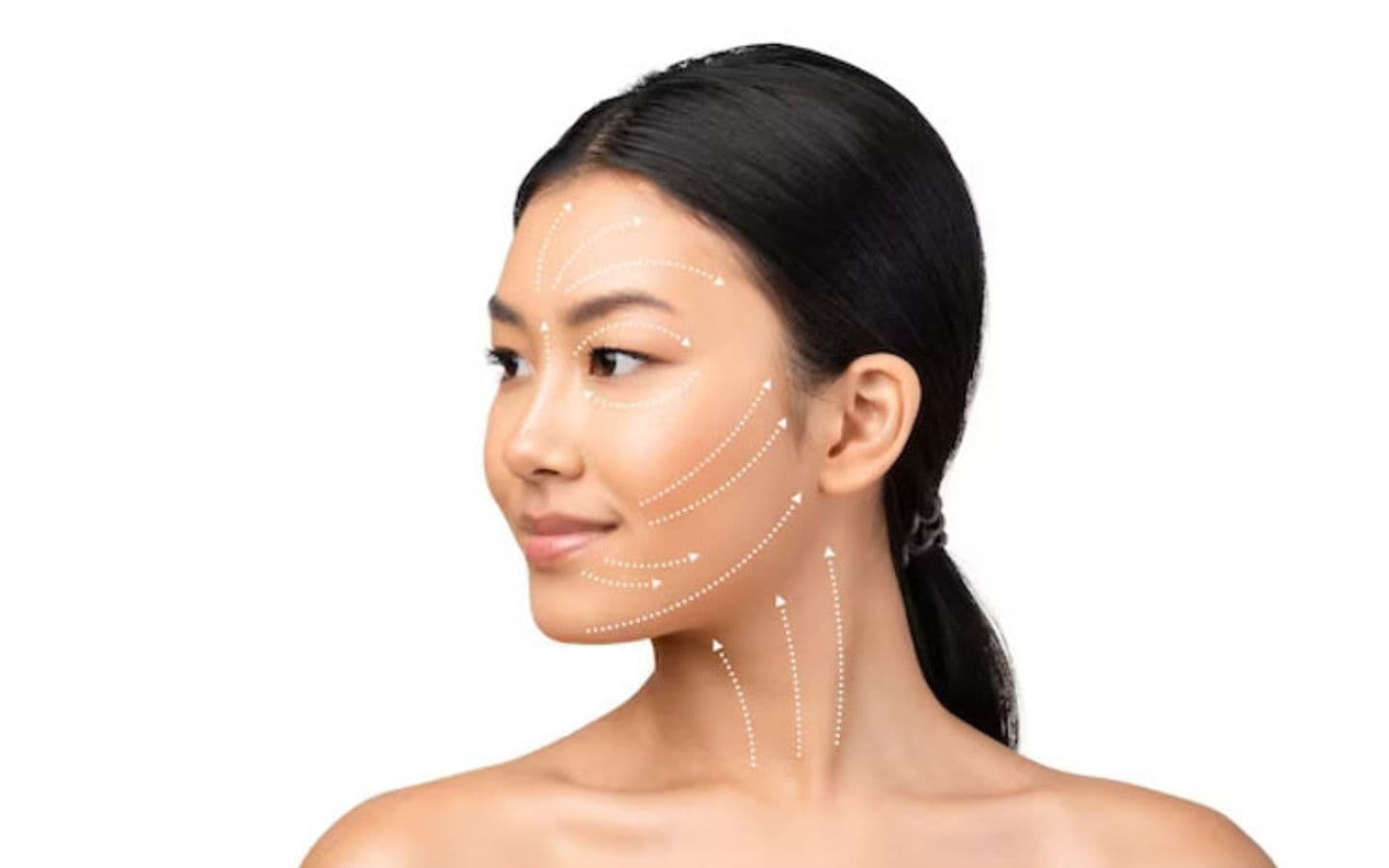
Ultracel Q is commonly considered for early to moderate laxity in the lower face and neck, and for definition along the jaw. It is not suitable for everyone. Concerns it is typically considered for include:
- Mild to moderate sagging along the jawline and lower face
- Loss of definition under the chin and in the submental area
- Laxity in the cheeks and mid-face
- Crepey or loose-feeling skin on the neck
- Overall skin firmness as part of a longer-term maintenance plan
Who should not have Ultracel Q, and why do fillers in the path matter?
Because focused ultrasound is absorbed by tissue rather than by pigment, HIFU is generally used across a wide range of skin tones, including deeper Asian skin, without the pigment-related considerations that apply to some lasers. It tends to be aimed at people with early to moderate laxity who want a non-surgical option.
Ultracel Q may not be suitable during pregnancy or breastfeeding, over active skin infection or inflammation in the treatment area, or where there are implants, metallic devices, cardiac devices or dermal fillers in the intended path. Certain medications, keloid tendency and some medical conditions also need to be considered. Please share your full medical history, medication list and any previous aesthetic treatments at consultation so the doctor can advise safely.
How long does an Ultracel Q session take, and what does each pulse feel like?
A visit starts with a doctor consultation, an assessment of where your laxity actually sits, and a discussion of whether HIFU is the right tool for it. If it is appropriate, the skin is cleansed, treatment areas are marked, and ultrasound coupling gel is applied. Topical numbing may be used depending on the area and your comfort. The doctor then delivers the shots line by line with the selected cartridges; most people describe brief warmth, prickling or a deep tapping sensation that comes and goes with each pulse rather than continuous pain.
A full face and neck session commonly takes somewhere in the region of 45 to 90 minutes including preparation, depending on the areas covered. HIFU is often planned as a single session with review some months later, or as a small number of sessions spaced out over time, with occasional maintenance afterwards. Your doctor will set out what is realistic for your face at consultation.
Downtime is usually minimal, and most people return to normal activities the same day. Mild redness, slight swelling, tenderness to touch or a temporary feeling of firmness in the treated area can occur and generally settle over a few days.
Gentle skincare and daily sun protection are advised afterwards. Your doctor may ask you to avoid vigorous heat exposure such as saunas for a short period, and will give aftercare guidance specific to your treatment plan.
Can Ultracel Q affect the nerves, and what else can go wrong?
As with any medical procedure, HIFU with Ultracel Q carries risks, which are explained during consultation. Temporary effects can include redness, swelling, tenderness, small areas of bruising, or transient numbness or tingling in the treated area; less commonly, welts or temporary nerve-related effects such as localised muscle weakness have been reported with focused-ultrasound treatments. Serious effects are uncommon when the treatment is appropriately selected, correctly mapped and performed by a trained doctor.
Concerns this device addresses
Whether it is the right choice for any of these is a decision for a doctor who has examined your skin.


Treatments that use Ultracel Q
Back to all devices and injectables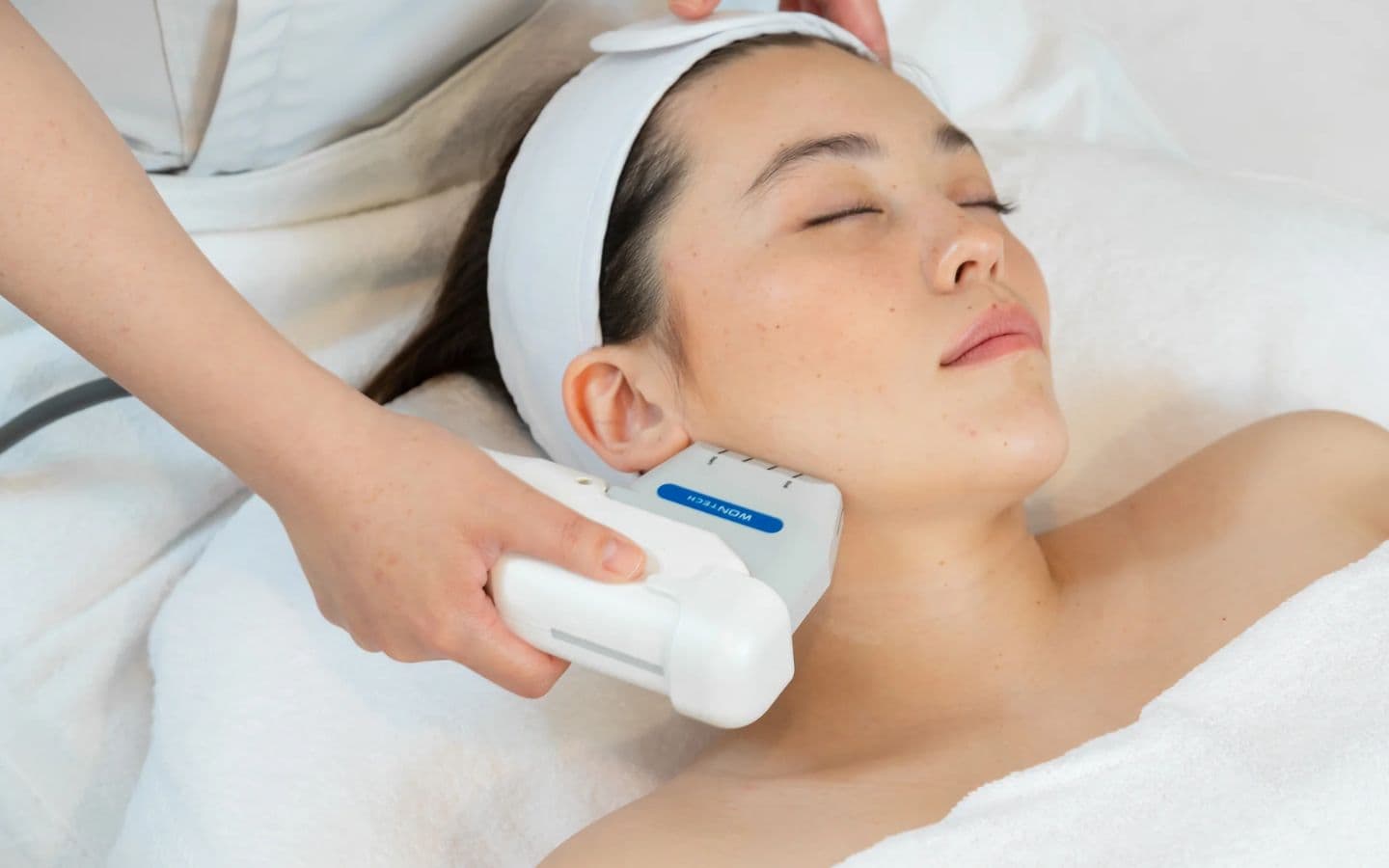
What affects the number of sessions, and the cost
Pricing is discussed at consultation rather than quoted online, so that any figure reflects the plan actually recommended for you rather than a generic package. What moves it:
- The area treated. A jawline-and-neck plan is a different amount of work from a full face and neck.
- The number of shots or lines delivered.
- Which cartridges are needed for your plan.
- How your tissue responds, which affects whether a review or maintenance session is worth considering later.
Other lifting and tightening devices
These address overlapping concerns. Which one suits you is a decision for a doctor who has examined your skin, not a choice to make from a page.
Common questions
How does Ultracel Q differ from other HIFU devices?
The main practical difference is its cartridge system: the doctor changes cartridges to alter the focal depth and whether energy is focused as a dot or along a line, so the same platform can be aimed at the dermis, the SMAS layer or the fat layer. Jeisys also describes a shorter pulse exposure and a moderated focal temperature compared with earlier HIFU designs. Which of these settings suits your face is decided by your doctor at consultation.
Is Ultracel Q HIFU safe for deeper or Asian skin tones?
Focused ultrasound is absorbed by tissue rather than by melanin, so HIFU is generally used across a broad range of skin tones without the pigment considerations that apply to some light-based treatments. That does not make it right for everyone, since laxity, tissue thickness and medical history all matter. A doctor assesses your suitability in person before recommending it.
How painful is a HIFU session?
Most people describe brief warmth, prickling or a deep tapping with each pulse rather than sustained pain, and it is usually felt more over bony areas such as the jaw and forehead. Topical numbing and adjusted settings can be used to keep it tolerable. Tell your doctor how you are finding it during the session so the settings can be adapted.
Are HIFU results permanent?
No. Skin continues to age after any tightening treatment, so any change is not permanent and varies between individuals. Many plans include a review some months later and occasional maintenance rather than a single one-off treatment. Your doctor will explain a realistic timeline for your skin at consultation.
Read next

Book a free consultation
The consultation is free, takes about 20 to 30 minutes, and there is no obligation to book treatment afterwards. A doctor will examine your skin and tell you whether Ultracel Q is appropriate, and if it isn’t, what would be.
Ask about thisMedically reviewed by

Dr Say Wei Xian
Aesthetic Physician
MBBS, MAC · MMC 103512
Dr Say Wei Xian is a medical doctor, graduating from International Medical University (IMU). She spent her medical officer years in ophthalmology, where she developed strong precision through microsurgical and laser-based procedures.
View full profile- Reviewed by
- Dr Say Wei Xian, MMC 103512
- Last reviewed
- 18 Jul 2026
- Next review due
- 18 Jul 2027
This page is general information about aesthetic treatments and is not medical advice. Treatments carry risks that are explained during consultation, and individual results vary. A doctor will assess whether a treatment is suitable for you before it is carried out.