
Body & Slimming
Fat Freezing
The general term for cryolipolysis for localised fat concerns.
Free consultation, no obligation.
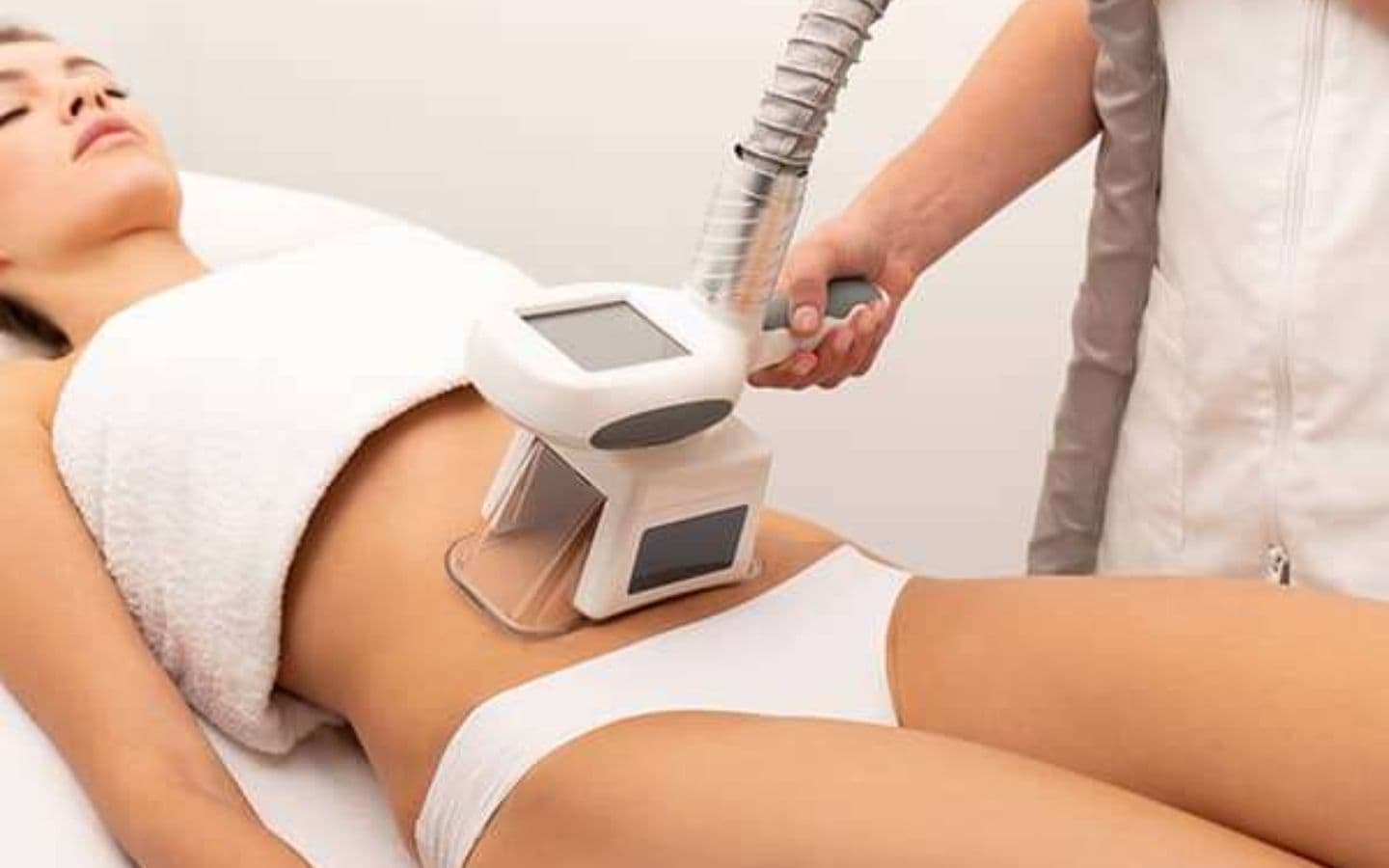
- Controlled cooling
- Applied to a pocket of fat an applicator can draw and hold
- 35–60 minutes
- Typical applicator cycle, per area
- Assessment first
- Your first visit is a doctor consultation, not a treatment
On this page
In brief
Fat freezing (cryolipolysis) uses controlled cooling to target localised fat in specific areas, and is not a weight-loss treatment. Whether a given area can be treated at all depends on whether an applicator can draw and hold it, which is something a doctor checks in person.
Results from Kaiteki patients
Before and after photos of patients treated at Kaiteki for face contouring and body slimming. A plan may combine more than one treatment.
10 photos · tap one to enlarge
Chin projection, before and after treatment at Kaiteki
Body contour, before and after a course of treatment at Kaiteki
Cheek support and proportion, before and after treatment at Kaiteki
Abdominal contour, before and after a course of treatment at Kaiteki
Chin projection, before and after treatment at Kaiteki
Abdominal contour, before and after a course of treatment at Kaiteki
Chin projection, before and after treatment at Kaiteki
Localised fat pocket, before and after a course of treatment at Kaiteki
Forehead and upper-face proportion, before and after treatment at Kaiteki
Body contour, before and after a course of treatment at Kaiteki
Photographs of Kaiteki patients, published with consent. Individual results vary and are not guaranteed. These images are not a promise of outcome. A doctor will assess whether any treatment is suitable for you.
What is fat freezing?
Fat freezing is the everyday name for cryolipolysis, a non-surgical approach that uses controlled cooling to target pockets of fat in specific areas of the body.
Why does cooling affect fat and not the skin around it?
Cryolipolysis is based on the idea that fat cells are more sensitive to cold than the surrounding skin, nerves and muscle. During a session, an applicator cools a defined area to a controlled low temperature for a set period.
The aim is to affect fat cells within the treated pocket while limiting the effect on nearby tissue.
What Fat Freezing is used for at Kaiteki
A pinchable pocket that diet has not shifted
Controlled cooling applied to a defined pocket of fat that can be pinched and drawn into an applicator.
A defined pocket of fat under the chin
Relevant only where the fullness under the chin is genuinely fat.
Cooltech or CoolSculpting: which device, and why
Both are cryolipolysis devices working on the same principle. They differ in applicator design.
Cooltech
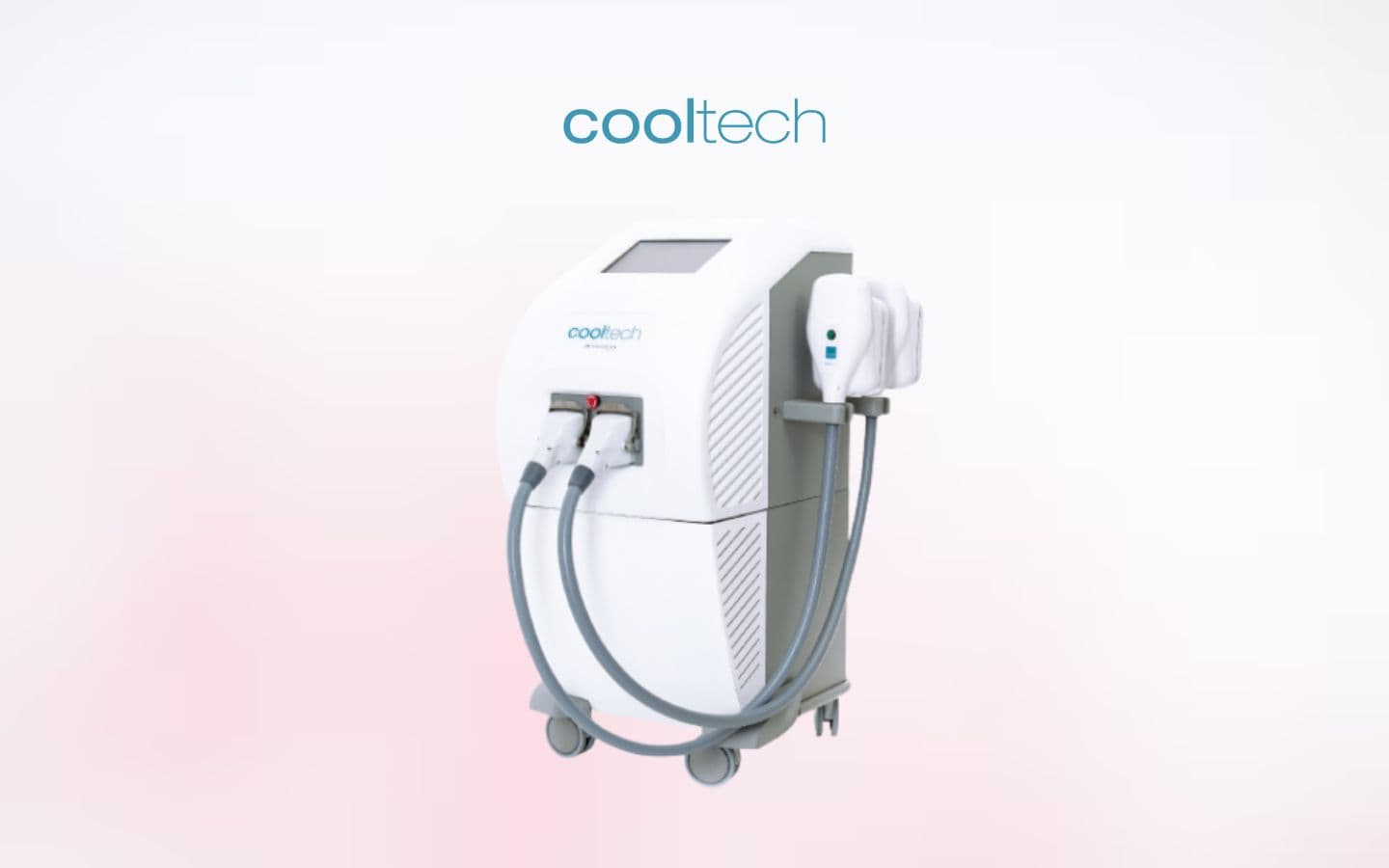
360° cooling · Cocoon Medical
The manufacturer describes 360° cooling around the drawn-in tissue rather than from one contact plate, and more than one applicator can run at once, so two areas or both flanks may be treated in one appointment.
About CooltechCoolSculpting
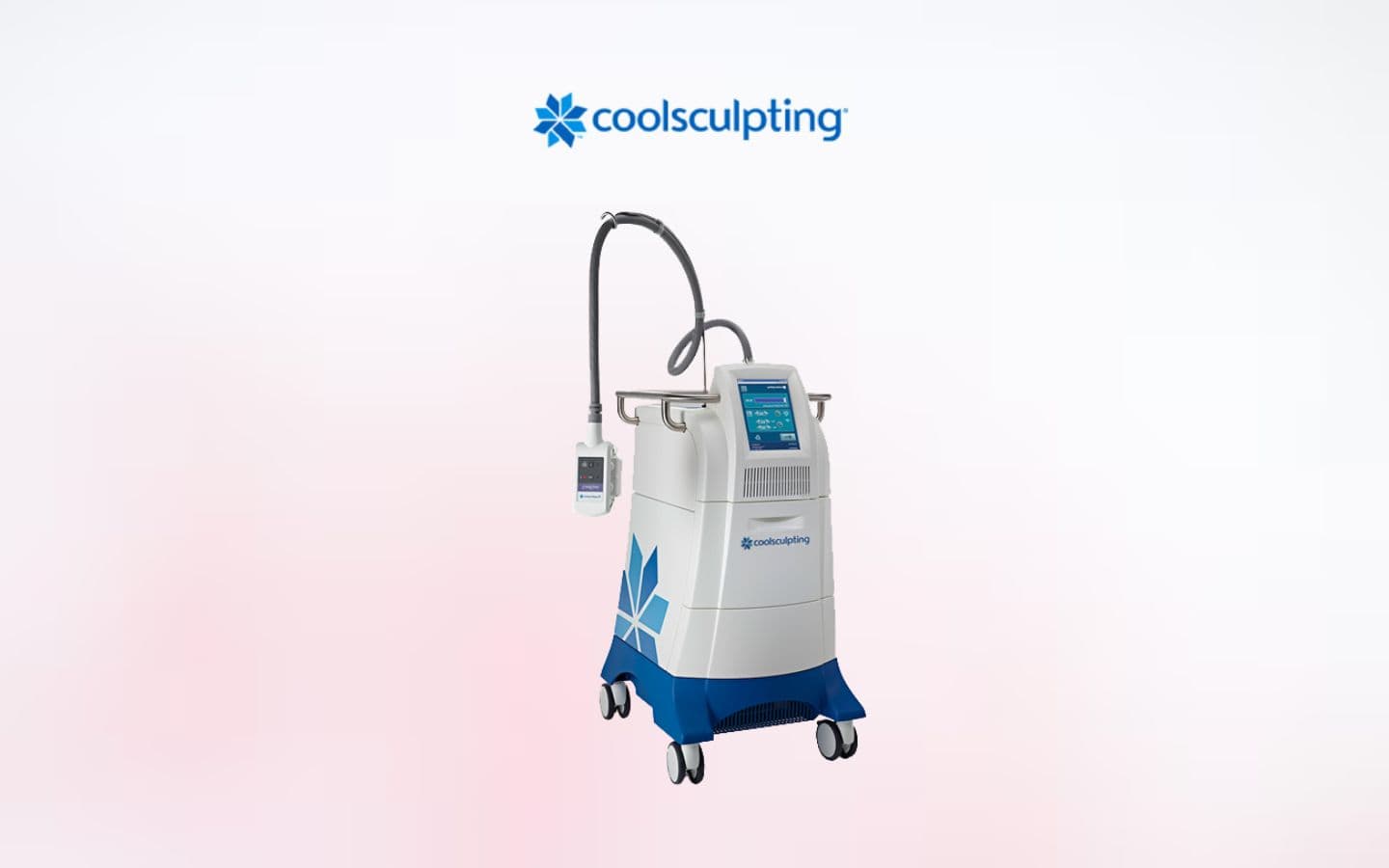
Cryolipolysis · CoolSculpting
An applicator draws the target area against a cooling plate.
About CoolSculpting
Not sure whether your area is one an applicator can hold?
A doctor can check in person, with a pinch test, whether the area is fat an applicator can treat.
Ask about this on WhatsAppFree consultation, about 20 to 30 minutes, no obligation.
Who should postpone or avoid it
- Pregnancy or breastfeeding. Treatment is deferred.
- Cold-related conditions such as cryoglobulinaemia, cold urticaria or paroxysmal cold haemoglobinuria.
- A hernia in or near the treatment area.
- Broken or infected skin over the area to be treated.
- Certain circulatory, nerve or liver conditions, which your doctor goes through with you.
What a session involves
Consultation and assessment
The doctor checks whether the fat in the area can be drawn into an applicator.
Preparation
The treatment area is marked, and a protective gel pad and applicator are positioned over the pocket of fat.
The cooling cycle
The area is cooled for a set period. There is an initial period of intense cold and a firm pulling sensation from the suction, which commonly eases as the area becomes numb.
Afterwards
The applicator is removed and the area is massaged.
In the treatment room
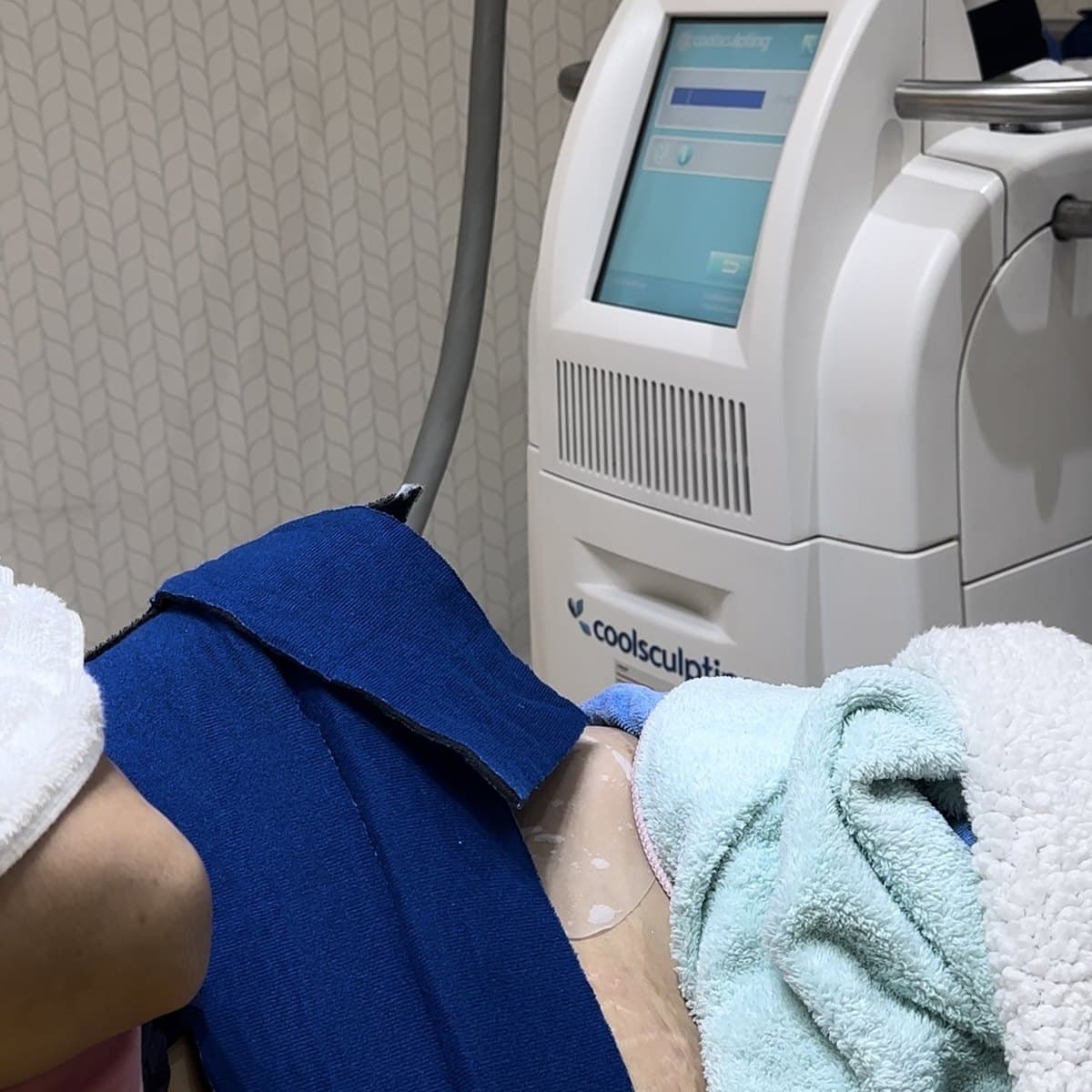
A cooling applicator sits on the patient's flank, connected to the treatment machine.
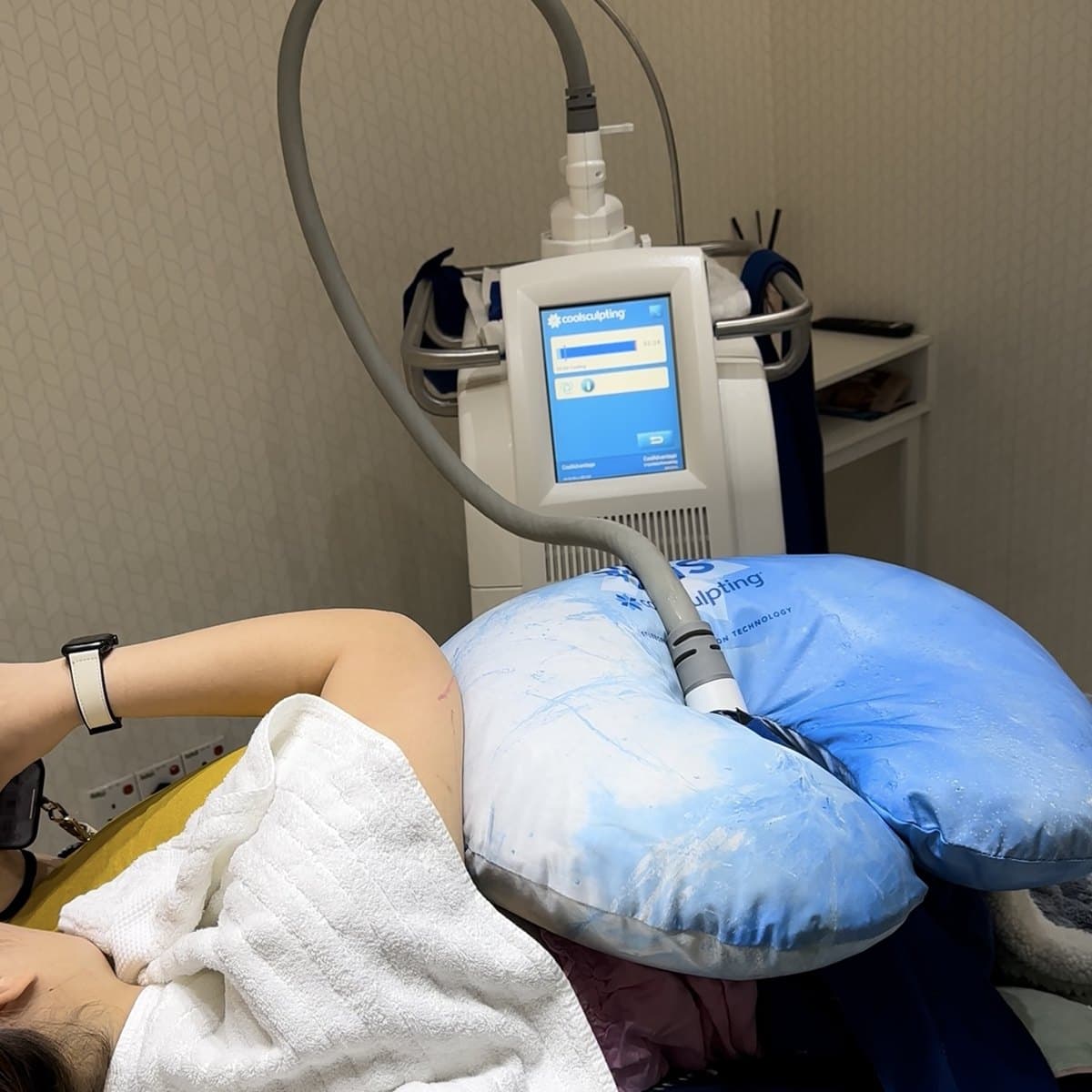
The patient reclines while a cooling applicator works on the abdomen.
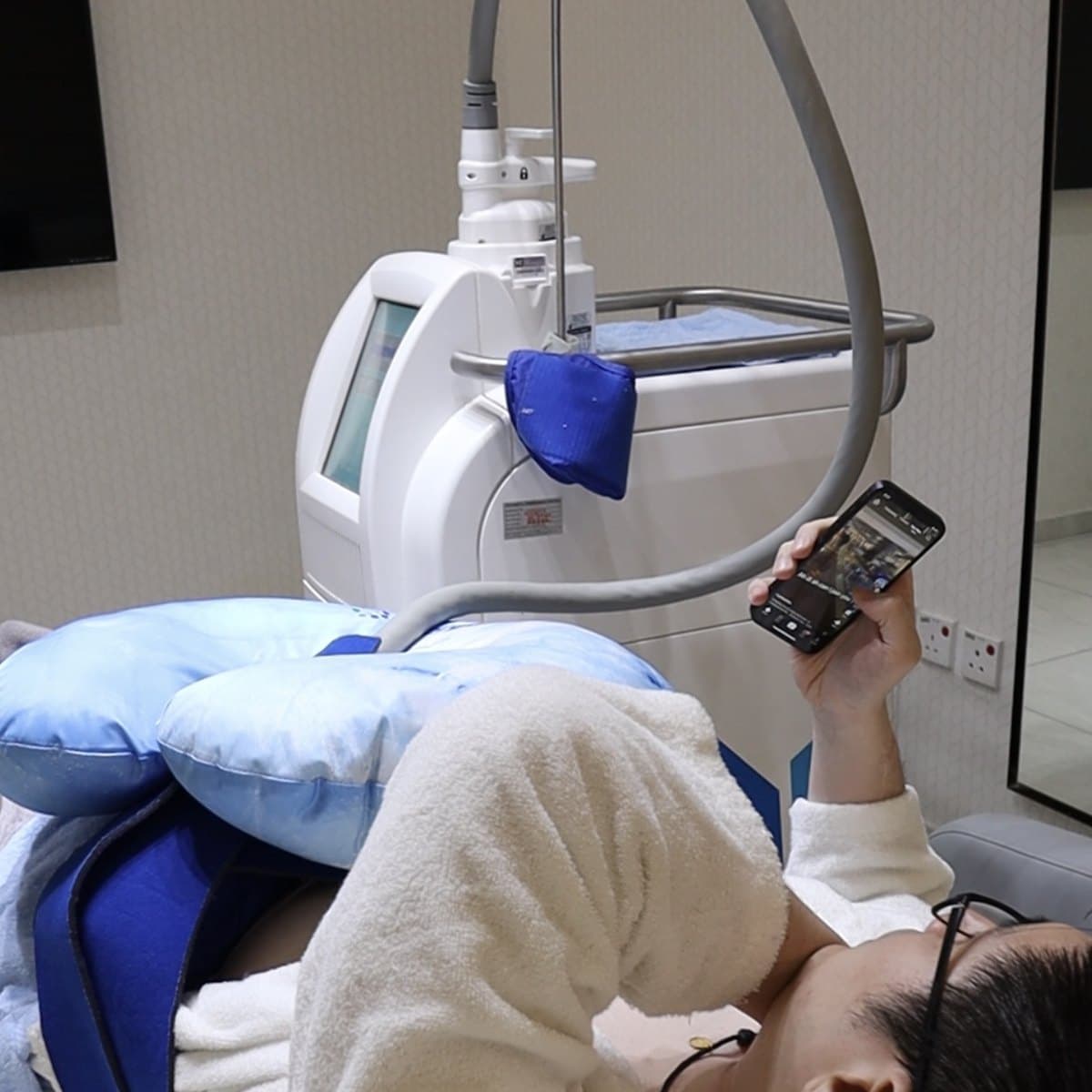
A patient relaxes with their phone while the cooling applicator works.
After a session
Straight afterwards
The area often looks red and feels firm, cold or oddly numb, and this typically settles over the following hours to days.The first weeks
Temporary tenderness, swelling, tingling or a dull ache in the treated area can persist for a few days to a couple of weeks, and some people find loose clothing or a compression garment more comfortable during that period.
Keep to a stable weight with your usual diet and activity.
Risks, side effects, and what Fat Freezing cannot do
Common and temporary
Redness, swelling, bruising, firmness, numbness, tingling, itching or cramping in the treated area, and altered skin sensation that may take some weeks to normalise.Less common
Lingering pain in the treated area, and paradoxical adipose hyperplasia, in which the treated fat pocket firms and enlarges rather than reduces.Pigment change and Malaysian skin
It acts on fat below the skin, not on pigment, so skin tone matters less than it does with lasers. The thickness and distribution of fat in the area matter more.What it cannot do
- It is not a weight-loss treatment, not a treatment for obesity, and not a substitute for diet, exercise or medical weight management.
- Not every pocket of fat is one an applicator can draw and hold.
- It does not stop remaining fat cells enlarging with weight gain, which is why a stable weight matters.
Tell your doctor about anything in the list under who should postpone or avoid it, and about any implant, device or medication.
What affects the number of sessions, and the cost
Kaiteki does not quote prices online. Cost is quoted per applicator cycle once the doctor has seen which areas can actually be treated. What moves it:
- The areas being addressed.
- The size of the fat pocket, and how many applicator placements it needs to cover.
- The number of cycles each area requires, and whether a further session is planned after review.
Devices used at Kaiteki
Which platform is used depends on your individual assessment.
Common questions
Is fat freezing a weight-loss treatment?
No. It targets localised pockets of fat in specific areas, not overall body weight, and is intended for people at or near a stable weight.
Does fat freezing hurt?
Most people feel intense cold and a firm pulling from the suction at the start, which usually eases as the area goes numb.
How many sessions will I need?
It depends on the area, the amount of localised fat and how you respond.
When might I notice a change?
Any change is gradual, because the body clears the treated cells over several weeks, so it is usually assessed a couple of months after the session.
Read next

Where to go next
Back to all treatments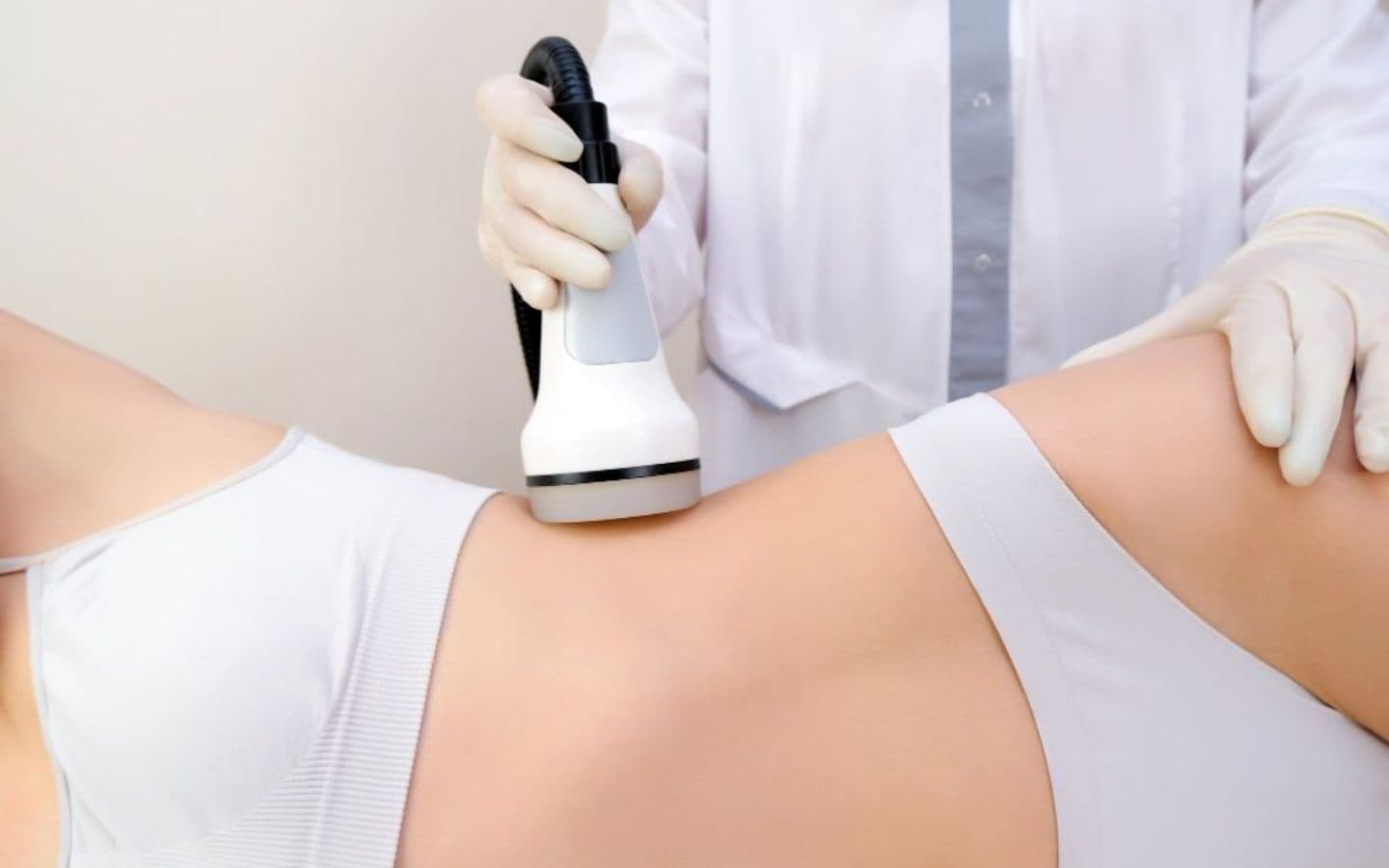
Book a free consultation
The consultation is free, takes about 20 to 30 minutes, and there is no obligation to book treatment afterwards. A doctor will examine your skin and tell you whether Fat Freezing is appropriate, and if it isn’t, what would be.
Ask about this treatmentMedically reviewed by
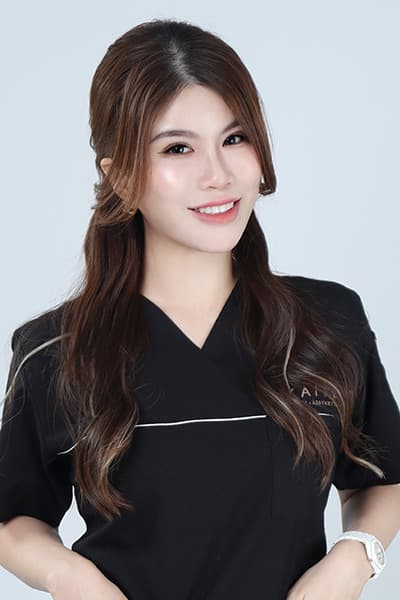
Dr Jessie Lim Jia Min
Founder & CEO, Aesthetic Physician
MD, LCP Board Certified, MAC, AAAM · MMC 64964
Dr Jessie Lim is a LCP certified aesthetic doctor. She obtained her medical degree from University Putra Malaysia with honours. She then went on to pursue her post-graduate certification in Aesthetics in Medical Aesthetic Certification Programme and American Academy of Aesthetic Medicine (AAAM).
View full profile- Reviewed by
- Dr Jessie Lim Jia Min, MMC 64964
- Last reviewed
- 10 Jun 2026
- Next review due
- 10 Jun 2027