Device & Injectables7 min read
Onda Coolwaves vs CoolSculpting: how they differ and which suits you
Both are non-invasive body contouring devices for localised fat, working by opposite mechanisms. CoolSculpting cools fat cells until they are damaged, a process called cryolipolysis. Onda heats the targeted tissue with microwave energy while cooling the skin. The practical difference is scope: Onda is also used for firmness and the dimpled appearance associated with cellulite.
Onda Coolwaves and CoolSculpting are both non-invasive body contouring devices used for pockets of fat that persist despite diet and exercise, and they work by opposite mechanisms. CoolSculpting cools fat cells until they are damaged, a process called cryolipolysis. Onda uses microwave energy to heat them. Kaiteki offers both.
That difference in mechanism leads to a difference in scope, which is the part worth understanding before you choose. CoolSculpting is a fat treatment. Onda is used for localised fat, for skin firmness over the treated area, and for the dimpled appearance associated with cellulite. This guide covers how each one works, where they genuinely differ, and which questions decide it at a consultation.
Key takeaways
- Opposite mechanisms: CoolSculpting cools fat cells to the point of damage. Onda delivers microwave energy (Coolwaves) that heats the targeted tissue while the skin surface is cooled and protected.
- Different scope: CoolSculpting addresses localised fat. Onda is used for localised fat, firmness and the dimpled appearance associated with cellulite over the treated area.
- Neither is a weight-loss treatment: both are for specific pockets of fat in people near their target weight, not for reducing overall body weight.
- The experience differs: CoolSculpting draws the area into an applicator with a cooling plate and cold sensation. Onda is a handpiece moved over the area with a warming sensation and no suction.
- Suitability is assessed, not chosen from a menu: the area, your skin, your medical history and what you actually want to change decide which is appropriate, and sometimes neither is.
What is fat freezing, and how does it work?
Cryolipolysis is a non-invasive method that uses controlled cooling to affect fat cells beneath the skin. It came out of research at Harvard's Wellman Center for Photomedicine, where Manstein and Anderson published the underlying work in Lasers in Surgery and Medicine in 2008. The observation behind it is that fat cells are more sensitive to cold than the skin, nerve and muscle tissue around them, so an area can be cooled to a temperature that affects the fat while aiming to leave the overlying skin unharmed.
CoolSculpting is the best known cryolipolysis brand and the first cleared by the FDA for the purpose. In a session the applicator draws the target area against a cooling plate and holds it there for roughly 35 to 60 minutes per cycle. The affected cells are then processed and cleared by the body gradually over the weeks and months that follow, so nothing changes on the day.
Published reviews of cryolipolysis report an average reduction of roughly 20% to 25% in the thickness of the treated fat layer after a single cycle. Two caveats matter more than the number. That is an average across study populations with wide individual variation, and it measures the thickness of a fat layer in one marked area rather than a change to your body shape as a whole. Your doctor should tell you what is realistic for your area rather than quote you a percentage.
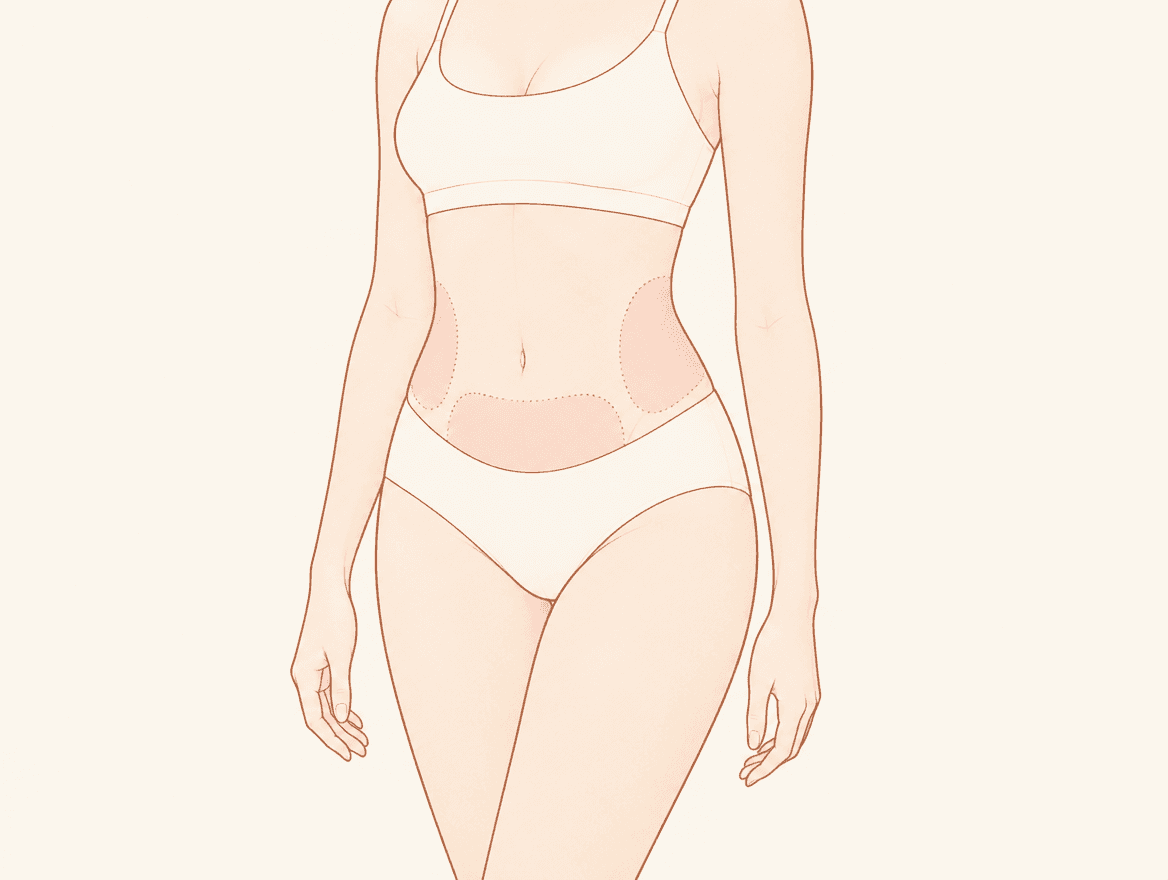
Fat freezing suits specific, pinchable pockets where an applicator can be fitted: the lower abdomen, flanks, thighs, upper arms and under the chin. It addresses fat, and only fat. It is not used for skin laxity or for the appearance of cellulite.
How does Onda work?
Onda uses a microwave-based technology the manufacturer calls Coolwaves, delivered beneath the skin's surface rather than applied to it. The energy is intended to act on the targeted tissue, whether that is localised fat cells or the fibrous bands associated with cellulite, while built-in cooling keeps the skin surface protected throughout. The body clears the affected cells over the following weeks.
The reason Onda is used for more than fat is that the same energy may also prompt a gradual collagen-remodelling response in the dermis, which is why the device is offered for firmness as well as contouring. Kaiteki uses it in two forms, Onda for Body and Onda for Face, with the same underlying technology at settings suited to each area.
The session feels different from fat freezing. A handpiece is moved over the treatment area rather than clamped to it, there is no suction, and most people describe a warming sensation. Settings are selected by the treating doctor for the area and your skin, and change develops over time rather than immediately.
Where they actually differ
| CoolSculpting | Onda Coolwaves | |
|---|---|---|
| Technology | Cryolipolysis, controlled cooling | Coolwaves, microwave energy |
| Mechanism | Cools fat cells until they are damaged | Heats the targeted tissue beneath cooled skin |
| Localised fat | Yes | Yes |
| Appearance of cellulite | Not used for this | Used for the dimpled appearance |
| Skin firmness | Not used for this | May prompt gradual collagen remodelling |
| Session experience | Applicator draws the area in, cold sensation | Handpiece moved over the area, warming sensation, no suction |
| Applicator cycle | Around 35 to 60 minutes per cycle | Varies by area, planned at consultation |
| Course | Individual, planned after assessment | Commonly several sessions a few weeks apart |
| Face | Not used on the face | Onda for Face is offered for jawline and cheeks |
The meaningful line is the third to fifth row. CoolSculpting does one thing, and having a single job is not a weakness: if a defined pocket of abdominal fat is the whole of your concern, a device built for that is a reasonable answer. Onda covers a wider brief, which is what makes it relevant when firmness or skin texture is part of what is bothering you rather than volume alone.
Comfort is a real difference and worth raising at consultation, because people vary in what they mind. Cryolipolysis involves cold and a pulling or pressure sensation that usually eases during the cycle, and temporary numbness, tingling, firmness or bruising afterwards is common. Onda involves neither cold nor suction, and the temporary effects reported are usually warmth, redness or mild tenderness. Neither is painless and both carry risks, which a doctor explains before anything is planned.
Which one suits you?
When fat is the whole of the concern. A defined, pinchable pocket that has not shifted with diet and exercise, on an area where an applicator fits, with skin that is still firm. Fat freezing is built precisely for this and has the longer regulatory and published track record.
When firmness or texture is part of it. Loose skin over the area, or the dimpled appearance associated with cellulite, is outside what cryolipolysis addresses. Microwave contouring with Onda is the option that covers fat, firmness and that appearance together, which usually matters more on thighs, buttocks and upper arms than on a lower abdomen.
When the face is involved. CoolSculpting is used under the chin, but not on the face itself. Onda for Face is the relevant option for jawline and cheek firmness.
When neither is right. This happens, and a consultation should say so. Both are for people close to their target weight with localised deposits. Neither reduces overall body weight, neither substitutes for diet, exercise or medical weight management, and neither is appropriate during pregnancy or with certain implants, devices or medical histories. If overall weight is the concern, that is a different conversation, and our body slimming assessment is the better starting point.
What to expect either way
Change develops slowly with both. The body clears affected fat cells over weeks and months rather than days, so judging either treatment by how you look the following week tells you nothing. Photographs and measurements taken before you start are more useful than a mirror.
The number of sessions is individual with both devices. CoolSculpting is planned by area and applicator; Onda is commonly a course of several sessions a few weeks apart. Anyone quoting you a fixed session count before assessing the area is guessing, and the same goes for a promised percentage or a date by which you will see something.
Cost depends on the area, the concern and how you respond, and it is discussed at consultation rather than published, so that any figure you are given reflects your actual plan rather than an average.
Can they be combined?
Sometimes, and it is a reasonable question to ask. The two work on different targets, so a plan can use cryolipolysis for a defined pocket and Onda across a broader zone where firmness and texture are also part of the picture. Whether that is sensible for you depends on the areas involved, your skin and your medical history, and it is a decision for the treating doctor rather than a package to select in advance.
The right treatment depends on the goal
The choice between the two comes down to one question: is it volume you want to change, or volume along with firmness and texture? If it is fat alone in a defined spot, CoolSculpting is a device built for exactly that. If firmness or the appearance of cellulite is part of what bothers you, Onda covers more ground in one treatment.
Both are assessed the same way, by a doctor looking at the area, your skin and your medical history, and telling you honestly whether either is worth doing.
Ready to find out which option suits you? Reach out to us on WhatsApp and we will help you find the right path forward.
Common questions
Can Onda and CoolSculpting be combined?
Sometimes. The two act on different targets, so a plan can use cryolipolysis for a defined pocket of fat and Onda across a broader zone where firmness and skin texture are also part of the picture. Whether that suits you depends on the areas involved, your skin and your medical history, and it is a decision for the treating doctor rather than a package chosen in advance.
Is fat freezing a permanent solution?
Fat cells affected by cryolipolysis are cleared by the body and are not replaced, but that is not the same as a permanent result. The fat cells remaining in the treated area can still enlarge if your weight increases, which is why neither device is a substitute for diet, exercise or medical weight management. Both are intended for people close to their target weight.
Does Onda hurt, and is there downtime?
Comfort varies between individuals. There is no suction and no cold, the built-in cooling is intended to keep the skin surface comfortable, and most people describe a warming sensation. Downtime is usually limited, though temporary warmth, redness or mild tenderness over the treated area can occur and typically settles. Your doctor explains what to expect for you.
How many sessions will I need?
It is individual with both devices, and it is set after the area has been assessed rather than before. CoolSculpting is planned by area and applicator, with each cycle running around 35 to 60 minutes. Onda is commonly a course of several sessions spaced a few weeks apart. Anyone quoting a fixed session count without assessing the area is guessing.
Which one is better for belly fat?
Both are used on the abdomen, so the answer depends on what is bothering you. If it is a defined, pinchable pocket of fat and the skin over it is still firm, cryolipolysis is built for that. If loose skin or texture over the area is part of the concern, Onda addresses fat, firmness and the dimpled appearance associated with cellulite together. A doctor decides after examining the area.
Will either treatment help me lose weight?
No. Both address specific pockets of localised fat rather than overall body weight, and neither substitutes for diet, exercise or medical weight management. They are intended for people already close to their target weight. If overall weight is the concern, that is a different conversation and a different assessment.
Book a free consultation
A doctor will assess your skin and tell you honestly whether this is the right option for you, including when it is not.
Related pages on our site
About the author
Dr Jacqueline Tan
Aesthetic Physician
MBBS, LCP Board Certified, MSc (UCSI) · MMC 83965
Dr. Jacqueline Tan graduated from IMU with a Bachelor of Medicine & Surgery (MBBS). She started her career as a doctor and has completed her 2 years compulsory service as a house officer in government hospital. She continued her medical journey as a medical officer in the Emergency Department to enhance her skill and experience in resuscitation. Being involved in emergency cases, her nature is being calm, empathic and determined.
View full profile- Written by
- Dr Jacqueline Tan, MMC 83965
- Reviewed by
- Dr Tim Chua, MMC 77677
- Published
- 6 September 2026
This page is general information about aesthetic treatments and is not medical advice. Treatments carry risks that are explained during consultation, and individual results vary. A doctor will assess whether a treatment is suitable for you before it is carried out.