Device & Injectables9 min read
XERF vs Oligio vs Density: how to choose between the three RF devices


XERF, Oligio X and Density all warm the deeper skin with radiofrequency, without needles, for early to moderate laxity. Oligio X uses one frequency, XERF blends two, and Density pairs monopolar with bipolar RF in each shot. No study compares them directly, so the choice depends on your skin, the area and comfort, after a doctor's assessment.
XERF, Oligio X and Density are all radiofrequency (RF) devices that warm the deeper layers of the skin from the surface, with no needles. They are aimed at the same problem: early to moderate loss of firmness, mostly on the lower face, jawline and neck. Where they differ is in how the energy goes in, how the skin surface is protected, and what each has been studied on.
Patients often come in with screenshots from Korean clinics and ask me which one is "the strongest". That question does not get you very far. A more useful one is: is loose skin really my problem, and if so, which way of heating suits my face? This guide explains the three devices in plain terms, what the published studies do and do not show, and what a doctor weighs before choosing one, or none.
Key takeaways
Same family, different deliveryAll three are surface RF without needles. Oligio X uses one frequency, XERF uses two, and Density pairs monopolar with bipolar RF in each shot.
No head-to-head study existsEach device has small studies of its own. None has been compared directly with the other two, so no one can honestly call one the winner.
The diagnosis matters more than the brandRF tightens skin. If fat, volume loss or deeper sagging is behind the change, none of the three is the right tool.
Suitable across Malaysian skin tonesRF heats tissue rather than targeting pigment, so skin colour is not what decides between them.
What the three have in common
All three are monopolar RF devices at heart. Current passes from the treatment tip into the skin, meets the tissue's natural resistance and turns into heat in the dermis. That warmth makes existing collagen contract a little, then prompts slower collagen remodelling over the following months. This is why any firming from RF builds gradually rather than showing on the day.
All three also cool the skin surface while the heat builds underneath. Cooling is not a comfort extra. It is what lets the dermis reach a useful temperature without the top layer of skin becoming the limit.
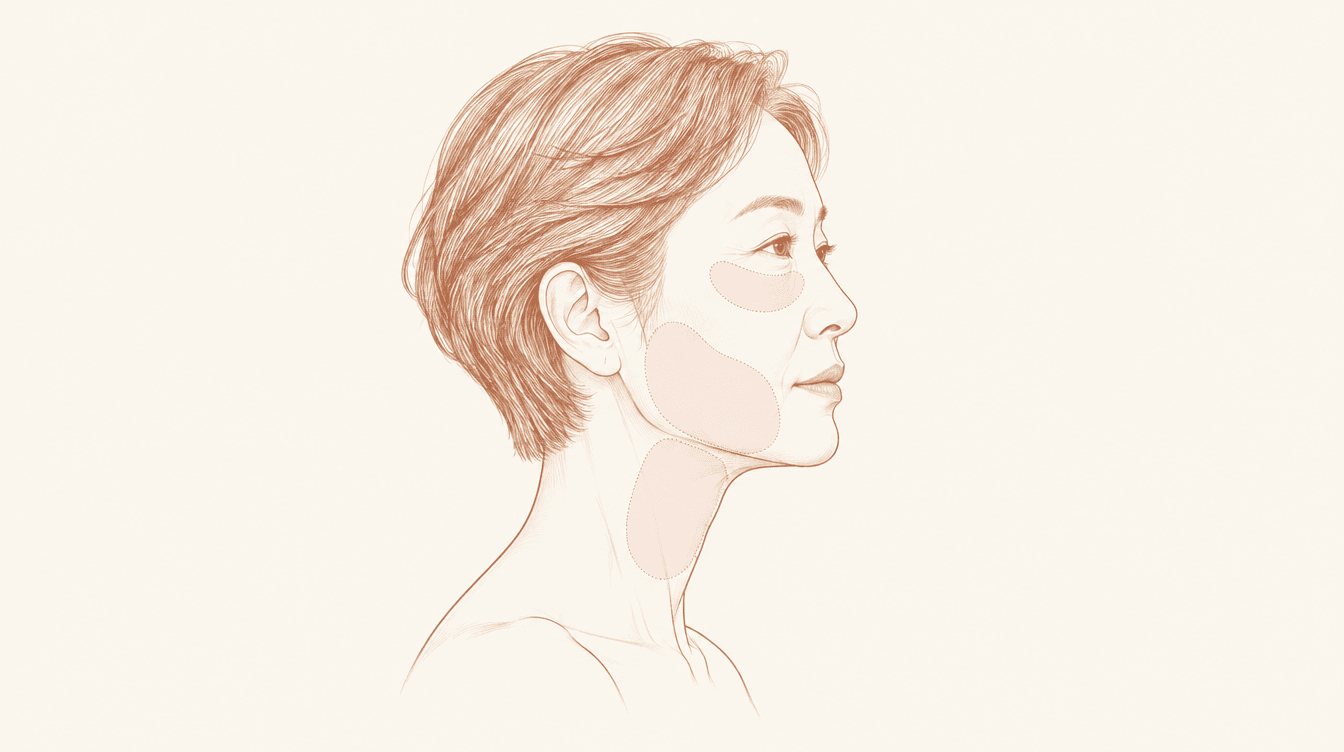
And all three work over intact skin. There are no channels, no pinpoint marks, and most people go back to work the same day. If you are weighing RF that goes in through fine needles instead, that is a different category, covered in our guide to Dermapen vs RF microneedling.
How each one delivers the heat
Oligio X
Oligio X is made by Wontech in South Korea. It runs at a single frequency, 6.78 MHz, and is delivered shot by shot through a disposable tip. The tip cools the skin on contact and monitors contact and tissue impedance, which helps the energy go in evenly from one shot to the next.
In practice it is a straightforward, well-understood design. Numbing cream can be applied first if you are worried about comfort, and the doctor can adjust the energy during the session.
XERF
XERF is made by Cynosure Lutronic. Its point of difference is that it is multifrequency: it runs 6.78 MHz and 2 MHz together. Higher frequencies deposit heat more superficially and lower frequencies travel further, so combining the two is meant to spread heat across shallower and deeper layers in one pass, instead of settling for one depth.
Cooling comes from an integrated cryogen system, and the manufacturer markets XERF as needing no numbing cream. I will come back to that claim below, because the published data on comfort is more mixed than the marketing.
Density
Density is made by Jeisys Medical, the Korean company that also makes the Potenza RF microneedling platform. Density itself has no needles. Each shot delivers monopolar RF and then bipolar RF in sequence through the same tip, also at 6.78 MHz. The monopolar phase reaches deeper; the bipolar phase, where current runs between closely spaced electrodes, stays in the upper dermis. The idea is to treat two depths within a single shot.
You may see it called Density Noir. That is the current version of the system, and it is the name used in the most recent studies.
XERF vs Oligio vs Density at a glance
| Oligio X | XERF | Density | |
|---|---|---|---|
| Made by | Wontech, South Korea | Cynosure Lutronic | Jeisys Medical, South Korea |
| RF type | Monopolar | Monopolar | Monopolar then bipolar, in each shot |
| Frequency | 6.78 MHz | 6.78 MHz and 2 MHz together | 6.78 MHz |
| How it aims for depth | One frequency, energy and passes set by the doctor | Two frequencies blended for shallow and deeper layers | Two RF modes for deeper and upper dermis |
| Surface cooling | Cooled tip with contact and impedance monitoring | Integrated cryogen cooling | Contact cooling |
| Numbing cream | Optional, for comfort | Marketed as not needed | Usually not needed; depends on settings |
| Eye-area tips | Yes | Yes, small tips | Yes |
| Needles or marks | None | None | None |
| Usual downtime | Redness for a few hours | Redness for a few hours | Redness and mild swelling, usually short-lived |
The rows that look like specifications are the manufacturers' own descriptions. They tell you how each machine is built, not how much any one face will change.
What the published studies actually show
This is the part most comparison pages skip, so I will be direct about it. All three devices have some published clinical data, and all of it is small.
- Oligio. A 2022 study in Dermatology and Therapy treated 30 Thai patients with skin types III to V and mild to moderate lower-face laxity with one session, and blinded dermatologists graded improvement over six months, with no serious side effects reported. A 2024 Korean study of 20 women reported improvement in jawline and nasolabial sagging that held to 24 weeks. Both looked at the original Oligio, which Oligio X builds on.
- XERF. A 2026 retrospective study in Lasers in Medical Science reviewed 16 women after a single session, using 3D imaging and questionnaires to three months. The authors are clear that it had no control group and no comparison with single-frequency devices, so it cannot say whether two frequencies do better than one. A separate 2026 paper in Cureus introduced its smaller tips for the eye area.
- Density. A 2026 open-label study in the Journal of Cosmetic Dermatology treated 26 Thai adults aged 30 to 60 with mild to moderate lower-face laxity, with one session and follow-up to six months. Laxity ratings improved, and the side effects were temporary redness, swelling and mild pain. One author works for the manufacturer, and the authors call for controlled studies. A three-patient case series in Clinical, Cosmetic and Investigational Dermatology looked at the eye tip.
Two things stand out. First, every study is on mild to moderate laxity, which tells you who these devices are for. Second, none of them compares XERF, Oligio and Density with each other. A clinic that tells you one is clearly superior is going beyond the evidence.
How a doctor chooses between them
When I see a patient asking about these three, the device is almost the last decision. The order of questions matters more.
1. Is it loose skin? A softer jawline can come from loose skin, but also from fat under the chin, volume loss in the cheeks, a short chin or simply bone structure. RF only addresses the first. If fat or volume is the main issue, HIFU, fillers or a fat treatment may fit better, and our page on face contouring explains how those are told apart.
2. How much laxity? Early to moderate laxity is where all three were studied. Marked sagging, heavy jowls or a lot of loose neck skin are generally beyond what any surface RF device can do, and I would rather say so at the consultation than sell a session.
3. Which area? The full face and jawline can be treated with any of the three. Around the eyes, each has a dedicated small tip, so the choice comes down to the eye protocol and the doctor's experience with it, not the brand on the machine.
4. How do you handle heat? Some patients tolerate deep warmth easily. Others find it uncomfortable and do better with numbing cream and lower, more gradual settings. This is a fair reason to prefer one platform over another, and your history with past RF or HIFU sessions helps here.
5. What else is in your plan? RF is often one part of a plan rather than the whole of it. It can sit alongside injectables or other energy devices, timed so one does not interfere with another. Recent fillers, threads, retinoids or peels all affect timing and settings, so mention them.
Only after those five questions does it make sense to pick a device. At that point the differences between the three are real but modest, and the person operating the machine matters at least as much as the machine.
Is one better for Malaysian skin?
Not in a way that should decide your choice. RF heats tissue rather than targeting pigment, so it does not depend on skin colour the way some lasers do. The Oligio and Density studies were both done in Thai patients, which is helpful for our skin types.
That does not mean zero risk. Too much heat in one spot can still cause blistering, a burn or a change in pigmentation, which is why cooling, energy settings and a trained operator matter. Afterwards, our heat and humidity make proper sun protection more important, not less. Redness usually settles within hours, but avoid hot yoga, saunas and long midday sun for a day or two.
Like other RF devices, none of the three is used during pregnancy, with a pacemaker or other implanted electronic device, over active infection or inflamed skin, or with a history of keloid scarring. Your doctor will go through the full list with you.
Questions to ask at your consultation
- Is my main problem loose skin, or is fat, volume or bone structure part of it?
- Which of the three devices would you use on me, and why that one?
- Who will operate the device, and how many treatments have they done with it?
- Is this a single session or a short course, and when would maintenance be due?
- What will the session feel like, and can I have numbing cream if I need it?
- What would you suggest instead if RF is not the right tool for my face?
If you would like a doctor to look at your face and tell you which, if any, of these suits you, our radiofrequency treatment page explains how the first visit works. The first visit is an assessment, not a treatment.
Common questions
Which is the most painful: XERF, Oligio or Density?
There is no study comparing comfort across the three, and comfort varies a lot between people. Most describe deep warmth rather than sharp pain. Numbing cream and adjusted settings can help, so tell your doctor if a pass feels too hot.
Is RF the same as HIFU?
No. RF uses electrical energy that turns into heat in the skin. HIFU focuses ultrasound energy at set depths. They are sometimes used in the same plan, and a doctor decides which, if either, fits your concern.
How many sessions of XERF, Oligio or Density do I need?
The published studies used a single session. In practice some plans are one session and others a short course, followed by maintenance. Your doctor sets the plan after assessing your skin.
Is Density the same as Thermage?
No. Both use RF at 6.78 MHz, but Thermage delivers monopolar RF only, while Density pairs monopolar and bipolar RF within each shot. They are separate devices from different manufacturers.
Can I switch from one device to another for my next session?
Yes, if your doctor thinks another platform suits your skin or the area better. Tell them which device you had before, the settings if you know them, and how it felt.
Book a free consultation
A doctor will assess your skin and tell you honestly whether this is the right option for you, including when it is not.
Related pages on our site
About the author

Dr Chew Yuhhui
Co-Founder & Senior Medical Director
MBBS, LCP Board Certified, MAC, MSAM · MMC 68232
Allow your passion to become your purpose and it will one day become your profession.
View full profile- Written by
- Dr Chew Yuhhui, MMC 68232
- Reviewed by
- Dr Chloe Wan Poh Yee, MMC 104547
- Published
- 20 November 2026
This page is general information about aesthetic treatments and is not medical advice. Treatments carry risks that are explained during consultation, and individual results vary. A doctor will assess whether a treatment is suitable for you before it is carried out.