

Concern · Face
Fine Lines & Wrinkles
Lines that appear when you move and lines that stay at rest need different approaches.
Free, about 20–30 minutes, no obligation to book treatment.
- Two different lines
- Lines that appear when you move and lines present at rest are treated differently.
- Movement or structure
- The same crease can come from muscle, from lost volume, or from the skin itself.
- At rest and moving
- The face is examined still and through expressions, because that decides the line type.
On this page
In brief
Fine lines and wrinkles come from three sources: muscle movement folding the skin (dynamic lines), the skin itself thinning with age and sun (static lines), and lost volume creating folds. Each is approached differently: muscle-relaxing injection for dynamic lines, collagen-stimulating treatment for static ones, and support above the fold for volume loss.
Results from Kaiteki patients
3 photos · tap one to enlarge
Forehead lines, before and after treatment at Kaiteki
Forehead lines, before and after treatment at Kaiteki
Frown lines between the brows, before and after treatment at Kaiteki
Photographs of Kaiteki patients, published with consent. Individual results vary and are not guaranteed. These images are not a promise of outcome. A doctor will assess whether any treatment is suitable for you.
What are fine lines and wrinkles?
Fine lines and wrinkles are creases that form in the skin over time. Expression lines appear with movement, smiling, squinting or frowning, and are linked to how the face moves, often showing around the eyes, forehead and mouth.
What causes them
Most lines have a specific cause, and the cause decides the treatment:
- Repeated expression: smiling, squinting and raising the brows fold the skin in the same place thousands of times. Crow's feet and forehead lines start here.
- Frowning and concentration: the vertical glabellar lines between the brows come from the muscles that pull them together.
- Pursing and lip movement: fine vertical perioral lines around the mouth come from the circular muscle in the lips.
- Volume loss and gravity: marionette lines running from the mouth corners toward the chin deepen as support in the mid-face is lost and tissue settles.
- Collagen decline and sun damage: static wrinkles present at rest reflect the skin's own structure thinning. UV exposure is the single largest accelerator.
- Sleep position: sleeping face-down or consistently on one side presses the skin into the same folds for hours each night.
- Neck posture and exposure: horizontal neck lines are shaped by movement, posture and looking downward, and the neck is both thinner-skinned and the area most often left out of a sunscreen routine.
Dehydration, smoking, poor sleep and genetics speed all of these up.
Which type do I have?
One test separates most of this. Look in a mirror with your face completely relaxed, then make the expression that produces the line.
Dynamic lines
Only when you move
Lines that appear when you make an expression and vanish when your face relaxes. They are produced by muscle folding the skin above it, and the skin itself is still intact.
Usually assessed for: commonly assessed for muscle-relaxing injection, with attention to skin quality alongside it.
Static lines
Visible at rest
Lines still present when your face is completely relaxed. The skin has been folded often enough, or has thinned enough, that the crease persists.
- The tell: you can see it with a still face, and stretching the skin gently reduces it.
Usually assessed for: assessed for skin-directed treatment such as resurfacing or collagen stimulation, often combined with muscle treatment.
Volume-related folds
Made by lost support
Deeper creases such as nasolabial folds and marionette lines, which are not really wrinkles at all. They mark where tissue has descended or deflated.
- The tell: lying down softens it considerably, and lifting the cheek gently with a fingertip reduces the fold.
Usually assessed for: assessed for support placed where volume was lost, rather than product placed into the line itself.
When to see a doctor
There is no threshold at which lines need treating. It is worth an assessment if:
- Lines that used to appear only on movement are now visible when your face is at rest.
- You have had treatment elsewhere and were unhappy with how it looked.
- A crease is red, scaly, itchy or bleeding, or the skin has changed texture rather than folded: that needs examining, not cosmetic treatment.
Treatment options at Kaiteki
Which fits depends on whether the line comes from muscle, lost support or the skin itself.
HIFU
Ultherapy
For lifting that softens the fold above it
The same principle with ultrasound imaging to guide delivery. Relevant where the doctor wants to see the tissue planes while treating, particularly around the brow and lower face.
UltherapySkin Booster
For fine crepe lines and surface dryness
Injectable hydration that improves the quality and light-reflection of the skin rather than filling any single line.
Skin BoosterRF Microneedling
For etched lines and overall texture
Fine needles with radiofrequency energy stimulate collagen through the deeper skin.
RF MicroneedlingBotulinum Toxin
For lines that appear when you move
Relaxes the specific muscle folding the skin, so the line forms less forcefully. Temporary, and repeated periodically.
Botulinum ToxinDermal Fillers
For folds held open by lost volume
Placed to restore support where the face has flattened, rather than into the crease itself.
Dermal FillersResurfacing Laser
For deeper static lines around the mouth
A fractional laser used where lines are etched into the skin and texture change has set in. More downtime than the options above.
Resurfacing Laser
Sequence matters: relaxing the muscle first often shows how much of a line was actually etched into the skin.
Which treatment suits which type?
A general guide. Most plans combine approaches; sessions are set after assessment.
| What you have | Commonly considered | Typical course | Downtime |
|---|---|---|---|
| Lines only on movement | Muscle-relaxing injection | Repeated periodically | None |
| Lines visible at rest | Muscle treatment plus skin-directed treatment | Staged, reviewed | Varies |
| Fine crepe lines under the eyes | Skin boosters | Short course, then maintenance | 1–2 days swelling |
| Etched lines and texture | RF microneedling | Several sessions, spaced | 2–3 days redness |
| Deep lines around the mouth | Resurfacing laser | Assessed individually | 5–7 days |
| Nasolabial or marionette folds | Support placed above the fold | Staged over sessions | 1–2 days swelling |
| Neck lines | Assessed individually, treated conservatively | Individual | Individual |
Wrinkle or fold?
Send us a photo on WhatsApp and a doctor can tell you which you're looking at.
Ask about this on WhatsAppFree consultation, about 20 to 30 minutes, no obligation.
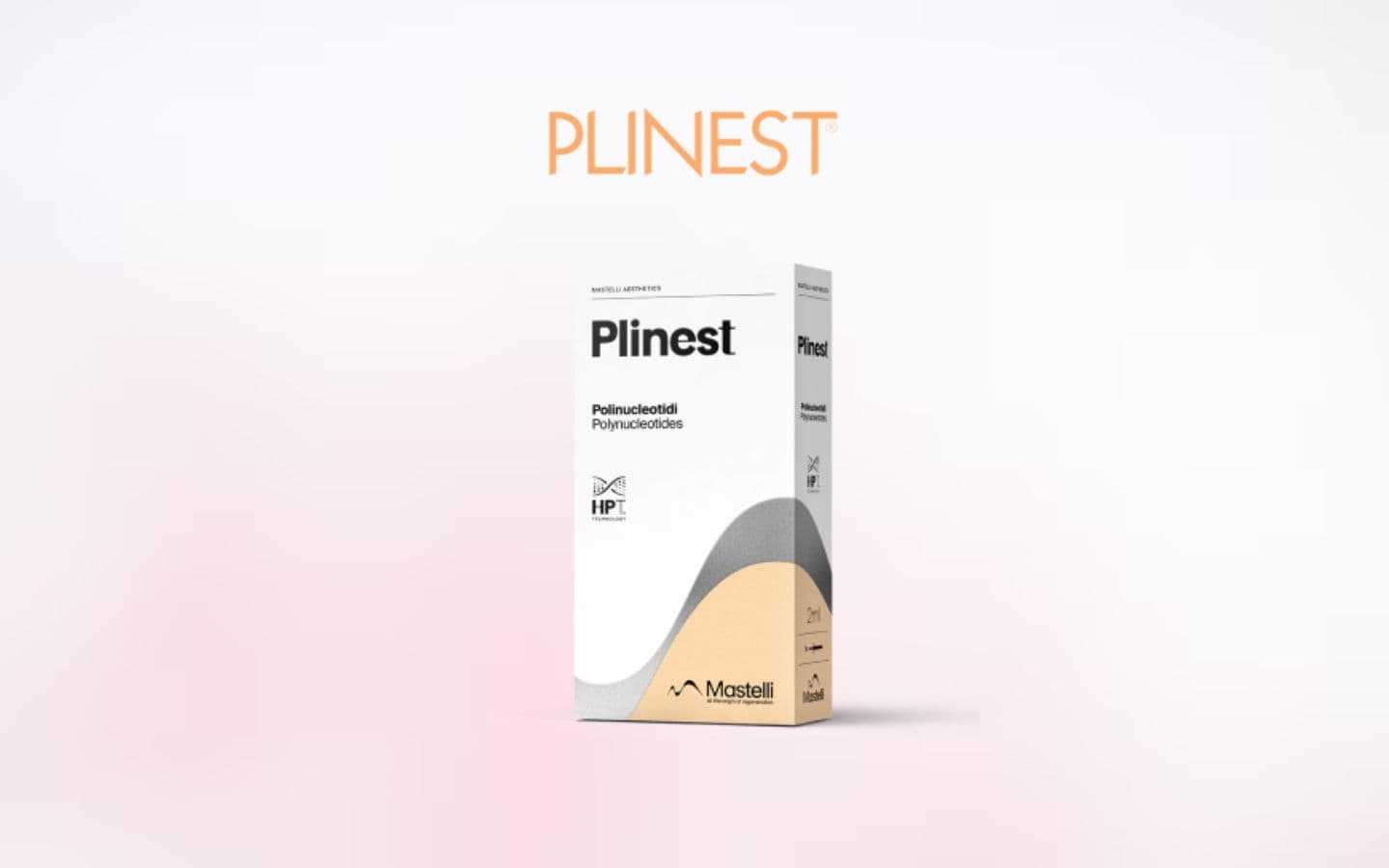
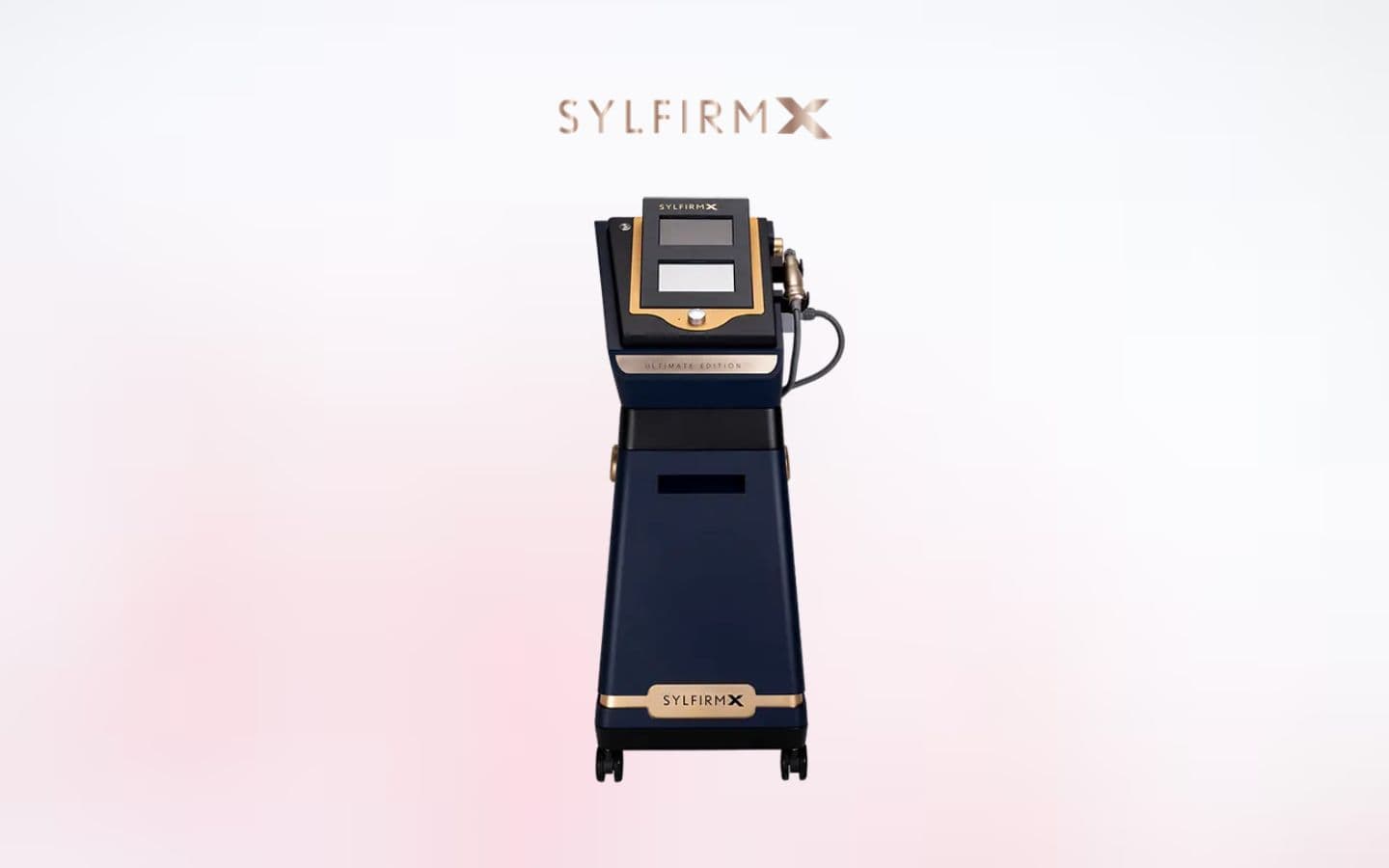
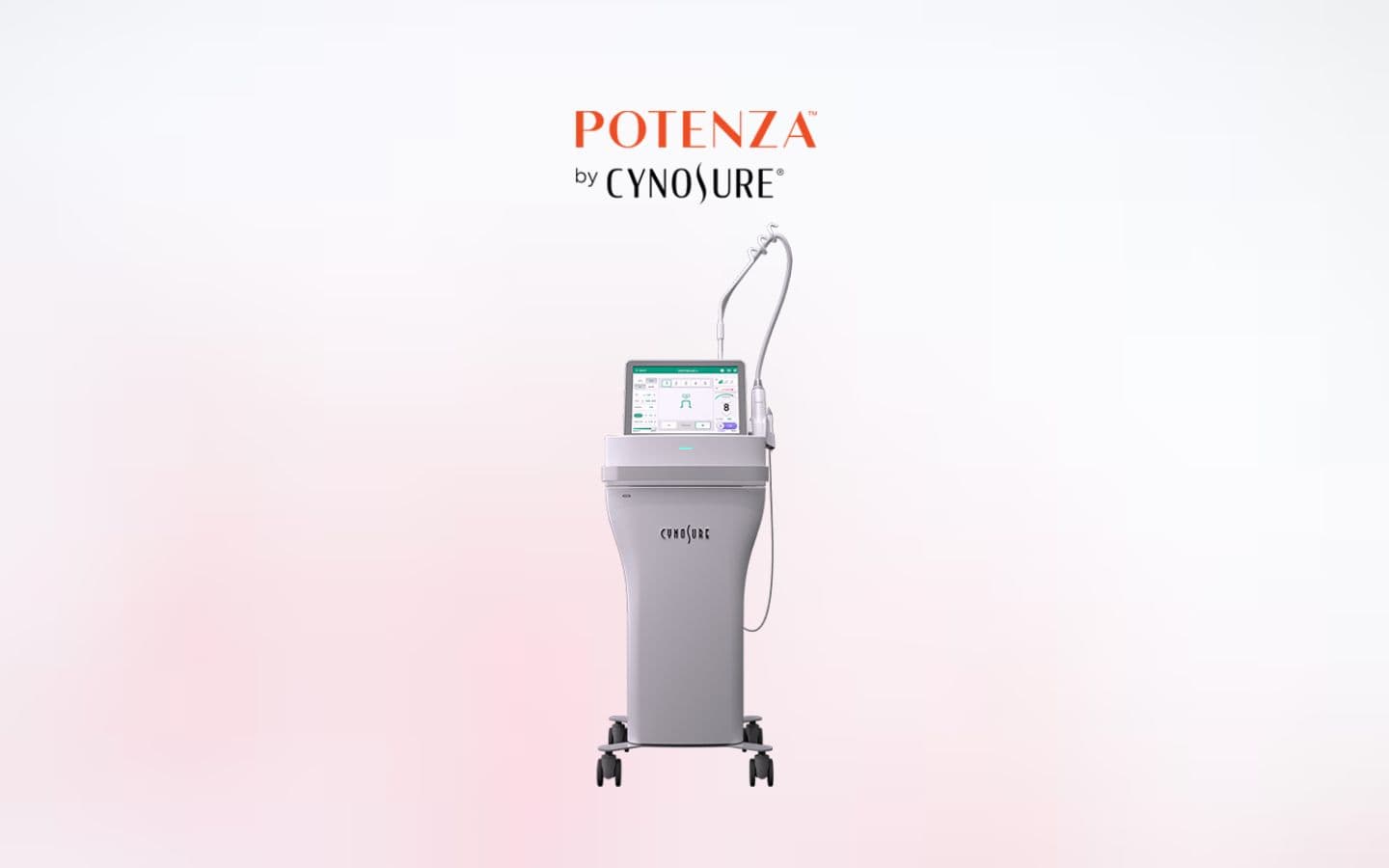
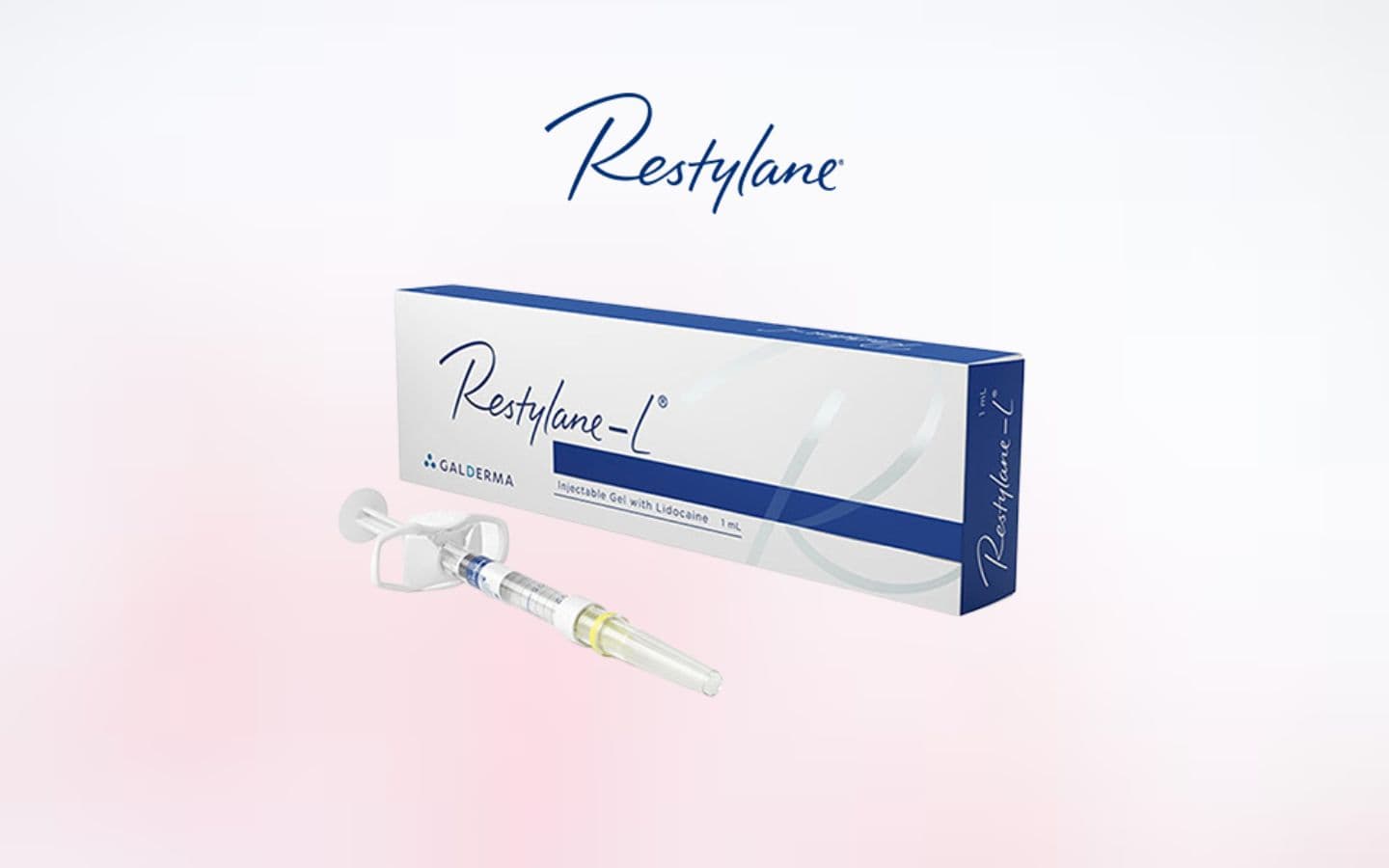
Technology used
Lines come from three different sources, so no single device or product addresses all of them.












Risks and what to expect
Common and usually temporary
Redness, swelling, bruising and tenderness at injection points. Energy-based treatment leaves redness, dryness and a gritty sensation for a few days. Muscle-relaxing injection can cause a mild headache in the first days.Uncommon but important
Muscle-relaxing injection can spread slightly beyond the intended muscle and cause a temporary drooping brow or eyelid, which resolves as the effect wears off. Injectables carry a rare but serious risk of vascular occlusion.Pigment change and Malaysian skin
Medium and deeper skin tones carry a higher chance of post-inflammatory hyperpigmentation after laser or energy-based treatment. Settings are chosen conservatively and sessions spaced further apart for this reason.What treatment cannot do
Nothing here stops your face ageing, and no treatment removes a deep static line entirely. Relaxing a muscle will not erase a crease already etched into the skin, and filling a fold does not address the descent that created it. Effects are temporary and maintained rather than permanent.
Tell your doctor if you are pregnant or breastfeeding, take blood thinners, have a neuromuscular condition, use retinoids or acids, have a history of cold sores or keloid scarring, have had any injectable or laser treatment recently, or have tanned in the past few weeks.
What your first visit involves
The doctor watches your face at rest and through expressions.
History
Any previous injectables or laser treatment, and whether you smoke.
Examination
Which lines vanish when you relax and which do not.
Discussion and plan
What each option changes, and a conservative first step, with no obligation to proceed.
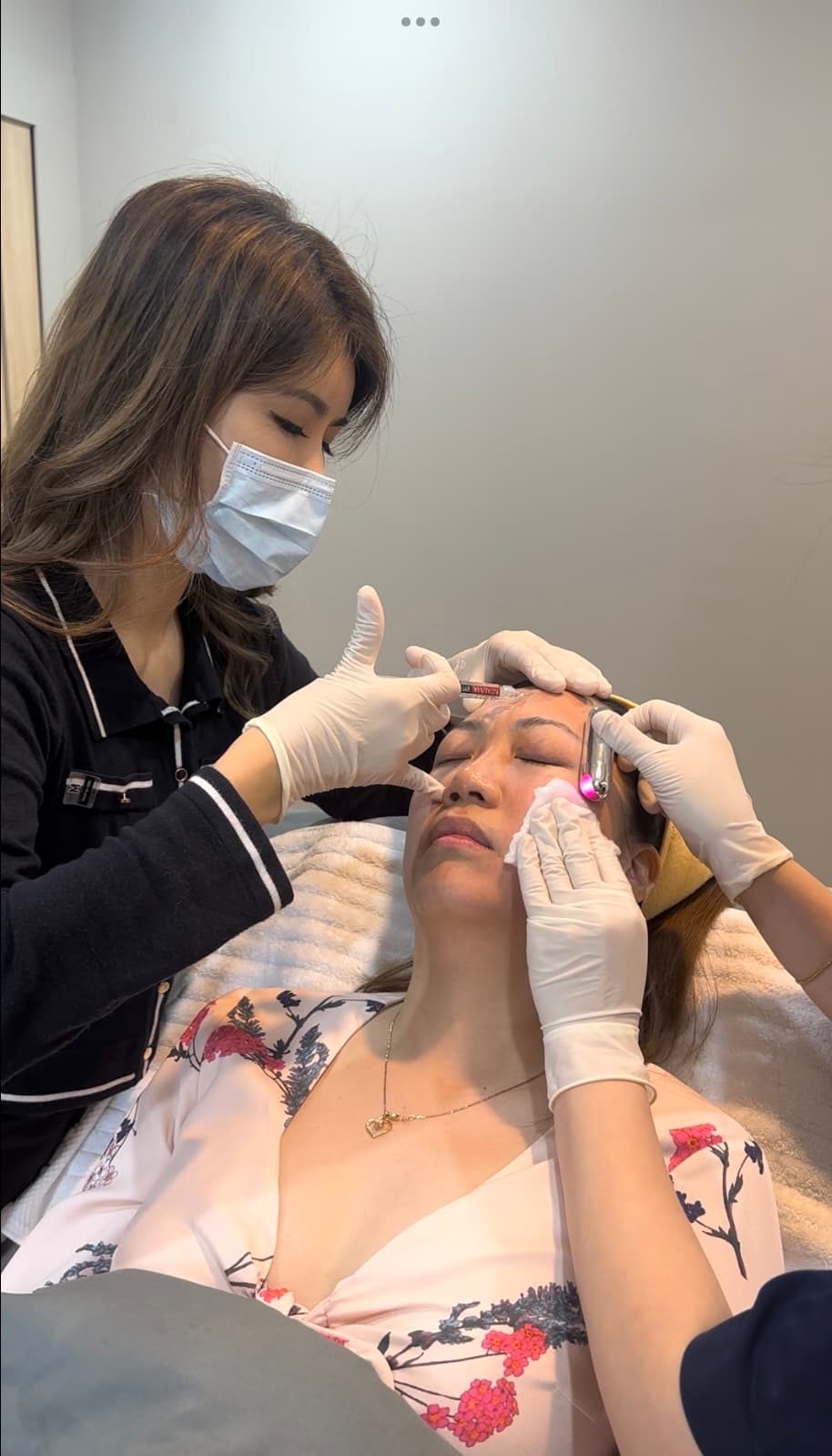
A prescription injectable being placed by the doctor. The dose and the injection points are planned at the consultation, not on the day.
What affects the cost
Pricing is set after assessment. It depends on:
- Which type of line is being treated, since muscle, skin and volume are different treatments.
- How many areas: one region of the face, the upper face, or a full-face plan.
- The product or device, and how much of it your anatomy and the pattern of movement call for.
- How many sessions, which is set after assessment and reviewed as your skin responds.
- How often maintenance is likely, because muscle-relaxing treatment is repeated over time.
Common questions
What is the difference between fine lines and wrinkles?
Fine lines are shallow surface creases, often the first thing people notice around the eyes and on the lip. Wrinkles are deeper and more established.
Can lines and wrinkles be prevented?
Not entirely, since everyone's face ages and movement is part of living in it. What is well established is that daily broad-spectrum sunscreen slows the process considerably, particularly in a country with year-round equatorial UV, and that not smoking makes a visible difference around the mouth.
Will muscle-relaxing injection make my face look frozen?
Only if it is overdosed or misplaced. Used conservatively, it reduces how forcefully a specific muscle folds the skin while leaving expression intact. A frozen appearance almost always comes from treating too many muscles at once, or from too much product in one area.
How long do the effects last?
Muscle-relaxing injection wears off over a period of months and is repeated. Volume support is gradually broken down by the body over a longer period. Collagen-based change builds and then recedes as ageing continues. None of it is permanent.
Is treatment painful?
Injections are described as quick sharp pinches, and most people find muscle-relaxing treatment easily tolerable without numbing. Fillers usually contain local anaesthetic. RF microneedling and resurfacing laser are more uncomfortable and are done with numbing cream and cooling.
Can I start treatment in my twenties or thirties?
Many people do, usually for dynamic lines that are beginning to persist. The argument for it is that a line is simpler to address before it becomes etched into the skin. The argument against starting too early is cost, commitment and the fact that some lines never progress.
Does skincare actually help?
It helps with skin quality, which is a real part of how lines read, and a sensible routine supports any in-clinic plan. Well-formulated retinoids and antioxidants have reasonable support behind them.
What if I don't like the result?
Muscle-relaxing injection is temporary and wears off, which is one reason it is a reasonable first treatment. Hyaluronic-acid fillers can be dissolved, which is why they are generally preferred over permanent products. Energy-based treatments cannot be undone, which is an argument for treating conservatively first.
Read next




Related concerns
Aging
Lines are one part of a wider picture of firmness, texture and volume.Face Lifting
Folds deepened by descent are addressed by supporting the tissue above them.Dark Eye Circles
Crepey lower-lid skin is usually assessed at the same time.
Find out what's making your lines
The consultation is free, takes about 20 to 30 minutes, and there is no obligation to book treatment afterwards. A doctor will examine your skin and how your face moves and talk you through what is, and is not, worth doing.
Book a free consultationMedically reviewed by

Dr William Yap
Partner, Aesthetic Physician
MD, LCP Board Certified, MAC · MMC 68812
Dr William Yap obtained his Medical Degree (MD) from University of Gahjah Mada. After completing his compulsory house officer training, he continued his 6 years journey in government hospital as medical officer. He has been rotating in different subdepartment including dermatology, infectious disease, cardiology, etc to enhance his skills and knowledge.
View full profile- Reviewed by
- Dr William Yap, MMC 68812
- Last reviewed
- 16 Jun 2026
- Next review due
- 16 Jun 2027