
Injectables
Restylane
A hyaluronic-acid dermal filler range from Galderma built on two distinct gel technologies: firmer NASHA® gels for definition and flexible OBT™ gels for expressive areas.
Free consultation, no obligation.
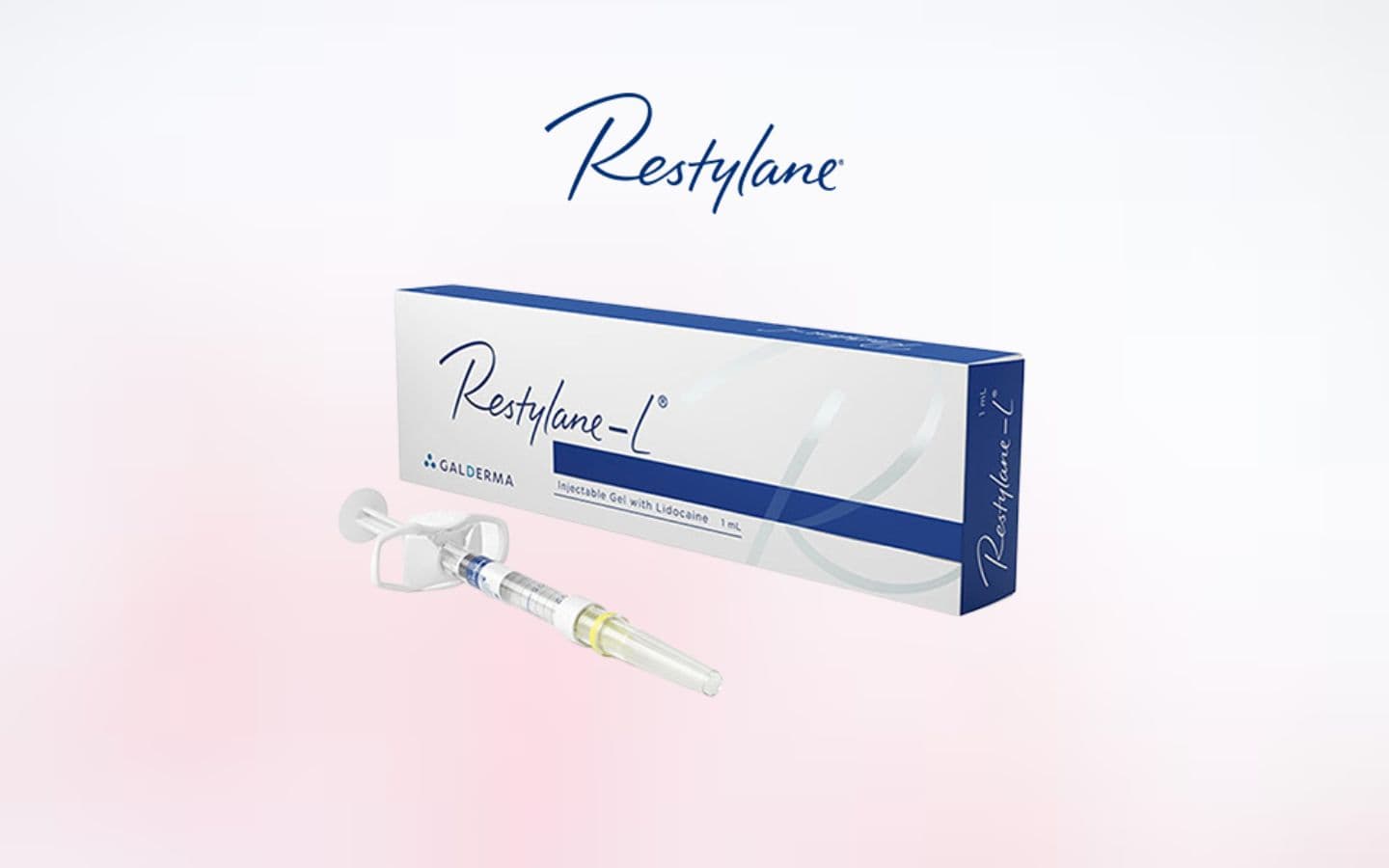
- NASHA and OBT
- Two gel technologies
- Galderma
- Manufacturer
- Dermal fillers
- Used within
In brief
Restylane is a range of hyaluronic acid dermal fillers from Galderma, and what distinguishes it is that it is built on two gel technologies rather than one: firmer NASHA gels used where definition is the aim, and more flexible OBT gels intended for expressive, mobile areas.
What is Restylane?
Restylane is a range of injectable hyaluronic-acid (HA) dermal fillers from Galderma. It is a stabilised, non-animal hyaluronic-acid range that Galderma states has been in clinical use for over 25 years. Like all HA fillers, the gel is cross-linked so it resists rapid breakdown and can provide volume, support or line softening once placed in the tissue.
The distinguishing feature of Restylane for anyone comparing filler brands is that Galderma manufactures it using two different gel technologies rather than one: NASHA® and OBT™ (marketed as XpresHAn Technology™ in the US). Those two technologies behave differently in tissue, which is why the range covers both structural work and movement-heavy areas of the face. Restylane is used within Kaiteki's dermal fillers treatment. Whether filler suits you at all, and which gel would be appropriate, is assessed by a doctor at an in-person consultation.
How NASHA® and OBT™ gel technologies differ
Galderma describes NASHA® (Non-Animal Stabilised Hyaluronic Acid) as engineered for precision and structure: it uses minimal chemical modification and controlled particle sizing, producing a firmer gel that the manufacturer says is used to create projection and definition, for example lifting the cheeks, defining the jawline or the chin profile. In rheological terms this is the higher-firmness end of the range, where the gel is intended to hold its shape and resist the surrounding tissue rather than spread through it.
OBT™ (Optimal Balance Technology) takes the opposite approach. Galderma describes OBT™ gels as softer and more flexible, with firmness varied by the degree of cross-linking, designed to integrate into the tissue and to suit dynamic, expressive areas such as the lips, cheeks and facial lines, or patients with thinner tissue coverage where a softer gel is preferred. The range therefore includes both: gels such as Lyft on the firmer side and gels such as Refyne, Defyne and Kysse on the flexible side. Neither approach is better than the other; they are suited to different jobs. Which technology and gel is used, where and in what amount, is decided by the treating doctor after in-person assessment. Results vary between individuals.
Can Restylane be reversed, and how long does it last?
Hyaluronic-acid gels such as Restylane can be dissolved with hyaluronidase where a doctor judges this clinically indicated. It is a medical procedure with its own risks and assessment, not a routine undo button, and it is not appropriate in every situation.
Hyaluronic-acid fillers are gradually broken down by the body, so the effect is not permanent and maintenance is individual: the area's movement, the gel used and your own metabolism all influence how long it lasts.
Restylane or another HA filler: what actually differs?
All the main filler families used at Kaiteki are cross-linked hyaluronic acid, so the meaningful difference is the gel technology rather than the ingredient. Restylane is distinctive in offering two separate technologies, a firmer particle-based gel and a flexible integrating gel, within one range. Which brand and gel is appropriate depends on the area being treated and your anatomy, and that is a clinical decision made at consultation.
Restylane gels are commonly considered for the following concerns within an individually planned filler treatment. Appearing on this list does not mean the treatment is suitable for you; that is established at consultation.
- Nasolabial folds and marionette lines
- Loss of cheek or mid-face volume
- Lip volume, shape and definition
- Chin profile and jawline definition
- Softening of static facial lines in mobile areas
- Loss of facial contour with age-related volume change
Does a wide range of gels mean Restylane suits everyone?
Restylane is aimed at adults who want volume replacement, contour support or line softening. Because HA fillers do not use light or heat, skin tone is not the constraint it can be with laser treatments: the relevant factors are your facial anatomy, the mobility of the area concerned, and your medical history. The breadth of the range means the doctor can choose a firmer or more flexible gel to match the area, but breadth is not the same as universal suitability.
Fillers are generally avoided in pregnancy and breastfeeding, and where there is active infection, inflammation or a skin lesion at the intended injection site. Tell your doctor if you have a history of severe allergy or anaphylaxis, known sensitivity to hyaluronic acid or to lidocaine and amide-type local anaesthetics, an autoimmune condition, a bleeding tendency or blood-thinning medication, previous filler or any permanent implant in the area, or a tendency to form abnormal scars. Please share your full medical history so the doctor can advise safely.
What happens at a Restylane appointment, and how much swelling follows?
A visit starts with a doctor consultation covering your concern, your medical history and an assessment of your facial proportions and tissue quality: the latter matters here, because it influences whether a firmer NASHA® gel or a more flexible OBT™ gel is the better fit. Risks are explained before you give consent. The area is cleansed and a topical anaesthetic may be used; several gels in the range are also available with lidocaine included for injection comfort.
The gel is placed in small increments with a needle or cannula according to the area and the doctor's judgement. Injection for a single area is usually a matter of minutes rather than hours, with a typical appointment often running 15 to 30 minutes once preparation is done. Multi-area plans are frequently staged over more than one visit rather than completed in a single sitting, and a follow-up review is commonly arranged once swelling has settled.
Downtime is generally limited, though this varies between individuals. Swelling, tenderness, redness and bruising at injection points are common in the first few days, and mobile areas such as the lips tend to swell more noticeably than the cheeks or jawline. Plan a comfortable margin before any event that matters to you.
Your doctor will give aftercare guidance specific to the area treated, which typically covers avoiding pressure or massage on the site, limiting strenuous exercise, saunas and alcohol briefly, and contacting the clinic straight away rather than waiting if anything feels unexpected.
Which side effects after Restylane need reporting straight away?
Restylane is an injectable medical device and carries risks, which are explained to you at consultation before you consent. Temporary effects can include swelling, bruising, redness, tenderness, firmness or small lumps at the injection site. Less common effects include infection, inflammatory nodules and delayed hypersensitivity reactions. The most serious recognised risk of any dermal filler is vascular occlusion, filler entering or compressing a blood vessel, which can affect the skin and, rarely, vision. It is uncommon, but it is precisely why filler must be administered by a doctor trained in facial anatomy and complication management, and why sudden pain, skin blanching or any change in vision should be reported immediately.
Concerns this injectable addresses
Whether it is the right choice for any of these is a decision for a doctor who has examined your skin.


Treatments that use Restylane
Back to all devices and injectables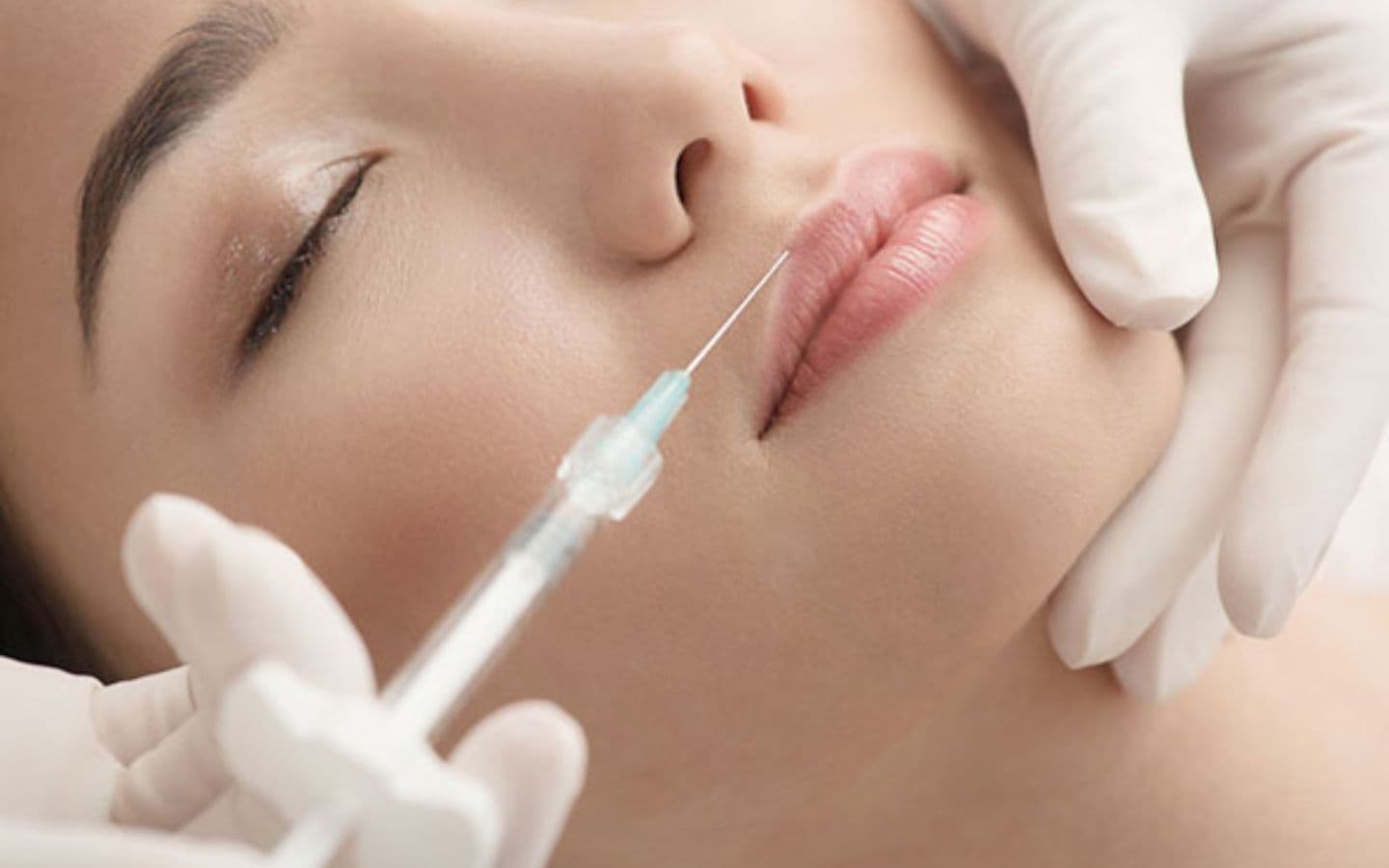
What affects the number of sessions, and the cost
Pricing is discussed at consultation rather than quoted online, so any figure reflects your actual plan. What moves it:
- How many areas are being addressed.
- Which gel technology and which specific gel the doctor selects for each area. A firmer structural gel used for jawline definition and a flexible gel used for lips are not interchangeable, so a plan is costed around the clinical selection rather than a flat per-area rate.
- How much product your anatomy calls for.
Other injectables we use
These address overlapping concerns. Which one suits you is a decision for a doctor who has examined your skin, not a choice to make from a page.

Common questions
What is the difference between Restylane NASHA® and OBT™ gels?
Galderma describes NASHA® as a firmer gel made with minimal modification and controlled particle sizing, used where projection and definition are the objective. OBT™ gels are softer and more flexible, intended to integrate into tissue and suited to expressive, mobile areas or thinner tissue coverage. Neither is superior: they are engineered for different jobs. Your doctor decides which is appropriate for your face at an in-person consultation.
How does Restylane compare with other hyaluronic-acid filler brands?
All the main filler families used at Kaiteki are cross-linked hyaluronic acid, so the meaningful difference is the gel technology rather than the ingredient. Restylane is distinctive in offering two separate technologies, a firmer particle-based gel and a flexible integrating gel, within one range. Which brand and gel is appropriate depends on the area being treated and your anatomy, and that is a clinical decision made at consultation.
Does Restylane hurt, and is anaesthetic used?
Most people describe filler injection as briefly uncomfortable rather than painful. A topical anaesthetic may be applied beforehand, and several gels in the range are available with lidocaine included to support comfort during injection. Sensitivity differs by area: lips are generally more sensitive than cheeks. Your doctor will discuss comfort options with you before starting.
Can Restylane be used for the chin and jawline, or only for lines?
The range spans both. Galderma states that firmer NASHA® gels are used where projection and definition are the goal, including the cheeks, chin profile and jawline, while the more flexible gels are used for lines and mobile areas such as the lips. Whether your chin or jawline is suited to filler at all depends on your underlying anatomy, which your doctor assesses in person before recommending anything.
Read next




Book a free consultation
The consultation is free, takes about 20 to 30 minutes, and there is no obligation to book treatment afterwards. A doctor will examine your skin and tell you whether Restylane is appropriate, and if it isn’t, what would be.
Ask about thisMedically reviewed by

Dr Jessie Lim Jia Min
Founder & CEO, Aesthetic Physician
MD, LCP Board Certified, MAC, AAAM · MMC 64964
Dr Jessie Lim is a LCP certified aesthetic doctor. She obtained her medical degree from University Putra Malaysia with honours. She then went on to pursue her post-graduate certification in Aesthetics in Medical Aesthetic Certification Programme and American Academy of Aesthetic Medicine (AAAM).
View full profile- Reviewed by
- Dr Jessie Lim Jia Min, MMC 64964
- Last reviewed
- 18 Jul 2026
- Next review due
- 18 Jul 2027
This page is general information about aesthetic treatments and is not medical advice. Treatments carry risks that are explained during consultation, and individual results vary. A doctor will assess whether a treatment is suitable for you before it is carried out.