Skin Concerns4 min read
Nasolabial folds: why they deepen and the non-surgical options a doctor considers
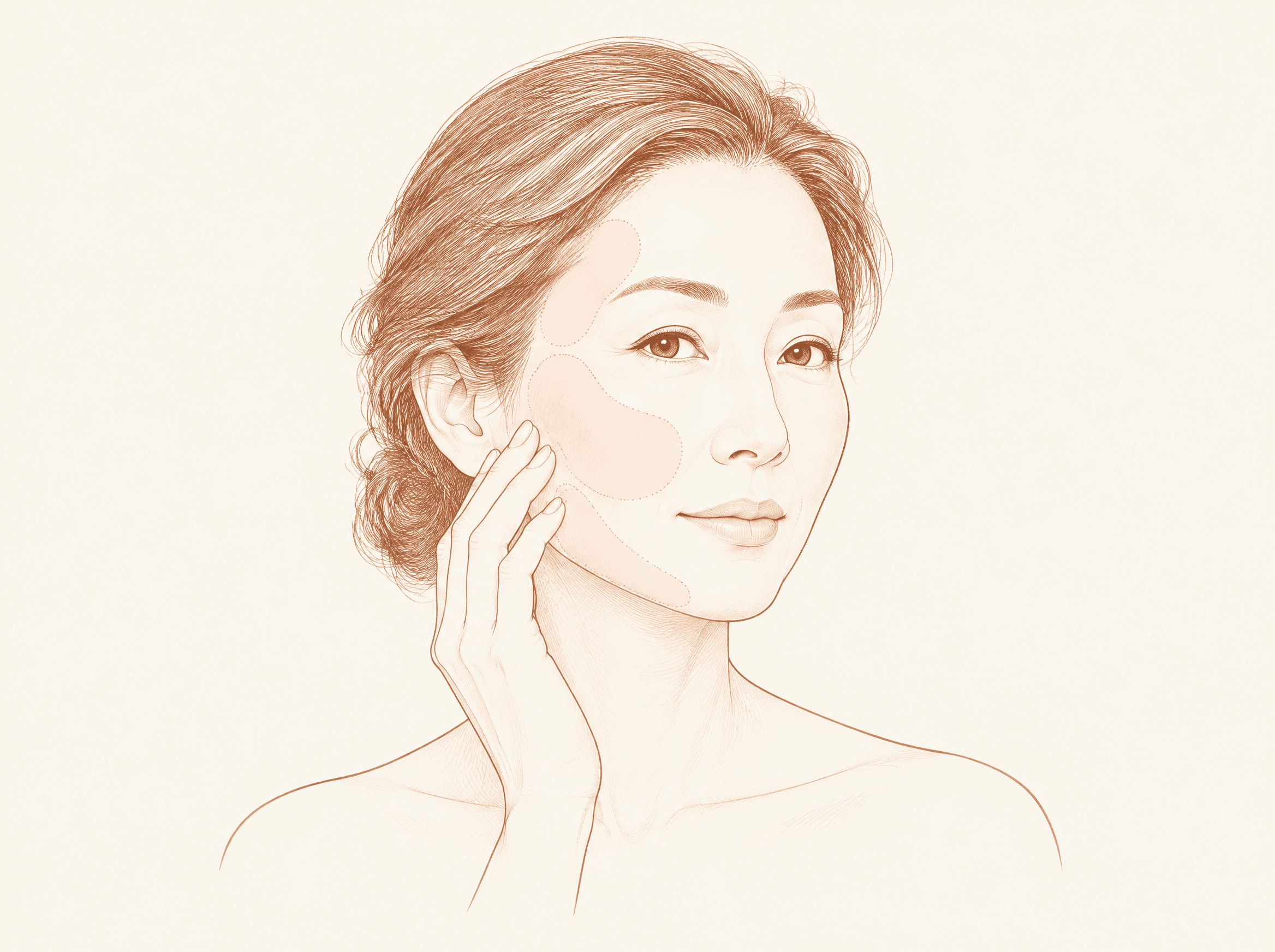
Nasolabial folds are a normal crease where the cheek meets the lip, so treatment can soften a deepened fold but not remove it. The cause decides the plan: lost cheek volume, descended tissue or loose skin. Options include fillers, bio-stimulators and energy-based lifting, and filler here carries a recognised vascular risk.
Nasolabial folds are the two lines that run from the sides of the nose to the corners of the mouth. Everyone has them, from childhood, because they mark where the cheek meets the upper lip. What changes with age is how deep they look, and that is what treatment can sometimes soften. It cannot remove the fold itself, and a face without one would not look natural.
This guide covers why the folds deepen, how a doctor works out which cause is behind yours, the non-surgical options considered for each cause, the risks, and when surgery is the more honest answer.
Key takeaways
The fold is normal anatomyIt marks where the cheek meets the lip. Treatment aims to soften a deepened fold, not erase it.
The cause decides the planLost volume, descended cheek tissue and loose skin each call for a different approach.
Support usually goes above the foldFilling the line itself is often not the answer, because the problem sits higher in the cheek.
This area carries real filler riskBlood vessels run close to the fold, so who injects and how matters.
Why do nasolabial folds get deeper?
Volume loss and cheek fat descent
The fat under the skin of the face sits in separate compartments rather than one sheet, a finding described by Rohrich and Pessa in Plastic and Reconstructive Surgery. With age, the deeper cheek compartments lose volume and the tissue above the fold sits lower. The cheek then rests against the fold, which makes the line look deeper even when the fold itself has not changed much.
Skin laxity
Skin makes less collagen and elastin over time, so it holds its shape less firmly. Looser skin folds more readily at a natural crease.
Sun, smoking and weight change
Long-term sun exposure and smoking both speed up the breakdown of collagen. Large changes in weight, up or down, alter how much support the mid-face has. These do not cause the fold, but they influence how early and how much it deepens.
How a doctor works out which cause is yours
A simple check helps: lie down and look in a mirror, or lift your cheek gently upwards and outwards with a fingertip. If the fold softens a lot, descended or deflated cheek tissue is a large part of it. If it barely changes, skin quality and an etched crease may matter more.
At a consultation the doctor looks at the whole mid-face, not just the line, because the fold is usually a sign of what is happening above it. This is the same reasoning used on our fine lines and wrinkles page, where folds are treated as a support problem rather than a wrinkle.
Non-surgical options, matched to the cause
| What is behind the fold | Commonly considered | What it does |
|---|---|---|
| Volume lost in the cheek | Dermal fillers | A hyaluronic acid gel restores support, often placed in the cheek above the fold rather than in the line |
| Gradual loss of support and skin quality | Bio-stimulators | Injectables such as Sculptra or Radiesse that prompt the skin's own collagen over time |
| Skin laxity | HIFU, Ultherapy or radiofrequency | Energy-based treatments used for lifting, tightening and firmness concerns |
Many plans combine more than one, and staged sessions are common. Which suits you, and in what order, is decided at assessment.
Dermal fillers
Fillers are hyaluronic acid gels placed by a doctor to add volume or support. For the nasolabial area, the doctor often restores support in the mid-cheek first, because filling the line directly can look heavy if the cause sits higher. Hyaluronic acid filler is gradually broken down by the body.
Bio-stimulators
Collagen-stimulating injectables work more gradually than fillers and are planned as part of a course. They cannot be dissolved, so they are planned carefully. Our Sculptra vs Radiesse guide explains how the two differ.
Energy-based lifting and firming
Focused ultrasound (HIFU and Ultherapy) and radiofrequency deliver heat into deeper layers of skin and are used for laxity rather than volume loss. They suit some people with early laxity, and they do not replace volume that has been lost.
Risks you should know about
Other risks include bruising, swelling, lumps or nodules, infection and allergic reactions. Bio-stimulators carry a recognised risk of delayed nodules. Energy-based treatments can cause temporary redness, swelling or tenderness. Your doctor will explain the risks for the specific treatment before you consent.
When surgery is the more honest route
When the skin and tissue have descended significantly, non-surgical treatments may soften the fold only a little, and adding more filler to compensate tends to make the face look heavy rather than refreshed. In that situation a doctor should tell you that a surgical opinion from a plastic surgeon may serve you better. A good consultation includes that answer when it is the right one.
Common questions
Can nasolabial folds be removed completely?
No. The fold is normal anatomy where the cheek meets the lip. Treatment aims to soften a fold that has deepened, and a face with no fold at all would not look natural.
Is filler injected straight into the nasolabial fold?
Not always. When the fold has deepened because the cheek above it has lost volume, support is often placed in the cheek rather than in the line. The doctor decides after assessing the whole mid-face.
Is filler in the nasolabial area safe?
It is a recognised higher-risk area because blood vessels run close to the fold. Serious complications are rare, but it should only be done by a doctor trained in facial anatomy and in managing complications.
Can HIFU or radiofrequency treat nasolabial folds?
They are used for skin laxity, which is one cause of a deeper fold. They do not replace lost volume, so whether they suit you depends on what is behind your fold.
Book a free consultation
A doctor will assess your skin and tell you honestly whether this is the right option for you, including when it is not.
Related pages on our site
About the author
Dr Yvonne Chuah
Aesthetic Physician
MD, MAC, LCP Certified · MMC 86640
Dr. Yvonne Chuah graduated from Nizhny Novgorod State Medical Academy (NNSMA). She began her medical career serving as a Medical Officer at Hospital Pulau Pinang, followed by further service at Hospital Sungai Bakap.
View full profile- Written by
- Dr Yvonne Chuah, MMC 86640
- Reviewed by
- Dr Lucas Chew, MMC 103677
- Published
- 9 November 2026
This page is general information about aesthetic treatments and is not medical advice. Treatments carry risks that are explained during consultation, and individual results vary. A doctor will assess whether a treatment is suitable for you before it is carried out.