Treatments Explained4 min read
Fat freezing aftercare: what is normal, what helps and when to call your doctor
After fat freezing, redness, firmness, swelling, tingling and numbness in the treated area are expected and usually ease over hours to a few weeks. Numbness can last longer. A rare delayed effect, paradoxical adipose hyperplasia, makes the area firmer and larger instead, and needs a doctor's assessment.
Fat freezing (cryolipolysis) cools a pocket of fat through the skin, so the treated area reacts for a while afterwards. Redness, numbness, firmness and some tenderness are expected and usually settle on their own. A small number of effects are not part of normal recovery and should be shown to a doctor.
This guide walks through what is normal after a session, what helps, the rare side effect worth knowing by name, and when to call the clinic.
Key takeaways
Most reactions are temporaryRedness, firmness, swelling, tingling and numbness usually ease over hours to a few weeks.
Numbness can outlast the rednessReduced sensation in the treated area can take some weeks to return to normal.
One rare effect to knowParadoxical adipose hyperplasia, where the treated area slowly firms and enlarges instead of reducing.
A stable weight mattersFat freezing does not stop the remaining fat cells growing if weight goes up.
What is normal after fat freezing?
Straight after the applicator comes off, the area often looks red and feels firm, cold or oddly numb. This typically settles over the following hours to days.
Over the first weeks, temporary tenderness, swelling, tingling, itching, bruising or a dull ache can come and go in the treated area. In the case series that first described its rare complication, published in JAMA Dermatology, the authors also noted that a temporary decrease in sensation was common and could last up to about eight weeks.
Pain that starts a few days later
Some people feel little at first, then notice a deeper ache, tingling or sensitivity a few days after the session. Delayed-onset pain after cryolipolysis is described in Dermatologic Surgery as usually settling on its own. It is still worth telling the clinic about, because your doctor can advise on what is safe to take and rule out anything else.
What helps while it settles
- Wear loose clothing over the area. Some people find a compression garment more comfortable for the first weeks.
- Keep to your usual diet and activity, and aim for a stable weight.
- Follow the aftercare your doctor gives you for your own areas, including what to take for discomfort.
- Avoid scratching or rubbing the area if it itches, and keep the skin clean.
There is no special diet to follow. Any change in the area is gradual, because the body clears the treated fat cells over several weeks, so it is usually reviewed with your doctor a couple of months after the session rather than judged in the first days.
The rare side effect worth knowing: paradoxical adipose hyperplasia
Paradoxical adipose hyperplasia (PAH) is a delayed effect in which the treated pocket of fat gradually becomes firmer and larger instead of reducing. It usually shows up weeks to months after treatment, often in the shape of the applicator. It was first reported in JAMA Dermatology in 2014 as rare.
Later research suggests it is more common than the manufacturer's early figures. A 2025 systematic review in Aesthetic Surgery Journal Open Forum, pooling 28 studies and about 13,000 patients, estimated roughly 1 case in every 455 patients, while noting the evidence is of low certainty. Reports have described it as relatively more frequent in men.
PAH does not go away on its own and is not treated with more fat freezing. If you notice a treated area becoming firmer or larger rather than smaller, see your doctor so it can be assessed and the options discussed.
When to contact the clinic
These are uncommon, but they are not part of normal recovery and should be checked rather than waited out.
Who should not have fat freezing at all
Fat freezing is not a weight-loss treatment, and not every area can be held by an applicator. It is deferred in pregnancy and breastfeeding, and avoided with cold-related conditions such as cold urticaria or cryoglobulinaemia, a hernia near the area, or broken skin over it. The Fat Freezing page lists who should postpone or avoid it, and the devices used, CoolSculpting and Cooltech, are described on their own pages. If your goal is broader body shaping, body slimming covers the other approaches a doctor may discuss.
Common questions
How long does numbness last after fat freezing?
Reduced sensation in the treated area is common and can take some weeks to return to normal. Tell your doctor if it is still there at your review.
Is it normal for pain to start a few days after fat freezing?
Some people notice a deeper ache or tingling a few days later, and it usually settles on its own. Let the clinic know so your doctor can advise you.
Do I need to avoid any food after fat freezing?
No. Keep to your usual diet and activity and aim for a stable weight.
What is paradoxical adipose hyperplasia?
A rare delayed effect in which the treated fat becomes firmer and larger instead of reducing. It does not go away on its own, so see your doctor if you notice it.
Book a free consultation
A doctor will assess your skin and tell you honestly whether this is the right option for you, including when it is not.
Related pages on our site
About the author
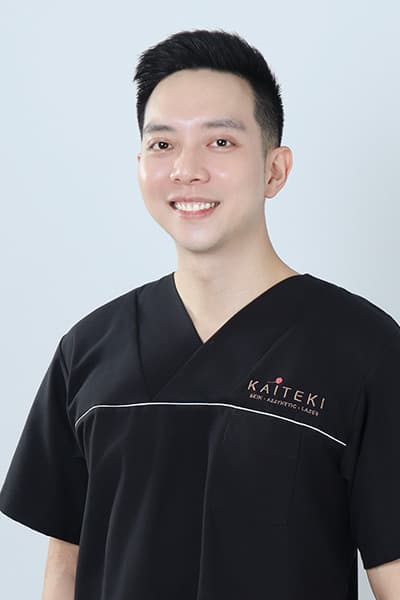
Dr Calvin Tan
Aesthetic Physician
MD, MAC · MMC 71657
Dr Calvin is a passionate medical doctor with a Medical Degree from Universiti Sains Malaysia (USM). He has over 9 years of experience in the medical industry where he worked in Orthopaedic Surgery as a medical officer then he pursued his interest into medical aesthetics. With a strong foundation in surgical training, he has acquired the hands on dexterity and precision that he can bring that experience into the field of medical aesthetics.
View full profile- Written by
- Dr Calvin Tan, MMC 71657
- Reviewed by
- Dr Tim Chua, MMC 77677
- Published
- 9 November 2026
This page is general information about aesthetic treatments and is not medical advice. Treatments carry risks that are explained during consultation, and individual results vary. A doctor will assess whether a treatment is suitable for you before it is carried out.