Treatments Explained7 min read
Best laser for acne scars: how each works and what to expect

There is no single best laser for acne scars. The right choice depends on the scar type: RF microneedling is often the starting point for rolling and boxcar scars, fractional CO2 for established or deeper scarring, and pico laser for the flat marks around them. Most plans combine treatments over several sessions.
There is no single best laser for acne scars, because acne scars are not one thing. Ice pick, boxcar, rolling and raised scars sit at different depths and have different shapes, so each responds to a different kind of energy. Most people have more than one type, which is why the plans that work tend to combine treatments rather than rely on one machine.
This guide explains the scar types, how each of the main devices works, which scars each is commonly considered for, what sessions and downtime look like, and what is realistic. It also covers why active acne comes first, which matters a great deal in Malaysia's climate.
Key takeaways
- No single best laser: the right choice follows the scar type. RF microneedling is often the starting point for rolling and boxcar scars, fractional CO2 for established or deeper scarring.
- Pico laser is mainly for marks: it targets the flat red or brown discolouration around scars more than the dips themselves.
- Ice pick scars are the hardest: they rarely resolve fully with energy devices alone.
- Sessions: usually a course of several sessions around four weeks apart, set after assessment.
- Downtime: roughly two to three days of redness after RF microneedling, five to seven days after fractional CO2, minimal after pico laser.
- Expectations: depressed scarring can often be improved, though rarely erased.
What types of acne scars are there?
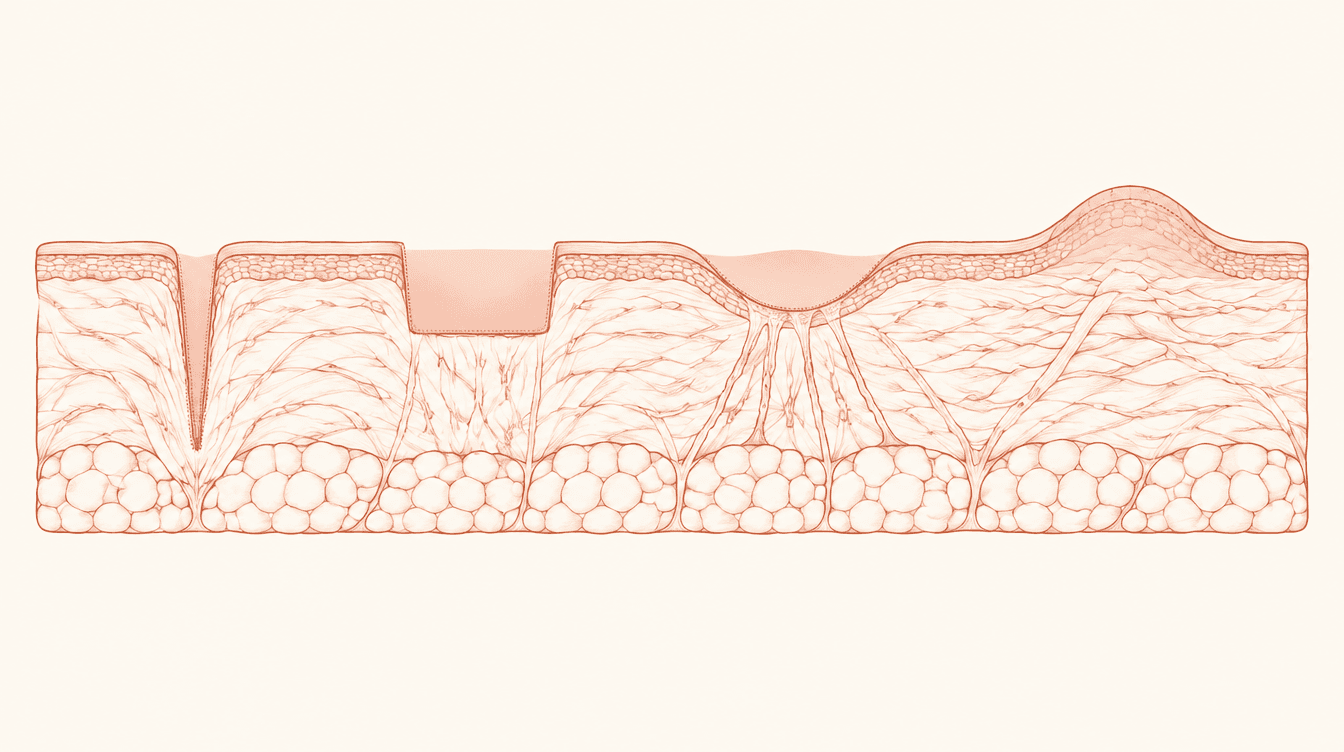
Acne scars fall into four main types. Identifying yours is the first step, because each responds to a different approach.
 Ice pickBoxcarRollingRaised
- Ice pick: narrow, deep, sharply defined pits that extend far into the skin.
- Boxcar: wider depressions with defined, steep edges, like a shallow crater.
- Rolling: soft, wave-like undulations caused by bands of tissue tethering the skin from below.
- Raised (hypertrophic or keloid): firm, thickened tissue above the skin, more common on the chest, shoulders and back.
Raised scars are treated very differently from depressed ones and need a separate assessment, because heat-based treatments can behave differently on them. Flat red or brown marks left after a spot are not scars at all: the skin is smooth, only the colour is different. Our acne scars page explains how to tell a scar from a mark.
How do lasers treat acne scars?
Energy-based scar treatments work in one of two broad ways.
Ablative resurfacing, such as fractional CO2, removes microscopic columns of damaged skin in a controlled pattern. As each column heals, the skin regenerates and remodels the collagen around it, which over time softens the edges and depth of scars.
Non-ablative and needle-delivered treatments leave the surface largely intact. RF microneedling uses fine needles to release radiofrequency heat inside the dermis, prompting collagen remodelling where the scar tissue sits. Pico laser delivers very short pulses that mainly break up pigment, which is why it suits marks better than texture.
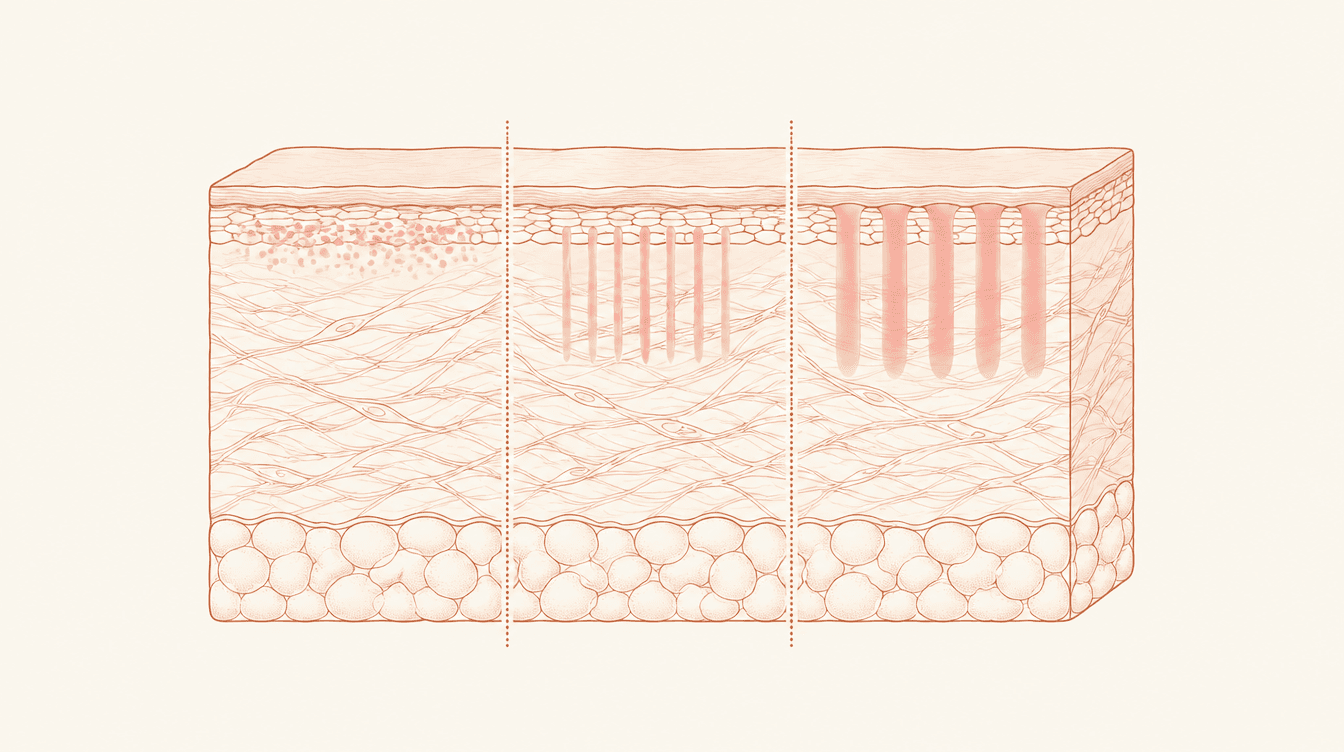 Pico laserRF microneedlingFractional CO2
Whichever device is used, the scar is remodelled rather than removed, and that remodelling takes months.
Comparing the main options
| Treatment | Commonly considered for | Typical course | Downtime |
|---|---|---|---|
| RF microneedling | Rolling and boxcar scars, texture, pores | Several sessions, around 4 weeks apart | 2 to 3 days of redness |
| Fractional CO2 resurfacing | Established, deeper or mixed scarring | Assessed individually | 5 to 7 days |
| Pico laser | Flat red or brown marks around scars | Multiple sessions, spaced | Minimal |
| Ice pick scars | Assessed individually, often a combination | Individual | Individual |
RF microneedling devices such as Potenza, Morpheus8 and Sylfirm X are often the starting point for rolling and boxcar scars. They are generally considered a lower pigmentation-risk option for the medium and deeper skin tones common in Malaysia.
Fractional CO2 is used where scarring is more established. It brings more downtime and needs careful sun avoidance afterwards. On Asian skin it is often used more conservatively, at lower intensity across more sessions.
Pico lasers such as PicoSure are most relevant where what remains is discolouration rather than texture. Some pico devices carry a fractional lens the manufacturer indicates for acne scars in lighter skin types, and your doctor will say whether that applies to you. If you are comparing pico devices, Picocare vs PicoSure explains how they differ.
Why combination plans often work better
Because different scar types sit at different depths, one device rarely addresses everything on the same face. A plan for mixed scarring might use RF microneedling for rolling scars, resurfacing for established texture, and pico laser for the marks around them, sequenced over months.
Some plans add a supportive treatment after energy-based sessions, such as exosome therapy or a polynucleotide skin booster like Rejuran, to support skin recovery and quality. The evidence for these as scar treatments in their own right is still developing, so they are offered alongside scar treatment rather than instead of it.
What to expect after treatment
First visit
Assessment
A doctor identifies your scar types and what is a mark rather than a scar.
Days after
Recovery
From minimal after pico to 5 to 7 days after fractional CO2.
Around 4 weeks
Next session
A course of several sessions is usual, reviewed as it goes.
Over months
Remodelling
Collagen remodels gradually. Change is not visible the next week.
6 to 12 months
Reassessment
Deeper scars are often formally reassessed after a course.
After RF microneedling, most people wait two to three days for the redness to settle. After fractional CO2, expect redness, swelling and a hot, tight feeling for a day or two, then several days of bronzing and flaking. Pico laser usually leaves little to see.
Improvement builds over months as collagen remodels beneath skin that already looks recovered. Taking your own photos in consistent light helps, because slow change is very hard to see in the mirror.
Acne treatment in Malaysia: settle active acne first
Treating scars while acne is still active usually does not work well, and treating active acne will not remove existing scars. Active inflammatory acne is usually managed medically first, and energy-based scar treatment is considered once breakouts are under control, or alongside medical treatment where the doctor judges it appropriate.
Malaysia's heat and humidity add to the challenge. Sweat, occlusive products and sun exposure all play a part, and brown marks after spots are very common in the medium and deeper skin tones seen here. Earlier assessment matters most with deep or cystic acne, because the aim is to settle inflammation before it leaves permanent change. Our acne page covers what drives breakouts and when to see a doctor.
Who is a good candidate?
Laser and energy-based scar treatment tends to suit people who have:
- ice pick, boxcar, rolling or mixed scarring that has been stable for some months
- active acne that is under control
- a preference for non-surgical improvement in texture
- the time for a course of sessions rather than a single visit
- realistic expectations of improvement rather than complete removal
Tell your doctor if you are pregnant or breastfeeding, take or recently took oral acne medication, have a history of cold sores, keloid scarring or recent tanning, or have had another skin procedure in the past few weeks. Any of these may change what is appropriate or when.
Risks to understand
Redness, swelling, dryness, flaking and a warm or gritty feeling for a few days are common. Less common effects include prolonged redness, blistering, infection or a change in skin pigment.
Post-inflammatory hyperpigmentation is the specific concern for medium and deeper skin tones. Doctors manage it by choosing suitable devices, using gentler settings, spacing sessions further apart and being strict about sun protection. That can lengthen the timeline, and it is a deliberate safety trade-off. Daily broad-spectrum sunscreen is part of every plan, before and after treatment.
Common questions
What is the best laser for acne scars?
There is no universal best laser, because ice pick, boxcar, rolling and raised scars sit at different depths and respond differently. RF microneedling is often the starting point for rolling and boxcar scars, and fractional CO2 for more established scarring. A doctor examines which types you have before recommending a device or a combination.
Can laser treatment completely remove acne scars?
Depressed scarring can often be improved, though rarely erased. Ice pick scars in particular rarely resolve fully with energy devices alone. A realistic goal is a meaningful improvement in texture over a course of treatment, not a complete erasure.
Is laser treatment for acne scars painful?
Most people describe it as uncomfortable rather than painful. Numbing cream is applied beforehand where appropriate, and cooling is used during and after. Ablative CO2 resurfacing is felt more than RF microneedling, and RF microneedling more than pico laser.
How soon will I see results?
Improvement builds gradually over months as collagen remodels, not the following week. Deeper scars are often formally reassessed six to twelve months after a course. Photos taken in the same light help, because slow change is hard to see in the mirror.
Is laser for acne scars safe on Asian skin?
Yes, when the device and settings suit your skin. Medium and deeper skin tones carry a higher chance of post-inflammatory hyperpigmentation after energy-based treatment, which doctors manage with conservative settings, longer intervals between sessions and strict sun protection.
Book a free consultation
A doctor will assess your skin and tell you honestly whether this is the right option for you, including when it is not.
Related pages on our site
About the author
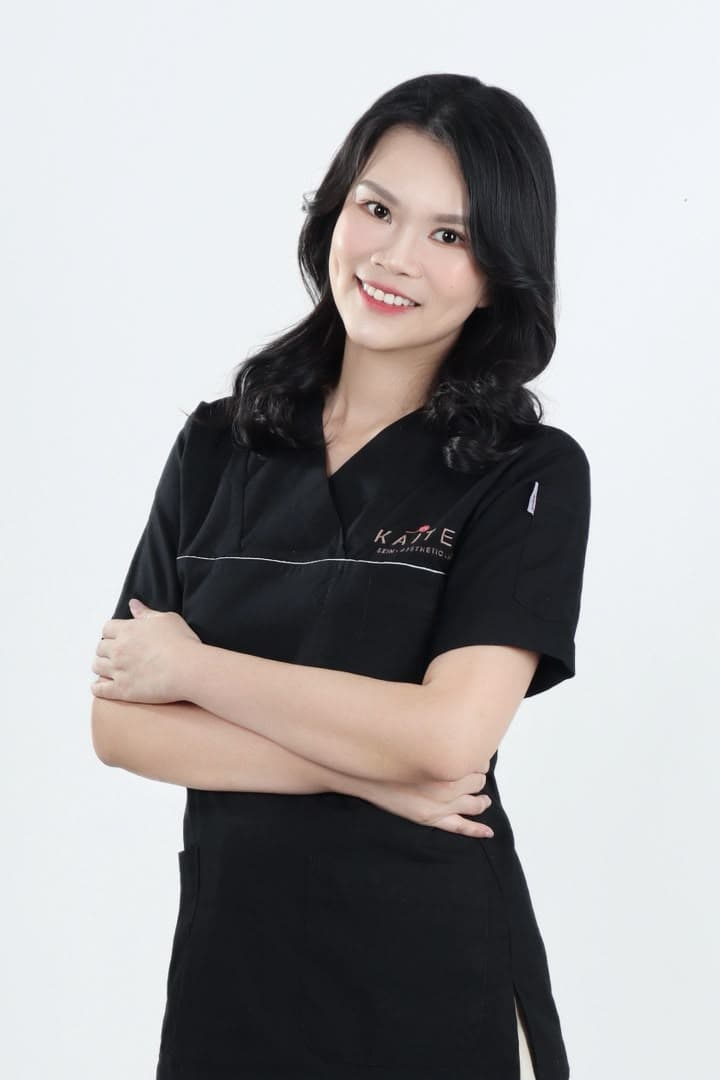
Dr Hong Peiyi
Aesthetic Physician
MD · MMC 64902
Dr Hong Peiyi graduated from Universiti Putra Malaysia (UPM) and subsequently completed advanced training in Family Medicine. With more than a decade of experience in primary care, she has developed a strong foundation in comprehensive and patient-centred healthcare.
View full profile- Written by
- Dr Hong Peiyi, MMC 64902
- Reviewed by
- Dr Chloe Wan Poh Yee, MMC 104547
- Published
- 11 October 2026
This page is general information about aesthetic treatments and is not medical advice. Treatments carry risks that are explained during consultation, and individual results vary. A doctor will assess whether a treatment is suitable for you before it is carried out.