
Regenerative
Exosome Therapy
A regenerative approach used alongside other treatments for skin and scalp concerns.
Free consultation, no obligation.
- Used alongside other treatments
- Microneedling, a laser or PRP, planned together
- Skin or scalp
- The two areas it is applied to
- Assessment first
- Your first visit is a doctor consultation, not a treatment
On this page
In brief
Exosome therapy applies preparations of exosomes, tiny cell-derived vesicles that carry signalling molecules, to the skin or scalp. At Kaiteki it is usually used alongside another procedure such as microneedling, a laser or PRP, not on its own. The evidence base is still developing, so a doctor assesses whether it suits your plan.
Results from Kaiteki patients
Before and after photos of patients treated at Kaiteki for acne and hair loss. A plan may combine more than one treatment.
10 photos · tap one to enlarge
Active acne, before and after a course of treatment at Kaiteki
Scalp coverage, before and after a course of treatment at Kaiteki
Active acne, before and after a course of treatment at Kaiteki
Scalp coverage, before and after a course of treatment at Kaiteki
Active acne, before and after a course of treatment at Kaiteki
Scalp coverage, before and after a course of treatment at Kaiteki
Active acne, before and after a course of treatment at Kaiteki
Hair density, before and after a course of treatment at Kaiteki
Active acne, before and after a course of treatment at Kaiteki
Hair density, before and after a course of treatment at Kaiteki
Photographs of Kaiteki patients, published with consent. Individual results vary and are not guaranteed. These images are not a promise of outcome. A doctor will assess whether any treatment is suitable for you.
What is exosome therapy?
Exosomes are tiny cell-derived vesicles that carry signalling molecules such as proteins, lipids and RNA. In the body they act as messengers between cells, and this signalling role is why they are being explored in regenerative aesthetics.
Why is exosome therapy applied after another procedure?
The aim of exosome therapy is to support the skin's or scalp's own repair and renewal processes by delivering exosome-based signalling molecules to the treated area. Because exosomes are small, they are commonly applied after a procedure that briefly opens channels in the skin, such as microneedling or certain lasers.
What Exosome Therapy is used for at Kaiteki
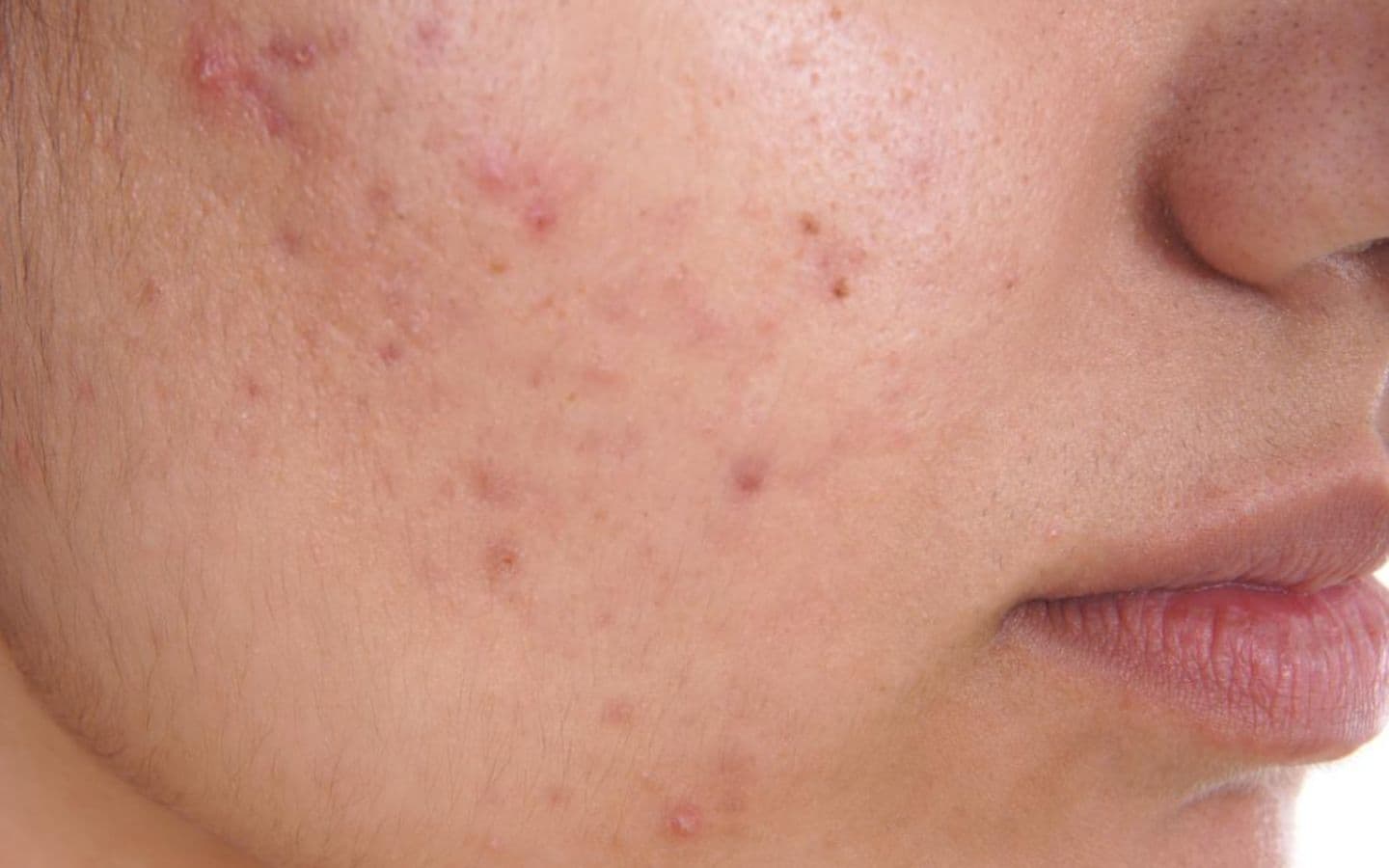
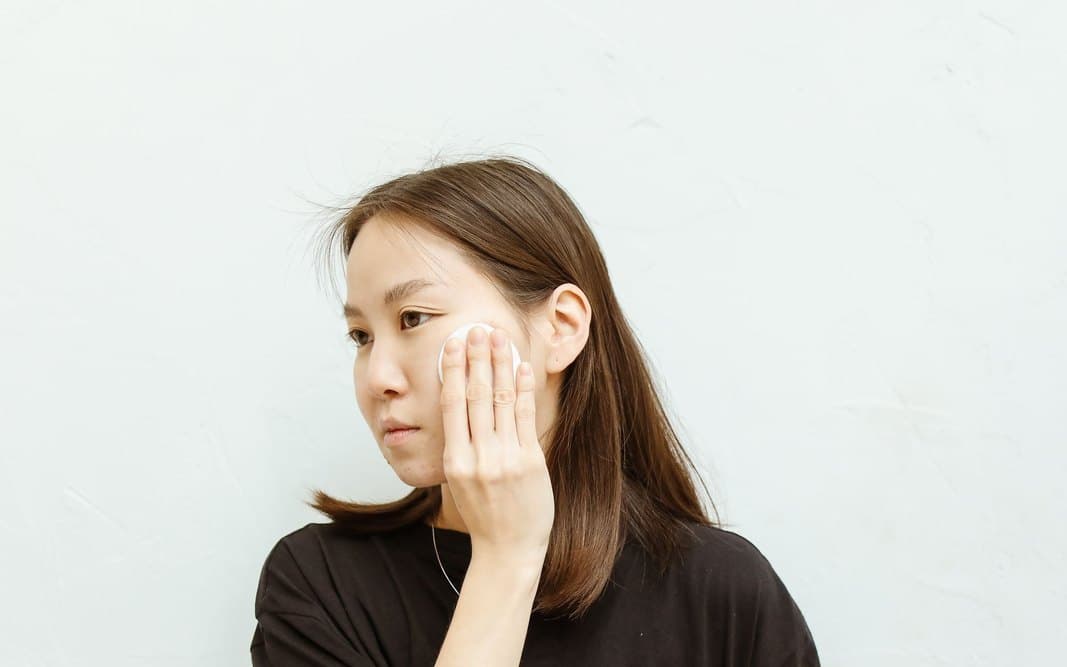
Skin recovery after energy-based acne treatment
A regenerative approach applied after energy-based treatment to support skin recovery.
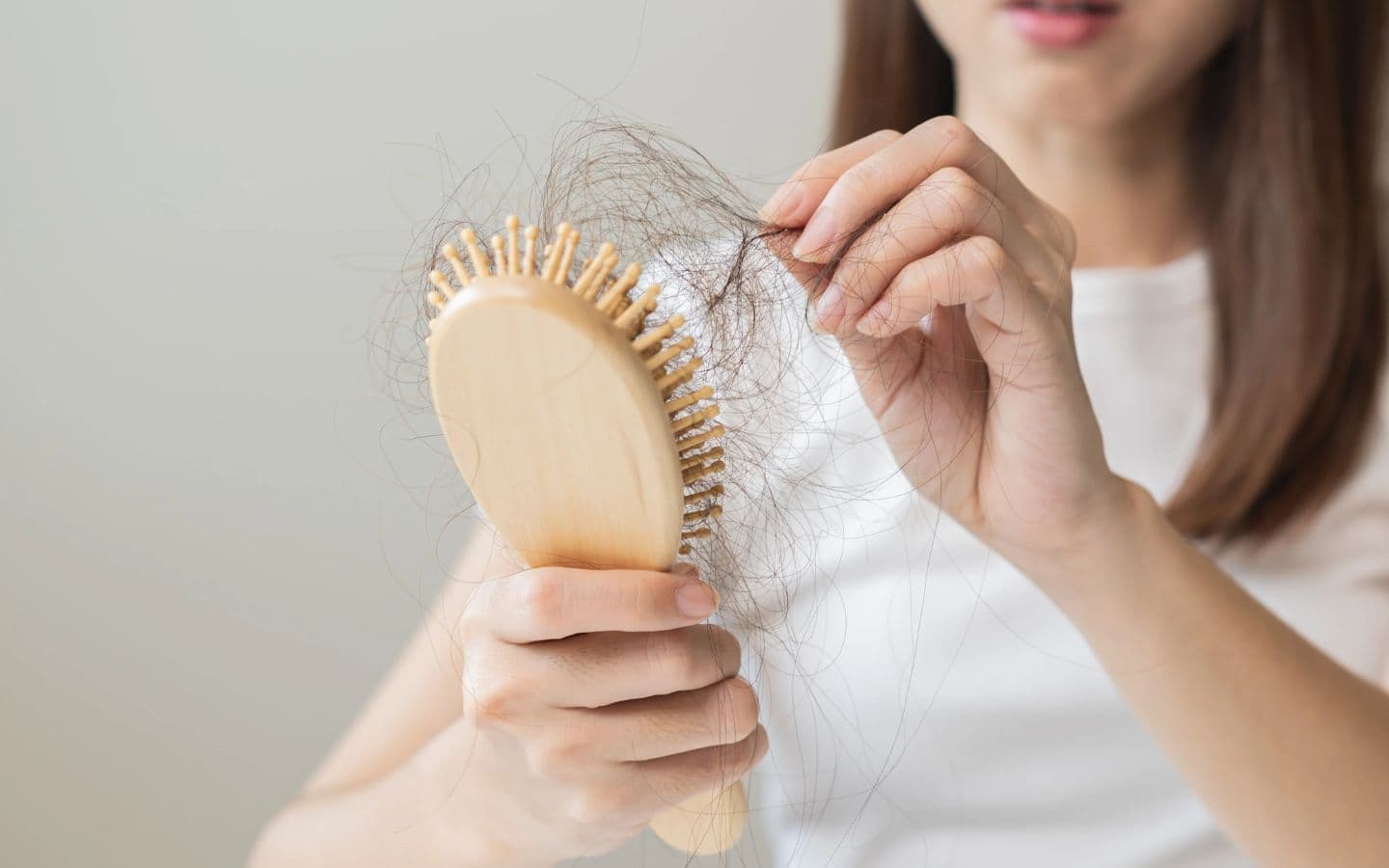
The scalp, alongside medical hair-loss treatment
A regenerative preparation applied to the scalp to support the follicular environment, offered as an adjunct to medical management.
Wondering whether exosome therapy adds anything to your plan?
It is an adjunct, so whether it belongs in your plan depends on what it would accompany.
Ask about this on WhatsAppFree consultation, about 20 to 30 minutes, no obligation.
Who should postpone or avoid it
- Pregnancy or breastfeeding. Treatment is deferred.
- Certain skin or scalp conditions in the area to be treated.
- Some medical conditions or medications, which your doctor goes through with you at consultation.
What a session involves
Consultation and assessment
Your first visit is a consultation, not a treatment. A doctor assesses your skin or scalp and decides whether exosome therapy is appropriate, and what it would be combined with.
The accompanying procedure
The session is built around the procedure exosome therapy accompanies: microneedling, a laser, or PRP (platelet-rich plasma).
Application
The exosome preparation is applied to the treated skin or scalp.
Afterwards
A short course spaced a few weeks apart is common.
In the treatment room
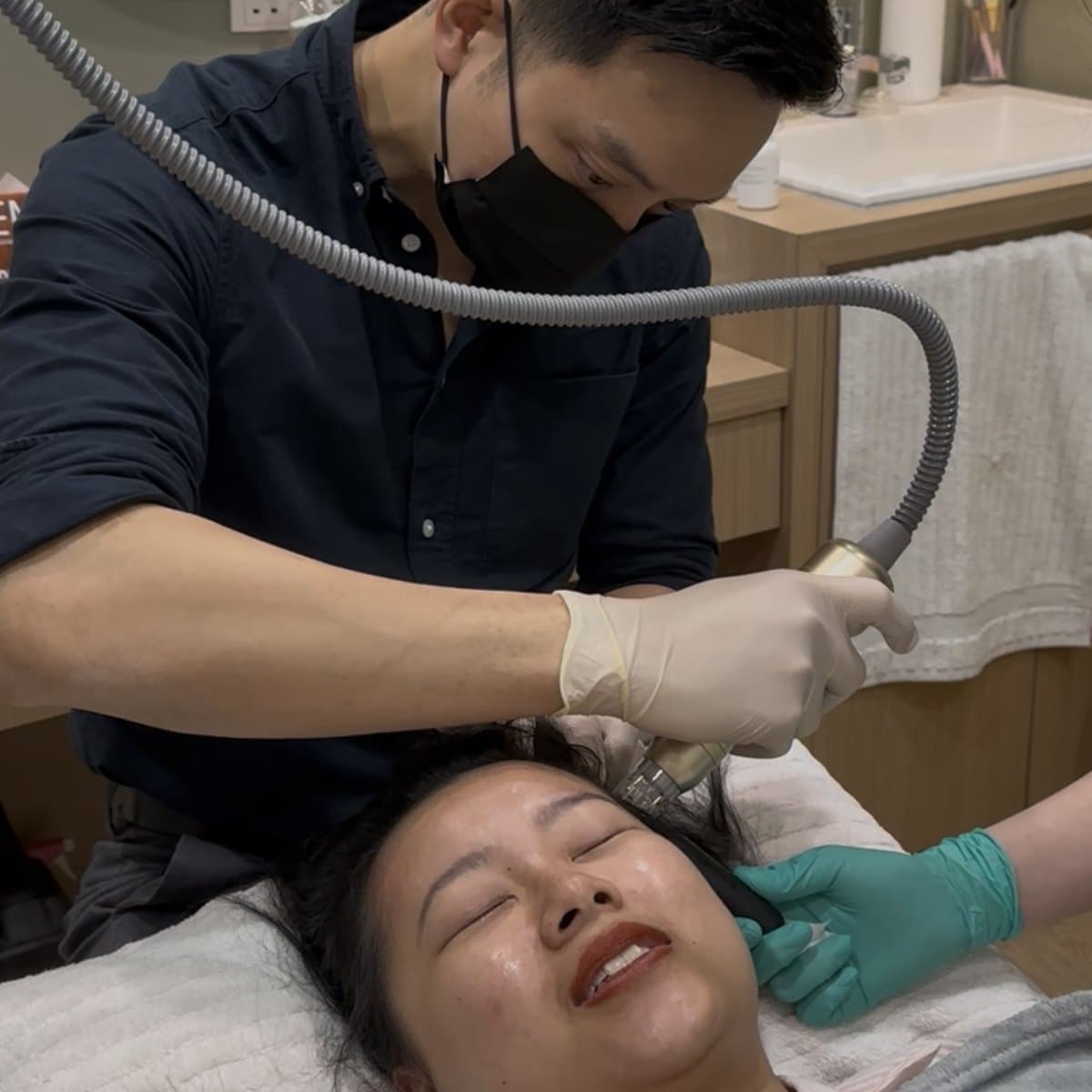
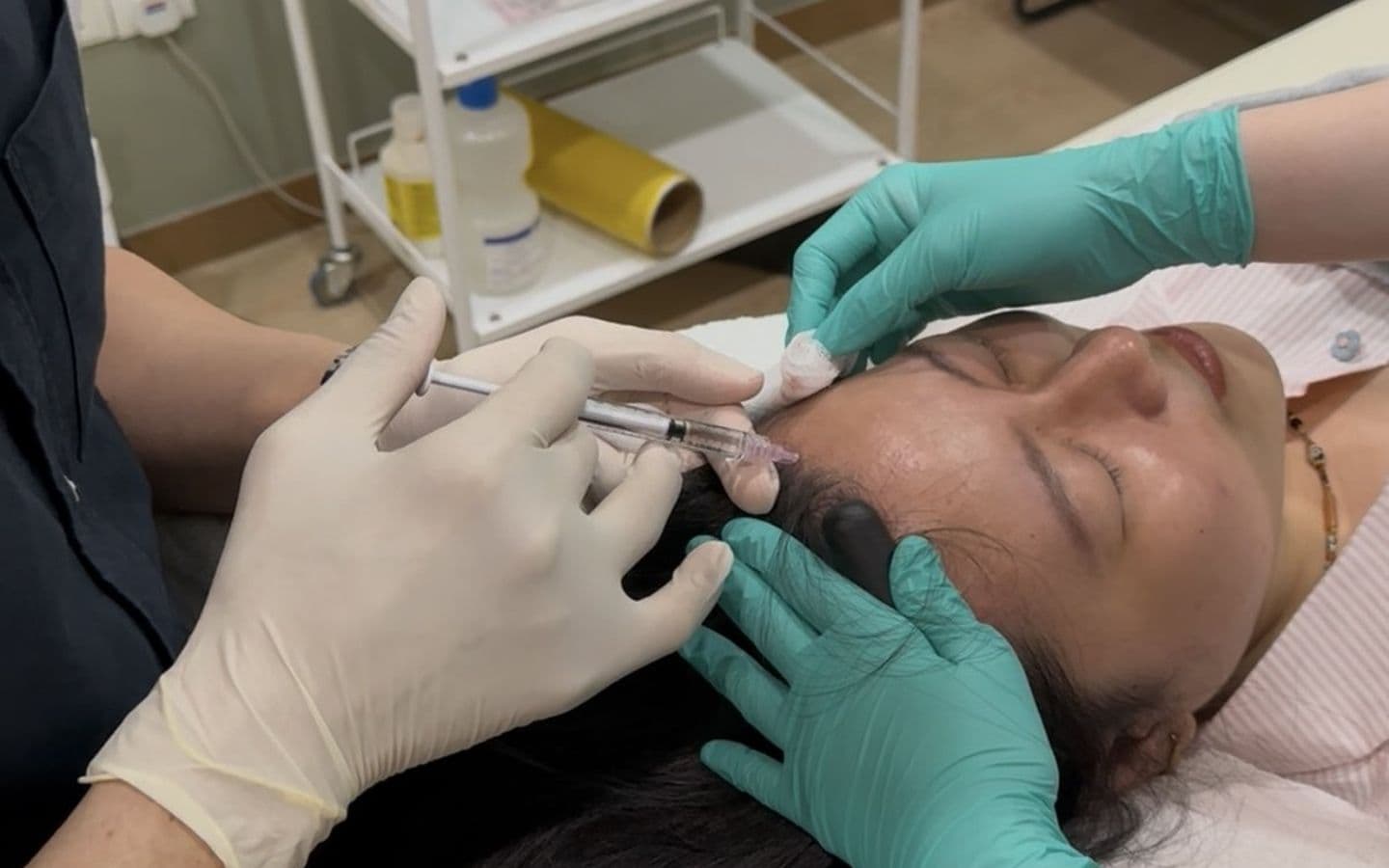
A doctor moves a handheld device over the patient's scalp as an assistant helps.
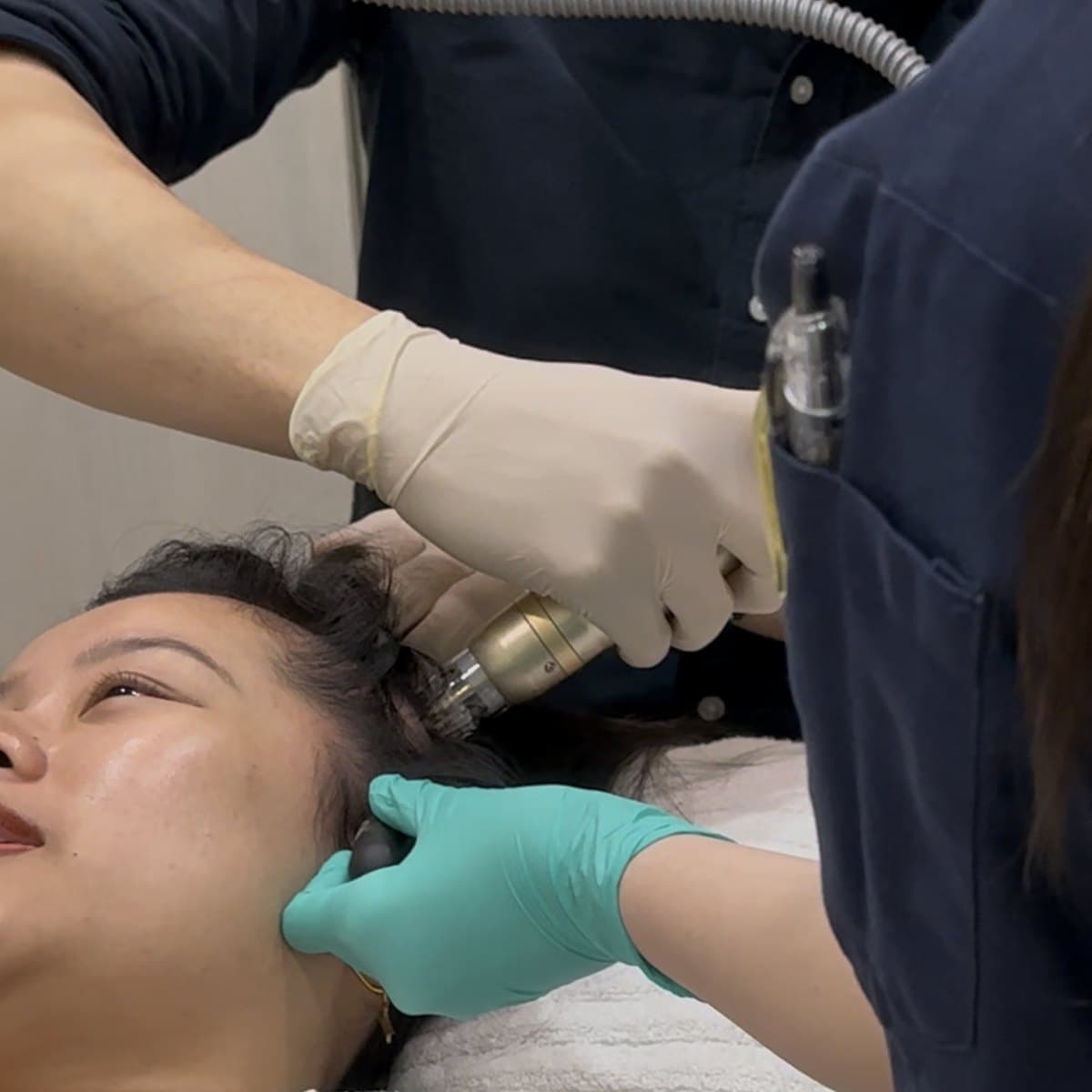
A handheld device is applied to the scalp during a session.
After a session
Downtime is set mostly by the procedure exosome therapy is combined with.
The first few days
When paired with microneedling or a laser, temporary redness, mild swelling or sensitivity can occur, and typically settles over the following days.
Gentle skincare and sun protection are usually advised afterwards.
Risks, side effects, and what Exosome Therapy cannot do
The doctor explains these, and those of the procedure it accompanies, before you decide.
Common and temporary
Redness, swelling, sensitivity or irritation at the treated area.Less common
The procedure it is combined with carries its own considerations.What it cannot do
- It is not a standalone acne treatment, only an adjunct after energy-based treatment.
- It is not a treatment for hair loss in its own right, and it is not a substitute for finding the cause.
- It is not established in the way the procedures it accompanies are. The evidence base is still developing.
Tell your doctor if you are or may be pregnant or breastfeeding.
What affects the number of sessions, and the cost
Kaiteki does not quote prices online: exosome therapy is priced as part of a combination, so the cost only exists once that is decided. What moves it:
- The concern being addressed.
- The area treated, skin or scalp.
- The number of sessions, and your individual response across the course.
Common questions
Is exosome therapy safe?
Common effects are temporary redness, swelling, sensitivity or irritation, and the accompanying procedure carries its own risks. The evidence base is still developing.
Who is a suitable candidate for exosome therapy?
People already planning microneedling, a laser or PRP for skin recovery or scalp concerns may be assessed for it.
When might I notice a change?
Any change develops gradually over the weeks after treatment, not immediately, and the extent varies between people.
Can exosome therapy treat hair loss on its own?
No. On the scalp it is used alongside medical hair-loss treatment, not as a treatment in its own right, and it is not a substitute for finding the cause of the hair loss.
Read next
Where to go next
Back to all treatments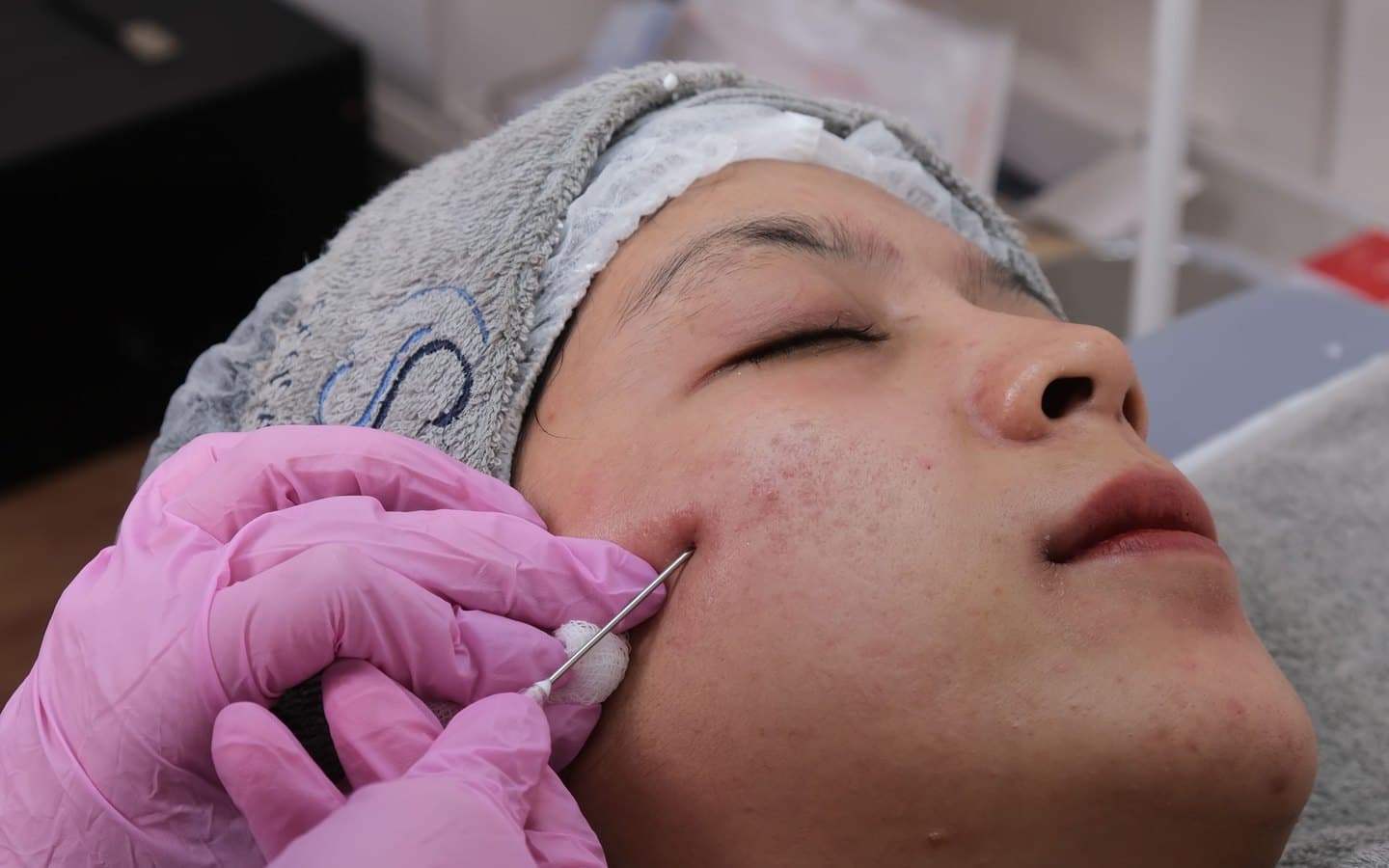
Book a free consultation
The consultation is free, takes about 20 to 30 minutes, and there is no obligation to book treatment afterwards. A doctor will examine your skin and tell you whether Exosome Therapy is appropriate, and if it isn’t, what would be.
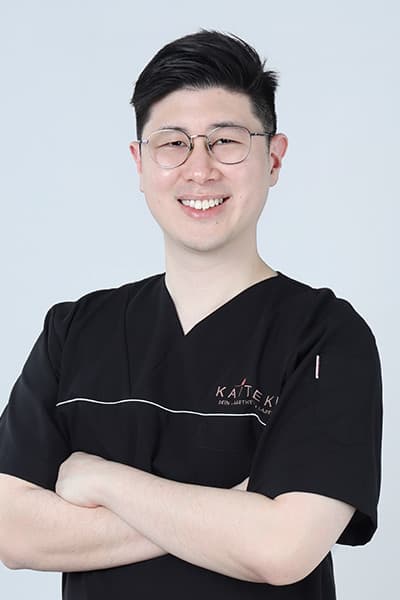
Ask about this treatmentMedically reviewed by
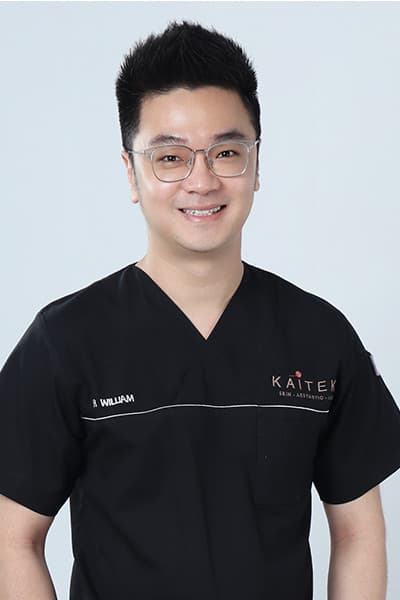
Dr William Yap
Partner, Aesthetic Physician
MD, LCP Board Certified, MAC · MMC 68812
Dr William Yap obtained his Medical Degree (MD) from University of Gahjah Mada. After completing his compulsory house officer training, he continued his 6 years journey in government hospital as medical officer. He has been rotating in different subdepartment including dermatology, infectious disease, cardiology, etc to enhance his skills and knowledge.
View full profile- Reviewed by
- Dr William Yap, MMC 68812
- Last reviewed
- 5 Jun 2026
- Next review due
- 5 Jun 2027