Skin Concerns11 min read
Hair loss treatment in Malaysia: the options, and how to choose
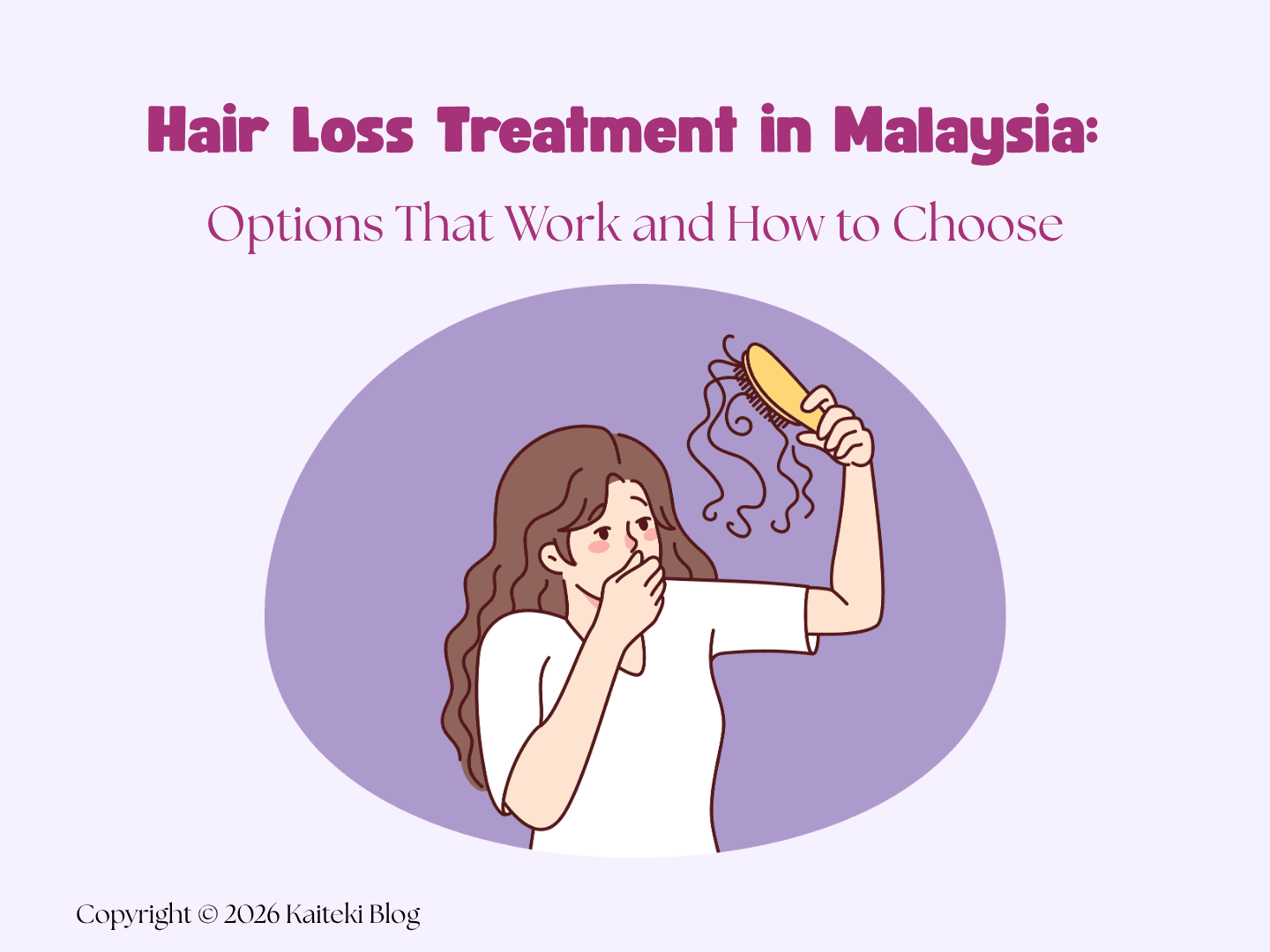
Hair loss treatment in Malaysia ranges from over-the-counter topicals to prescription medical management, in-clinic regenerative treatment and transplant surgery. Which one is appropriate depends on the cause, which is why a scalp assessment comes first. Hereditary pattern loss, stress-related shedding and a scalp condition are each managed differently.
Hair loss affects a majority of men and a substantial proportion of women at some point in their lives, with the International Society of Hair Restoration Surgery putting the figures at roughly 60% and 40% respectively. In Malaysia the options run from over-the-counter topicals through in-clinic regenerative treatment to transplant surgery, and they are not interchangeable. Which one is appropriate depends on why your hair is falling.
That last point does most of the work in this guide. Hair loss is one of the few cosmetic concerns where treating the wrong thing costs you more than money, because some causes are time-sensitive. This guide covers what causes hair loss, what each treatment actually does, how to think about the choice at different stages, and what to look for when you are searching for hair loss treatment near you.
Key takeaways
- The cause decides the treatment: hereditary pattern loss, stress-related shedding, an autoimmune condition and a scalp infection are managed in completely different ways. Assessment comes first.
- Pattern loss is the most common: hereditary androgenetic alopecia accounts for the large majority of male hair loss, and it is also the most common cause in women, though it presents differently.
- Combination approaches are the norm: medical management, in-clinic treatment and correcting any underlying deficiency are usually used together rather than one at a time.
- Timing genuinely matters: a follicle still producing fine hair can often be supported, while one dormant for years or scarred by a skin condition cannot be brought back by any treatment.
- Choosing a clinic: an LCP certified doctor, a proper scalp assessment before anything is recommended, and a written plan you can take away and think about.
Common causes of hair loss
Hair grows in a cycle. Each follicle spends years in an active growing phase, passes through a short transitional phase, then rests before the hair sheds and the cycle begins again. Because every hair on your head sits at a different point in that cycle, finding hair on the pillow or in the drain is normal. Hair loss becomes a concern when the balance shifts, and the reason it has shifted is what matters.
Androgenetic alopecia (pattern loss)
The most common cause by a wide margin. It is hereditary and driven by the sensitivity of follicles to DHT (dihydrotestosterone), a hormone that gradually shrinks affected follicles so they produce finer, shorter hairs until they stop. In men it follows a recognisable distribution: the temples recede and the crown thins. In women it more often shows as a widening central parting while the front hairline stays intact, which is why it is frequently missed for longer.
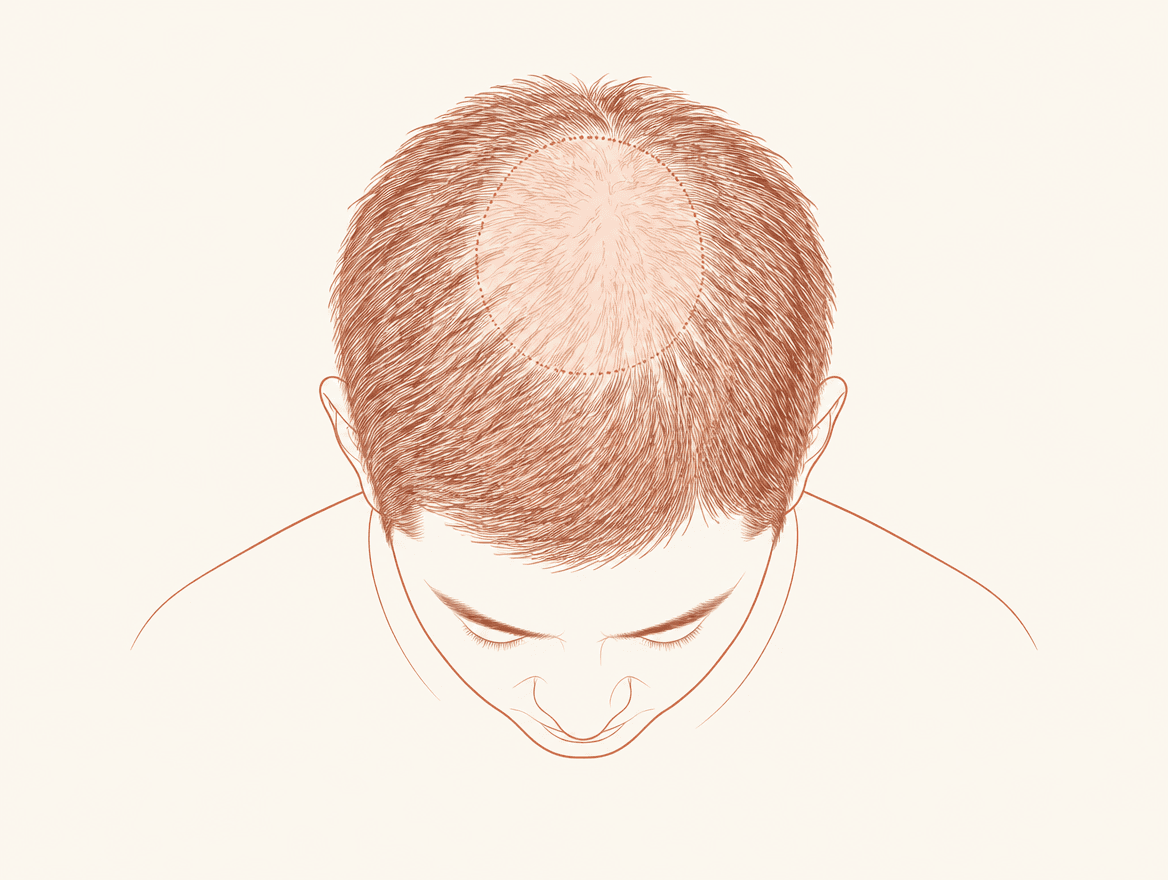
Pattern loss develops over years without inflammation, itching or a sudden increase in shedding. It is a long-term condition to be managed rather than an event to be fixed.
Telogen effluvium (temporary shedding)
A physical or emotional shock can push a large number of follicles into the resting phase at the same time. Childbirth, surgery, serious illness, rapid weight loss, a change in medication or a sustained stressful period are the usual triggers. The shedding typically appears two to three months after the event, which is long enough afterwards that people often do not connect the two.
This form usually settles once the trigger has passed. It can also uncover hereditary thinning that was already quietly underway, which is why the two are sometimes assessed together.
Alopecia areata and scalp conditions
Alopecia areata is an autoimmune condition producing smooth, well-defined round patches over a matter of weeks. It is a different condition from pattern loss and needs medical assessment rather than a cosmetic plan.
Fungal infection, seborrhoeic dermatitis and psoriasis inflame the scalp and disrupt the follicles sitting in it. These are treated as scalp problems first, because hair rarely improves while the skin beneath it is inflamed. A scalp that is red, scaly, sore, or shiny and smooth where hair has gone should be examined promptly, since some scarring conditions destroy follicles for good while they are active.
Nutrition, medication and styling
Iron deficiency, low protein intake, restrictive dieting and thyroid disorders all show up in the hair, which is why blood tests are often part of a proper assessment rather than an upsell. Supplementation is not automatically helpful either: an excess of some nutrients, selenium and vitamin A among them, causes shedding in its own right.
Consistently tight braids, ponytails and extensions pull on the follicle over years. Caught early that is reversible. Left long enough it scars, and then it is not. Malaysia's humidity adds its own contribution, since sweat build-up and fungal scalp infection are both more common here than in a temperate climate.
Why the cause has to come first
More than one factor is usually present at once. Hereditary thinning uncovered by a stressful year is a far more common story than either acting alone, which is why a single explanation is rarely the whole answer.
The practical consequence is that the most consequential risk in hair loss is not a side effect from a treatment. It is spending months on cosmetic treatment while a thyroid disorder, an iron deficiency or a scarring scalp condition goes undiagnosed. A clinic that proposes a course of treatment for diffuse hair loss without investigating anything is worth questioning. Our hair loss assessment page sets out what that examination involves.
Treatment options and what each one does
| Option | What it does | What it involves | Suited to |
|---|---|---|---|
| Topical minoxidil | Widens blood vessels at the follicle and prolongs the growing phase | Applied to the scalp daily, long term | Early thinning, and maintenance alongside other treatment |
| Prescription DHT blockers | Reduce conversion of testosterone to the hormone that shrinks follicles | Oral medication under ongoing medical supervision | Male pattern loss, prescribed individually after assessment |
| Oral minoxidil | Systemic version of the topical, with a growing evidence base | Prescription only, monitored | Patients who cannot tolerate topical application |
| Platelet rich plasma (PRP) | Concentrated platelets from your own blood injected into the scalp | A course of sessions spaced several weeks apart | Early to moderate thinning, alongside medical management |
| Exosome therapy | Regenerative preparation applied to support the follicular environment | A course of in-clinic sessions | An adjunct where medical management is already in place |
| Low level light therapy | Light energy delivered to the scalp to stimulate follicles | Device used at home on a regular schedule | Supporting other treatment rather than replacing it |
| Hair transplant (FUE) | Follicles moved from a donor area into thinning zones | Day surgery, then months of gradual growth | Established loss with a good donor area |
Topical minoxidil
The most accessible starting point, available without a prescription and suitable for both men and women. It widens the blood vessels supplying the follicle and extends the growing phase of the cycle. Any change is judged over months rather than weeks, and it works only for as long as it is used. Some people notice a brief increase in shedding early on, which is expected and worth being warned about in advance.
Prescription medical treatment
Pattern loss is managed medically first. There are oral treatments that reduce the hormonal driver behind follicle shrinkage, and they are the mainstay of long-term management in men. They are prescription medicines with real considerations attached, including who should not take them: they are generally not prescribed to women of childbearing potential. Malaysian advertising rules mean a clinic cannot promote prescription medicines to you in an article like this one, and rightly so. What a doctor can do is assess you and discuss individually whether medical management is appropriate.
Platelet rich plasma (PRP)
A sample of your own blood is spun to concentrate the platelets, and that concentrate is injected into the scalp to support the follicular environment. It is typically given as a course of sessions several weeks apart, then reviewed. PRP is used alongside medical management rather than instead of it, and it is most relevant while there are still fine hairs to support.
Exosome therapy
Exosome therapy uses a regenerative preparation applied to the scalp to support the environment around the follicle. The evidence base is still developing rather than settled, so it is offered as an adjunct to medical management and not as a treatment for hair loss in its own right. That is an honest position rather than a modest one: regenerative treatment for hair is an active area of research, and you should be told where the evidence stands before paying for a course.
Low level light therapy
Light energy delivered by a cap or comb, used on a regular schedule at home. It is generally positioned as an adjunct that supports a wider plan rather than something that carries a plan on its own.
Hair transplant surgery
Follicular unit extraction moves individual follicles from a donor area, usually the back of the scalp, into thinning zones. Relocated follicles keep the characteristics of the donor site, which is why they are less affected by the hormonal process that thinned the original area. Growth is gradual and assessed over roughly a year.
Two things are worth being clear about. A transplant does not stop the underlying hereditary process in the hair around it, so ongoing medical management usually continues afterwards. And it depends entirely on having a sufficient donor area, which is one of the things an assessment establishes. Kaiteki does not perform transplant surgery. If your assessment points that way, you should be told so directly rather than sold a course of something else.
Choosing an approach at each stage
Early thinning, noticeable to you but not to others. This is the stage with the most options, because there is still fine hair to support. A topical is the usual starting point, with medical management discussed where the pattern is hereditary, and an in-clinic course considered alongside it. Blood tests here are often more useful than any product.
Moderate loss, with visible scalp or a receding hairline. Combination approaches become the norm: medical management as the base, with in-clinic sessions reviewed as the scalp responds. Progress is judged against photographs over many months, not against how the hair looks on a given morning.
Advanced loss, where follicles in the affected area are long dormant. No treatment restores a follicle that has scarred or been inactive for years. Where a good donor area remains, transplant surgery is the option that addresses coverage, with medical management continuing afterwards to protect the hair that was not transplanted.
Hair loss in women
Female hair loss is more common than the way it is usually discussed suggests, and the approach differs in a few important respects. The hormonal treatments used in men are generally not prescribed to women of childbearing potential. Topical minoxidil is well established for female pattern loss, and PRP is used in the same supporting role it plays in men.
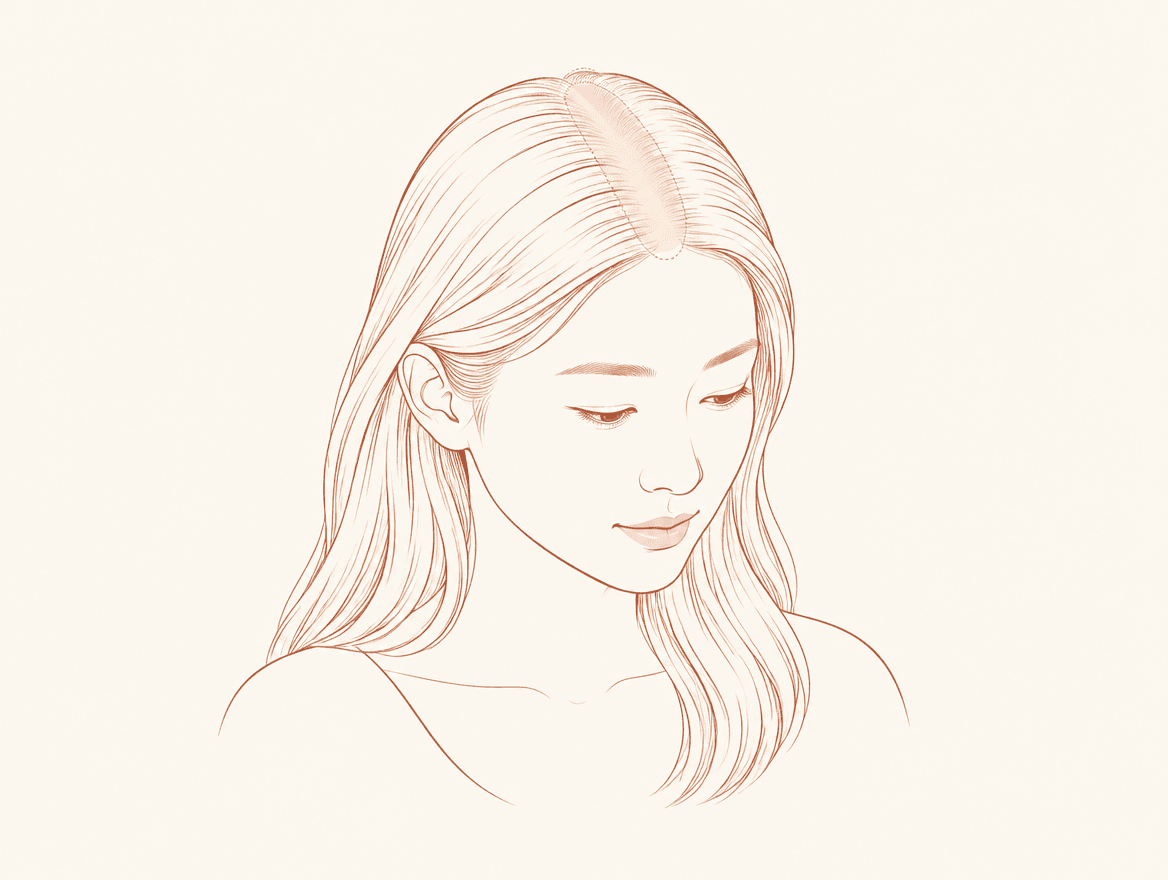
The larger difference is investigation. Iron status, thyroid function, recent pregnancy and conditions such as PCOS are frequent contributors in women and are routinely checked, because correcting one of them changes the plan entirely. A widening central parting with the hairline preserved is the pattern to watch for, and comparing it against a photograph from a few years ago is more informative than counting shed hairs.
Loss after childbirth deserves its own note. A marked increase in shedding a few months after giving birth is a well recognised pattern as hormone levels change, and for most people it settles over the following months without treatment. It is still worth assessing if it is prolonged or severe, since iron and thyroid changes are common in the same period.
Finding hair loss treatment near you
Choosing the clinic matters as much as choosing the treatment, and a few things are worth checking.
The treating doctor should be registered with the Malaysian Medical Council and, for aesthetic procedures, LCP certified. Those are verifiable, and any clinic should be willing to tell you who is treating you and what their registration is. Our doctors are listed with their credentials for exactly that reason.
Ask what the consultation actually includes. A proper hair loss assessment looks at the scalp itself as well as the hair, sometimes under magnification, takes a history covering illness, medication, diet and family pattern, and orders blood tests where the picture is diffuse or sudden. It should end with an explanation of the likely cause and a plan you can take away, not a package you sign for on the day.
Be cautious of a few things. A clinic that guarantees a specific result, promises regrowth on a timetable, offers no doctor assessment before selling a course, or applies pressure to commit immediately is not treating this as the medical process it is. Change in hair is slow, measured over many months, and it is maintained rather than finished.
Kaiteki has clinics across Klang Valley, Johor and Sabah, and the consultation is free with no obligation to book treatment afterwards.
Taking the first step
Hair loss has more options today than it did a decade ago, and most of them are most useful while there is still hair to work with. The single most valuable thing you can do is find out which kind you have, because that decides whether you are looking at a scalp condition to treat, a deficiency to correct, or a hereditary pattern to manage long term.
If you have photographs of your hair from one, three and five years ago, bring them. Gradual change is almost impossible to judge from memory, and they are the most useful thing you can put in front of a doctor.
Ready to find out which option suits you? Reach out to us on WhatsApp and we will help you find the right path forward.
Common questions
What is the most effective hair loss treatment?
There is no single answer, because effectiveness depends on the cause. Hereditary pattern loss is managed medically for the long term, often with in-clinic treatment alongside it. Shedding after illness, childbirth or a stressful period usually settles once the trigger passes. A scalp condition or an iron or thyroid problem needs that cause treated first, since hair rarely improves while the reason it is falling remains unaddressed.
Is hair loss reversible?
It depends on the cause. Telogen effluvium, the shedding that follows illness, surgery, childbirth or severe stress, usually recovers once the trigger has resolved. Hereditary pattern loss is managed rather than cured, and starting earlier generally leaves more to work with. Follicles that have scarred or been dormant for years cannot be brought back by any treatment, which is why timing matters here more than in most concerns.
Why does Kaiteki not publish hair loss treatment prices?
Because a price is meaningless before an assessment. What it depends on is the area involved, whether investigation such as blood testing is needed first, how many sessions are appropriate, and whether medical management forms part of the plan alongside in-clinic treatment. The doctor goes through the specifics with you at the consultation, which is free, before you commit to anything.
Does minoxidil work for women?
Topical minoxidil is well established for female pattern hair loss and is one of the usual starting points. A low-dose oral form is also prescribed for some women under medical supervision. It works only for as long as it is used, and in women it is worth pairing with investigation of iron status and thyroid function, since those are frequent contributors that no topical addresses.
How long before hair loss treatment is reviewed?
Hair changes slowly, so every option here is judged over months rather than weeks. Photographs taken at the start and compared later are far more reliable than memory or a mirror. Some people notice a brief increase in shedding early in a course, which is expected and should be explained to you in advance. Anyone offering regrowth on a fixed timetable is overstating what is known.
Do I need blood tests for hair loss?
Often, particularly where the loss is diffuse, came on suddenly, or comes with other symptoms such as fatigue or nail changes. Thyroid function and iron status are common and treatable contributors that no topical or in-clinic treatment addresses, and finding one changes the plan entirely. A clinic proposing a course of treatment for diffuse hair loss without investigating anything is worth questioning.
Does Kaiteki perform hair transplant surgery?
No. Kaiteki assesses hair loss, investigates the cause, and offers in-clinic treatment alongside medical management where that is appropriate. Transplant surgery is not performed here. If your assessment points that way, the doctor will tell you directly rather than recommend a course of something else.
Book a free consultation
A doctor will assess your skin and tell you honestly whether this is the right option for you, including when it is not.
Related pages on our site
About the author
Dr Tim Chua
Aesthetic Physician
MBBS, MAC, LCP Certified · MMC 77677
Dr Tim Chua graduated from Taylor's University with an MBBS. Years of working experience as a medical officer in otorhinolaryngology has equipped him with the relevant skills to deal with both medical and surgical cases.
View full profile- Written by
- Dr Tim Chua, MMC 77677
- Reviewed by
- Dr William Yap, MMC 68812
- Published
- 6 September 2026
This page is general information about aesthetic treatments and is not medical advice. Treatments carry risks that are explained during consultation, and individual results vary. A doctor will assess whether a treatment is suitable for you before it is carried out.