Skin Concerns8 min read
Excessive sweating (hyperhidrosis): causes and how it’s treated
Excessive sweating without a clear trigger is a medical condition called hyperhidrosis, affecting roughly 4.8% of people worldwide. Treatment ranges from clinical strength antiperspirants to Botox injections and longer lasting options like miraDry. Which suits you depends on the type, the areas affected and how severe it is.
Excessive sweating that happens without a clear trigger is a medical condition called hyperhidrosis. It affects roughly 4.8% of the population worldwide (American Academy of Dermatology) and can significantly disrupt daily confidence, social life, and career choices. Effective excessive sweating treatment ranges from clinical strength antiperspirants to Botox injections and permanent solutions like miraDry.
In Malaysia, where the heat and humidity are constant, managing hyperhidrosis is especially challenging. This guide covers what causes it, how to tell if your sweating is a medical problem, and every treatment option from deodorants to professional procedures.
Key takeaways
- What is hyperhidrosis? A condition where sweat glands produce excessive sweat without a physical or thermal trigger, caused by overactive sympathetic nerves.
- Two types: Primary focal (genetic, affects specific areas, accounts for 90% of cases) and secondary generalised (caused by medical conditions or medications).
- Best OTC option: Clinical strength antiperspirants with 10 to 15% aluminium chloride, applied at night to dry skin for maximum absorption.
- Most effective clinical treatment: Botox injections reduce underarm sweating by up to 87% (Journal of the American Academy of Dermatology), lasting 6 to 12 months.
- When to see a doctor: If sweating disrupts sleep, soaks through clothing daily, or persists after two weeks of clinical strength antiperspirant use.
What is hyperhidrosis?
Hyperhidrosis is a medical condition where sweat glands become overactive and produce excessive sweat even without heat, exercise, or stress. It goes far beyond normal perspiration, causing sweat to drip from the hands, pool under the arms, or soak through clothing within minutes of getting dressed.
It is not a hygiene issue. People with hyperhidrosis often shower multiple times a day and apply heavy layers of antiperspirant, yet still experience uncontrollable sweating. The condition is driven by overactive nerves and has a strong genetic component. It can take a real toll on social confidence, career choices, and daily functioning, which is why understanding the full range of excessive sweating treatment options is essential.
Primary vs secondary hyperhidrosis
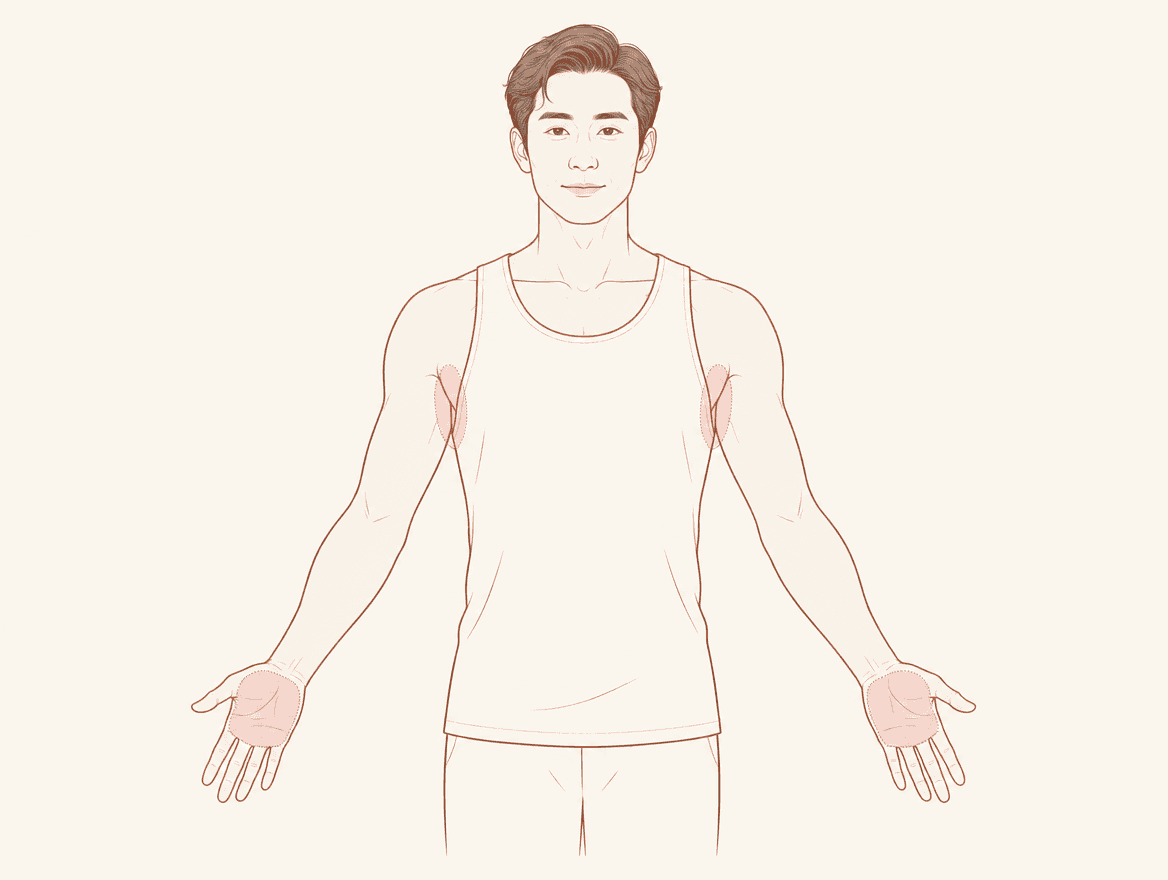
Primary focal hyperhidrosis accounts for roughly 90% of cases. The sympathetic nerves that signal sweat glands become overactive for no clear medical reason. It is genetic, usually appears during childhood or adolescence, and affects specific areas: underarms, palms, soles of the feet, and face. Sweating occurs symmetrically on both sides of the body.
Secondary generalised hyperhidrosis is caused by an underlying condition or medication side effect. Common triggers include hormonal changes (menopause, pregnancy, thyroid disorders), diabetes, infections, and medications like antidepressants. It tends to cause sweating across larger body areas and often includes night sweats. If your excessive sweating started suddenly in adulthood, a doctor should rule out underlying causes.
What causes excessive sweating?
Overactive sympathetic nerves are the primary driver, sending excessive signals to eccrine sweat glands even when cooling is not needed. This neural overactivity is largely genetic, meaning hyperhidrosis frequently runs in families.
Several factors can worsen the condition. Hormonal shifts during menopause, pregnancy, or puberty can trigger sudden increases in sweating. Emotional stress activates the body's fight or flight response, stimulating sweat glands, and for someone who already sweats excessively, stressful situations like presentations or job interviews can feel overwhelming.
Living in Malaysia's hot, humid climate adds another layer. The constant warmth means the body's cooling system is already working hard. For someone with hyperhidrosis, the combination of tropical heat and overactive sweat glands makes everyday tasks like commuting or sitting in a meeting genuinely uncomfortable.
How to know if your sweating is a medical problem
Sweating becomes a medical concern when it occurs without a trigger, disrupts daily activities, or does not respond to standard antiperspirants. Signs to watch for include sweating that soaks through clothing, interferes with gripping objects or handshakes, occurs visibly in cool environments, or causes you to avoid social situations.
Behavioural signs are equally telling. If you choose your wardrobe based on what hides sweat stains, carry extra shirts to change into, or feel anxious about physical contact, your sweating has likely moved beyond the normal range.
Doctors diagnose hyperhidrosis through medical history and physical examination. The starch iodine test maps problem zones by turning dark blue where excess sweat is present. A gravimetric test measures exact sweat output over a set period. These tests help determine severity and guide the most appropriate treatment.
Why does excessive sweating cause body odour?
Sweat itself is nearly odourless. Body odour occurs when bacteria on the skin break down proteins and lipids in apocrine gland secretions, which are concentrated in the underarms and groin. Eccrine sweat, found across the body, is mostly water and salt and does not smell. For people with hyperhidrosis, constant underarm moisture creates ideal conditions for bacterial growth, which is why treating the sweating directly is the most effective way to control odour.
Best deodorant and antiperspirant for hyperhidrosis
Clinical strength antiperspirants containing 10 to 15% aluminium chloride are the most effective over the counter option. This distinction matters: deodorants only mask odour using fragrance or antibacterial agents but do nothing to reduce sweat volume. Antiperspirants physically block sweat ducts with aluminium compounds, reducing the amount of moisture that reaches the skin's surface.
A tip that significantly improves effectiveness: apply your antiperspirant at night before bed, not in the morning. Sweat glands are less active during sleep, giving the product time to absorb and form a protective barrier inside the ducts. By morning, the barrier is in place and working, even after showering.
If clinical strength products do not provide adequate relief after two to four weeks of consistent use, that is a clear signal your sweating needs a more targeted medical approach.
Medical and professional treatments for excessive sweating
When OTC products are not sufficient, doctors follow a stepped approach from least to most invasive.
Prescription topicals
Higher concentration aluminium chloride antiperspirants and medicated glycopyrronium wipes (FDA approved as Qbrexza in 2018) reduce sweat production when applied directly to affected areas.
Oral medications
Anticholinergic medications block the chemical signals that activate sweat glands system wide. Side effects include dry mouth, blurred vision, and constipation. Reserved for generalised sweating unresponsive to topicals.
Iontophoresis
A mild electrical current passed through water temporarily blocks sweat glands, primarily effective for sweaty hands and feet. Requires multiple weekly sessions initially, then ongoing maintenance.
Botox injections
Botox (botulinum toxin) blocks nerve signals that activate sweat glands. A study published in the Journal of the American Academy of Dermatology found it reduces underarm sweating by 87% on average, with results lasting 6 to 12 months. The procedure takes under 20 minutes, requires no downtime, and most patients see results within a week.
MiraDry
Uses electromagnetic energy to permanently destroy underarm sweat glands. FDA cleared in 2011. Sweat glands do not regenerate, so results are long lasting. Most patients need one to three sessions. Also reduces underarm odour and hair growth.
Surgery (ETS)
Endoscopic thoracic sympathectomy cuts or clamps the nerves activating sweat glands. Effective but carries significant risk: compensatory sweating (increased sweating in untreated areas) occurs in up to 80% of patients. Last resort only after all other treatments have been exhausted.
Frequently asked questions
Is hyperhidrosis curable?
Primary hyperhidrosis has no permanent cure, but treatments can reduce sweating to manageable levels. MiraDry permanently destroys sweat glands. Botox provides 6 to 12 months of relief per session. Secondary hyperhidrosis may resolve when the underlying condition is treated.
Can I still sweat normally after treatment?
Yes. The body has 2 to 4 million sweat glands, and treatments like Botox and miraDry target only a small fraction in the treated area. Temperature regulation continues normally through untreated areas.
Is excessive sweating a sign of poor hygiene?
No. Hyperhidrosis is a medical condition with a genetic basis, completely unrelated to hygiene habits.
Does Botox for sweating hurt?
Most patients find it highly tolerable. Topical numbing cream or ice is applied beforehand. The session takes 15 to 20 minutes with no downtime.
What makes hyperhidrosis worse?
Hot and humid weather, emotional stress, spicy foods, caffeine, alcohol, certain medications, and tight synthetic clothing that traps heat and moisture.
Taking the first step
Excessive sweating is a recognised medical condition with proven treatments at every level. The right excessive sweating treatment is available whether you need a better antiperspirant or a professional procedure.
Ready to explore your options? Reach out to us on WhatsApp and we will help you find the right path forward.
Book a free consultation
A doctor will assess your skin and tell you honestly whether this is the right option for you, including when it is not.
Related pages on our site
About the author

Dr Joaan Kong
Aesthetic Physician
MBBS, AAAM, LCP Board Certified · MMC 90047
Dr Joaan Kong obtained her Bachelor of Medicine and Surgery (MBBS) from International Medical University (IMU). She then trained as a Paediatric doctor before embarking her journey in aesthetic medicine. Her training in the paediatric department has refined her skills in needle handling and detailed meticulous work.
View full profile- Written by
- Dr Joaan Kong, MMC 90047
- Published
- 5 August 2026
This page is general information about aesthetic treatments and is not medical advice. Treatments carry risks that are explained during consultation, and individual results vary. A doctor will assess whether a treatment is suitable for you before it is carried out.