Treatments Explained10 min read
Ultherapy vs HIFU: what’s the difference and which suits you?

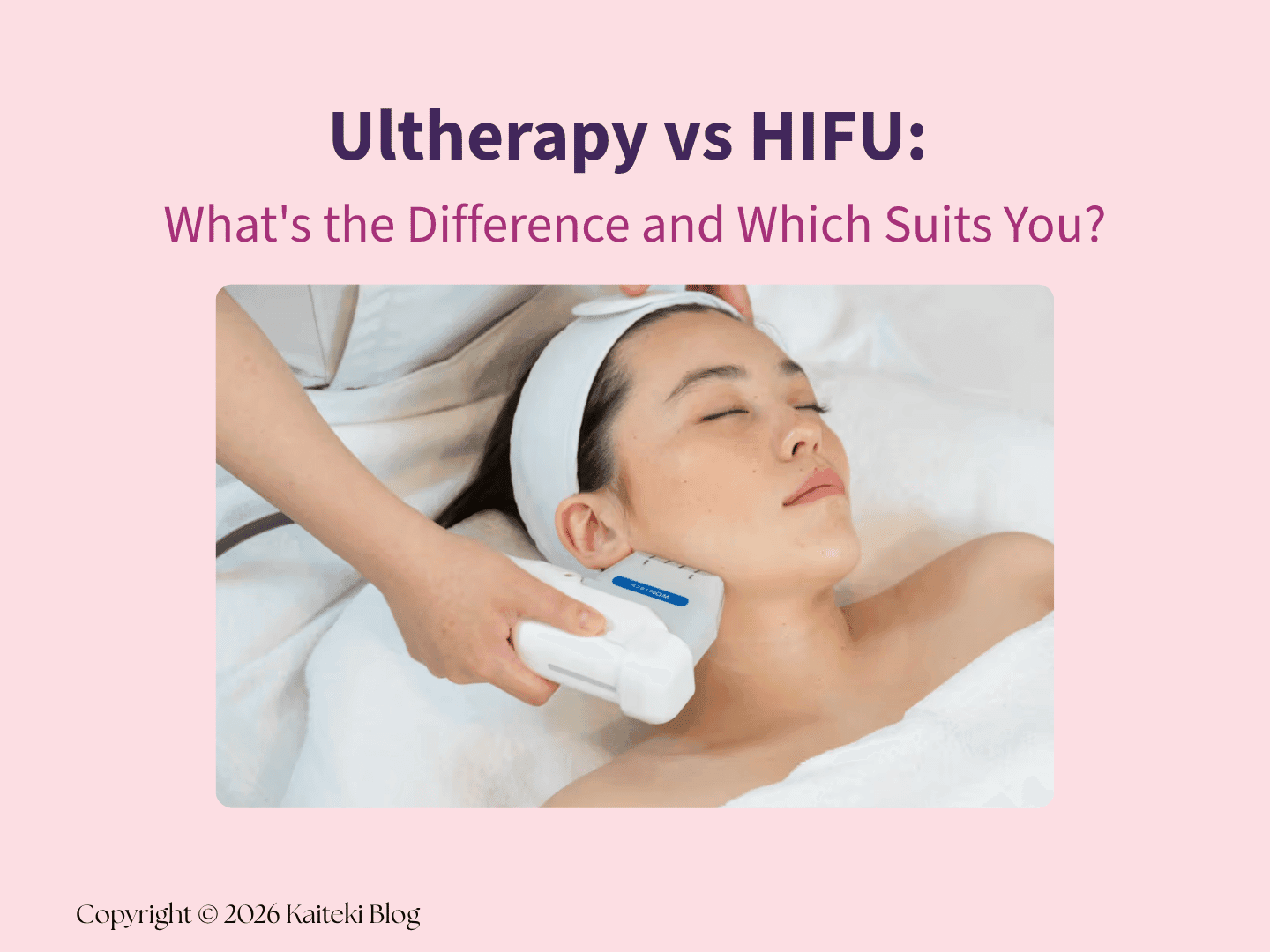
Both use focused ultrasound to reach the deeper support layer of the face without surgery, and Kaiteki offers both. The substantive difference is imaging: the Ultherapy platform lets the doctor view tissue layers on screen before delivering energy, while HIFU devices treat at depths set by the cartridge and clinical assessment.
Ultherapy and HIFU both use focused ultrasound energy to reach the deeper layers of the skin without surgery, and both are offered at Kaiteki. They are not the same thing. Ultherapy is a specific platform that pairs the treatment with ultrasound imaging, so the doctor can see the tissue layers on screen before delivering energy. HIFU is the broader category of focused-ultrasound devices, which generally do not include that imaging step.
That single difference, seeing the layers versus selecting a depth from assessment alone, is what most of the comparison comes down to. This guide sets out how each one works, where they genuinely differ, what actually decides which is appropriate for you, and the questions worth asking any clinic before booking either.
Key takeaways
- The core difference: Ultherapy includes real-time ultrasound imaging (the platform calls it DeepSEE), so the doctor views the tissue on screen before treating. HIFU devices deliver energy at depths set by the cartridge and the doctor's assessment, without that on-screen view.
- What they share: Both target the deeper support layer of the face, including the SMAS, and both work by prompting the skin's own gradual collagen response. Neither is a facelift and neither cuts or removes skin.
- Neither is universally better. They are different tools. Which one suits you depends on the area, the degree of laxity and your facial anatomy, which is what the consultation is for.
- Results are gradual. Any change builds over weeks to months as collagen renews, and it varies between individuals.
- What they cost in Malaysia: Ultherapy generally runs from around RM4,000 to RM18,000 a session depending on the areas covered, HIFU from around RM300 to RM3,500, where the wide HIFU range reflects a wide spread of device quality. These are market ranges, not a Kaiteki price list.
- What to verify: That the device is registered with Malaysia's Medical Device Authority, that a named device is being used, and that an MMC-registered doctor is delivering the treatment.
How both treatments work
Both deliver focused ultrasound energy to set depths beneath the skin surface, including the deeper support layer sometimes called the SMAS (superficial muscular aponeurotic system). That is the same layer a surgical facelift addresses, though focused ultrasound reaches it without incisions.

The energy creates small, controlled points of heat at those depths. That controlled injury is what prompts the body's repair response, and over the following weeks and months the skin produces fresh collagen in the treated zones. The surface of the skin is largely spared, which is why there is no wound to heal and why both treatments are generally walk-in, walk-out.
Because the mechanism is a collagen response rather than a mechanical tightening, results are not immediate. Any change develops gradually and varies considerably between individuals, depending on age, skin quality and how much laxity was there to begin with. Anyone promising you a visible lift the same afternoon is describing something other than how this technology works.
Where they actually differ
| Ultherapy | HIFU | |
|---|---|---|
| Energy type | Micro-focused ultrasound | Focused ultrasound |
| Real-time imaging | Yes, tissue layers viewed on screen before treating | No, depth set by cartridge and clinical assessment |
| Depth selection | Chosen per area after viewing the anatomy | Chosen per area from available cartridge depths |
| Typical session | 60 to 90 minutes | 30 to 60 minutes |
| Downtime | None for most people | None for most people |
| Typical range in Malaysia | RM4,000 to RM18,000 per session | RM300 to RM3,500 per session |
| Devices at Kaiteki | Ultherapy System | Ultracel Q, Lifthera |
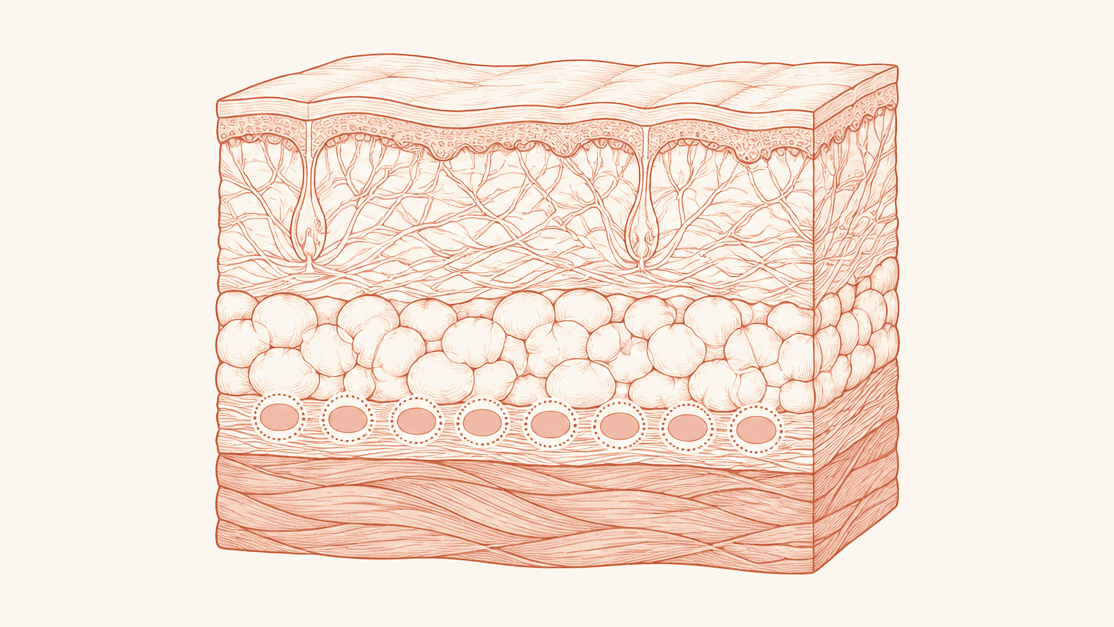
The imaging is the substantive difference. With Ultherapy, the doctor can confirm what is under the transducer before delivering energy, which matters most in areas where the anatomy varies from person to person or sits close to structures you want to avoid. With HIFU, that judgement is made from clinical assessment and the doctor's knowledge of facial anatomy instead, which is one reason it is a treatment that should be delivered by a doctor rather than a therapist.
On evidence, the Ultherapy platform has the longer published record among micro-focused ultrasound devices, and it holds US FDA clearance for non-invasive lift of the brow, chin and neck and for lines on the décolletage. Worth knowing, though: FDA clearance is a US regulatory status, not a Malaysian one. What governs a device here is registration with the Medical Device Authority (MDA) under the Medical Device Act 2012, which is the thing actually worth checking locally. HIFU as a category covers a wide range of devices, and they are not interchangeable in build quality or in the evidence behind them, which is why the specific named device matters more than the category label.
Which one suits you?
This is genuinely a per-person question, and it is not one you can settle from an article. The factors your doctor weighs include how much laxity is present and at what depth, which areas you want addressed, your facial anatomy and tissue thickness, whether you have had previous energy-based treatments, and how the treatment fits into a wider plan.
As a rough orientation: focused ultrasound of either kind is generally considered for mild to moderate laxity rather than advanced sagging, and neither is a substitute for surgery where surgery is the more appropriate option. A doctor who tells you that honestly is doing their job. Both treatments also sit alongside other approaches, and skin lifting is often addressed with a combination rather than one device. Our post on Alma Titanium Lifting covers a laser-based alternative for the same concern.
The other honest answer is that the two are not mutually exclusive. Some plans use one as the primary treatment and the other as interim maintenance. Whether that makes sense for you is a clinical judgement, not a package.
What Ultherapy and HIFU cost in Malaysia
The figures below are general market ranges in Malaysia, given so you can judge whether a quote you have been shown is in a sensible band. They are not a Kaiteki price list, and your own figure is confirmed at consultation once a doctor has assessed what actually needs treating.
Ultherapy in Malaysia generally runs from around RM4,000 to RM18,000 a session. A single area such as the brow or jawline sits at the lower end. Full face, typically quoted in the region of 600 to 800 energy lines, commonly falls somewhere around RM9,000 to RM15,000, and full face with neck sits at the upper end. Because authentic transducers carry a real per-use cost, quotes far below that lower bound are worth questioning rather than treating as a bargain.
HIFU ranges more widely, from around RM300 to RM3,500, and that spread is the point rather than a detail. It reflects a genuinely wide range of devices and settings, not a single treatment sold at different margins. Doctor-delivered treatment on a quality branded device generally sits in the upper part of that range. Treatments priced at the very bottom of it are usually a different proposition altogether, often in non-medical settings.
It is also worth comparing over a year rather than per session, since the two are not maintained on the same cadence. Ultherapy is typically repeated less often than HIFU, so a higher single-session figure spread across a longer interval can land closer to a lower figure repeated more frequently than the headline gap suggests. Which cadence applies to you depends on how your skin responds, so treat that as a way of framing the comparison rather than a schedule.
What moves the number either way: how many areas are treated and how large they are, how much energy is required across them, which platform is appropriate for your anatomy, and whether the ultrasound work forms part of a wider plan with other treatments. Be wary of any firm quote given before anyone has looked at your face.
Questions worth asking before you book
Focused ultrasound is a medical treatment delivering real energy into deep tissue, and the standard of the device and the operator matter. Before booking either treatment, anywhere:
- Which specific device is being used? Ask for the name. A clinic that will not name the device is not a clinic to hand your face to.
- Is that device MDA-registered? Registration with the Medical Device Authority is the Malaysian requirement, and it is reasonable to ask.
- Who is delivering the treatment? It should be a doctor registered with the Malaysian Medical Council, with an Annual Practising Certificate and LCP certification for aesthetic practice. You can check registration on the MMC register.
- How was the plan arrived at? A proper answer references your assessment: which areas, which depths, and why. If the answer is a package name, that is not a plan.
- What does the quoted price actually include? For Ultherapy, ask how many energy lines are covered, since that is what the figure is built from and a low headline price can simply mean fewer lines. A clinic should be able to tell you without hedging.
- What are the risks in my case? Every energy-based treatment has them, and a doctor should walk you through the ones relevant to you before you consent, not after.
Asking these is not being difficult. It is the ordinary due diligence for any medical procedure, and any clinic worth attending will answer without hesitating.
Frequently asked questions
Is Ultherapy better than HIFU?
They are different tools rather than better and worse. Ultherapy adds an imaging step that lets the doctor view tissue layers before treating, and it has the longer published evidence base. A quality HIFU device delivered by a doctor is a legitimate treatment in its own right. Which is appropriate depends on your anatomy, the areas involved and the degree of laxity, which is assessed at consultation.
Does one hurt more than the other?
Both are usually described as warmth with a prickling or tingling sensation as energy is delivered, and comfort varies by person and by area. Treatments that deliver energy deeper, or across more areas in a session, are generally felt more. Your doctor can discuss comfort measures beforehand.
How many sessions will I need?
There is no fixed answer, and any cadence is planned with your doctor rather than set in advance. Because both treatments work through a gradual collagen response, plans are usually reviewed after enough time has passed to judge how your skin has responded.
Can I combine it with other treatments?
Often, yes. Focused ultrasound addresses laxity, but it does not treat volume loss, dynamic lines or skin quality, so plans frequently combine it with injectables, skin boosters or resurfacing. What is appropriate, and in what order, is decided with your doctor.
Is the cheapest HIFU safe?
Very low-priced HIFU, particularly in non-medical settings, is where the real risk sits. Focused ultrasound delivers energy deep into tissue, and a poorly calibrated device or an untrained operator can cause burns, unwanted fat loss or nerve injury. The gap between the bottom and the top of the HIFU price range reflects a difference in the device and the standard of care, not just margin. Choose a clinic with a named, MDA-registered device and a registered doctor delivering the treatment.
Is it a non-surgical facelift?
No. Both treatments reach some of the same deeper tissue a surgical facelift addresses, but neither cuts, lifts or removes skin, and the degree of change is not comparable to surgery. Where surgery is the more appropriate option for your concern, a doctor should tell you so.
Choosing between them
The Ultherapy versus HIFU question usually gets framed as which one wins. It is more useful to ask which one fits your face, your degree of laxity and the plan you and your doctor agree on, and that is a conversation rather than a comparison table.
Ready to explore which option suits you? Reach out to us on WhatsApp and we will help you arrange a consultation.
Book a free consultation
A doctor will assess your skin and tell you honestly whether this is the right option for you, including when it is not.
Related pages on our site
About the author

Dr Jamie Gan Ee Vienn
Aesthetic Physician
MD, PDAM (EIU) · MMC 97231
Dr. Jamie obtained her medical degree from Kursk State Medical University, Russia. She subsequently completed her housemanship and served in the Emergency Department at Hospital Tuanku Jaafar, Seremban, where she developed strong clinical judgement, precision, and the ability to perform under pressure.
View full profile- Written by
- Dr Jamie Gan Ee Vienn, MMC 97231
- Reviewed by
- Dr Chew Yuhhui, MMC 68232
- Published
- 13 August 2026
This page is general information about aesthetic treatments and is not medical advice. Treatments carry risks that are explained during consultation, and individual results vary. A doctor will assess whether a treatment is suitable for you before it is carried out.