Treatments Explained4 min read
Alma Titanium Lifting: is this non-surgical facelift worth it?
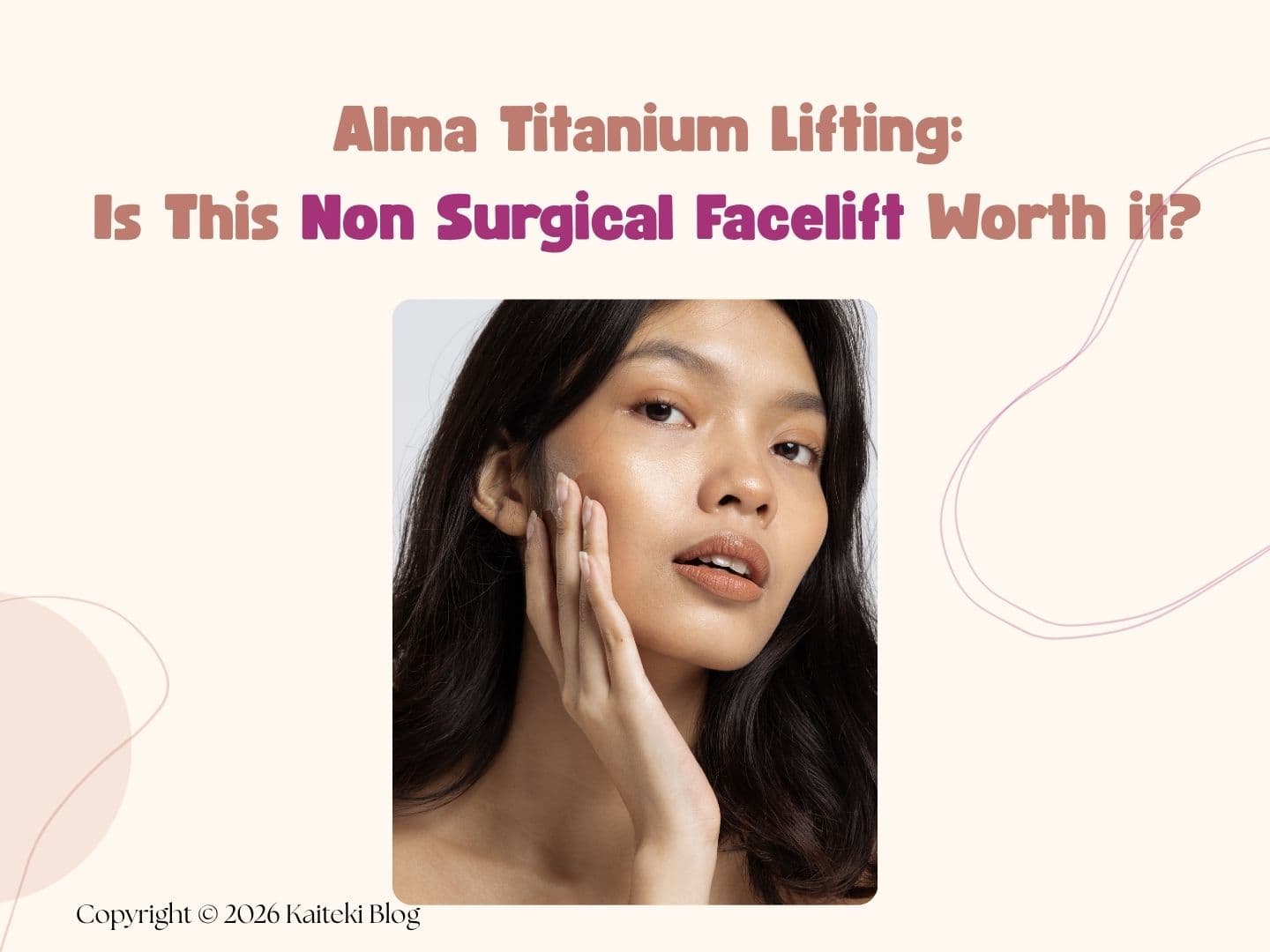
Titanium Lifting is a non-invasive laser treatment. It uses three wavelengths (755nm, 810nm and 1064nm) to work across several skin depths at once, with the aim of tightening skin, supporting collagen and refining facial contour without surgery or significant downtime.
What is Alma Titanium Lifting?
Titanium Lifting is a non-invasive treatment for skin tightening and facial contouring. It uses a laser with three wavelengths, working on the skin and the structure sitting underneath it. You may also see it called BTS laser lifting, which stands for brightening, tightening, slimming.
Most lifting treatments act on one layer. This one is designed to put energy into several depths in the same session. The intention is to:
- tighten the skin
- stimulate collagen and elastin
- improve the facial contour
- support a brighter, more even complexion
Whether it suits you is decided at consultation, not from an article. I will come back to that point more than once.
How does it work?
Three wavelengths, 755nm, 810nm and 1064nm, each reaching a different depth. The laser heats the layer below the surface in a controlled way, and that heating is what sets off collagen remodelling over the following weeks.
Each wavelength has a job:
| Depth | What the energy does | What it targets |
|---|---|---|
| Superficial | Absorbed near the surface | Skin tone and brightness |
| Mid-dermis | Mid-depth heating | Collagen production |
| Deeper layers | Deepest penetration | Soft tissue tightening and contour |
Because the energy goes in evenly rather than in one aggressive pass, most patients find it comfortable, and it can be used across a range of skin types. The settings are still chosen by the treating doctor for your particular skin.
Which areas can it treat?
Commonly:
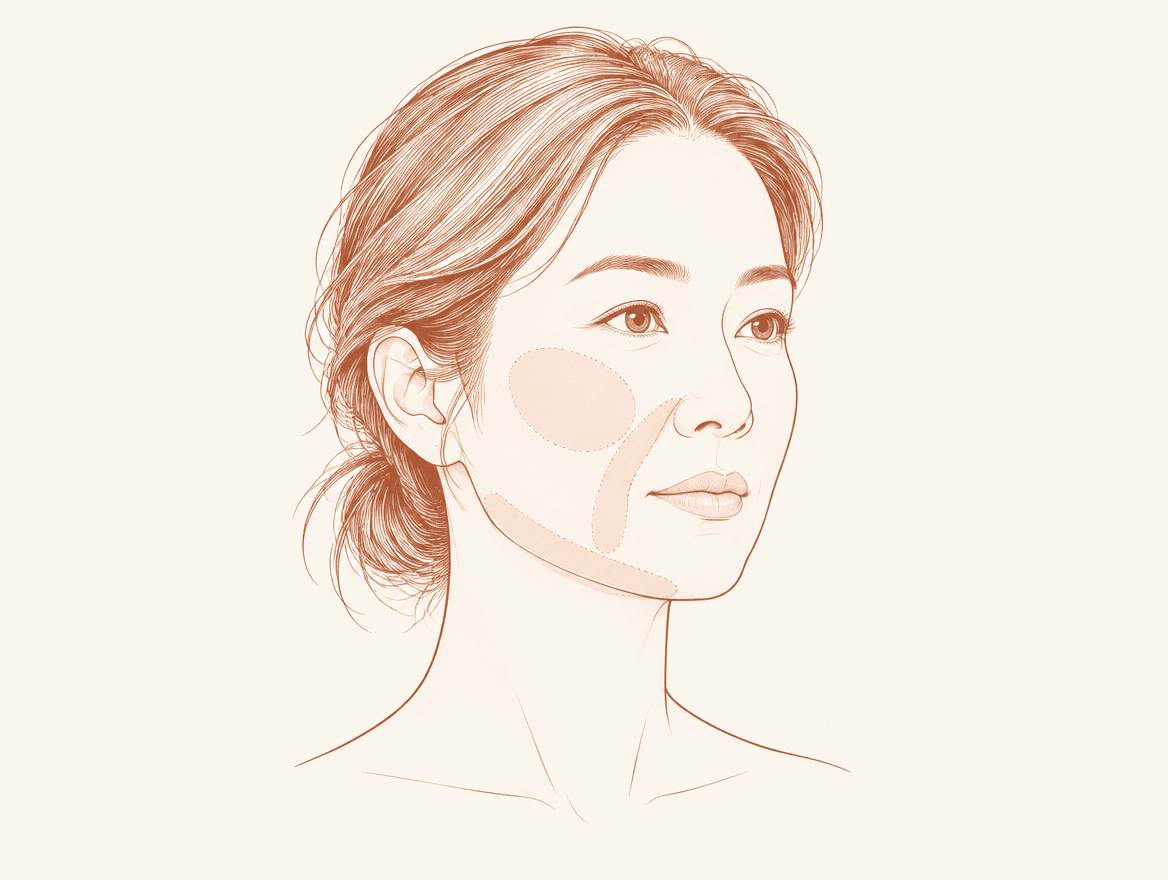
- Cheeks, for midface lifting
- Jawline, for definition and contour
- Nasolabial folds, the lines running from nose to mouth
- Lower face, for early jowling
Who is it suitable for?
It is generally considered for people who have:
- mild to moderate nasolabial folds or facial sagging
- early signs of ageing
- a preference for something non-surgical
- an interest in maintenance rather than a one-off fix
If your sagging is more advanced, one modality on its own is usually not the answer, and a combination plan works better. Some patients are not suitable candidates at all. That is exactly what the assessment is for. If lifting is your main concern, our face lifting page sets out the full range of options.
What results can you expect?
In the days after a session, some patients notice their skin looks brighter, feels slightly tighter, and the contour has shifted a little.
Over the following weeks, the collagen response continues. Skin can feel firmer and the contours more defined.
Results build up rather than arrive all at once, and they vary between people. Age, skin quality, lifestyle and sun exposure all affect what a course achieves. No aesthetic treatment gives a guaranteed outcome, and I would rather say so plainly than imply otherwise.
How many sessions?
The usual plan is four sessions, roughly a month apart. Improvement carries on after the course finishes, and the effect may last up to around 12 months depending on things like age and lifestyle. Maintenance sessions are common.
Month 1
Session 1
The course starts after a consultation and assessment.
Months 2 to 4
Sessions 2 to 4
Roughly a month apart, as the collagen response builds.
After the course
Gradual change
Improvement carries on after the last session.
Up to around 12 months
Maintenance
The effect varies with age and lifestyle. Maintenance sessions are common.
How does it compare to other lifting treatments?
Against HIFU and Ultherapy. Ultherapy uses focused ultrasound to lift. Titanium Lifting uses laser energy and tends to show change sooner, with a brightening effect on top. Both are useful tools. Which one suits you is a consultation question, because they act on different tissue in different ways. If you are weighing up the two ultrasound options against each other rather than against laser, Ultherapy vs HIFU goes through where they actually differ.
Against radiofrequency lifting. RF delivers bulk heating and concentrates on tightening deeper structures. Titanium Lifting's triple wavelength targets several selective layers at once and adds the brightening component.
There is no single best lifting device. There is a device that suits your degree of laxity, your skin and your goals.
Is it worth it?
If you want something non-surgical that addresses lifting and skin quality in one session, it is worth discussing. The honest caveat is the same one that applies to every energy-based device: the assessment matters more than the machine.
Before recommending Titanium Lifting, we look at skin quality, how much laxity there is, your facial structure, and what you are actually hoping for. No two faces age the same way, so no two plans should look identical.
If you would like to know whether you are a suitable candidate, message us and a doctor will talk it through at a free consultation.
Book a free consultation
A doctor will assess your skin and tell you honestly whether this is the right option for you, including when it is not.
Related pages on our site
About the author
Dr Calvin Tan
Aesthetic Physician
MD, MAC · MMC 71657
Dr Calvin is a passionate medical doctor with a Medical Degree from Universiti Sains Malaysia (USM). He has over 9 years of experience in the medical industry where he worked in Orthopaedic Surgery as a medical officer then he pursued his interest into medical aesthetics. With a strong foundation in surgical training, he has acquired the hands on dexterity and precision that he can bring that experience into the field of medical aesthetics.
View full profile- Written by
- Dr Calvin Tan, MMC 71657
- Published
- 4 July 2026
This page is general information about aesthetic treatments and is not medical advice. Treatments carry risks that are explained during consultation, and individual results vary. A doctor will assess whether a treatment is suitable for you before it is carried out.