Skin Concerns2 min read
Understanding Rosacea: Causes, Symptoms, and Effective Treatments
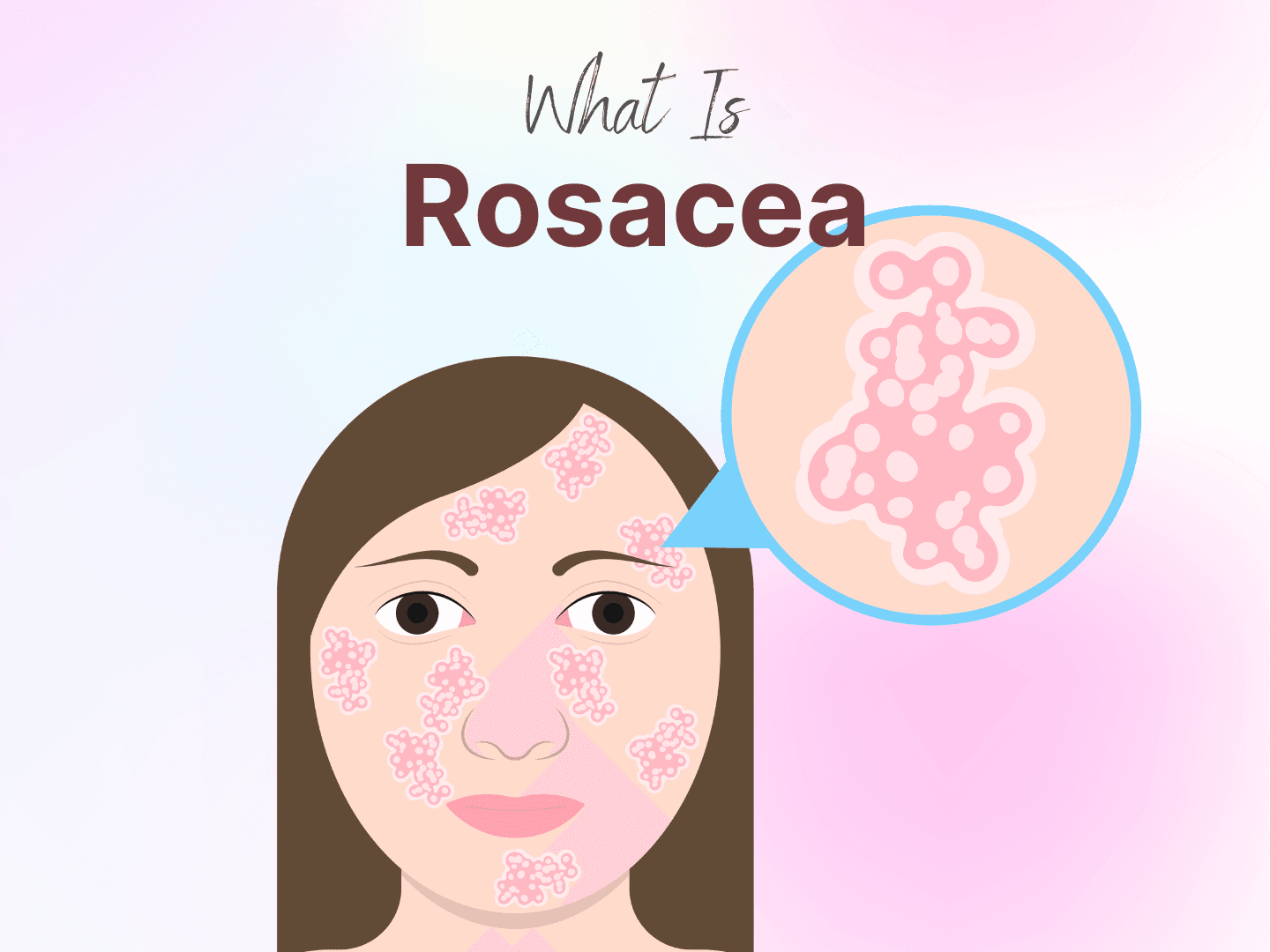
What is Rosacea?
Rosacea is a common, chronic disorder that can present with a variety of cutaneous or ocular manifestations.
Who is usually affected?
- Primarily adults over the age of 30 years
- Females are commonly affected except phymatous skin changes
- Fair skin individuals
Exact cause is unknown but could be attributed to:
- Genetic
- Immune dysfunction
- Microorganisms such as Demodex mites
- Vascular hyperactivity
- Ultraviolet light
When will it exacerbate?
Potential exacerbating factors are:
- Exposure to extremes of temperature
- Sun exposure
- Hot beverages
- Spicy foods
- Alcohol
- Exercise
- Irritation from topical products
- Psychologic feelings, especially anger, rage, and embarrassment
- Certain drugs, such as nicotinic acid and vasodilators
- Skin barrier disruption
How to manage Rosacea?
- Avoidance of exacerbating factors
- Skincare: Gentle skin cleansing, regular skin moisturizing, avoiding irritating topical product
- Sun protection: Broad-spectrum sunscreen with a sun protection factor (SPF) of at least 30
- Cosmetic camouflage (foundation)
Lasers
- Green or yellow light laser
- Intense Pulse Light (IPL) devices
Pharmacological Therapy
-
- Topical or oral antibiotics
Fun Fact
Although consumption of hot beverages has been considered an exacerbating factor for rosacea, consumption of coffee may not increase risk for rosacea. Caffeine has vasoconstrictive and immunosuppressive properties that could, theoretically, inhibit rosacea.
Take Home Message
Are you seeking personalized and expert guidance to effectively treat your rosacea? Take the next step towards clearer, healthier skin by booking a free consultation at Kaiteki Clinic. Our experienced dermatologists are ready to help you understand your condition better and provide tailored treatment options.
Where does it affect?
Cutaneous involvement primarily affects the central face, with findings such as persistent centrofacial redness, papules, pustules, flushing, telangiectasia, and phymatous skin changes.
Ocular involvement may manifest with lid margin telangiectases, conjunctival injection, ocular irritation, or other signs and symptoms.
Why does it occur?
Exact cause is unknown but could be attributed to:
- Genetic
- Immune dysfunction
- Microorganisms such as Demodex mites
- Vascular hyperactivity
- Ultraviolet light
When will it exacerbate?
Potential exacerbating factors are:
- Exposure to extremes of temperature
- Sun exposure
- Hot beverages
- Spicy foods
- Alcohol
- Exercise
- Irritation from topical products
- Psychologic feelings, especially anger, rage, and embarrassment
- Certain drugs, such as nicotinic acid and vasodilators
- Skin barrier disruption
How to manage Rosacea?
- Avoidance of exacerbating factors
- Skincare: Gentle skin cleansing, regular skin moisturizing, avoiding irritating topical product
- Sun protection: Broad-spectrum sunscreen with a sun protection factor (SPF) of at least 30
- Cosmetic camouflage (foundation)
Lasers
- Green or yellow light laser
- Intense Pulse Light (IPL) devices
Pharmacological Therapy
-
- Topical or oral antibiotics
Fun Fact
Although consumption of hot beverages has been considered an exacerbating factor for rosacea, consumption of coffee may not increase risk for rosacea. Caffeine has vasoconstrictive and immunosuppressive properties that could, theoretically, inhibit rosacea.
Take Home Message
Are you seeking personalized and expert guidance to effectively treat your rosacea? Take the next step towards clearer, healthier skin by booking a free consultation at Kaiteki Clinic. Our experienced dermatologists are ready to help you understand your condition better and provide tailored treatment options.
Book a free consultation
A doctor will assess your skin and tell you honestly whether this is the right option for you, including when it is not.
About the author

Dr Lim Xiao Chien
Partner, Aesthetic Physician
MBBS, LCP Board Certified, GCFM, MAC · MMC 74662
Dr Lim Xiao Chien graduated from Jawaharlal Nehru Medical College, KLE University in India with a degree in Bachelor of Medicine and Bachelor of Surgery (MBBS).
View full profile- Written by
- Dr Lim Xiao Chien, MMC 74662
- Published
- 9 July 2023
- Topics
- Sensitive skin
- Last reviewed
- 1 September 2023
This page is general information about aesthetic treatments and is not medical advice. Treatments carry risks that are explained during consultation, and individual results vary. A doctor will assess whether a treatment is suitable for you before it is carried out.