
Skincare7 min read
Best moisturisers for keratosis pilaris, and when creams aren’t enough
Moisturisers that help most with keratosis pilaris contain a chemical exfoliant: lactic acid, salicylic acid or urea. These loosen the keratin plugs, and ceramides alongside them support the skin barrier. Allow four to six weeks of daily use. Where creams are not enough, a doctor can discuss prescription retinoids, clinic peels or laser.
Patients come to me holding their upper arms, half apologising, asking whether the rough bumps there are acne. Usually they are not. What they have is keratosis pilaris, or KP, and it is far more common than most people realise. Studies put it at up to 40% of adults and between 50% and 80% of adolescents (British Journal of Dermatology).
The short answer on products: look for a moisturiser with a chemical exfoliant in it. Lactic acid, salicylic acid or urea. These loosen the keratin plugs sitting in your hair follicles, while the moisturising base keeps the skin from drying out. Where creams are not doing enough, there are clinic options worth discussing.
There is a local wrinkle to this too. Malaysian skin spends the whole day swinging between humid outdoor air and cold, dry air conditioning. That constant back and forth is hard on the skin barrier, and KP tends to look worse because of it.
Key takeaways
- What KP is. Excess keratin plugging the hair follicles. It gives you rough, sandpaper-like bumps, usually on the upper arms, thighs, buttocks and cheeks. Harmless, but annoying.
- Ingredients that matter. Lactic acid at 10 to 15% for exfoliation plus hydration. Salicylic acid at 1 to 2% if you need it to reach deeper into the follicle. Urea at 10 to 20% to soften the keratin. Pair any of these with ceramides.
- How to apply. On damp skin, straight after your shower, at night. Then wait. Four to six weeks minimum before you judge it.
- When creams fall short. Two months of honest daily use with no change is the point to come in and talk about prescription retinoids, clinic peels or laser.
- There is no cure. KP runs in families. We manage it, we do not cure it. Many people improve as they get older. Stop treating it and the bumps usually come back.
What is keratosis pilaris?
Your body makes keratin, a tough protein that protects the skin. With KP, it makes too much. The extra keratin collects around the hair follicles and forms little plugs, and those plugs are the bumps you feel. They can be skin-coloured, white, or a bit red.

I want to be clear about what KP is not, because patients often arrive worried. It is not an infection. You cannot catch it from anyone and you cannot give it to anyone. It has nothing to do with being unclean. I have had patients tell me they scrub harder because of it, which only makes things worse.
KP is strongly genetic. If you have it, there is a fair chance a parent or sibling does too. It also travels with the atopic conditions: eczema, asthma, hay fever. It is usually most obvious in the teenage years and tends to settle down with age.
Why it gets worse in some conditions
Dryness is the main trigger. When the skin loses moisture, those keratin plugs harden and the bumps feel rougher. In Malaysia the culprit is usually air conditioning rather than weather. An office at 22 degrees for eight hours a day will dry your skin out reliably.
Sweat is the part people miss. If you deal with excessive sweating, moisture trapped against the skin irritates the follicles and makes the plugging worse. Then you walk into a cold, dry mall and the whole thing reverses. That swing, several times a day, is exactly what the skin barrier handles badly.
Hormones matter as well. Puberty, pregnancy and the menstrual cycle can all change how prominent KP looks.
KP, eczema and acne are not the same thing
This one is worth getting right, because treating the wrong condition just irritates the skin without fixing anything.
| Keratosis pilaris | Eczema | Acne | |
|---|---|---|---|
| How it feels | Rough, like sandpaper. Painless | Itchy, inflamed | Tender, sometimes sore |
| What you see | Small skin-coloured or red bumps | Red, scaly patches | Whiteheads, blackheads, cysts |
| What causes it | Keratin building up in follicles | Immune-driven inflammation | Blocked pores, bacteria, excess oil |
| Where it shows | Upper arms, outer thighs, buttocks, cheeks | Elbow and knee creases, hands, face | Face, chest, back |
If you are not sure which one you are looking at, please do not guess from a photo online. Come and let someone look at it properly.
The ingredients that actually matter
Lactic acid (AHA)
This is my usual starting point. Lactic acid loosens the bonds holding dead skin cells together, so the plugs break down, and it is also a humectant, meaning it pulls water into the skin. You get exfoliation and hydration from one ingredient. For body use, look for 10 to 15%.
Salicylic acid (BHA)
Salicylic acid is oil-soluble, so it gets further into the follicle than lactic acid does. Worth considering if your KP comes with redness, or if you also have oily or acne-prone skin. Over the counter, you will find it at 1 to 2%.
Urea (10 to 20%)
Urea is a keratolytic. It softens and dissolves keratin specifically, and it moisturises deeply at the same time. It is generally gentler than glycolic acid, so this is often where I send patients with sensitive skin.
Ceramides and hyaluronic acid
These are not exfoliants, but do not skip them. Ceramides rebuild the skin barrier, which matters a lot when you are putting acids on daily. Hyaluronic acid draws water in. An acid on its own will exfoliate and dry you out. An acid with barrier support is much better tolerated.
What to avoid
Heavy fragrance, alcohol and SLS. And please, no physical scrubs, especially the ones with walnut shell or apricot kernel in them. Those particles have rough edges and cause micro-tears. I see the results of aggressive scrubbing often, and it is always redder and more irritated than when the patient started. For KP, chemical exfoliation beats scrubbing every time.
How to actually use it
Start with a gentle, fragrance-free body wash. After your shower, pat yourself down but leave the skin slightly damp, then apply the moisturiser to the affected areas. Damp skin absorbs better and you trap the hydration in.
Night is the better time. Your skin is not dealing with sweat or friction from clothes. If your product contains an AHA, put sunscreen on those areas during the day.
Now the part where most people go wrong: consistency. Skin cells turn over roughly every 28 days. So give it four to six weeks of daily use before you decide it does not work. And do not stack three different acids together hoping to speed it up. That does not accelerate anything. It just irritates you.
When creams are not enough
If you have used a product properly for two months and seen no real change, or your KP comes with significant redness, dark marks or scarring, come and talk to a doctor. None of what follows is a cure, and whether any of it suits you depends on your skin.
Prescription retinoids. Topical tretinoin speeds up cell turnover and unclogs the follicles more aggressively than anything you can buy over the counter. We start low and build up, because dryness and irritation in the early weeks are normal.
Clinic chemical peels. We use higher concentrations of glycolic or lactic acid than retail products are allowed to contain. A course spaced two to four weeks apart may improve the texture. How much varies from person to person, and I would rather tell you that upfront than promise you a number.
Laser. IPL is used for the redness and discolouration. Fractional lasers work on texture by stimulating collagen and resurfacing. Our resurfacing laser and vascular and pigment laser pages explain how we use each. You will need more than one session.
Professional exfoliation. Clinic facial treatments give controlled resurfacing where the depth is chosen for your skin, rather than decided by how hard you rubbed in the shower.
Honestly, a fair number of patients I see do not need a procedure at all. They need to fix the routine and give it time. That is a perfectly good outcome and I will tell you if that is where you are.
Frequently asked questions
Is keratosis pilaris permanent?
It is chronic, but not necessarily for life. Plenty of people find it improves as they get older. Treating it consistently keeps the bumps manageable. Stop, and they usually return. Think of it as something you manage, like dry skin, not something you finish.
Can I use KP creams on my face?
Facial skin is thinner and more reactive. A body product at 10 to 15% lactic acid is often too strong for it. Use a gentler formulation or a lower concentration, and patch test on a small area first.
Does picking the bumps help?
No, and it will cost you. Squeezing damages the skin and can leave scarring or dark marks, which are harder to treat than the KP was. Keratin plugs respond to chemical exfoliation, not to pressure. If you notice a bump that looks different from your usual ones, get it checked rather than picked.
Can sweating make KP worse?
Yes. Excessive sweating irritates the follicles and worsens the plugging. Shower reasonably soon after you sweat heavily, and put your moisturiser on clean, damp skin.
Is KP related to eczema?
They share genetics through the atopic triad, which is eczema, asthma and hay fever. But they are different problems. KP is keratin building up. Eczema is immune-driven inflammation. Both do better with a ceramide-rich moisturiser, which is why the advice overlaps.
Smoother skin is realistic
Get the ingredient right, apply it properly, and stay consistent. That alone changes how KP feels and looks for most people. If creams have genuinely not been enough, there are clinic options, and we can go through them with realistic expectations about what each one does.
If you would like someone to actually look at your skin, message us and we will arrange a free consultation.
Book a free consultation
A doctor will assess your skin and tell you honestly whether this is the right option for you, including when it is not.
Related pages on our site
About the author
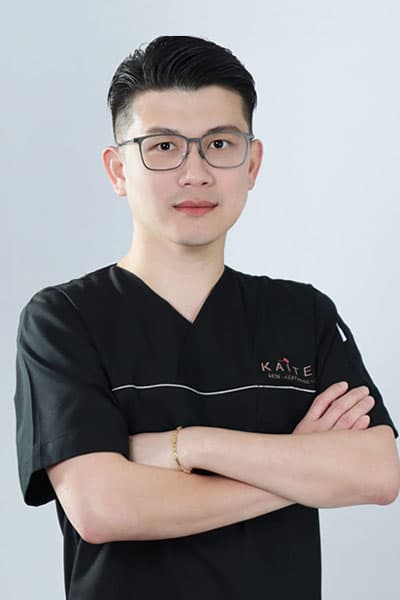
Dr Chin Wei Horng
Aesthetic Physician
MD, GCFM, OHD, MAC, LCP Certified · MMC 50809
Dr. Chin is a medical doctor with over 10 years experience in clinical practice, dedicated to helping patients look and feel their best through safe, effective, and personalised treatments. He graduated from Crimea State Medical University and gained valuable clinical experience in emergency medicine and psychiatry during his compulsory service, forming a strong foundation in patient care.
View full profile- Written by
- Dr Chin Wei Horng, MMC 50809
- Published
- 5 August 2026
This page is general information about aesthetic treatments and is not medical advice. Treatments carry risks that are explained during consultation, and individual results vary. A doctor will assess whether a treatment is suitable for you before it is carried out.