
Device & Injectables2 min read
Pigmentation Laser Treatment: How Many Sessions Do You Need?

What is Pigmentation?
Skin Pigmentation refers to how much melanin the body generates. Generally skin pigmentation disorders are broadly divided into 2 types:
- Hyperpigmentation (Excess Melanin)
- Hypopigmentation (Reduced Melanin)
How does Pigment Laser work?
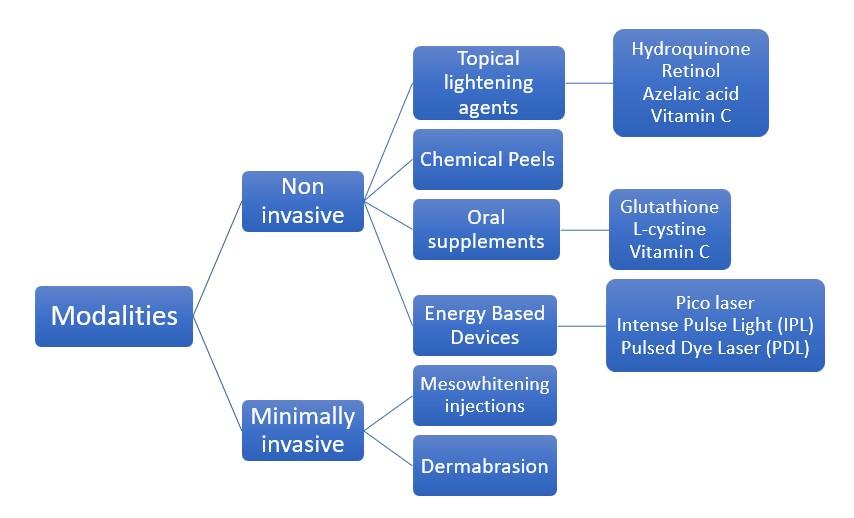
A Pigment Laser emits a wavelength of energy that is specific and well absorbed by a particular Chromophore (i.e Melanin) being treated. The energy is restricted to the target (Pigment) thus sparing the surrounding untreated skin.
What to expect during Post Laser Treatment?
- Erythema/Redness that may linger for ~24 Hours
- Warmth and Slight Swelling (Edema)
- Frosting that usually lasts ~30 minute
- The targeted pigments will become 2-3 shades darker and shed over time (~3-10 days)
- The pigments treated will gradually lighten or clear after a couple of sessions
- Hypopigmentation may occur but is usually transient and resolves after a few months
Post Treatment Care
Protect your skin by limiting sun exposure, using sunscreen with at least SPF 30, and moisturizing regularly.
Frequency and Timing
Recommended at least 1 month apart between treatments.
The Golden Question: How many sessions are required?
The number of sessions required varies based on the type of pigment(s) that are being treated. However, with each successive treatment the pigments will progressively be lightened. Combination treatments are recommended to yield better results. Therefore, it is best to get a consultation done before the treatment plan can be tailored accordingly to suit your skin condition.
Frequently Asked Questions (FAQ)
Are Pigmentation Laser Sessions Painful?
Pigmentation laser sessions are generally well-tolerated, with many people experiencing minimal discomfort. The sensation often feels like mild stinging or tingling. However, pain thresholds vary, and practitioners may use numbing creams to enhance comfort during the procedure.
Can Pigmentation Laser Treat All Types of Skin Tones?
Yes, pigmentation laser treatments can be effective on a variety of skin tones. However, it’s important to consult with a qualified practitioner to determine the most suitable approach for individual skin types and conditions.
Is There Downtime After a Pigmentation Laser Session?
There is typically minimal downtime after a pigmentation laser session. Some individuals may experience mild redness or swelling, but it usually subsides quickly. Makeup can often be applied immediately, and normal activities can be resumed shortly after the treatment.
Are the Results of Pigmentation Laser Permanent?
The results of pigmentation laser treatments are often long-lasting, but permanence can vary. Maintenance may be required for optimal outcomes, and factors such as sun protection and skincare play a role in sustaining the benefits over time.
Can Pigmentation Laser be Combined with Other Treatments?
Yes, pigmentation laser treatments can often be combined with other skincare procedures for enhanced results. However, it’s essential to consult with a qualified practitioner to ensure the compatibility and safety of combining specific treatments based on individual skin concerns.
Do Consult Kaiteki’s certified Aesthetic Doctors to determine whether you are a suitable candidate for Pigmentation Laser Treatment!
Book a free consultation
A doctor will assess your skin and tell you honestly whether this is the right option for you, including when it is not.
About the author

Dr Lim Xiao Chien
Partner, Aesthetic Physician
MBBS, LCP Board Certified, GCFM, MAC · MMC 74662
Dr Lim Xiao Chien graduated from Jawaharlal Nehru Medical College, KLE University in India with a degree in Bachelor of Medicine and Bachelor of Surgery (MBBS).
View full profile- Written by
- Dr Lim Xiao Chien, MMC 74662
- Published
- 6 December 2023
- Topics
- Lasers, Pigmentation
- Last reviewed
- 29 June 2024
This page is general information about aesthetic treatments and is not medical advice. Treatments carry risks that are explained during consultation, and individual results vary. A doctor will assess whether a treatment is suitable for you before it is carried out.