Device & Injectables4 min read
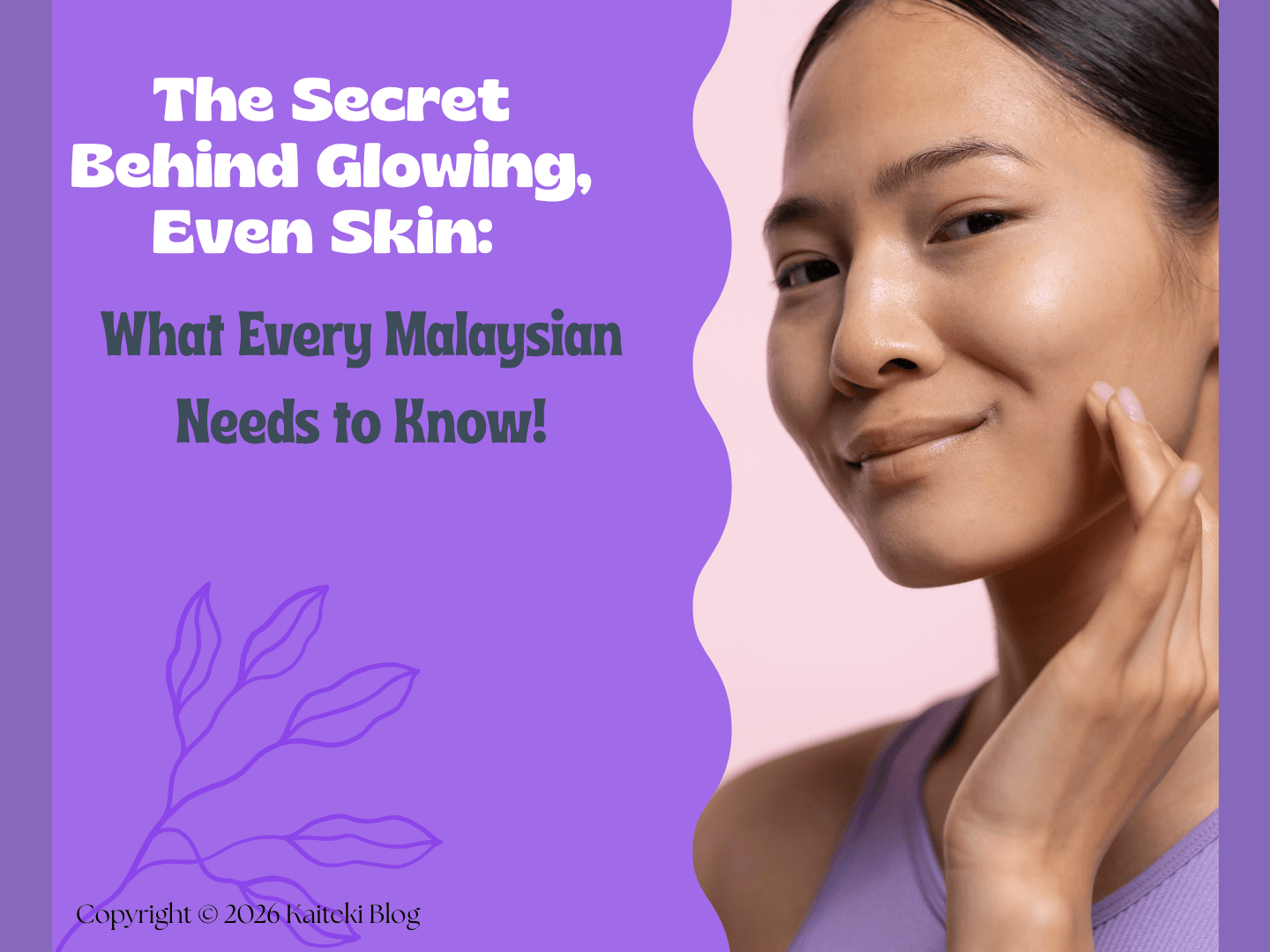
The Secret Behind Glowing, Even Skin: What Every Malaysian Needs to Know!
“If you are excited to understand more about Glowy Skin, please consult our experienced doctors at Kaiteki Clinic. We will create a personalized treatment plan tailored to your needs!
Introduction
Ever looked in the mirror and thought… “Why does my skin look patchy today?” Or maybe you’ve noticed dark spots that just won’t fade, uneven areas around your cheeks, or a dull tone that makes your skin look tired no matter how much you rest.
You’re definitely not alone.
Uneven skin tone is one of the most common concerns we see, especially here in Malaysia, where the sun is strong all year round and humidity is part of daily life.
The good news? It’s very manageable.
In this post, we’ll break down:
- Why it happens
- What makes it worse
- And what actually works (not just hype)
Think of this as your no-nonsense, doctor-approved guide, explained like a friend, not a textbook.
What Does “Uneven Skin Tone” Actually Mean?
“Uneven skin tone” is actually a blanket term, it doesn’t refer to just one specific issue.
It can show up as:
- Dark spots or sun spots
- Melasma (patchy brown areas, usually on cheeks or forehead)
- Post-acne marks (those stubborn dark spots after pimples)
- Redness
- Overall dull or tired-looking skin
These variations are often due to melanin, the pigment that determines your skin color. Sometimes, your skin produces too much melanin in certain areas, leading to those pesky dark patches.
Why Malaysians Are More Prone to This
If you feel like your skin tone gets uneven easily, it’s not your imagination.
Living in Malaysia comes with a few built-in challenges:
- **Sun exposure all year round **Without a winter break from UV rays, our skin is in constant defense mode.
- **High humidity **It can weaken your skin barrier, making it more reactive.
- **Our skin type **Many Malaysians fall under skin types that naturally produce more melanin, which means when triggered, pigmentation becomes more obvious.
- **Heat + sweat **They’re not just uncomfortable; they can exacerbate melasma and cause inflammation.
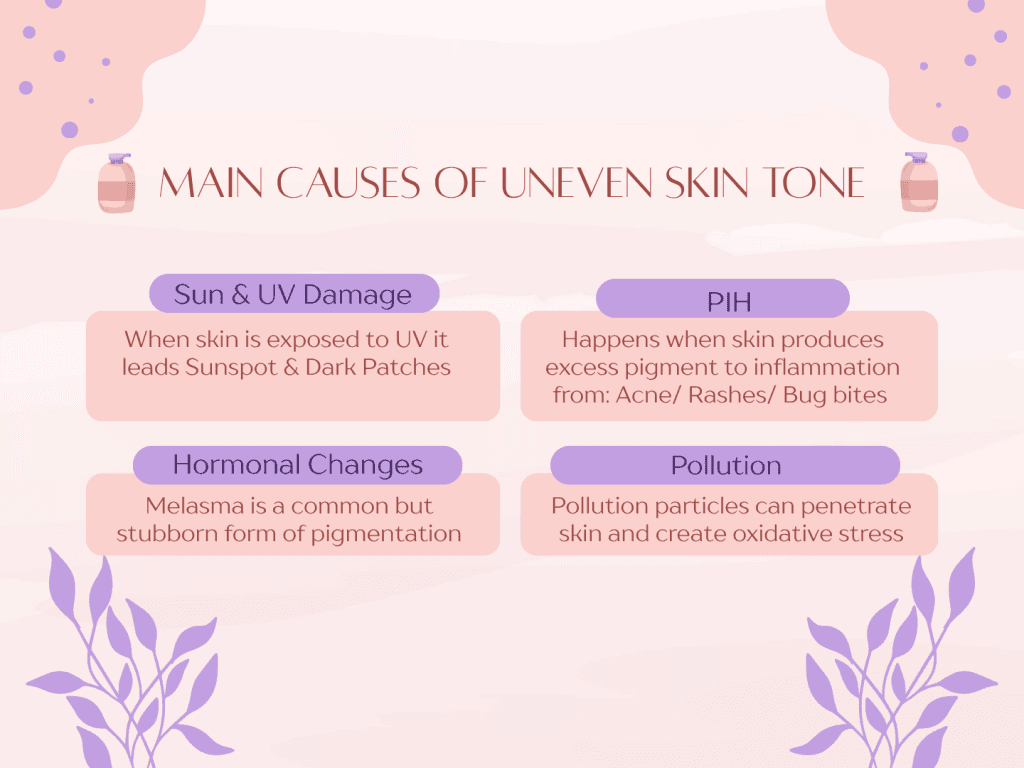
The Main Causes of Uneven Skin Tone
1.Sun & UV Damage
This is the biggest culprit. When your skin is exposed to UV rays, it produces more melanin to protect itself. Over time, this leads to: Sunspots/ Dark patches/ Uneven pigmentation
And here’s the tricky part: Damage can start in your 20s but only become visible years later.
2. Post-Inflammatory Hyperpigmentation (PIH)
Ever noticed a dark mark after a pimple heals? That’s PIH.
It happens when your skin produces excess pigment in response to inflammation from: Acne/ Rashes/ Bug bites
The darker your natural skin tone, the more noticeable these marks tend to be and they can linger for months.
3. Hormonal Changes
Melasma is a common but stubborn form of pigmentation.
It’s often triggered by: Pregnancy/ Birth control pills/ Hormonal fluctuations
It usually appears as symmetrical patches on: Cheeks/ Forehead/ Upper lip
Pollution particles can penetrate your skin and create oxidative stress, which:
And unfortunately sun exposure makes it worse very quickly.
4. Pollution & Environmental Stress
If you live or commute in busy cities, this one matters.
- Speeds up pigmentation
- Makes skin look dull
- Weakens overall skin health
Simple Daily Skincare Tips
Now that we know the culprits, let’s talk about solutions. The good news is, with some easy tweaks to your daily skincare routine, you can keep your skin looking its best!
- Sunscreen is your BFF: Apply SPF 30 or higher every day, rain or shine.
- Gentle Exfoliation: 2-3 times a week helps shed those dulling dead skin cells.
- Key Ingredients: – Niacinamide → reduces pigmentation – Vitamin C → brightens – AHAs (like glycolic acid) → improve skin turnover – Tranexamic acid → especially helpful for melasma
- Stay Hydrated: Moisturise to keep your skin plump and even.
What To Avoid
- Picking at Pimples: It’s tempting, but it guarantees dark marks.
- Skipping Sunscreen: This is a big no-no.
- Harsh Whitening Products/ Over exfoliating: They can do more harm than good.
Professional Treatments: When You Need a Little Extra Help
Sometimes, skincare alone might not cut it, especially for stubborn pigmentation. Here’s a quick look at some professional treatments that can give your skin a helping hand:
SilkPeel Dermalinfusion
A gentle, non-invasive treatment that exfoliates and Infuses skin with targeted serums
Great for: Dull skin/ Mild pigmentation/ Congested pores
Laser Treatments (Pico / Q-Switch)
These use precise light energy to break down pigment deep in the skin. Think of them as high-tech erasers.
Best for: **Sunspots/ PIH/ Melasma (**with proper assessment)
Downtime and results vary, which is why consultation is important.
Skin Boosters
Think of this as “skin repair from within.”
It helps: Improve skin quality/ Boost radiance/ Strengthen the skin over time
Not just about pigment but overall healthier, glowing skin.
Chemical Peels
Controlled acids are used to resurface the skin.
Effective for: Post-acne marks/ Sun damage
Important: Always done by trained professionals not DIY.
How Long Does It Take to See Results?
Let’s set realistic expectations.
- Skin renewal cycle: ~28 days
- Skincare products: 4–12 weeks for visible improvement
- Treatments: Faster results, but usually require multiple sessions
And for melasma? It’s more of a long-term management plan than a one-time fix.
Ready to Take Action?
Uneven skin tone is common, but it’s also manageable and treatable. The key is understanding what’s causing your skin’s mood swings and taking consistent steps to address them. If you’re feeling overwhelmed or unsure where to start, it’s always best to speak to a doctor before trying new products or treatments
Remember, your journey to even, glowing skin is a marathon, not a sprint. Let’s make every step count!
Contact us to find out if you’re a suitable candidate for Rejuran Hb and we will plan out a customised treatment for you.
Book a free consultation
A doctor will assess your skin and tell you honestly whether this is the right option for you, including when it is not.
About the author

Dr Teresa Tan
Aesthetic Physician
MD, MAC · MMC 87513
Dr. Teresa Tan earned her Medical Degree (MD) from Lincoln University College and initially pursued a career in Obstetrics and Gynecology (O&G). This valuable experience honed her precision and meticulousness in needle handling, skills that translate seamlessly to aesthetic medicine.
View full profile- Written by
- Dr Teresa Tan, MMC 87513
- Published
- 27 April 2026
- Topics
- Skin Boosters, Pigmentation
This page is general information about aesthetic treatments and is not medical advice. Treatments carry risks that are explained during consultation, and individual results vary. A doctor will assess whether a treatment is suitable for you before it is carried out.