Skin Concerns6 min read
Ice pick scars: how to recognise them and which treatments reach them
Ice pick scars are narrow, deep acne scars, usually under 2mm wide, that run straight down into the skin. Lasers and microneedling help the skin around them but rarely resolve them alone. The treatments aimed at them work scar by scar, such as TCA CROSS or punch excision, followed by resurfacing.
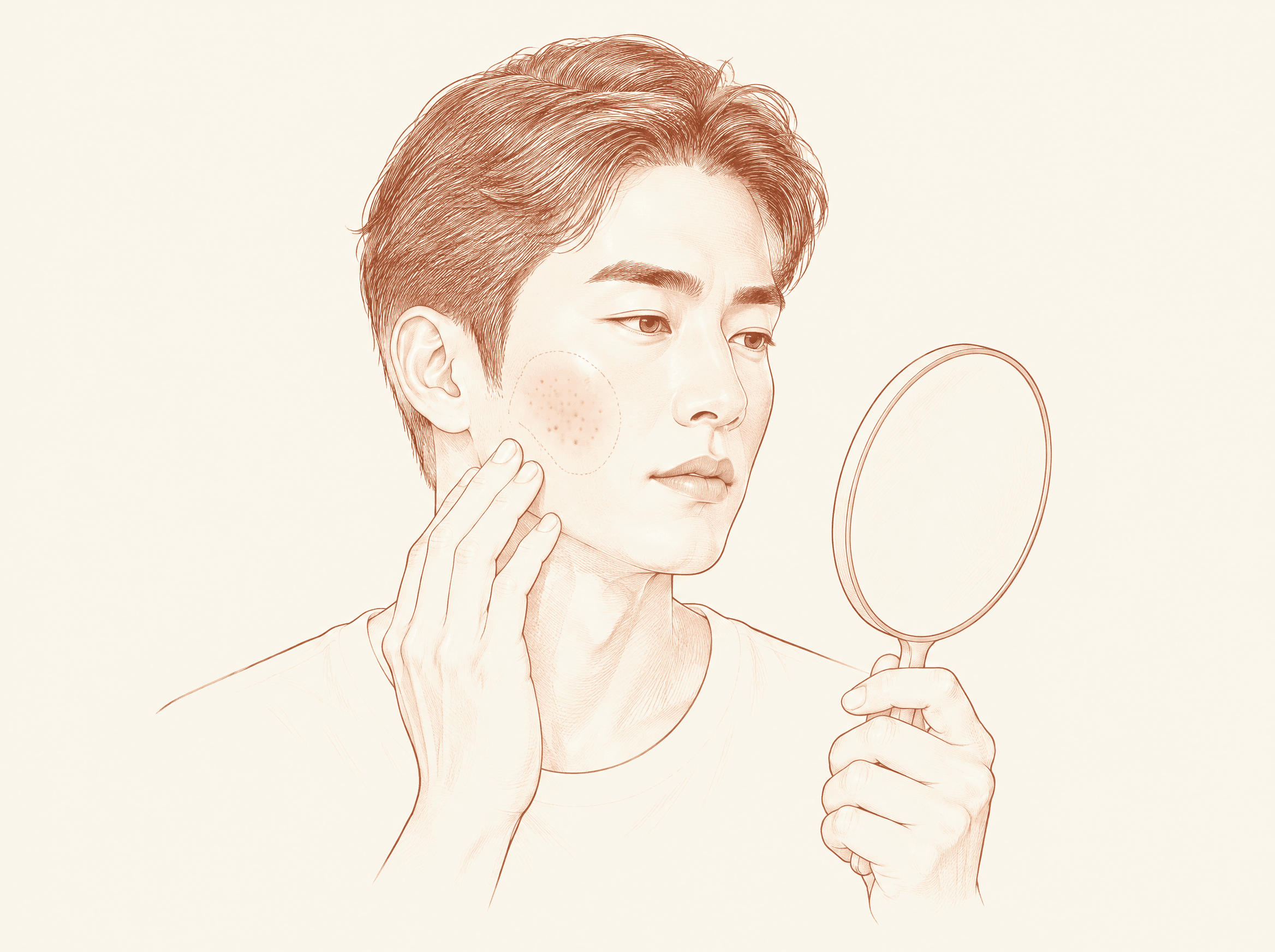
Ice pick scars are the narrow, deep pits that acne leaves behind, usually on the cheeks and temples. They are small at the surface and go straight down, which is exactly why the treatments that smooth other scars often barely touch them.
Most people who come to see me about them have already tried something. A laser package, a course of facials, a cream from overseas. When nothing changed, the usual reason is that the treatment never reached the bottom of the scar. This guide explains how to recognise an ice pick scar, why depth matters so much, and which treatments are actually aimed at them.
Key takeaways
- What they are: narrow, deep scars, usually less than 2mm across, with steep walls that run down into the dermis.
- Why they are stubborn: resurfacing lasers and microneedling work across the skin's surface layers, and a deep, narrow scar can sit below what they reach.
- What targets them: techniques that treat each scar on its own, such as TCA CROSS and punch excision, with resurfacing afterwards to even out the texture.
- On Malaysian skin: the main risk is the treated spot healing darker for a while, so settings and aftercare matter as much as the method.
What is an ice pick scar?
Acne scars are usually grouped by shape. Acne scars come as rolling scars (soft, wave-like dips), boxcar scars (wider, flat-bottomed dips with sharp edges), raised scars, and ice pick scars.
An ice pick scar looks like someone pressed the tip of a needle into the skin. The opening is small, often only a millimetre or two, but the scar narrows into a V as it goes deeper. It forms when a deep, inflamed spot destroys the tissue around a hair follicle and the skin heals with a tunnel of scar tissue instead of a filled-in wound.
Few people have only one type. In clinic, ice pick scars almost always sit among rolling and boxcar scars, and that mix decides the plan.
Is it an ice pick scar or a large pore?
This is the question I get most, especially about the cheeks and the nose. Three things help you tell them apart at home.
- Where they are: enlarged pores are spread fairly evenly, often across the nose and inner cheeks. Ice pick scars cluster where you had deep spots, and they are irregular.
- The stretch test: gently stretch the skin between two fingers. Rolling scars soften and partly disappear. Ice pick scars and boxcar scars stay visible.
- Side lighting: look in the mirror with a single light from the side, not from above. Ice pick scars cast a small dark shadow at their centre. A pore shows as an opening, sometimes with oil or a blackhead in it.
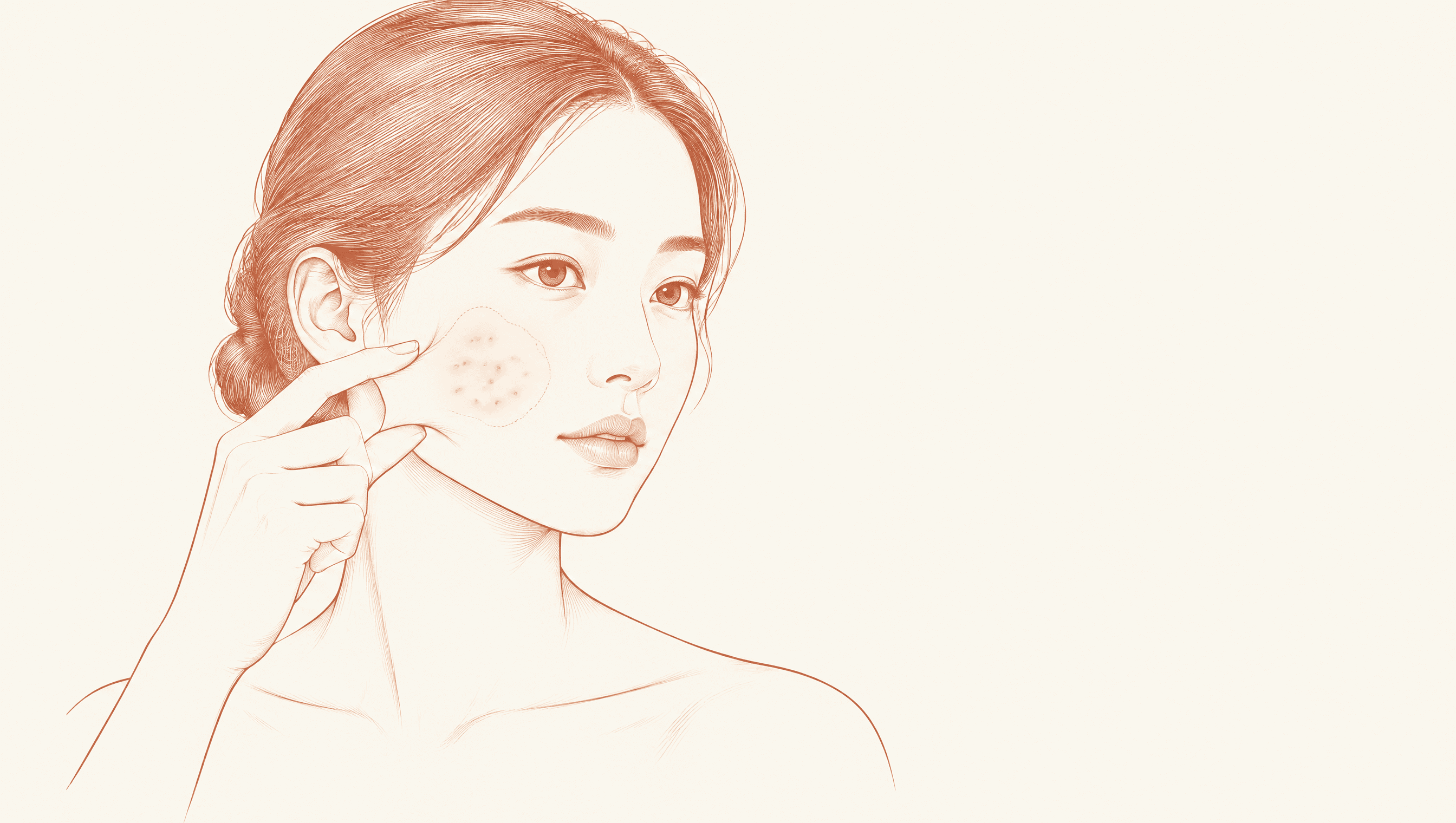
If you are still not sure, that is normal. A doctor can tell in a few seconds under good light, and the difference changes everything about treatment. Enlarged pores are a different concern with a different approach.
Why are ice pick scars so hard to treat?
Depth. Many treatments that improve rolling and boxcar scars work by creating controlled injury in the upper layers of the skin and letting collagen rebuild. That is effective for a shallow, wide dip. A narrow scar that runs deeper than the treatment reaches gets very little out of it.
A review in the Journal of Clinical and Aesthetic Dermatology notes that many treatments do not adequately correct ice pick scars that reach up to 2mm in depth. A 2024 narrative review in JMIR Dermatology lists poor results on ice pick scars as a limitation of fractional ablative lasers used on their own. That matches what I see. Lasers and RF microneedling help the skin around the scars, and they are useful in a plan, but they rarely resolve ice pick scars by themselves.
Which treatments reach ice pick scars?
The treatments with the most evidence for ice pick scars work on one scar at a time.
TCA CROSS
CROSS stands for chemical reconstruction of skin scars. A very small amount of high-strength trichloroacetic acid is placed inside each scar with a fine applicator, not spread over the face. The acid causes controlled injury at the base of the scar, and the healing that follows lays down new collagen from the bottom up.
It matters for Malaysia that the original study of the technique, published in Dermatologic Surgery in 2002, was carried out on patients with skin types IV and V, the range most Malaysians fall into. It is usually repeated over several sessions a few weeks apart. Each treated scar forms a small dark crust that falls off within about a week.
Punch excision
For a deeper or wider ice pick scar, the scar can be removed with a small round surgical punch and the skin closed with a fine stitch. The aim is to replace a pit with a small, flat line, which is often less noticeable, though it is still a scar. Punch elevation and punch grafting are related techniques for particular scars. These are done under local anaesthetic and need a few days of wound care.
Resurfacing and RF microneedling afterwards
Once the deepest scars have been treated individually, resurfacing evens out the surrounding texture. At Kaiteki this is where RF microneedling and fractional CO2 resurfacing come in. Our guide to lasers for acne scars explains how each works on the rolling and boxcar scars that usually sit beside ice pick scars.
Whether a targeted technique such as TCA CROSS or punch excision belongs in your plan is something we decide together at consultation, scar by scar.
What about creams and home treatment?
No cream fills an ice pick scar. Retinoids can improve skin texture and fade the marks around scars over months, and daily sunscreen keeps the surrounding skin even, so both are worth doing. They will not change the depth of the scar itself.
Please do not try to treat scars at home with strong acid, needles or rollers. On our skin that is a common way to end up with dark patches that take longer to settle than the scar has existed.
Timing, skin tone and what to expect
Scars are treated once your acne is under control. New spots keep forming new scars, and treating during a breakout raises the risk of infection and darkening. If you are taking or have recently taken isotretinoin, tell your doctor, because it affects when some procedures are timed.
On medium and deeper skin tones, the main risk with any of these treatments is post-inflammatory hyperpigmentation: the treated spot heals darker than the skin around it. It usually fades over weeks to months. Careful settings, spacing sessions properly and strict sun protection in between all lower the risk. With Malaysian sun, I treat sunscreen as part of the treatment, not an extra.
Be realistic about the result. Ice pick scars can often be improved, but they are rarely erased, and improvement builds over months as collagen remodels. Photos taken in the same light before you start are the most reliable way to judge progress.
When should you see a doctor?
See a doctor if your scars bother you enough to consider treatment, if you are not sure whether you have scars or pores, or if you still get new deep spots. Active acne comes first, and our page on acne covers how it is assessed. A good consultation will tell you which types of scar you have, which techniques fit each, and what is realistic on your skin.
Common questions
Can ice pick scars be removed completely?
Rarely. They can often be improved, but not erased, and improvement builds over months as collagen remodels.
Can pico laser treat ice pick scars?
Pico laser is mainly for the flat marks around scars. It does not reach the depth of an ice pick scar on its own.
Do ice pick scars get worse with age?
They can look more noticeable as skin loses volume and firmness, even though the scar itself has not changed.
How many TCA CROSS sessions are needed?
It is usually repeated over several sessions a few weeks apart. The number is set after the doctor has examined each scar.
Book a free consultation
A doctor will assess your skin and tell you honestly whether this is the right option for you, including when it is not.
Related pages on our site
About the author
Dr Jen Meng
Aesthetic Physician
MBBS, MAC · MMC 104167
Dr Jen Meng is an aesthetic medical doctor who graduated with Bachelor of Medicine, Bachelor of Surgery (MBBS) from Manipal Academy of Higher Education. With training in Plastic and Reconstructive Surgery, he has strong expertise in facial anatomy, skin health, and procedural safety.
View full profile- Written by
- Dr Jen Meng, MMC 104167
- Reviewed by
- Dr Yeong Bin, MMC 78238
- Published
- 3 November 2026
This page is general information about aesthetic treatments and is not medical advice. Treatments carry risks that are explained during consultation, and individual results vary. A doctor will assess whether a treatment is suitable for you before it is carried out.