

Concern · Skin
Vascular Lesions
Visible blood vessels, redness and broken capillaries can have different causes.
Free, about 20–30 minutes, no obligation to book treatment.
- Type before treatment
- A thread vein, a red spot and rosacea flushing are assessed and managed differently.
- Most are harmless
- The common facial types are cosmetic, but a few patterns are worth checking medically.
- Face and legs differ
- Facial vessels and leg veins sit in different systems and are not assessed the same way.
On this page
In brief
Vascular lesions are visible blood vessels or areas of redness in the skin: facial thread veins, spider angiomas, cherry angiomas and the persistent redness of rosacea.
Results from Kaiteki patients
3 photos · tap one to enlarge
Facial redness on the cheek, before and after a course of treatment at Kaiteki
Fine thread veins, before and after a course of vascular laser at Kaiteki
Thread veins on the cheek, before and after vascular laser at Kaiteki
Photographs of Kaiteki patients, published with consent. Individual results vary and are not guaranteed. These images are not a promise of outcome. A doctor will assess whether any treatment is suitable for you.
What are vascular lesions?
Vascular lesions occur when small blood vessels near the surface of the skin become visible or dilated, appearing as fine red or purplish lines, small red spots, patches, or persistent redness.
Common causes
Usually more than one of these:
- Sun exposure: ultraviolet light weakens the collagen that supports the small vessels in the upper skin.
- Genetics and skin type: a tendency toward visible vessels and facial flushing often runs in families, and fair or thin skin shows vessels that sit at the same depth in other skin.
- Hormonal change: pregnancy and hormonal medication can bring on spider veins, some of which settle on their own afterwards.
- Skin damage and harsh routines: long-term use of strong topical steroids, aggressive scrubs, and injury to the skin can all leave vessels more visible.
Which type is it?
Three common patterns, and the pattern decides whether laser is relevant:
Facial thread veins and spider veins
Fine red lines
Fine red or purple lines (telangiectasia), usually on the cheeks, around the nostrils and on the chin. A spider angioma is a related pattern: a small central red point with fine vessels radiating outward, which briefly blanches when pressed.
Usually assessed for: usually assessed for vascular laser.
Cherry angiomas and venous lakes
Small, raised or bluish
Cherry angiomas are small, bright red, often slightly raised spots, most common on the trunk and arms and increasingly frequent with age. Venous lakes are soft, dark blue or purple bumps, usually on the lips or ears in sun-exposed older skin.
Usually assessed for: usually assessed for vascular laser once the doctor is satisfied the spot is what it appears to be.
Persistent redness and rosacea
Flushing, patchy redness
Background redness across the cheeks, nose and chin that worsens with heat, sun, alcohol, spicy food or stress, sometimes with fine visible vessels and, in some people, small bumps. This pattern is frequently part of rosacea.
Usually assessed for: assessed for medical management first, with vascular laser discussed for persistent vessels.
Where they appear
Location is a strong clue to type:
Cheeks and nose
The most common site for thread veins and diffuse redness, because these areas take the most sun and flush the most readily.Chin and around the mouth
Fine vessels on the chin and beside the nostrils are common. Redness with scaling or small bumps around the mouth can be a different skin condition and is assessed as such.Legs
Fine spider veins on the legs can sometimes be treated, but larger, bulging or rope-like veins are varicose veins. These involve the deeper venous system and need a vascular assessment, not a facial laser.A birthmark rather than a vein?
A flat pink, red or purple patch present since birth, such as a port-wine stain, is a vascular birthmark. It is assessed on the birthmark page, because its behaviour and treatment course differ.
When to see a doctor
Most facial vessels are a cosmetic concern, but a few patterns need medical attention first. Any of these is a reason to be examined:
- A red spot or lesion bleeds easily, bleeds repeatedly or has started to ulcerate.
- A lesion is growing quickly, changing colour or looks different from the others around it.
- Several new spider angiomas have appeared in a short time. In numbers, these can be linked to liver or hormonal causes and are worth checking with a GP.
- Leg veins are bulging, aching, swollen, or the skin over them has changed colour.
- Facial redness comes with burning, stinging, bumps or eye irritation.
Treatment options at Kaiteki
Vascular laser is the in-clinic option for visible vessels on the face and body.
Vascular / Pigment Laser
For dilated vessels you can see at the surface
Delivers light absorbed by the haemoglobin in small, superficial vessels, heating them so the body can gradually clear them.
Vascular / Pigment Laser
Thread vein, red spot or rosacea?
Send us a photo on WhatsApp and a doctor can tell you which it most likely is.
Ask about this on WhatsAppFree consultation, about 20 to 30 minutes, no obligation.
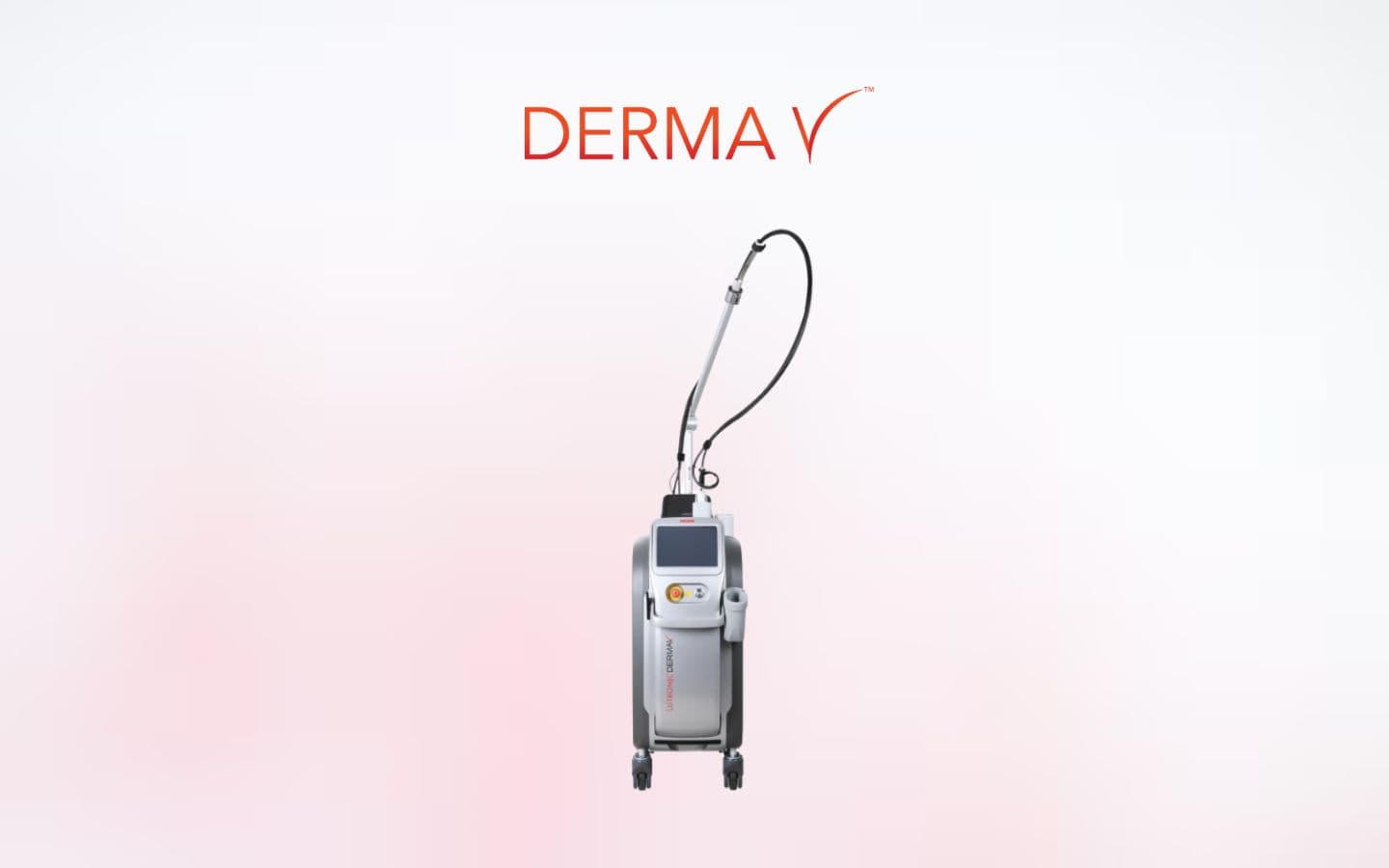
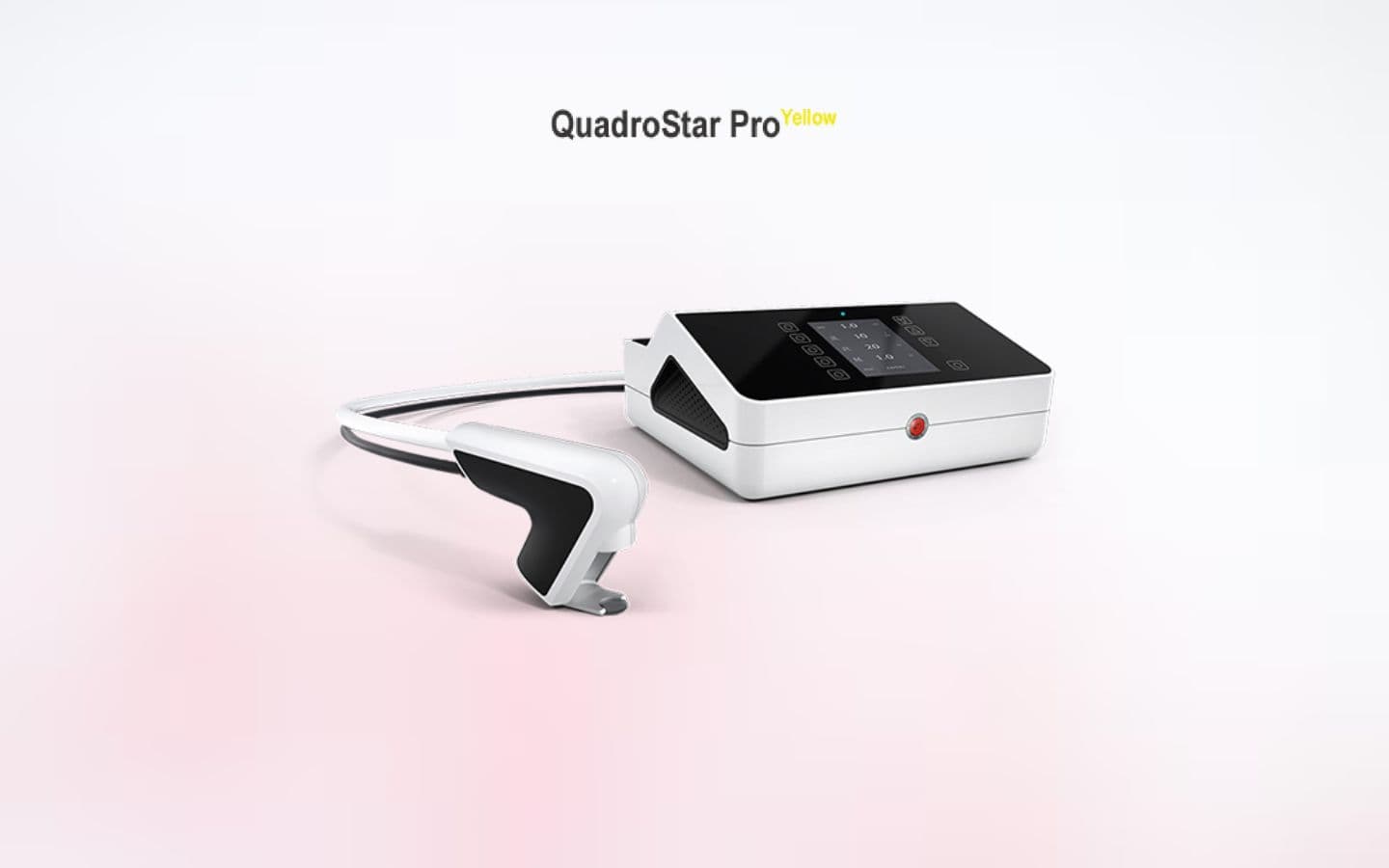
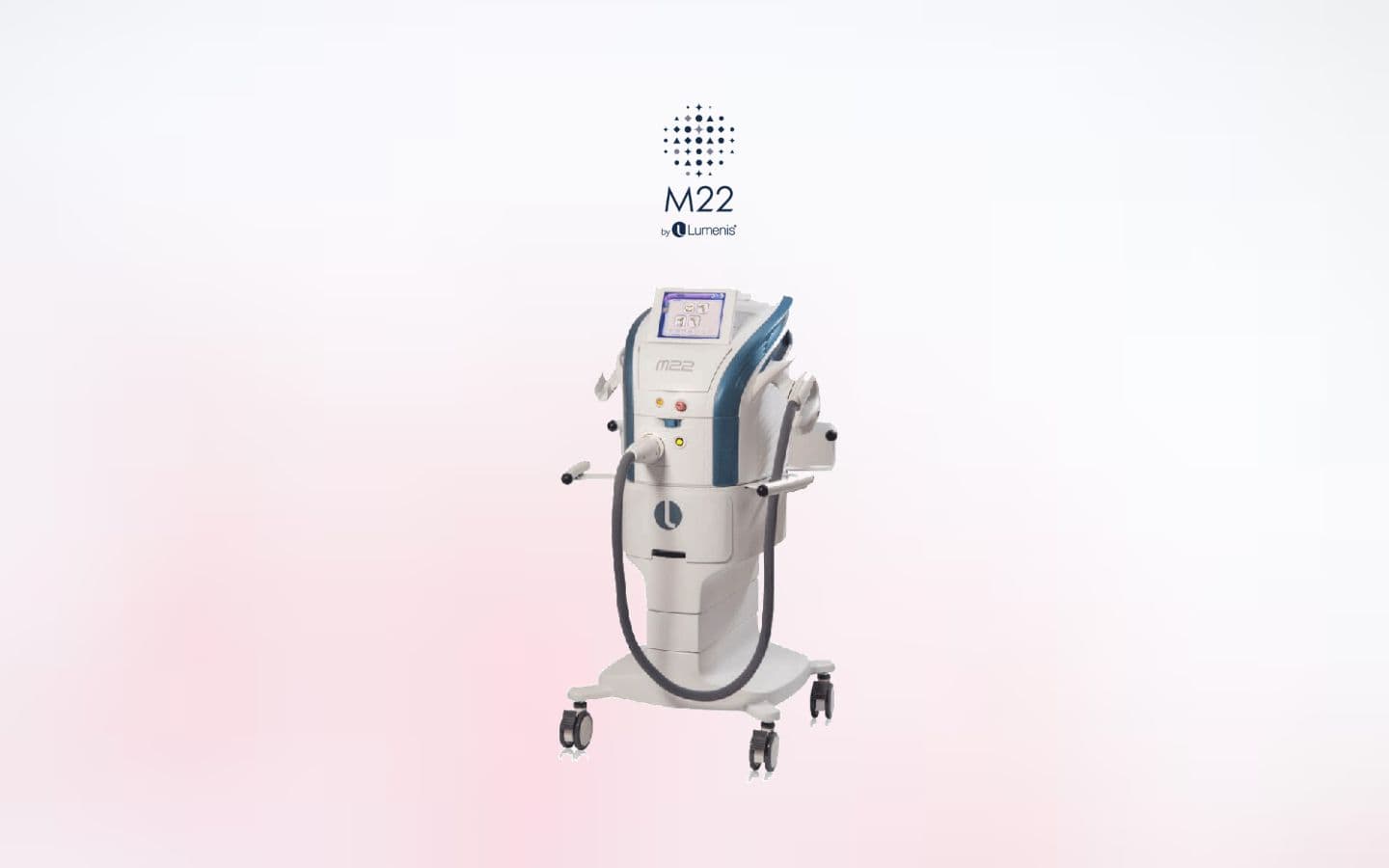
Technology used
Having more than one platform means the doctor can match the device to your skin type and to what is being treated, rather than fitting your skin to a single machine.
Risks and what to expect
Common and usually temporary
Redness, swelling and a warm, sunburn-like feeling for a short time after treatment. Some vessels darken or look purple-grey before they fade, and some settings leave temporary bruising.Pigment change
Darkening or lightening of the treated skin can occur, particularly in medium to darker skin tones or after sun exposure. This is why settings are adjusted to your skin tone and why sun protection before and after matters.Less common
Blistering, crusting or, rarely, scarring.What treatment cannot do
Laser does not cure rosacea or change a tendency toward visible vessels, so new vessels can appear over time, especially with ongoing sun exposure. It is not suitable for varicose veins, and some deeper or larger vessels respond only partly or not at all.
Tell your doctor if you are pregnant or breastfeeding, have a tan or recent sun exposure, take blood thinners or medication that increases light sensitivity, have a history of cold sores in the area, keloid scarring, or a liver or hormonal condition.
What your first visit involves
The doctor may press on a lesion to see how it blanches, which separates the three types.
History
When the vessels or redness appeared, whether they come and go, what makes them worse, and any medication.
Examination
A close look at the affected skin, sometimes under magnification.
Ruling out medical causes
Anything that bleeds, is changing or looks unusual is assessed first, with referral where needed.
Discussion and plan
Whether laser suits your type, and what to do about triggers.
Come without make-up on the affected area if you can. Concealer hides exactly what the doctor needs to see.
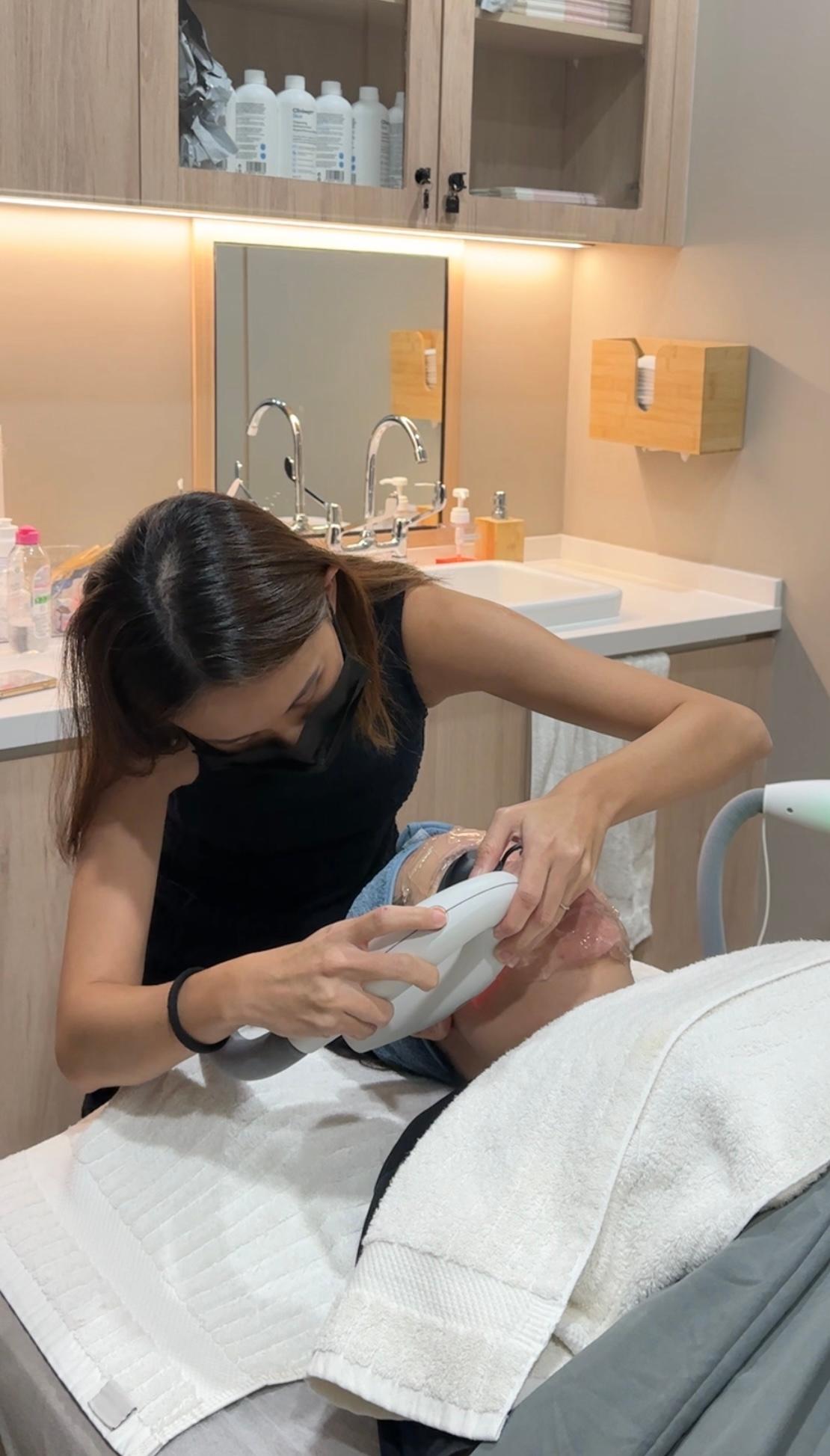
Light-based treatment for visible vessels in progress, with the eyes shielded throughout.
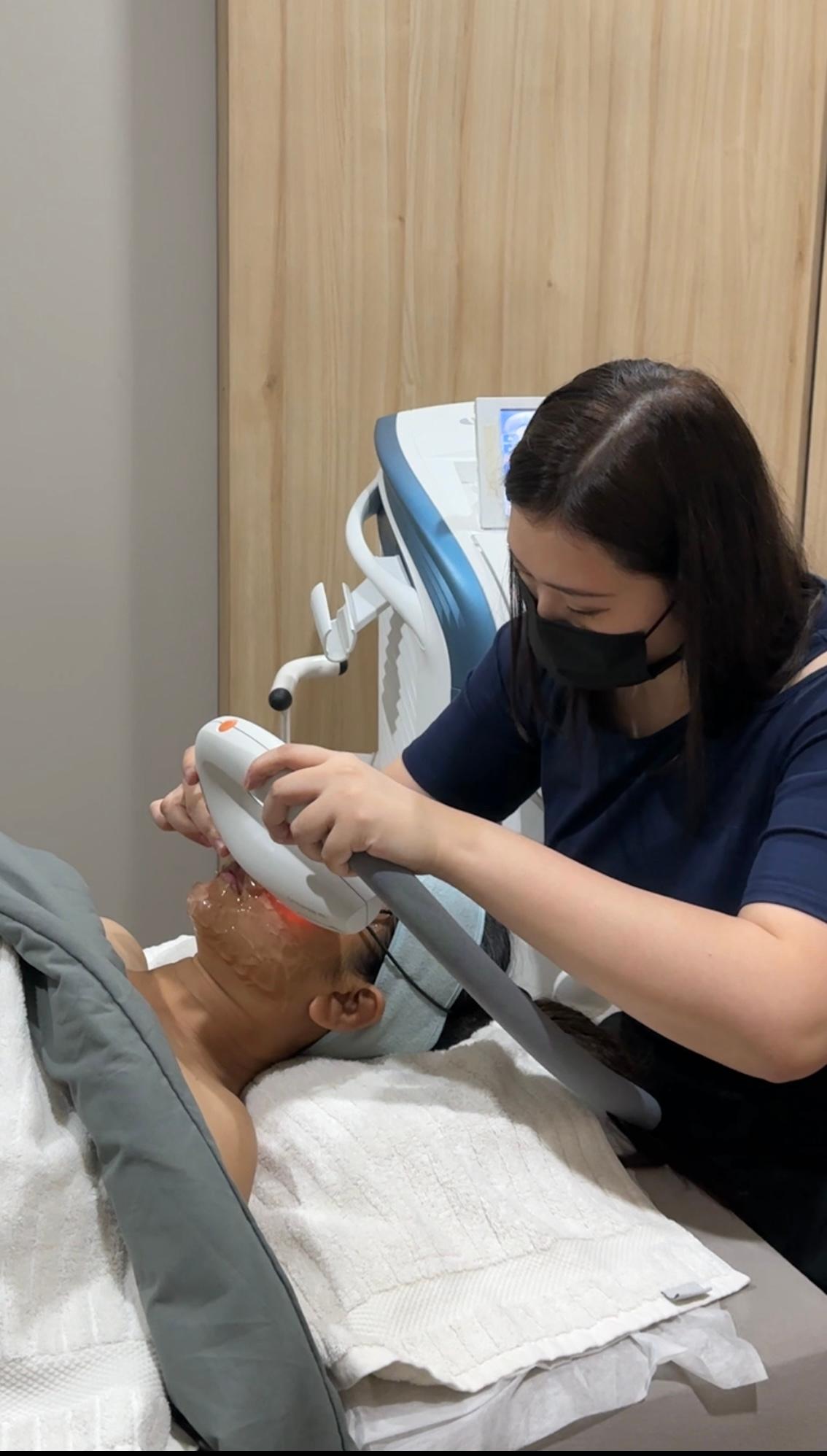
The handpiece moves across the area in overlapping passes, with settings matched to the size and depth of the vessels.
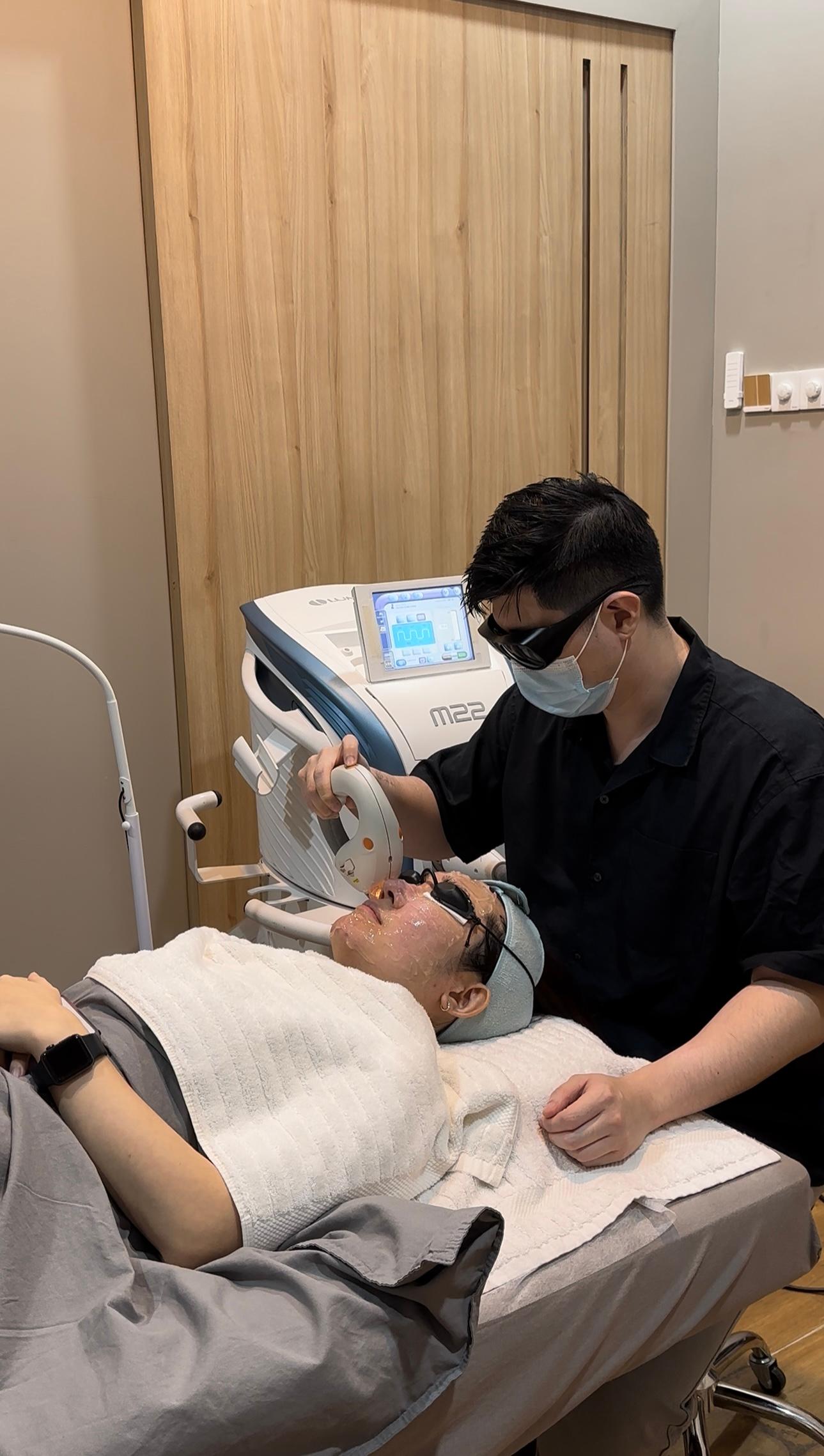
Treatment takes place with the doctor present throughout.
What affects the cost
Pricing is set after assessment. It depends on:
- The type of lesion, since a single red spot and widespread facial redness are different in scale.
- How large an area is treated, from a few spots to the whole of both cheeks.
- How many sessions are planned, which is set after assessment and reviewed as the skin responds.
- Whether medical management of rosacea or skin sensitivity forms part of the plan.
- Whether occasional maintenance is likely, given that new vessels can form over time.
Common questions
Do vascular lesions come back after treatment?
Laser does not change the tendency that produced them, so new vessels can form over time, particularly with sun exposure, heat and flushing triggers.
Are broken capillaries actually broken?
No. The common name is misleading: the vessels are dilated, not broken. This is also why they do not heal on their own the way a bruise does.
Are red spots on my body a sign of something serious?
Small, bright red cherry angiomas are very common and harmless, and they tend to increase in number with age. A spot that bleeds, grows quickly or looks different from the others should be examined.
Is rosacea the same as a vascular lesion?
Not quite. Rosacea is a long-term skin condition that often includes flushing, persistent redness and visible vessels, sometimes with bumps or eye irritation. The visible vessels are one part of it that laser can address, but managing triggers, gentle skincare and sometimes prescribed treatment address the condition itself.
Can leg veins be treated the same way?
Fine spider veins on the legs can sometimes be treated with laser, but they are assessed differently from facial vessels.
Is vascular laser suitable for darker skin tones?
It can be, with care. Darker skin carries more pigment that also absorbs laser light, which increases the risk of pigment change.
Read next


Related concerns
Birthmark
Port-wine stains and some haemangiomas are vascular birthmarks, assessed on their own page.Pigmentation
Redness and brown patches often sit together, and the same assessment separates them.Aging
Thinning skin and sun damage with age make small vessels easier to see.
Not sure which type you have?
The consultation is free, takes about 20 to 30 minutes, and there is no obligation to book treatment afterwards. A doctor will examine the affected skin and talk you through what is, and is not, worth doing.
Book a free consultationMedically reviewed by

Dr Jade
Aesthetic Physician
MBBS, LCP Board Certified · MMC 60253
Dr Jade obtained her Medical Degree from Russian State Medical University (Moscow). After serving her compulsory service with the government, she moved on to continue her services in the Emergency Department before subsequently moving on to serve in the interior towns of Sarawak.
View full profile- Reviewed by
- Dr Jade, MMC 60253
- Last reviewed
- 13 Jul 2026
- Next review due
- 13 Jul 2027