Skin Concerns8 min read
How to reduce facial redness: what causes it and what actually helps
Facial redness comes from dilated blood vessels near the skin's surface or from inflammation that has damaged the skin barrier. Rosacea, sun damage and over-exfoliation are the usual causes. A gentle barrier-repair routine with daily SPF 50+ settles most cases; persistent vessels are addressed with vascular laser or IPL.
Facial redness happens when blood vessels near the skin's surface dilate, or when inflammation damages the skin barrier, leaving flushing, visible veins or persistent red patches. The usual causes are rosacea, sun damage, over-exfoliation, allergic reactions, and heat or dietary triggers. Reducing it starts with working out which of those is driving yours, then building a routine that calms rather than provokes.
In Malaysia's heat and humidity, and with the constant cycling between outdoor warmth and air-conditioned rooms, facial redness tends to be harder to settle than it is in cooler climates. This guide covers what causes it, which ingredients actually calm it, and when professional treatment is worth considering.
Key takeaways
- What causes facial redness? Dilated blood vessels, inflammation, or a compromised skin barrier. Common triggers include rosacea, sun damage, over-exfoliation, allergic reactions, heat, spicy food and alcohol.
- Calming ingredients worth using: Niacinamide (reduces inflammation and supports the barrier), azelaic acid (anti-inflammatory), centella asiatica (soothes irritation) and ceramides (repair the barrier).
- Daily routine: Gentle fragrance-free cleanser, a calming serum, a barrier-repair moisturiser, and broad-spectrum SPF 50+ every morning.
- Redness and ageing: As skin thins with age, the blood vessels underneath become more visible. Collagen loss and laxity make vascular redness more obvious than it was in younger skin.
- When to see a doctor: If redness is persistent, worsening, comes with bumps or pustules, or has not settled after about 4 weeks of calming skincare.
What causes facial redness?
Facial redness has several possible causes, and identifying yours is the first step toward the right treatment.
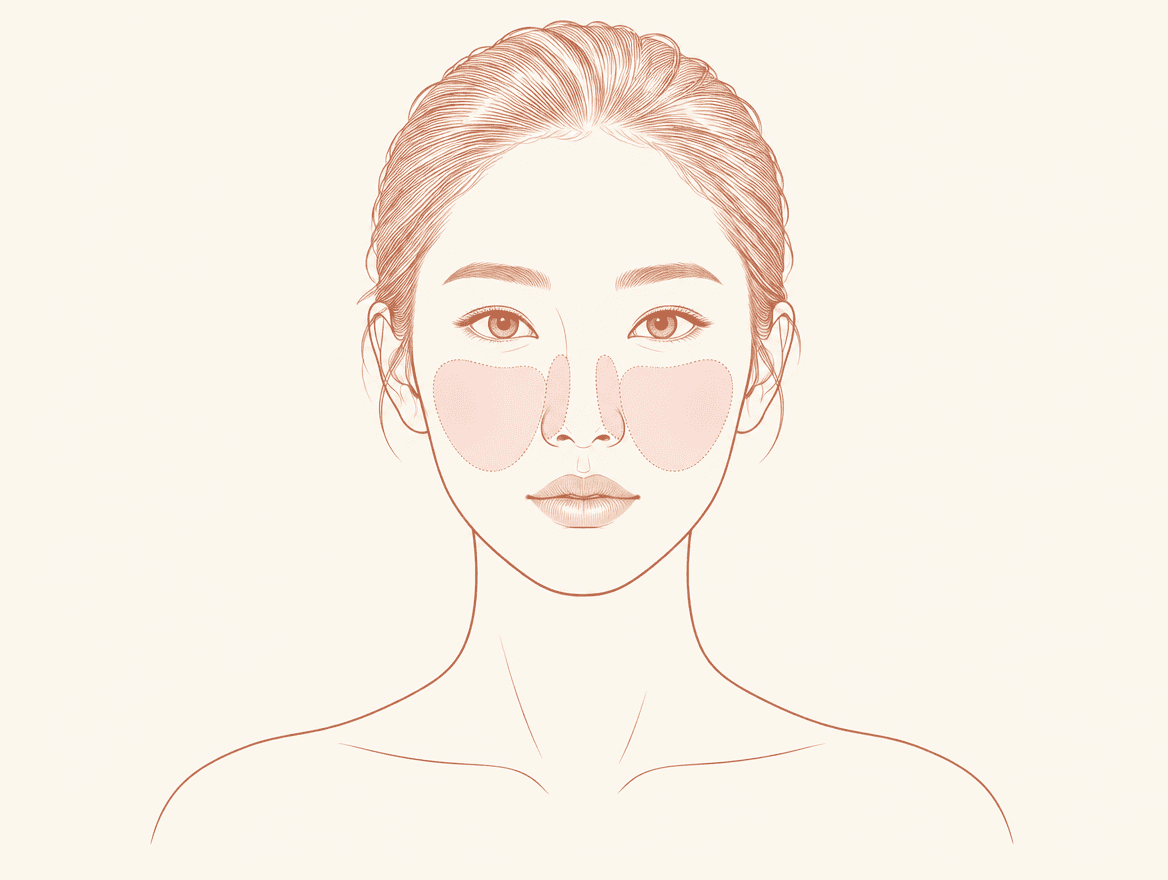
Rosacea is one of the most common causes of persistent redness. It is a chronic inflammatory condition that produces flushing, visible blood vessels and sometimes small bumps across the central face. A systematic review in the British Journal of Dermatology put its global prevalence at roughly 5% of adults. Triggers vary from person to person, but sun exposure, heat, spicy food, alcohol, stress and certain skincare products come up repeatedly. Rosacea cannot be cured, though it can usually be managed.
Sun damage is another major cause. Chronic UV exposure breaks down collagen and elastin, thinning the skin and making the vessels beneath it more visible. Over time this produces a flushed or blotchy look that does not settle when you cool down.
Over-exfoliation is an increasingly common cause, particularly among people layering several actives, retinoids, AHAs and vitamin C, without enough barrier support. Once the protective barrier is stripped, the inflammation and redness that follow can take weeks to resolve.
Other triggers include contact dermatitis, meaning reactions to fragrance, detergents or metals, acne-related inflammation, allergic reactions, and heat or dietary flushing. Alcohol flushing is especially common in East and Southeast Asian populations because of a genetic variation in the ALDH2 enzyme, which causes the face to redden after even small amounts of alcohol. That particular flush is a metabolic response, not a skin problem, and skincare will not change it.
One thing worth separating out early: redness is not the same as pigmentation. If your concern is flat brown or grey patches rather than flushing, that is more likely melasma, which is treated quite differently. The two can appear on the same face.
Facial redness and ageing skin
Redness often becomes more noticeable with age, and the link between the two is easy to miss. As skin ages, collagen production declines and the skin thins, so the blood vessels underneath show through progressively more. The result is a flushed or mottled appearance that was not there in younger years.
Laxity compounds it. As skin loses firmness and elasticity, it no longer sits as tightly over the tissue beneath, so dilated or damaged vessels show through more prominently. Hormonal change around menopause can thin the skin further and increase vascular sensitivity, which is why flushes often become more frequent and longer-lasting at that stage.
Cumulative sun damage speeds all of this up, since years of unprotected UV exposure break down the structural proteins that keep skin firm and thick. That combines laxity and visible redness into one compounding problem, and it is the reason daily sunscreen is not only about preventing dark spots. It is one of the more useful long-term steps for both redness and skin ageing.
How to build a skincare routine for redness
The right routine calms inflammation, repairs the barrier and protects against triggers. Keep it simple. A few products with the right ingredients will do more than a long routine that keeps irritating the skin.
Start with a gentle, fragrance-free cleanser. Avoid foaming cleansers containing SLS, which strip the skin's natural oils and weaken the barrier. Use lukewarm water, not hot, since heat dilates blood vessels and worsens flushing.
After cleansing, apply a calming serum. Niacinamide (vitamin B3) is among the better-studied ingredients for redness: it supports the skin barrier and reduces inflammation with consistent use. Azelaic acid is another well-evidenced option, particularly in rosacea, available at 15% to 20% on prescription or at lower strengths over the counter. Centella asiatica, often labelled cica, soothes irritation and supports barrier repair.
Follow with a barrier-repair moisturiser containing ceramides, which rebuild the lipid layers that keep irritants out and moisture in. Our skincare range includes ceramide-based options suited to reactive skin. Finish every morning with a broad-spectrum SPF 50+ sunscreen. UV is a trigger for almost every type of facial redness, which makes sunscreen the single most important daily step.
Avoid fragrance, alcohol-based toners, essential oils and physical scrubs, and stop using anything that stings or tingles. Stinging is not a product working. It is a barrier being damaged.
Professional treatments for persistent redness
When a calming routine has not settled things after 4 to 6 weeks, clinical treatment can address the vascular component that skincare cannot reach.
Topical prescriptions
For rosacea, doctors commonly prescribe topical metronidazole, prescription-strength azelaic acid, or brimonidine, which temporarily constricts blood vessels and reduces visible redness for a number of hours at a time. These are prescription medicines and need a proper assessment first, partly because the wrong choice can aggravate the condition.
Vascular laser
Vascular laser uses a wavelength absorbed strongly by haemoglobin, so the energy is taken up by the blood vessel rather than the surrounding tissue. At Kaiteki this is delivered with Pro Yellow, a 577nm yellow laser, or DermaV. It is the usual approach for discrete visible vessels on the nose and cheeks as well as for diffuse background redness. Downtime is limited, typically some mild redness for a day or two.
IPL
M22 IPL delivers filtered broad-spectrum light rather than a single wavelength, which lets it address diffuse redness and sun-damage-related flushing across a wider area in one pass. Whether IPL or a true vascular laser suits you better depends on your skin tone and on what the redness is actually made of, which is a judgement your doctor makes at consultation rather than something to choose from a menu.
Either way, rosacea and a tendency to flush are chronic. Treatment is planned as a course followed by periodic maintenance and trigger management, not as a one-off with a fixed endpoint. How many sessions that means varies with how extensive the vessels are, and your doctor will give you a realistic figure after assessing your skin.
Frequently asked questions
Is facial redness permanent?
It depends on the cause. Temporary redness from flushing, irritation or sunburn settles on its own. Persistent redness from rosacea, sun damage or visible vessels generally needs treatment, and how much it improves varies from person to person.
Can rosacea be cured?
No. Rosacea is a chronic condition with no permanent cure. It is managed through trigger avoidance, calming skincare and, where appropriate, vascular laser or IPL to reduce the visible vessels, with maintenance over time.
Does diet affect facial redness?
Yes. Spicy food, hot drinks, alcohol, caffeine and histamine-rich foods such as tomatoes, aged cheese and chocolate can trigger flushing by dilating blood vessels. Working out your own triggers, which are individual, tends to reduce how often episodes happen.
Does skin laxity make facial redness worse?
It contributes. As skin thins and loses firmness with age, the vessels beneath the surface become more visible, so redness that was previously masked starts to show. Sun protection and collagen-supporting treatment slow that process rather than reverse it.
When should I see a doctor about facial redness?
Get it assessed if the redness is persistent over weeks or months, is worsening, comes with bumps, pustules or visible blood vessels, or has not responded to about 4 weeks of gentle, calming skincare. It is also worth an assessment if you are unsure whether you are dealing with redness, pigmentation or both, since the treatments differ.
Calmer skin starts with understanding the cause
Reducing facial redness begins with identifying what is triggering yours. A calming routine, the right ingredients and professional input when skincare is not enough are what a sensible plan looks like, and the first step is knowing which type of redness you actually have.
Ready to explore your options? Reach out to us on WhatsApp and we will help you find the right path forward.
Book a free consultation
A doctor will assess your skin and tell you honestly whether this is the right option for you, including when it is not.
Related pages on our site
About the author

Dr Jeremy Low Jia Wei
Partner, Aesthetic Physician
MBBS, MAC, LCP Board Certified · MMC 91193
Dr Jeremy graduated with a Bachelor of Medicine & Surgery (MBBS) from Newcastle University Medicine Malaysia. After completing his compulsory housemanship, he served as a medical officer in the Dermatology department and undergone training under a renowned dermatologist. He has vast knowledge and experience in dealing with a broad spectrum of skin conditions such as acne, rosacea and pigmentation. Dr Jeremy is also a distinguished speaker for several dermatology workshops associated with acne. With his years of experience in the hospital treating patients, improving their well-being and appearances, Dr Jeremy decided to venture into aesthetic medicine, aiming to broaden his horizons and achieve new heights in this field.
View full profile- Written by
- Dr Jeremy Low Jia Wei, MMC 91193
- Published
- 13 August 2026
This page is general information about aesthetic treatments and is not medical advice. Treatments carry risks that are explained during consultation, and individual results vary. A doctor will assess whether a treatment is suitable for you before it is carried out.