
Injectables
Deusaderm
A cross-linked porcine collagen injectable from Taiwan, used within bio-stimulator treatment, including around the under-eye area.
Free consultation, no obligation.
- Porcine type I collagen
- Material
- Sunmax, Taiwan
- Manufacturer
- Bio-stimulator
- Used within
In brief
Deusaderm is an injectable gel of cross-linked type I collagen, purified from pig skin by Sunmax Biotechnology in Taiwan; the version supplied in Malaysia also contains lidocaine. Rather than prompting collagen with a synthetic particle, it places collagen itself, giving some support when injected before being absorbed over months. It contains no hyaluronic acid.
What is Deusaderm made of, and who makes it?
Deusaderm is an injectable collagen gel made by Sunmax Biotechnology, a medical-device manufacturer based in Tainan, Taiwan. The manufacturer lists its contents as cross-linked type I atelocollagen at 35 mg/mL in phosphate-buffered saline, purified from the skin of specific-pathogen-free (SPF) pigs. Atelocollagen is collagen with the end segments of the molecule removed, the parts most associated with allergic reactions. The gel is white and opaque rather than clear, and it contains no hyaluronic acid. In Malaysia it is regulated as a medical device: the manufacturer lists a Medical Device Authority (MDA) registration for Deusaderm LIDO, the version that also contains lidocaine, a local anaesthetic, at 3 mg/mL.
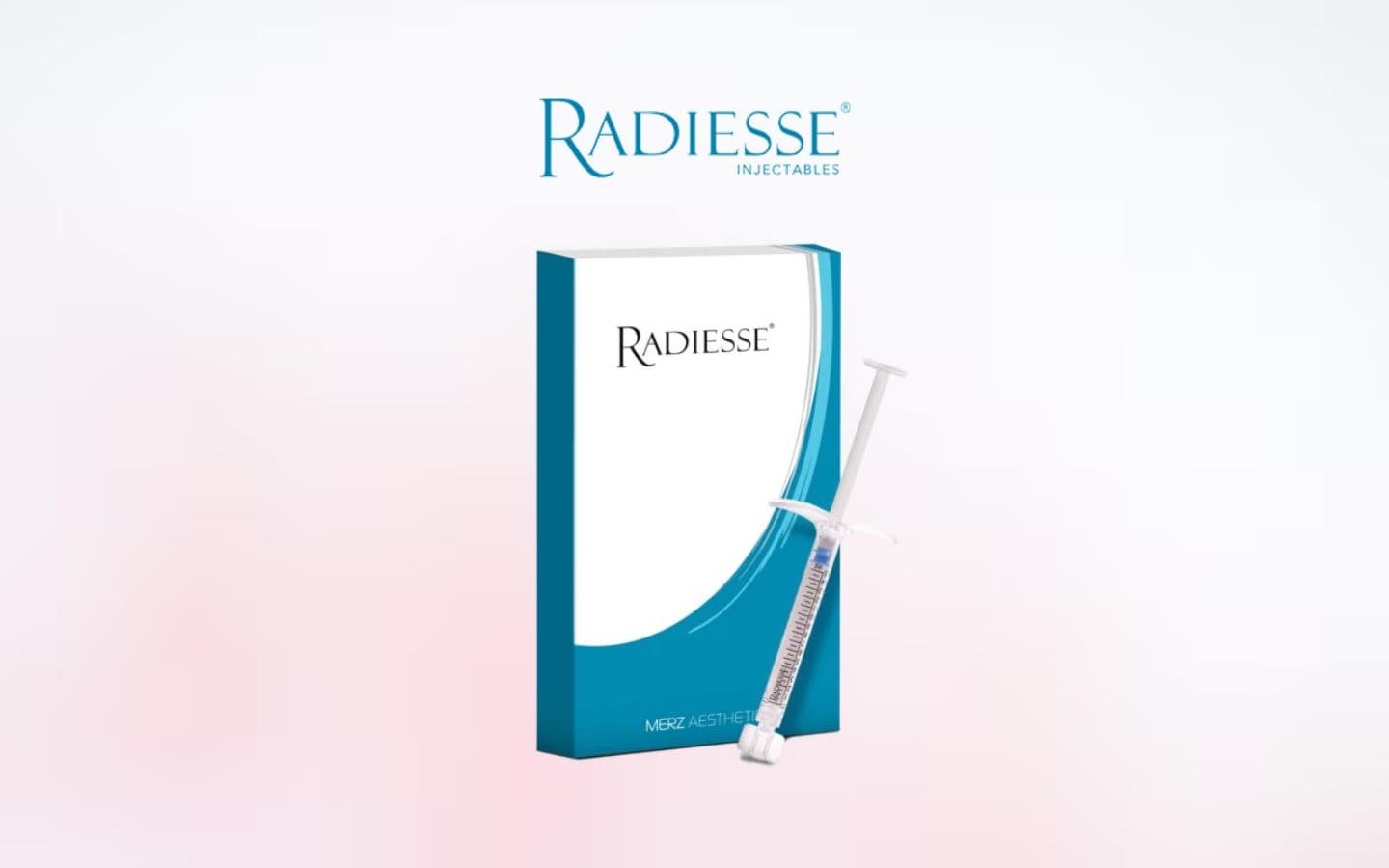
That makes it different in kind from the other bio-stimulators Kaiteki uses. Sculptra, Radiesse and Ellansé are synthetic particles that prompt a collagen response as they are resorbed; Deusaderm places purified collagen itself. Sunmax's first injectable collagen received a Taiwan Food and Drug Administration licence in 2006. Whether Deusaderm suits your concern, or whether a filler or a different bio-stimulator would fit better, is decided by your doctor at an in-person consultation.
What does cross-linked collagen do once it is injected?
Collagen on its own is broken down quickly by the body's enzymes. Cross-linking bonds the collagen fibres together so the gel resists that breakdown for longer, and the manufacturer describes it forming a soft, fibrous network that stays at the injection site and fills the depression it is placed in. Over the following months it is absorbed into the surrounding connective tissue or broken down by enzymes, so it is biodegradable and temporary, and the manufacturer notes that how long it stays depends on the area and the injection technique.
Sunmax also describes the product as supporting the skin's own collagen over time, which is why Kaiteki groups it with its bio-stimulators. The published studies measured wrinkle grading and instrument readings of the skin rather than new collagen formation directly, so treat that as the manufacturer's account of the mechanism. The depth, the amount and whether a fine needle or a blunt cannula is used are decided by the treating doctor after examining you, and Kaiteki does not publish volumes. Results vary between individuals.
What have studies of Sunmax's collagen measured?
The largest published trial is a 2024 randomised, double-blind study at three Taiwanese hospitals, in which 252 adults had their nasolabial folds treated with one of two Sunmax cross-linked collagen formulations containing lidocaine. Wrinkle-severity scores improved from baseline in both groups, the newer formulation scored better than the older one from 12 to 52 weeks, and the authors observed a gradual decline across the year, which they suggested may reflect the collagen being broken down. The trial was sponsored by Sunmax.
Evidence for the under-eye area is thinner. A 2024 study of Sunmax's FACIALGAIN collagen around the eyes followed a small group of patients for 12 weeks using skin-measurement instruments: the change in lightness readings had faded by 12 weeks, the authors noted that regular treatment may be needed, and the study was uncontrolled and manufacturer-funded. Neither study names Deusaderm itself, as both use other product names from the same manufacturer's collagen range, and neither is a prediction of how you will respond.
Why is Deusaderm considered for the under-eye area and overfilled faces?
Hyaluronic acid binds water. In some people, particularly under the eyes where fluid tends to collect, a hyaluronic acid filler can contribute to puffiness or an overfilled look, and a clear gel placed too close to the surface can show a bluish tint known as the Tyndall effect. Deusaderm contains no hyaluronic acid and is white and opaque, and the Tyndall effect was not observed in the 2024 trial. Those properties, rather than any promised outcome, are why doctors consider it in these areas.
Within Kaiteki's bio-stimulator treatment, Deusaderm is commonly considered for the concerns below. Under-eye darkness has several causes, including pigment, visible blood vessels and hollowing, and an injectable addresses only some of them, so the cause is assessed first. It is not suitable for everyone, and a consultation determines whether it is appropriate for you.
- Hollowness along the tear trough and lower eyelid
- Dark circles linked to thin skin and hollowing, sometimes called panda eyes
- Crepey, lax skin around the eyes
- Concern about looking overfilled after repeated hyaluronic acid filler
- Fine wrinkles and established facial folds, the use the manufacturer lists
- Mild, localised volume loss where a lighter correction is preferred
Who should avoid Deusaderm, and why does its pig-derived collagen matter?
Because Deusaderm is animal-derived, tell your doctor about any allergy to collagen or pork-derived products, any previous reaction to a collagen filler, and any allergy to lidocaine or similar local anaesthetics. Older bovine collagen fillers required an allergy skin test before treatment; the authors of the 2024 trial state that one is not needed for this porcine formulation, but your doctor will still take an allergy history. If a porcine product is not acceptable to you for religious, dietary or personal reasons, say so: non-animal options, such as hyaluronic acid fillers or synthetic bio-stimulators, can be discussed instead.
Deusaderm is not used in pregnancy or while breastfeeding, or where there is infection, inflammation or a skin condition in the treatment area. A history of severe allergic reactions, autoimmune disease, keloid scarring, bleeding disorders or blood-thinning medication, immunosuppressant or steroid medication, and permanent implants or previous filler in the same area are all relevant; these mirror the exclusions of the 2024 trial. Its authors also cite an earlier report advising against injecting cross-linked porcine collagen into the lips because of a high rate of nodules, and call for further safety study in other facial areas. Please share your full medical history, medication list and any past injectable treatment at consultation.
What happens during a Deusaderm session, and what is the first week like?
The visit starts with a doctor consultation and assessment: what is causing the concern, what has been injected before, and whether collagen, a filler or neither is the right answer. If Deusaderm is appropriate, the skin is cleansed and a topical anaesthetic may be applied, and the lidocaine in the gel adds to comfort as it is injected. The doctor places the product with a fine needle or a blunt cannula at the depth chosen for your anatomy. The injecting itself is brief: most of the appointment is assessment and aftercare.
Swelling, redness, tenderness and bruising are common in the first days, and they tend to show more under the eyes than elsewhere on the face, so allow a margin before any event that matters to you. Your doctor will explain aftercare, which commonly includes cold compresses, not pressing or massaging the area, and avoiding heat and strenuous exercise for a short period. Most people return to normal activity the same day, though this varies.
Because the collagen is absorbed over months, some plans include a review and a further session rather than one larger treatment, and the authors of the under-eye study noted that regular treatment may be needed to maintain a change. Your doctor will set out what to expect for your case. Raise anything unexpected with the clinic promptly rather than waiting for the review.
What side effects were recorded, and why can Deusaderm not be dissolved?
As with any injectable procedure, Deusaderm carries risks, which are explained during consultation. In the 2024 trial the effects recorded were mostly at the injection site: swelling, pain, tenderness, bruising, small lumps (nodules), redness, itching and skin flaking. Most device-related effects resolved within a month, and no serious adverse events were reported. Allergic reaction and infection are possible with any animal-derived implant, and rare but serious vascular complications are recognised for facial injectables in general, including around the eyes.
Unlike hyaluronic acid filler, collagen has no dissolving agent: hyaluronidase, the enzyme used to dissolve hyaluronic acid, does not break it down, so a lump or an unwanted result cannot be reversed on demand. That is why careful assessment and conservative placement matter. Your doctor will explain which symptoms to report and how quickly.
Concerns this injectable addresses
Whether it is the right choice for any of these is a decision for a doctor who has examined your skin.
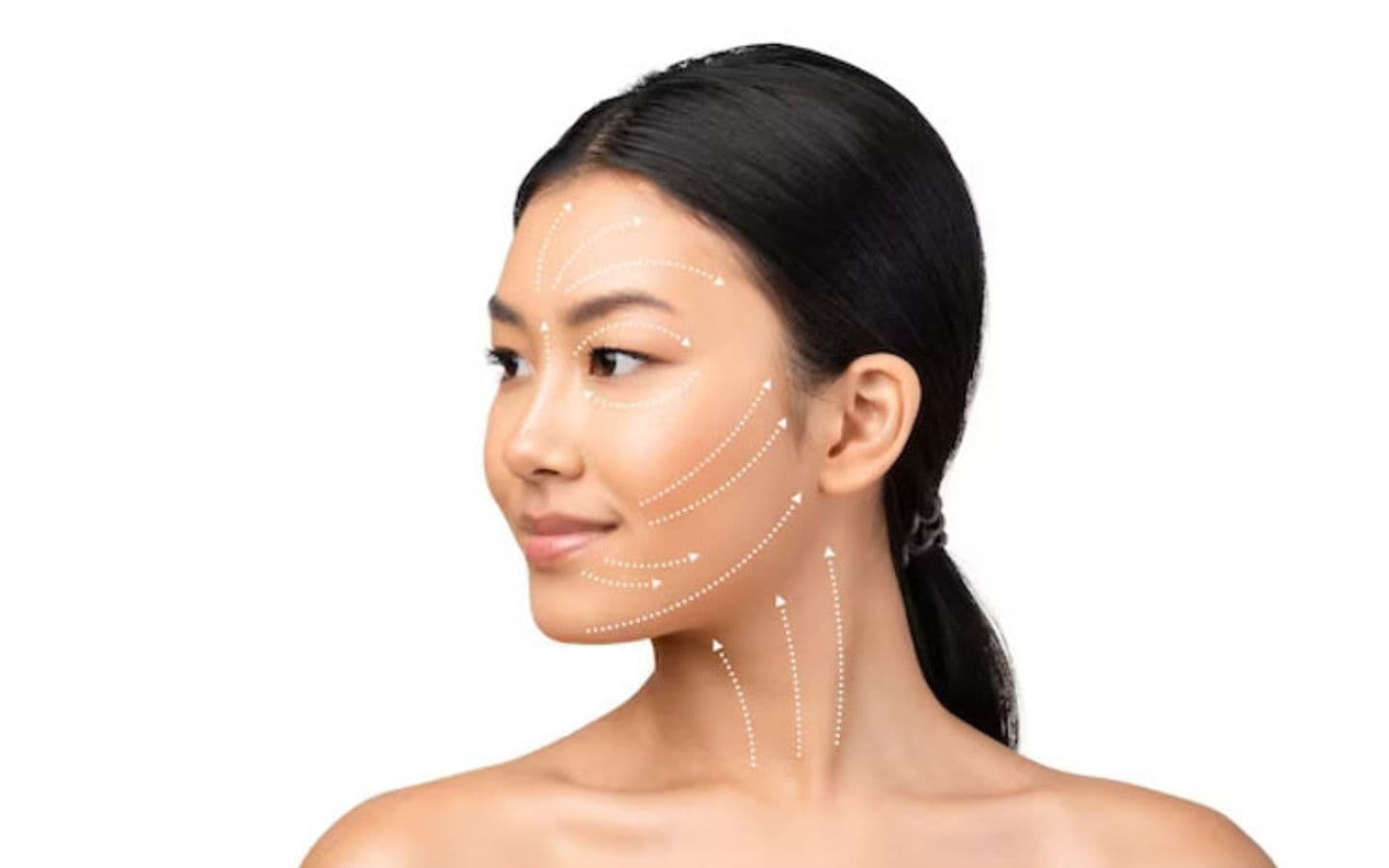

Treatments that use Deusaderm
Back to all devices and injectables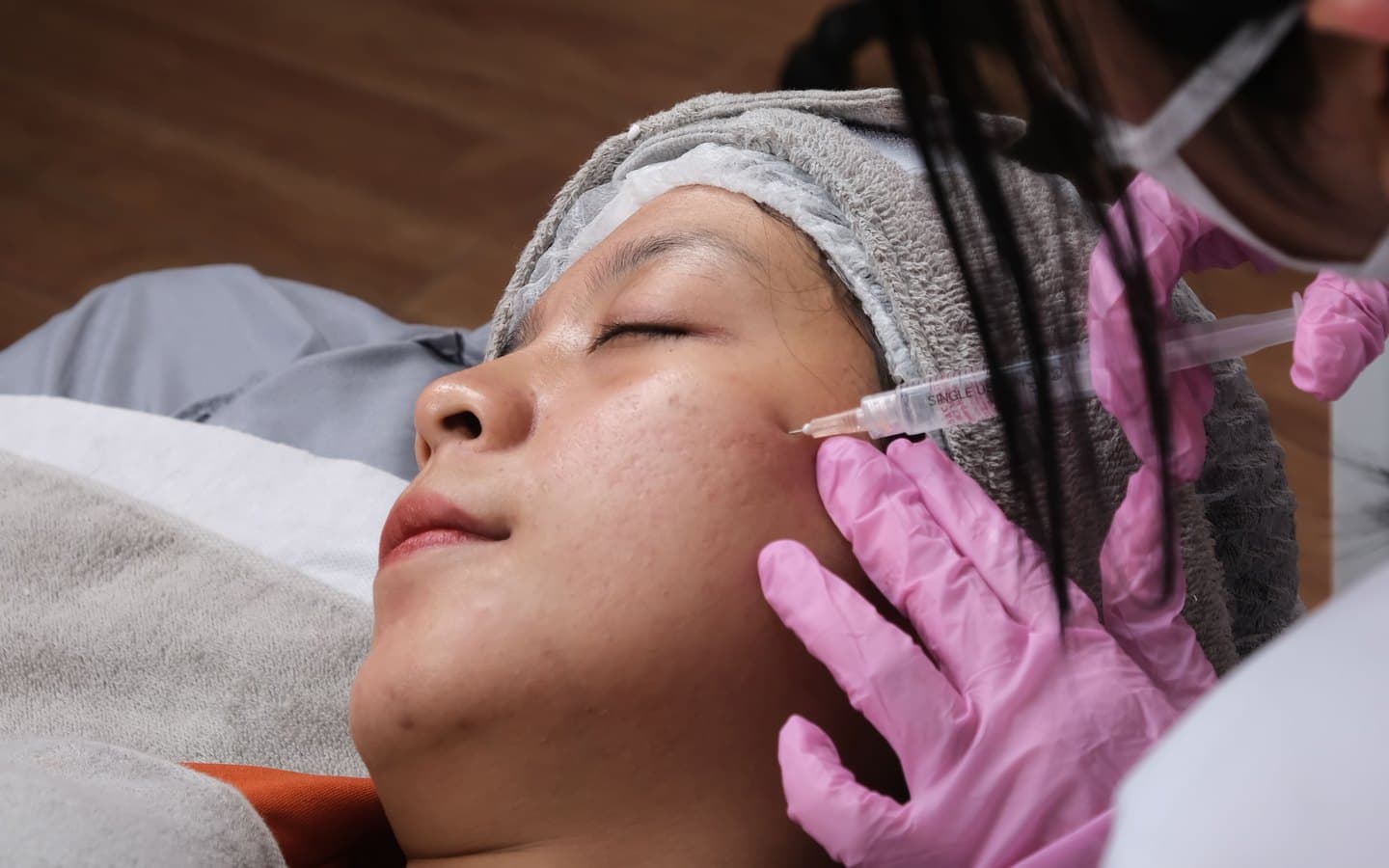
What affects the number of sessions, and the cost
Pricing is discussed at consultation rather than quoted online, so any figure reflects your assessed plan rather than a generic package. What moves it:
- The area being treated: the under-eye area alone, or other areas of the face as well.
- The quantity your doctor judges appropriate.
- Whether your plan includes a review and a further session.
- Whether existing filler in the area needs to be assessed or dissolved first, which is a separate procedure.
Other injectables we use
These address overlapping concerns. Which one suits you is a decision for a doctor who has examined your skin, not a choice to make from a page.

Common questions
How is Deusaderm different from Sculptra?
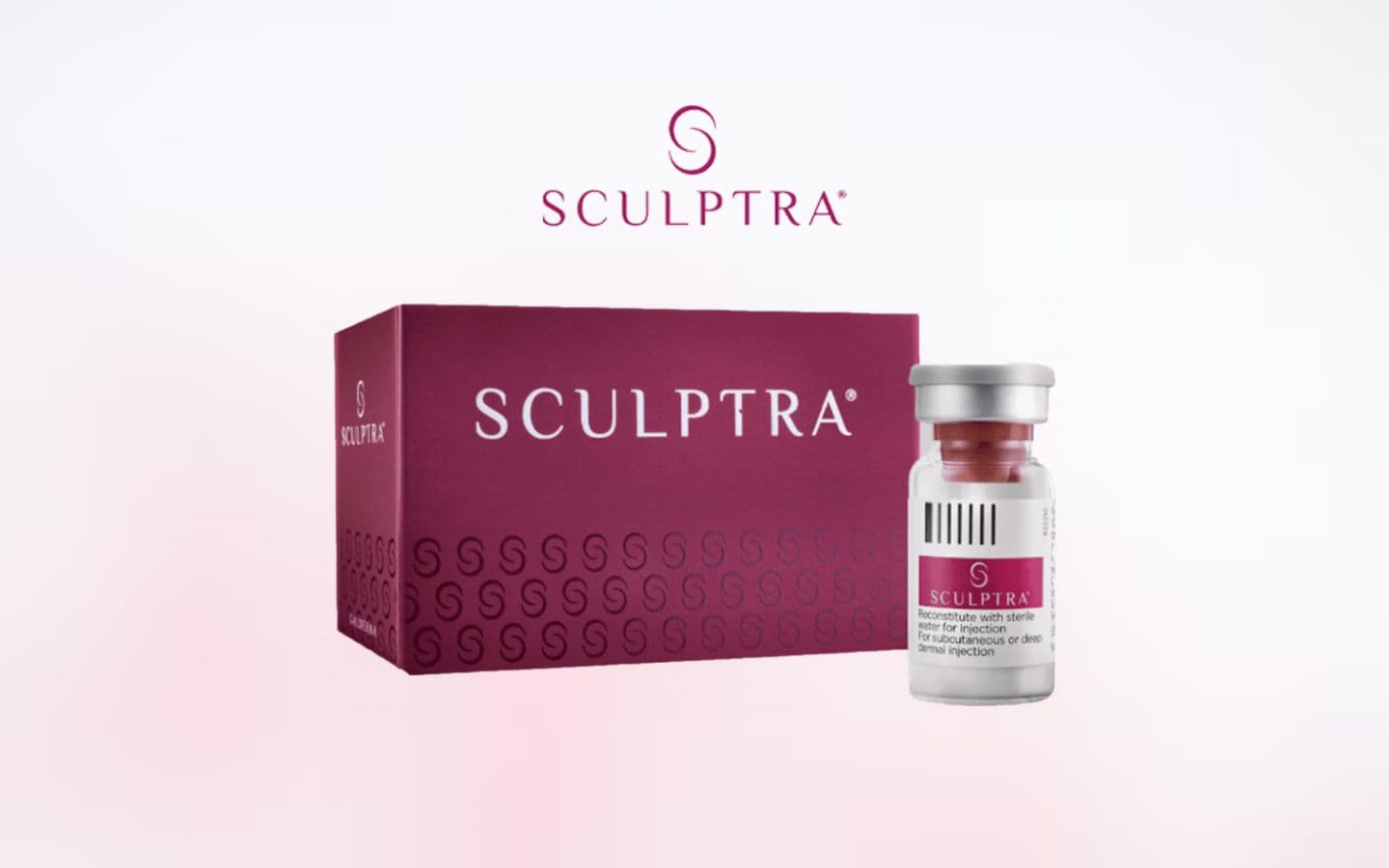
The material is different in kind. Sculptra is poly-L-lactic acid, a synthetic powder reconstituted before use and intended to work gradually by prompting your own collagen over a course of sessions. Deusaderm is purified porcine collagen supplied as a ready-to-inject gel, so it gives some support when it is placed before being absorbed over months. Neither can be dissolved. Which suits your concern, if either, is decided by your doctor at consultation.
Is Deusaderm a hyaluronic acid filler?
No. It contains no hyaluronic acid, which binds water, and its gel is white rather than clear. That is why doctors consider it where puffiness, or a bluish tint from a clear gel, is a concern. The trade-off is that hyaluronidase, the enzyme that can dissolve hyaluronic acid filler, does not work on collagen. Your doctor will explain which category fits your concern at consultation.
Is Deusaderm made from pig collagen?
Yes. The manufacturer states that the collagen is purified from the skin of specific-pathogen-free pigs raised at an accredited agricultural research institute in Taiwan, and processed to remove the parts of the collagen molecule most associated with allergic reactions. If a porcine product is not acceptable to you for religious, dietary or personal reasons, tell your doctor: non-animal alternatives can be discussed.
How long does Deusaderm last?
It is temporary. The collagen is biodegradable and is absorbed over several months, and the manufacturer notes that how long it stays depends on the area treated and the technique. In the 2024 trial, wrinkle scores drifted back gradually over the year. Duration varies between individuals and is not guaranteed, so your doctor will discuss review and any repeat treatment at consultation.
Read next






Book a free consultation
The consultation is free, takes about 20 to 30 minutes, and there is no obligation to book treatment afterwards. A doctor will examine your skin and tell you whether Deusaderm is appropriate, and if it isn’t, what would be.
Ask about thisThis page is general information about aesthetic treatments and is not medical advice. Treatments carry risks that are explained during consultation, and individual results vary. A doctor will assess whether a treatment is suitable for you before it is carried out.