Device & Injectables7 min read
Chin filler before and after: what changes, and when

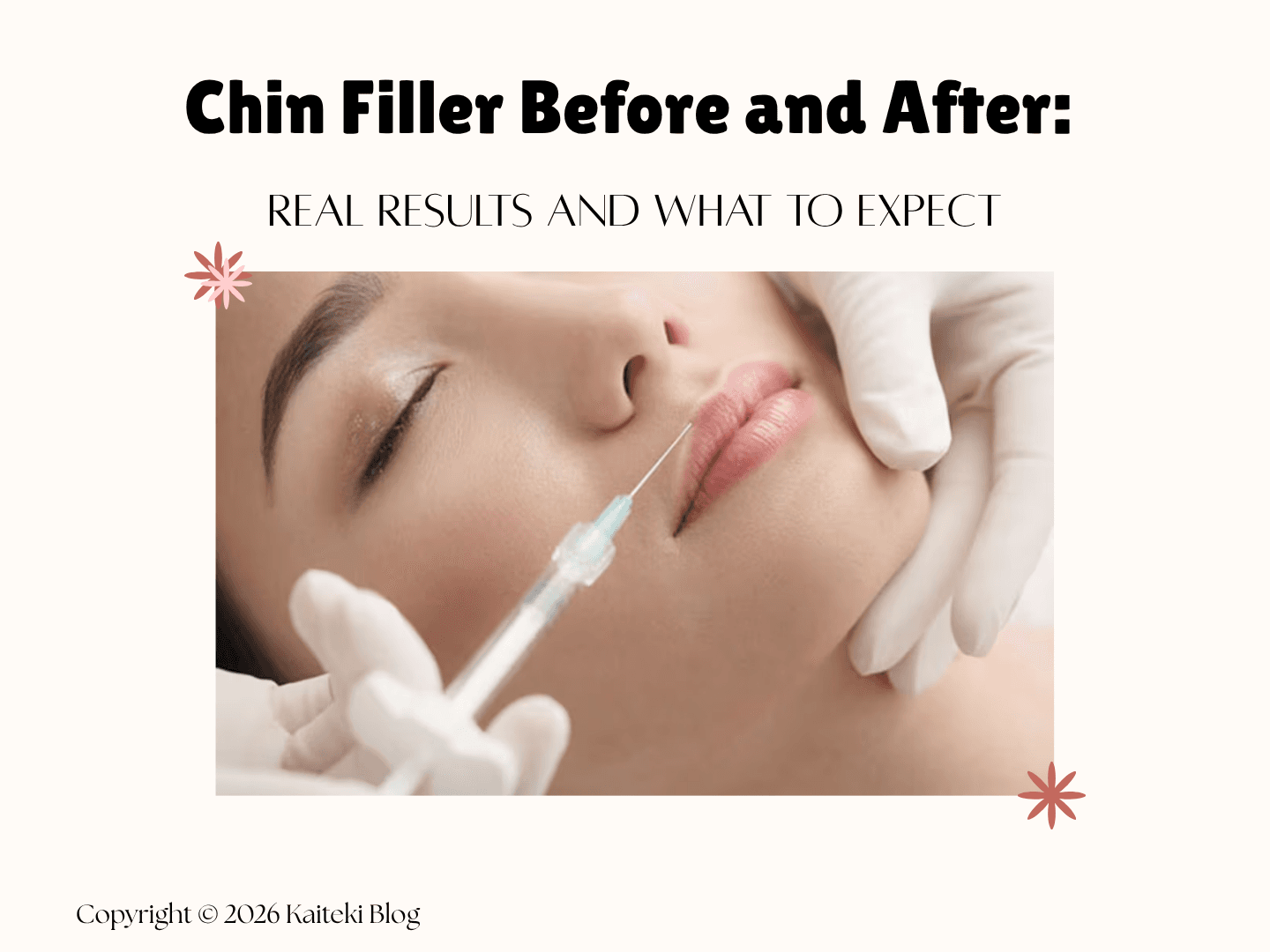
Chin filler is an injectable gel placed by a doctor to add projection and definition to a recessed or undefined chin. Some change is visible straight after injection, but swelling hides the settled shape for around two weeks. Hyaluronic acid chin fillers commonly last around a year, sometimes longer, and this varies between individuals.
Chin filler is an injectable gel, usually hyaluronic acid, placed by a doctor to add forward projection, length or definition to the chin. It is one of the ways a recessed chin can be addressed without surgery. Because most chin fillers are hyaluronic acid, the result is temporary and can usually be dissolved if needed.
Most people searching for chin filler before and after want to know two things: what will actually change, and when they will see it. This guide answers both, stage by stage. It also covers who suits it, which products are used, why it is sometimes planned alongside tear trough filler, and the risks to understand first.
Key takeaways
- When you see a change: some projection is visible straight away, but swelling means the settled shape takes around two weeks to show.
- How long it lasts: hyaluronic acid chin fillers commonly last around a year, and some studies follow results for longer. It varies with the product, the amount and your metabolism.
- Reversible, mostly: hyaluronic acid can usually be dissolved with an enzyme called hyaluronidase. Bio-stimulators such as Radiesse and Ellanse cannot.
- Pairing with tear trough filler: sensible when both areas need it, but the under-eye is a more demanding area and not everyone is a candidate.
- Comfort: most people describe a brief pinch. Numbing cream is applied first and many gels contain lidocaine.
A note on before and after photos
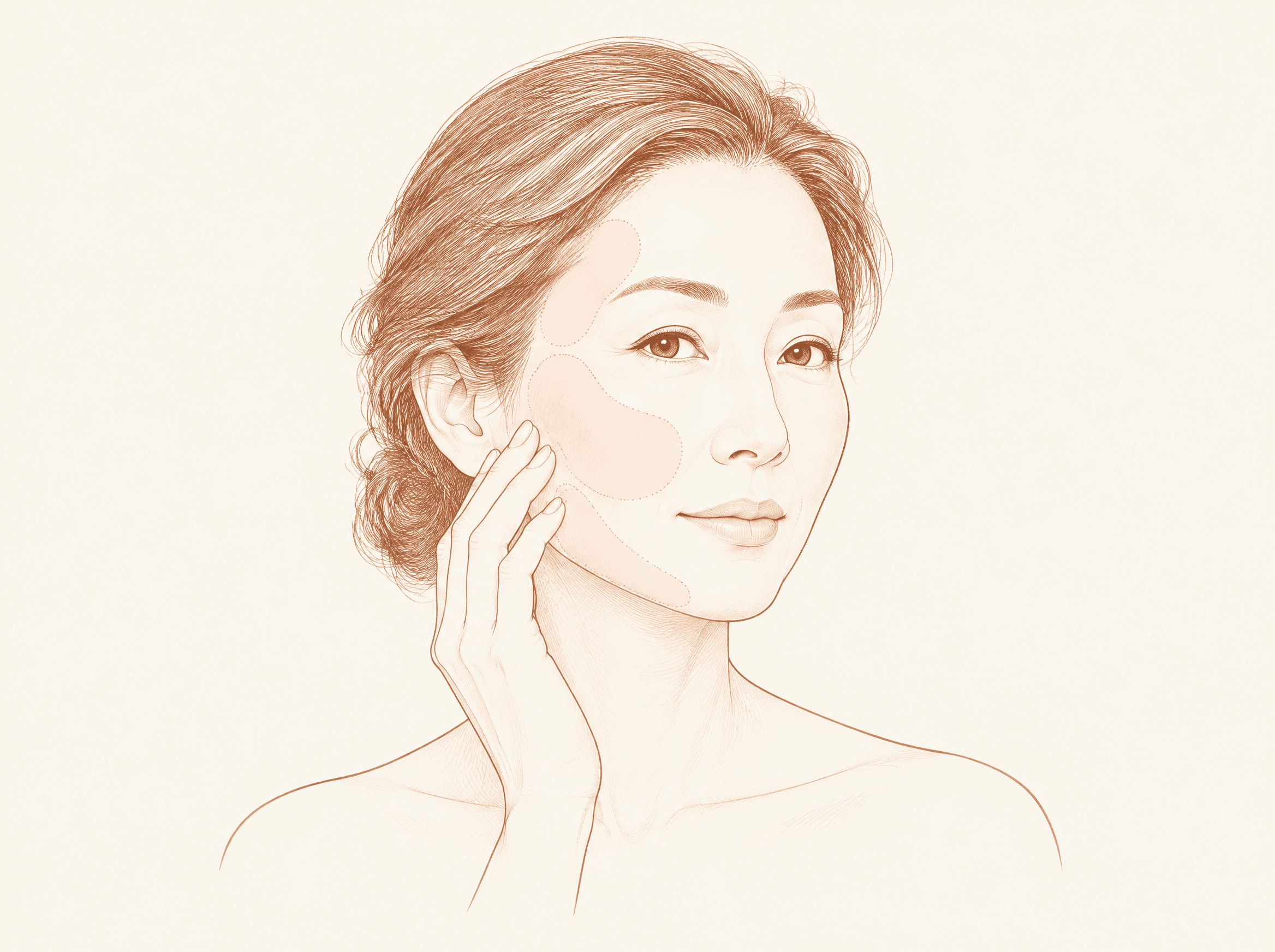
This guide uses illustrations rather than patient photographs, and that is deliberate. A good chin result is a small change in proportion, and how it looks in a photo depends heavily on angle, lighting and head tilt. Two pictures of the same untreated chin, taken a few degrees apart, can look like a result.
What helps more is seeing your own profile assessed. At consultation a doctor can show you where projection is lacking and what a measured change would mean for the balance of your face. If you want to track your own change, take side-profile photos before treatment and again at two weeks: same room, same light, same distance, chin level.
What is chin filler and how does it work?
The filler is injected at chosen points on the chin, usually close to the bone, where a firmer gel acts as structural support. Placed there, it can bring a chin that sits behind the line of the lips further forward, lengthen a short chin, or give a soft chin a clearer outline where it meets the jaw.
Firmer gels are used here because the chin carries load. A chin gel has to hold its shape against the pull of the muscles around the mouth, which is a different job from the soft, flexible gels chosen for the lips. The products are not interchangeable for that reason.

The appointment usually takes 30 to 60 minutes including the consultation. The injection itself is quicker.
Chin filler before and after: the realistic timeline
Day 0
Injection
Some projection is visible at once. Swelling makes the area look larger.
Days 1–2
Tender
A dull ache, swelling and small bruises at the injection points are common.
Days 3–14
Settling
Swelling eases and the gel integrates. The shape softens and looks more natural.
Around 2 weeks
Review
Close to the settled shape. Any small top-up is decided now.
Months later
Gradual fade
The body slowly breaks the gel down. Often around a year, sometimes longer.
Straight after treatment
You will see some added projection immediately. You will also see swelling, which makes the area look larger and sometimes slightly uneven. Tenderness, a dull ache and small bruises at the injection points are common in the first one to two days. Do not judge the shape yet.
Days 3 to 14: settling
Swelling goes down and the gel integrates with the tissue around it, so the shape softens and looks more natural through this stretch. Mild firmness when you press the chin is normal and fades. A review at around two weeks is common practice. Ask at your consultation whether one is planned, because that is when a small top-up, if any is needed, gets decided.
Two weeks onwards: the settled result
By about two weeks, what you see is close to the settled result: a chin that sits further forward or has a clearer outline, and a profile where the nose, lips and chin relate better to one another. How much changes depends on how much projection was lacking and how much filler your anatomy will carry well.
How long it lasts
The chin moves less than the lips, so filler there tends to last longer. In a 2020 study of Juvederm Volux in the lower face, published in Aesthetic Surgery Journal, improvement in chin projection was generally maintained through 18 months. That is a trial figure, not a promise. Your own timeline depends on the product, the amount placed and how quickly your body breaks the gel down.
Who is a good candidate?
Chin filler is usually considered for people who have:
- a chin that sits behind the line of the lips in profile
- a short chin, or one that loses shape where it meets the jaw
- early volume loss along the lower face with age
- a preference for something reversible before considering a chin implant
- a wish to improve how the nose, lips and chin balance one another
It is generally avoided during pregnancy or breastfeeding, over active infection or broken skin in the area, and where there is a known allergy to an ingredient. It is also the wrong tool where the problem is a significant bite or jaw misalignment, which needs a dental or maxillofacial opinion, or where the fullness under the chin is really fat, a separate concern covered on our face contouring page.
A doctor should also tell you when what you are hoping for is more than filler can deliver. Filler does a modest, proportionate change well. It does not deliver a surgical-level change.
Chin filler and tear trough filler: when they are planned together
Some faces look tired and unbalanced at the same time, with hollows under the eyes casting a shadow and a chin that recedes. Treating only one can make the other more noticeable. Where an assessment finds both, a doctor may plan them together, in the same visit or a few weeks apart.

The two areas are not equal, though. The tear trough is one of the more demanding places on the face to inject. The skin is thin, the area tends to hold fluid, and gel placed too shallow can show through as a bluish tinge. Not every dark circle is a hollow either: some are pigment or visible blood vessels, which filler does nothing for. Our dark eye circles page explains how to tell which you have. People with puffy under-eye bags are often better served by something other than filler.
Where filler does suit, a soft, low-density gel is used under the eye. Belotero Balance (+), for example, was approved by the US FDA in September 2023 specifically for under-eye hollows. Recovery is broadly similar for both areas, which is part of why they are sometimes scheduled together, although bruising under the eye can take a little longer to clear.
Which fillers are used for the chin and tear trough?
| Product | What it is | Where it tends to be used |
|---|---|---|
| Juvederm | Hyaluronic acid range, graded from soft to firm | Firmer gels for chin projection, softer gels for delicate areas |
| Belotero | Hyaluronic acid range with several gel densities | Softer gels for fine lines and under-eye hollows |
| Radiesse | Calcium hydroxylapatite, a bio-stimulator | Deeper structural support, not dissolvable |
| Ellanse | Polycaprolactone, a bio-stimulator | Gradual, collagen-supporting contour, not dissolvable |
Hyaluronic acid gels are the usual starting point, mainly because they can generally be dissolved if the result is not right. Radiesse and Ellanse belong to a different category, which we offer as bio-stimulator treatment. They are not used under the eye, and because they cannot be dissolved, they suit someone who has had filler before and knows what they want. Which product, how much and where is decided after examining your face. Our dermal fillers page covers the full range, and the lip filler guide explains how gel firmness changes from area to area.
Risks to understand
Swelling, tenderness, bruising and mild firmness are common and temporary. Less commonly, filler can cause lumps, asymmetry or infection.
The serious risk with any facial filler is a vascular complication, where gel enters or presses on a blood vessel and blocks the blood supply. It is rare, but both the chin and the under-eye have blood vessels close by, and near the eye such an event can affect vision. That is why filler is a doctor's procedure and why the product should be a genuine, named brand. Contact the clinic immediately if you notice severe or increasing pain, skin turning pale or dusky, or any change in your vision after treatment.
Aftercare
- Avoid touching, pressing or massaging the chin for at least 24 hours, unless your doctor says otherwise
- Skip strenuous exercise, saunas and long sun exposure for about 48 hours
- Avoid alcohol for 24 hours, and check with your doctor before starting or stopping anything that thins the blood
- Sleep on your back for the first night or two
- Follow your doctor's own instructions, which take priority over any general list
Common questions
How noticeable is chin filler?
The change is in proportion rather than size. Most people notice their profile first, where the chin sits relative to the lips and nose. How much changes depends on how much projection was lacking and how much filler your anatomy carries well.
How long does chin filler last?
Hyaluronic acid chin fillers commonly last around a year, and some studies have followed results for 18 months. It varies with the product, the amount placed and how quickly your body breaks the gel down.
Does chin filler look natural?
It can, when the amount respects your facial proportions. Overfilling is the usual reason a chin looks obviously treated, so a doctor may advise less than you asked for, or building up over two sessions.
Can chin filler and tear trough filler be done together?
Sometimes, if an assessment finds both areas need it. The under-eye is a more demanding area, and not every dark circle is a hollow, so the tear trough is assessed on its own merits rather than added to a chin plan by default.
Is chin filler painful?
Most people describe a brief pinch or pressure. Numbing cream is applied first and many chin gels contain lidocaine. Some tenderness for a day or two afterwards is normal.
Book a free consultation
A doctor will assess your skin and tell you honestly whether this is the right option for you, including when it is not.
Related pages on our site
About the author

Dr Chloe Wan Poh Yee
Aesthetic Physician
MBBS, MAC · MMC 104547
Dr Chloe graduated from Newcastle University Medicine Malaysia with a Bachelor of Medicine & Bachelor of Surgery (MBBS). She has a strong passion for aesthetic medicine and is dedicated to help patients achieve healthier, more confident skin through personalized and evidence-based treatments.
View full profile- Written by
- Dr Chloe Wan Poh Yee, MMC 104547
- Reviewed by
- Dr Chew Yuhhui, MMC 68232
- Published
- 11 October 2026
This page is general information about aesthetic treatments and is not medical advice. Treatments carry risks that are explained during consultation, and individual results vary. A doctor will assess whether a treatment is suitable for you before it is carried out.